
Loading, please wait...
LOT 0703
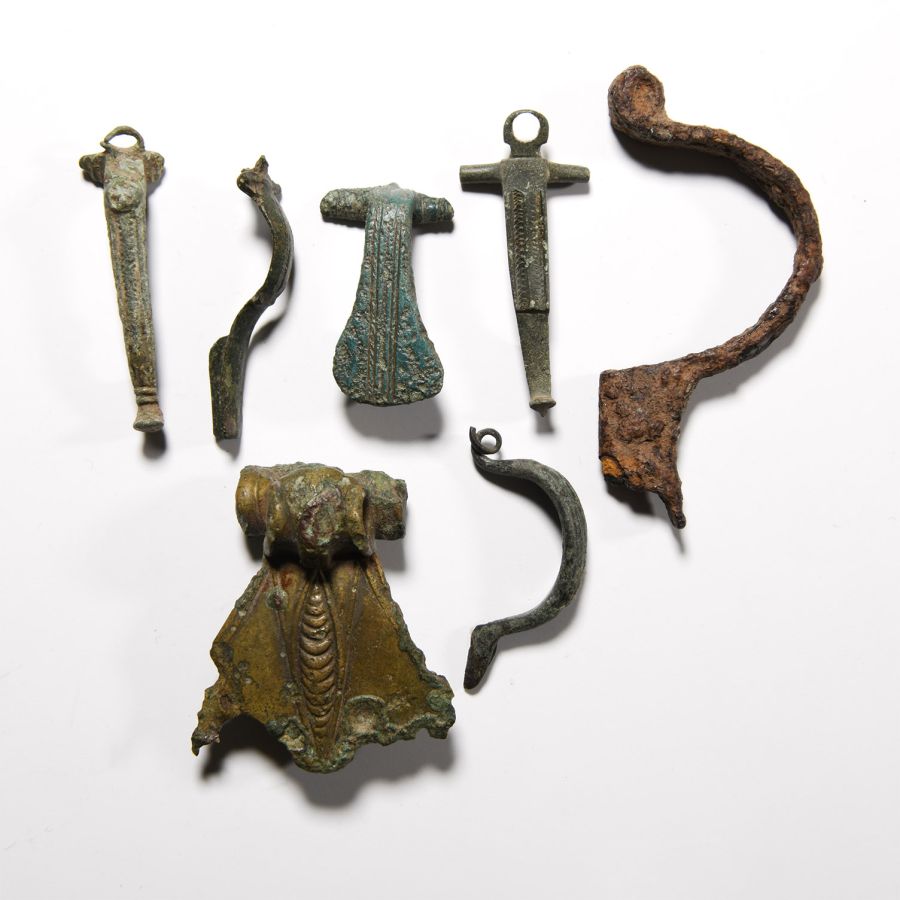
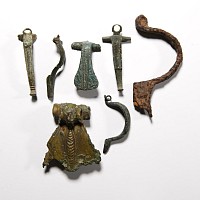
Romano-British Bow Brooch Collection
CIRCA 1ST-2ND CENTURY A.D.
1 3/8 - 2 7/8 in. (85 grams total, 37-74 mm).
Comprising: a large fly, together with a number decorated with simple geometric ornament; pins absent. [7, No Reserve]
ProvenanceFound Norfolk, Essex, and Wiltshire, UK.
Ex private Merseyside, UK, collection.
TimeLine Auctions follows a vetting process to ensure the authenticity and legality of all items, reinforcing our commitment to integrity and responsible trading. Each antiquity, antique, and coin lot undergoes thorough examination by a vetting committee of at least ten external specialists, professional trade association members, scientists, and archaeologists: Our Vetting Process
AUCTIONS:
TimeLine is a leading auction house specialising in antiquities, ancient art, collectables, natural history, coins, medals, and books. Our auctions offer museums, collectors, historians, and enthusiasts the opportunity to acquire unique and historically significant pieces.
-
Roman and Later Artefact Group
Circa 1st century A.D. and laterSold for (Inc. bp): £65
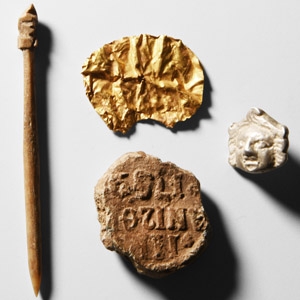
Comprising: a silver gorgoneion head mount; sheet-gold accessory element; bone pin with figural finial; lead seal dated 1789. 28.1 grams total, 15-64 mm
Acquired on the UK art market. Property of a Ruislip, UK, gentleman, by inheritance. -
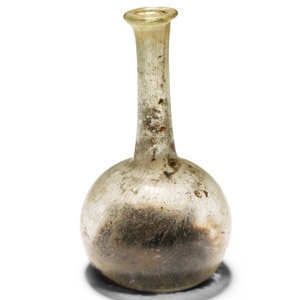
Roman Glass Cosmetic Bottle
Circa 3rd century A.D.Sold for (Inc. bp): £85
The slender tubular neck rising from a globular body. 34 grams, 10.1 cm
Ex Coincraft, London WC1. Ex private Merseyside, UK, collection. -
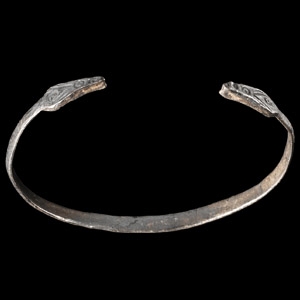
Roman Silver Armilla Snake Bracelet
2nd-3rd century A.D.Sold for (Inc. bp): £312
Penannular in form with kite-shaped terminals representing serpents' heads, punched ring-and-dot and pricked dot ornament forming the stylised head and scale detailing. 8 grams, 66 mm
Ex North American private collection. Acquired privately on the European art market in the 1990s. Property of a Buckinghamshire, UK, gentleman.
