
Loading, please wait...
LOT 0304
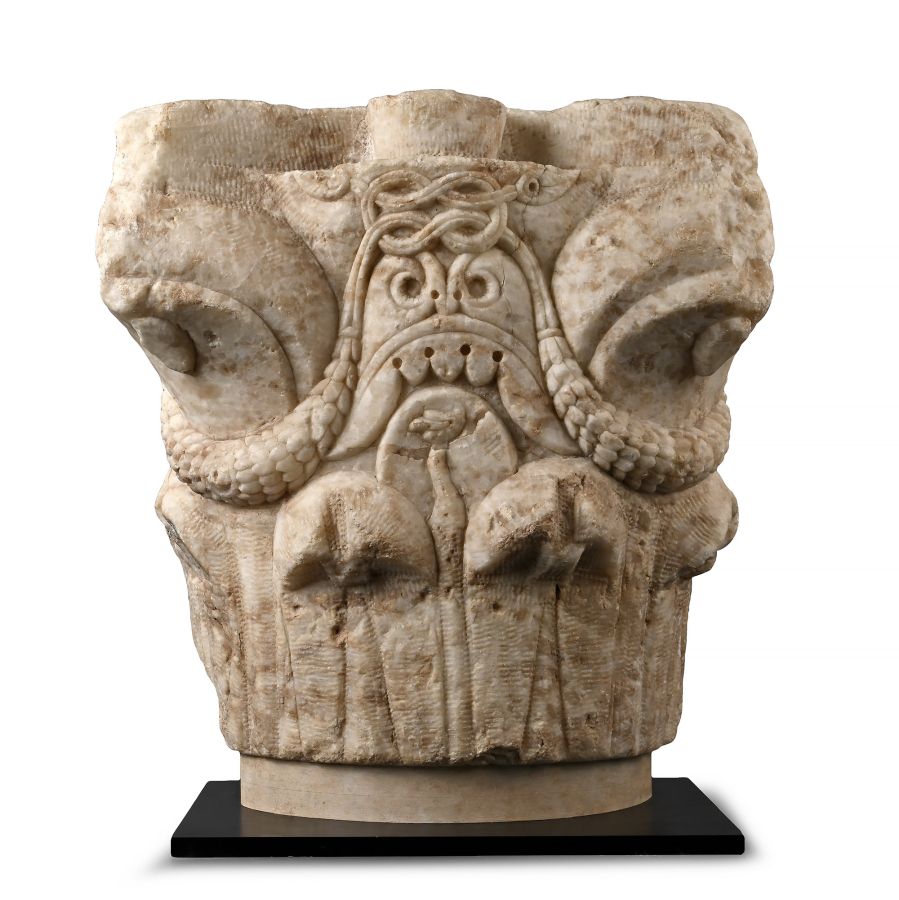
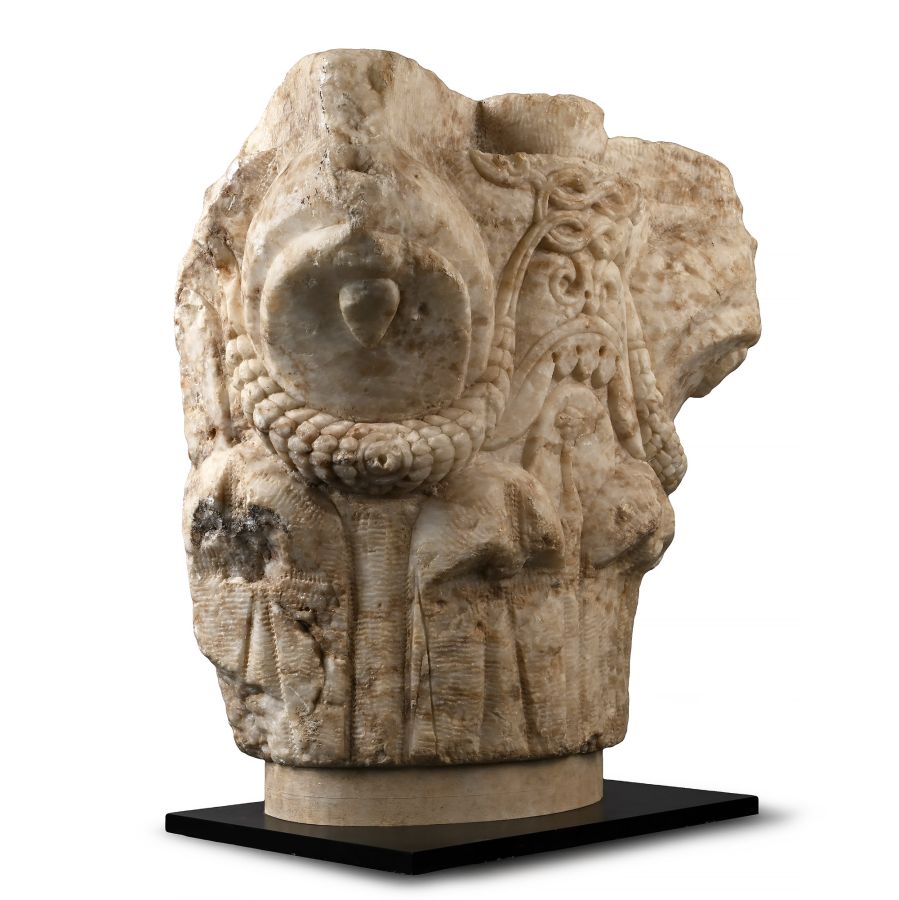
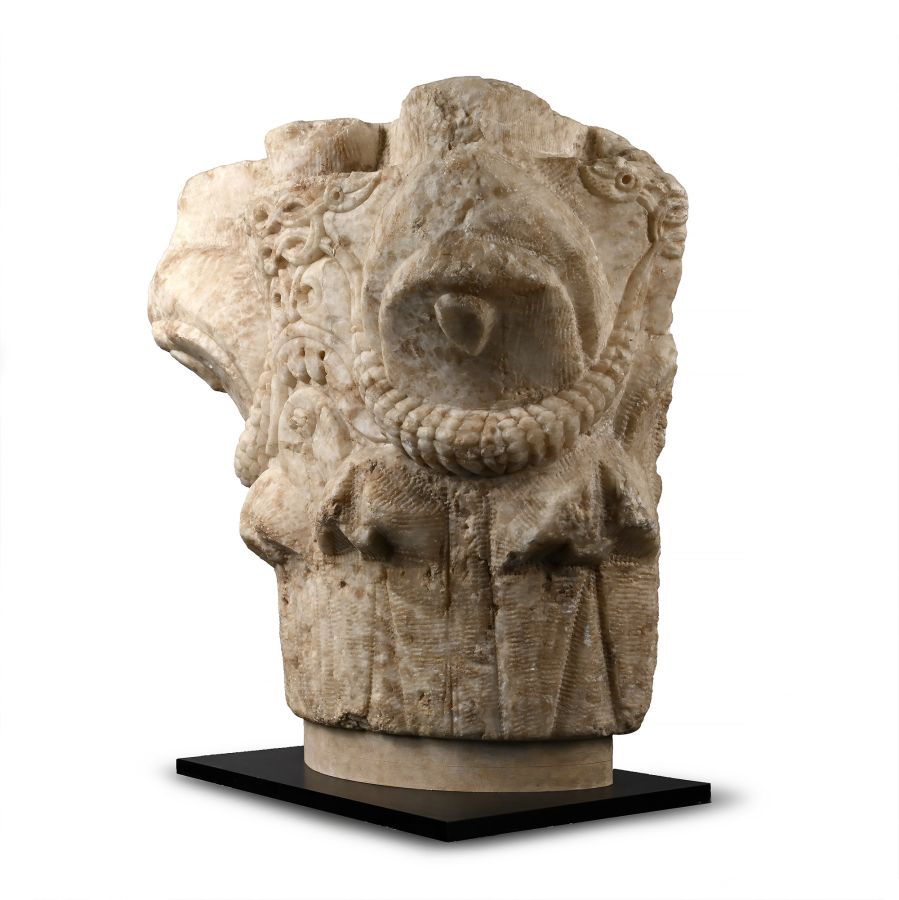
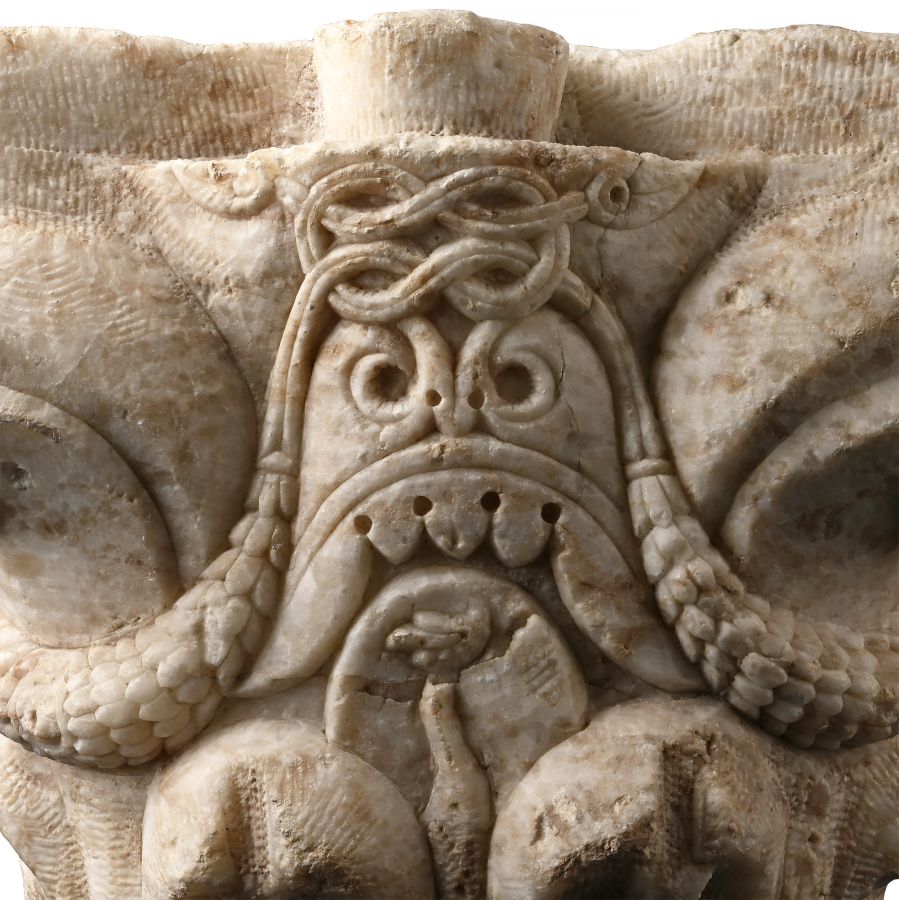
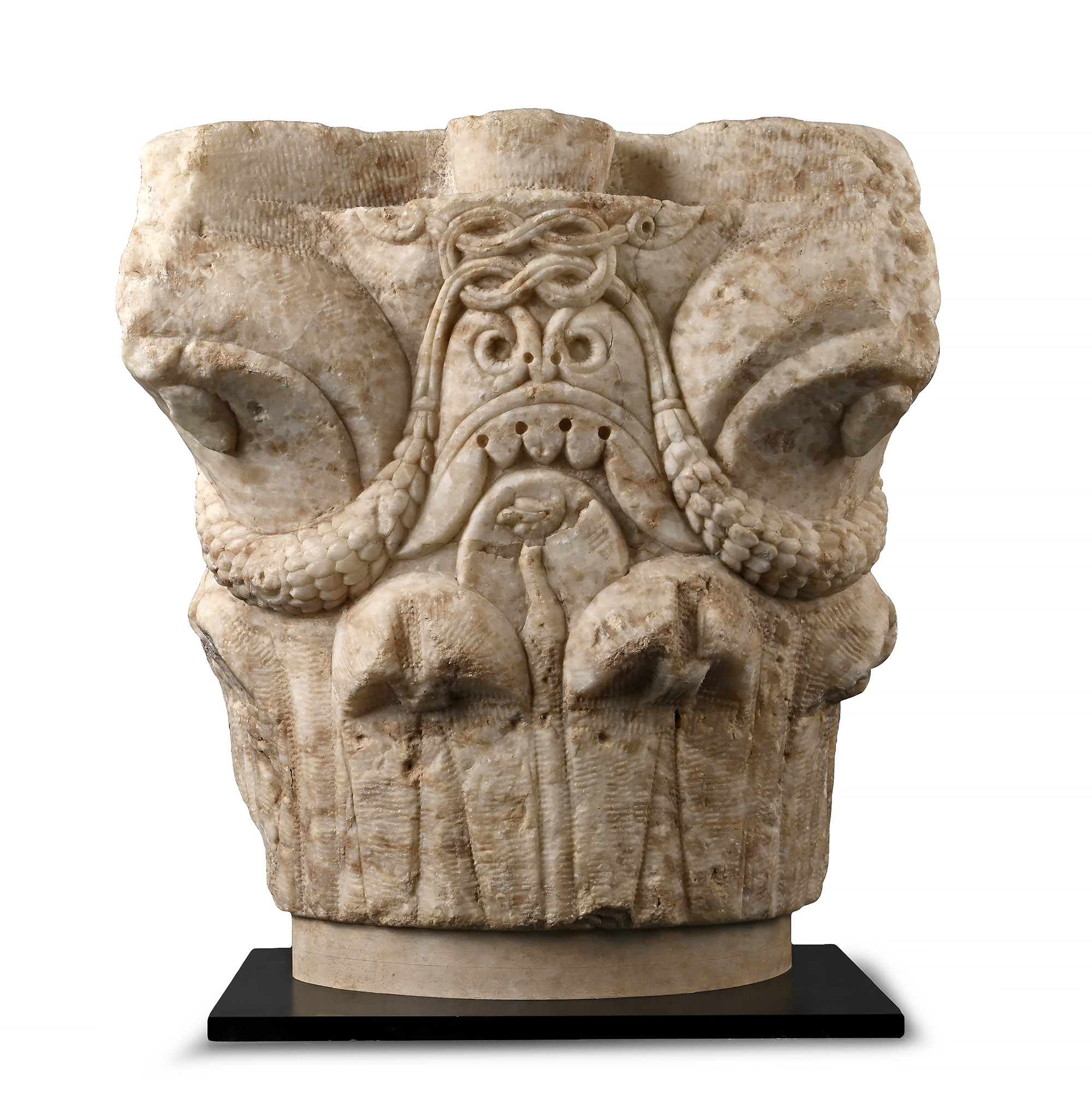
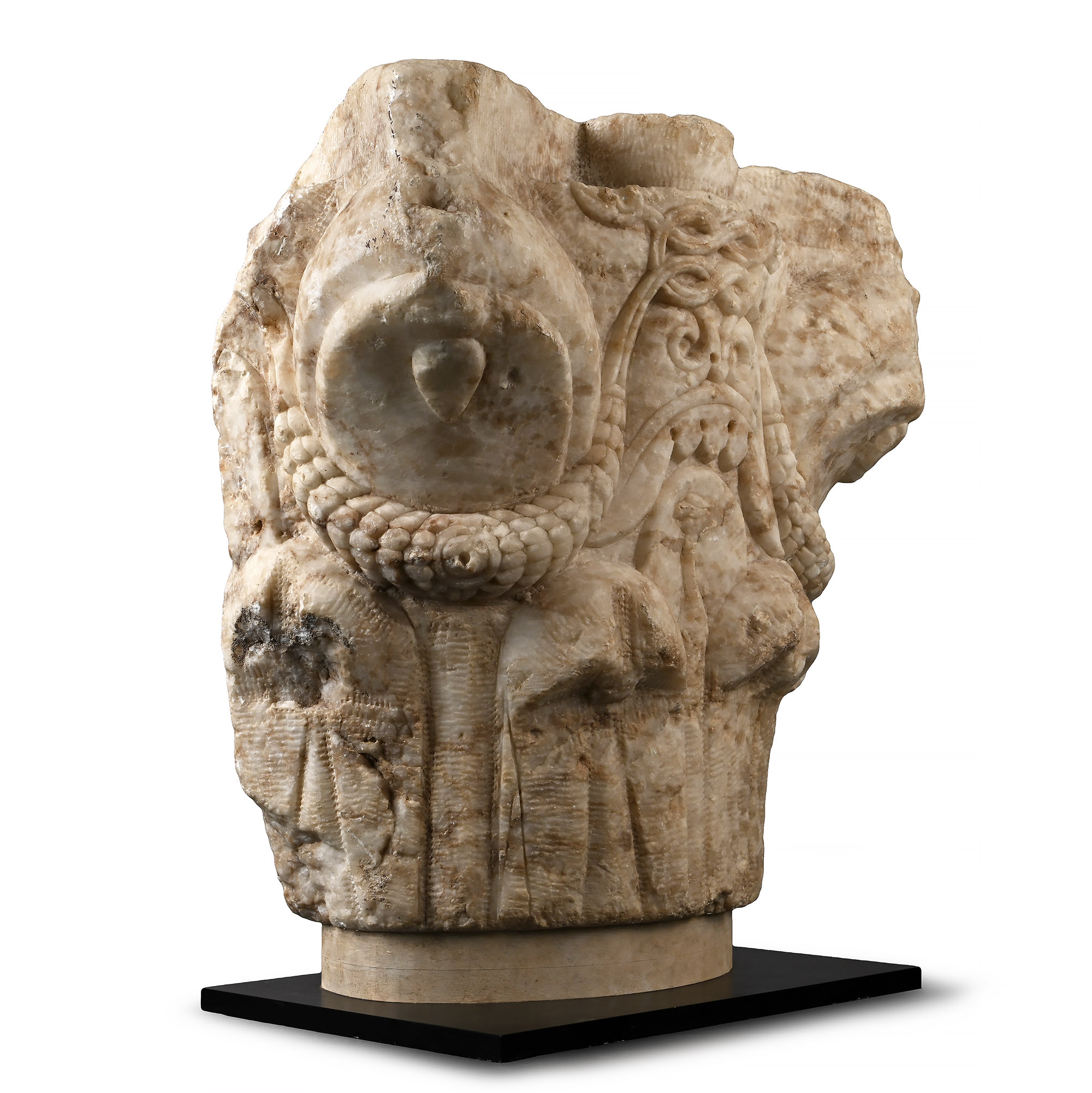
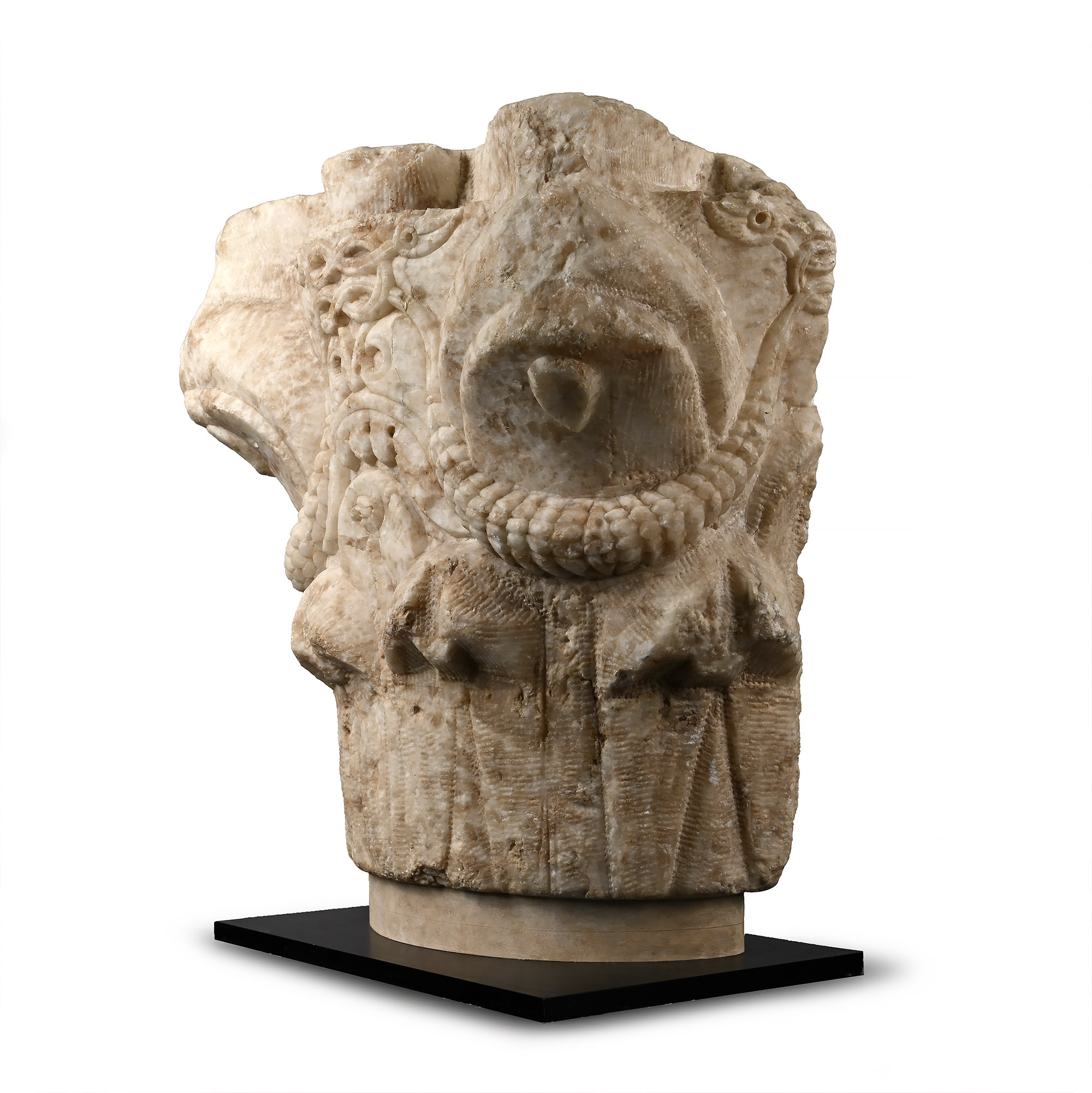
Romanesque Limestone Capital with Reef Knot
VISIGOTHIC STYLE, 12TH CENTURY A.D.
20 1/4 in. (74 kg total, 51.5 cm high including stand).
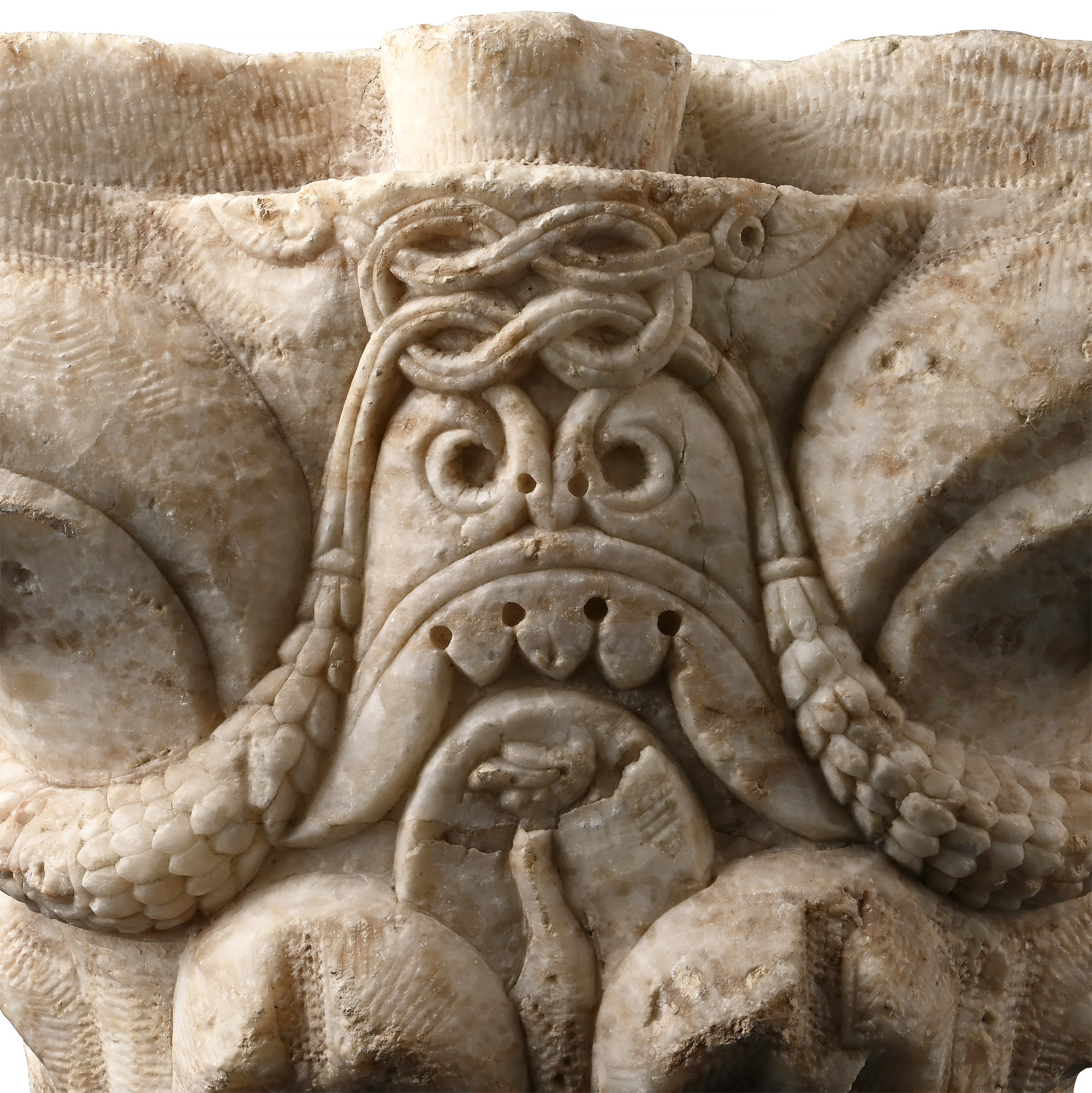
Pillar capital for an architectural column or pier decorated with dense vegetation motifs, tapering swags or garlands; reef-knot motif and leaves above; unworked to the reverse.
ProvenanceEx French collection.
Holz Artles, 25 April 2015, no.83.
Private collection, Kensington, London.
Private collection, UK.
This lot has been checked against the Interpol Database of stolen works of art and is accompanied by search certificate number no.13383-259007.
See Toman, R., Romanesque Architecture, Sculpture, Painting, Cologne, 1997, p.31, for discussion.
FootnotesThis finely carved capital belongs to a group of Romanesque capitals known as knotwork capitals, widespread in the South of France and North of Spain, where the influence of the architecture of the old Visigothic Kingdom was still strong. These capitals probably originate in one of the most famous sculpture workshops of Romanesque France. The base of the capital is topped by a row of abstractly sculpted acanthus leaves. The dominant section of the capital is decorated with stylised knotwork, composed of ornament that entwine and end in folded acanthus leaves. In between the entwined branches, there is more foliage forming the ‘head of a monster’ which playfully animates the sculpture.
CONDITIONTimeLine Auctions follows a vetting process to ensure the authenticity and legality of all items, reinforcing our commitment to integrity and responsible trading. Each antiquity, antique, and coin lot undergoes thorough examination by a vetting committee of at least ten external specialists, professional trade association members, scientists, and archaeologists: Our Vetting Process
AUCTIONS:
TimeLine is a leading auction house specialising in antiquities, ancient art, collectables, natural history, coins, medals, and books. Our auctions offer museums, collectors, historians, and enthusiasts the opportunity to acquire unique and historically significant pieces.
-
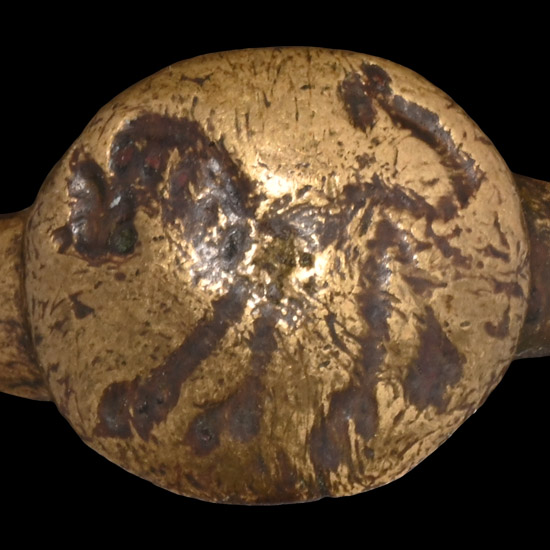
Medieval Bronze Ring with Standing Lion
Circa 14th-15th century A.D.Sold for (Inc. bp): £46
Comprising a D-section hoop and a domed, circular bezel with a stylised lion. 3.27 grams, 22.14 mm overall, 17.46 mm internal diameter (approximate size British N 1/2, USA 6 3/4, Europe 14.35, Japan 13)
From the private collection of a European gentleman (1942-2024), formed since the 1970s. -
.jpg)
Medieval Wooden Bench Finial in the Form of an Elephant and Castle
England, 15th century A.D.Estimate: £3,000 - 4,000 (+bp*)
Opening Bid: £1,500
Carved stylised elephant with elongated ears supporting a palanquin in the form of a castle with a carved cross, foliage motif to the reverse; mounted on a velvet-covered stand. 1.31 kg total, 34.2 cm including stand
Private collection, Europe. Acquired on the English art market. This lot has been checked against the Interpol Database of stolen works of art and is accompanied by search certificate number no.13088-248391.
The image of an elephant carrying warriors in a howdah originated from Alexander the Great's battle against King Porus's war elephants at the Battle of Hydaspes in 326 BC. This motif became widely known in European art through the spread of Bestiaries which were medieval texts combining natural history with moralising Christian stories. One of the most well known was Matthew Paris’s imagined depictions of elephants, most notable in this case is his war elephant illustrated in Chronica maiora II, circa 1240-1255 (Cambridge, Corpus Christi College, MS 016II). Another well known manuscript - The Rochester Bestiary, circa 1230-1240 (British Library, London, Royal MS 12 F.xiii) contains a miniature with a war elephant in the midst of battle, above another image of elephants supposedly in their natural habitat. Since very few live elephants were seen in Europe during the medieval period, their representations were often more imaginative than realistic. Other Medieval bench end carvings of elephants in English churches are known, amongst them are: St Peter and St Paul, Tuttington, Norfolk; St Andrew, South Lopham, Norfolk; St Edmund, South Burlingham, Norfolk; St Andrew, Holme Hale, Norfolk. Elephants can also be found on misericords, some examples can be found at: Cathedral Church of Saint Peter, Exeter; Cathedral Church of St Peter, Gloucester; and St Mary's Church, Beverley. -
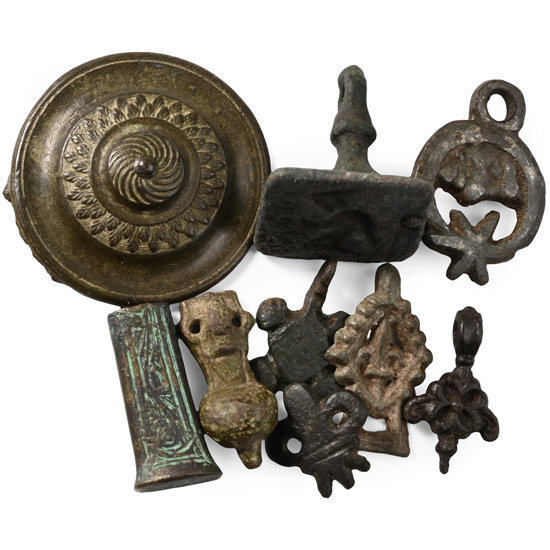
Medieval and Later Bronze Artefact Collection
Circa 14th-17th century A.D.Sold for (Inc. bp): £65
Comprising: a sheet-bronze knife pommel; a mount shaped as fleur-de-lis with two studs on the reverse; a circular domed mount with a central whirl motif; a pendant or a mount formed as the crescent moon and star; a small quatrefoil pendant; a small bifacial floral pendant; a square seal matrix with a bird; a hooked tag with fleur-de-lis; and a mount with an acorn finial. 66.5 grams total, 18-42 mm
Found Lancashire and Yorkshire, UK. Acquired on the UK art market. Property of a Lancashire, UK, collector.
