
Loading, please wait...


LOT 0817
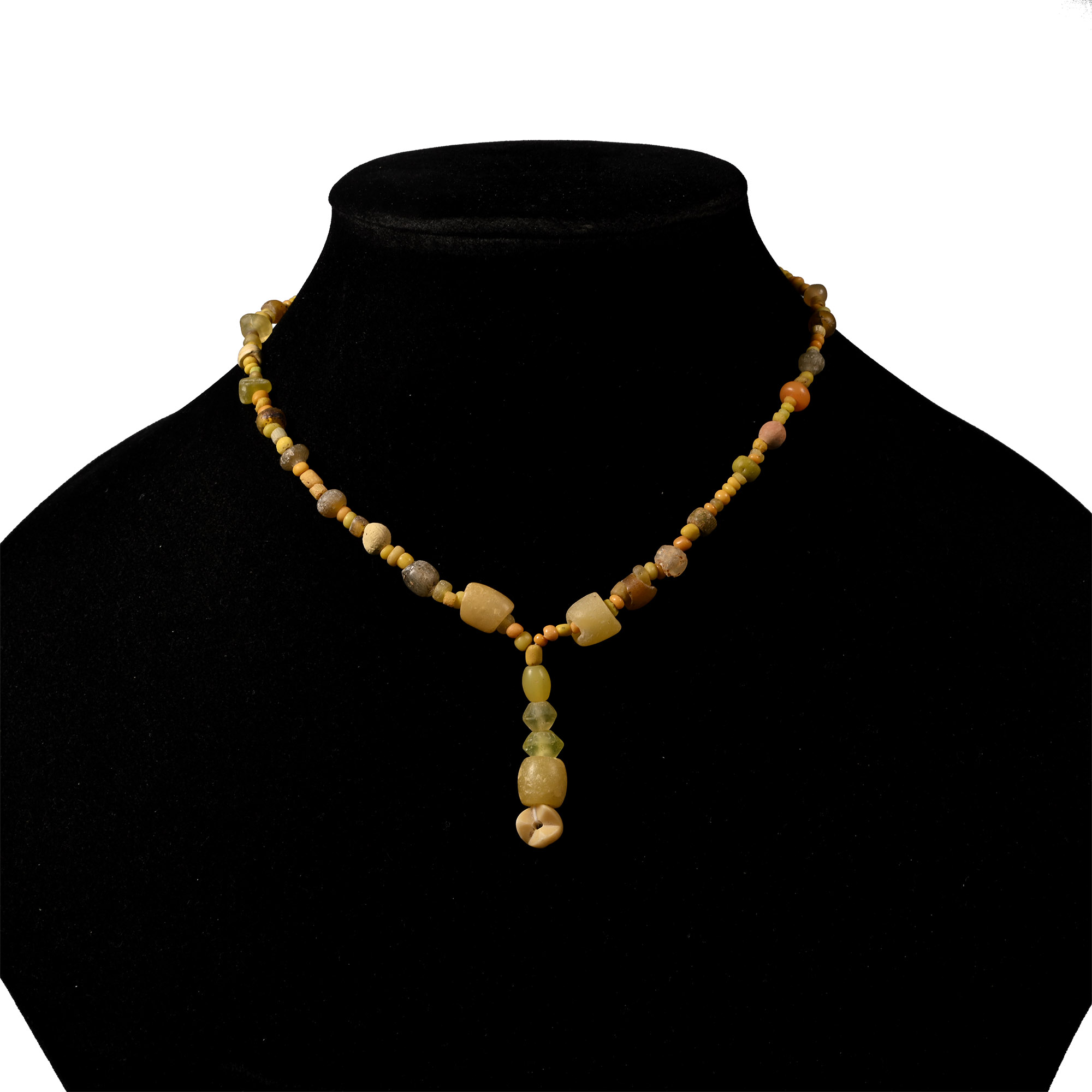
Roman Yellow Glass Bead Necklace String
1ST-4TH CENTURY A.D. AND LATER
13 3/8 in. (15.7 grams, 34 cm).
A restrung Y-shaped string composed of variously shaped beads with a central feature composed of larger beads. [No Reserve]
ProvenanceAcquired 1980-2015.
Ex Abelita family collection.
This lot is accompanied by an illustrated lot declaration signed by the Head of the Antiquities Department, Dr Raffaele D’Amato.
TimeLine Auctions follows a vetting process to ensure the authenticity and legality of all items, reinforcing our commitment to integrity and responsible trading. Each antiquity, antique, and coin lot undergoes thorough examination by a vetting committee of at least ten external specialists, professional trade association members, scientists, and archaeologists: Our Vetting Process
AUCTIONS:
TimeLine is a leading auction house specialising in antiquities, ancient art, collectables, natural history, coins, medals, and books. Our auctions offer museums, collectors, historians, and enthusiasts the opportunity to acquire unique and historically significant pieces.
-
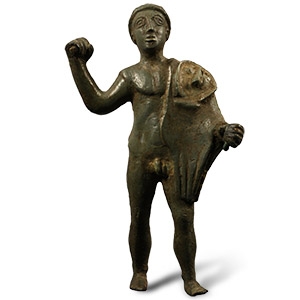
Etrusco-Italic Bronze Figure of Young Hercules
Archaic Style, circa 4th-3rd century B.C.Estimate: £6,000 - 8,000 (‡+bp*)
Opening Bid: £3,000
Modelled in the round figure standing in advancing pose with the right hand raised and fist clenched; left shoulder and arm covered with the skin of the Nemean lion and left hand modelled hollow; hair cut short and textured. 307 grams, 12cm
Acquired in the mid 1980s-1990s. Private collection, Switzerland, thence by descent. Private collection, since the late 1990s. Accompanied by an academic report by Dr Raffaele D'Amato. This lot has been checked against the Interpol Database of stolen works of art and is accompanied by a search certificate number no.12515-232159. This lot has been cleared against the Art Loss Register database, and is accompanied by an illustrated lot declaration signed by the Head of the Antiquities Department, Dr Raffaele D’Amato. -
.jpg)
Roman Haematite Magical Gemstone
2nd-4th century A.D.Sold for (Inc. bp): £2,340
Ellipsoid in plan with chamfered rim to obverse with womb with key and roots; above womb the figures of Isis, Anubis, Chnoubis, and Nephthys (from left to right); reverse with facing Medusa mask with wings to the brow below a coiled snake, spiders and other items. 2.84 grams, 24 mm
From the collection of magical objects of the late Mr A. Cotton, Brockenhurst, Hampshire, UK. This lot has been checked against the Interpol Database of stolen works of art and is accompanied by search certificate number no.12354-225280. This lot has been cleared against the Art Loss Register database, and is accompanied by an illustrated lot declaration signed by the Head of the Antiquities Department, Dr Raffaele D’Amato.
During the Graeco-Roman period, the traditional genres of Egyptian or Near Eastern temple magic gems, particularly protective magic against demons, snakes and scorpions, seemed largely to have disappeared, and new genres became dominant, for different types of divination (direct visions of god, bowl divination, dream sending, Homer oracles), malign magic, aggressive (mainly erotic) magic, magic for personal success and attractiveness. This type of amulet was intended to aid childbirth and avoid illness and dangers for its attendant. -
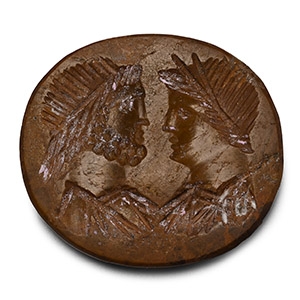
Late Roman Carnelian Double Portrait Gemstone
4th century A.D.Sold for (Inc. bp): £338
A brown oval intaglio with two facing male busts, both diademed and togate, the left bust bearded, possibly depicting Serapis and Horus. 3.38 grams, 24 mm
Mr F.D. collection, acquired on the European art market, 1975 to present. This lot is accompanied by an illustrated lot declaration signed by the Head of the Antiquities Department, Dr Raffaele D’Amato.
