
Loading, please wait...


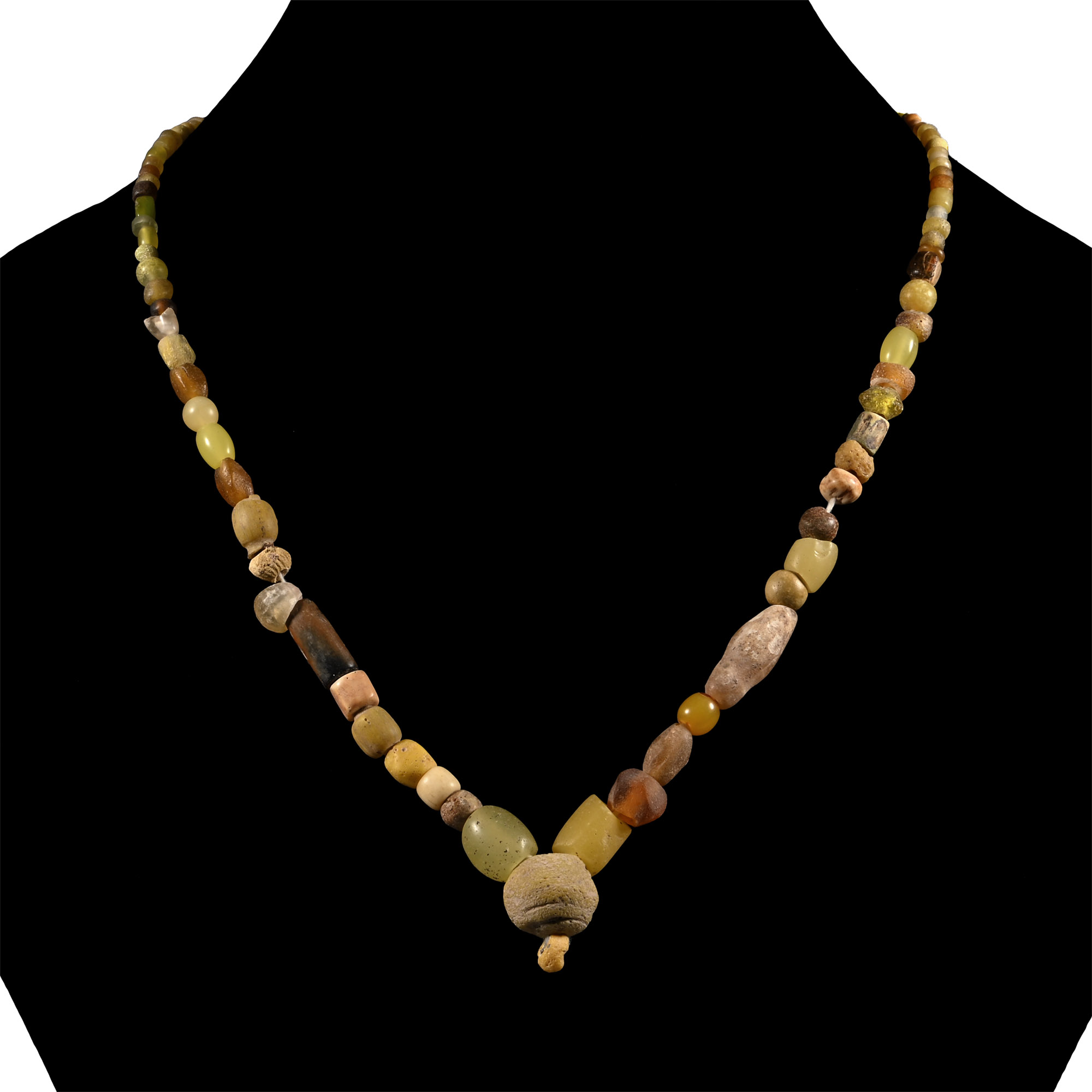
LOT 0825
Roman Yellow Glass Bead Necklace String
1ST-4TH CENTURY A.D. AND LATER
16 3/8 in. (35.5 grams, 41.5 cm).
A designer necklace composed of mainly oblate and barrel-shaped beads, central feature composed of a large spherical bead with a small annular bead below. [No Reserve]
ProvenanceAcquired 1980-2015.
Ex Abelita family collection.
This lot is accompanied by an illustrated lot declaration signed by the Head of the Antiquities Department, Dr Raffaele D’Amato.
TimeLine Auctions follows a vetting process to ensure the authenticity and legality of all items, reinforcing our commitment to integrity and responsible trading. Each antiquity, antique, and coin lot undergoes thorough examination by a vetting committee of at least ten external specialists, professional trade association members, scientists, and archaeologists: Our Vetting Process
AUCTIONS:
TimeLine is a leading auction house specialising in antiquities, ancient art, collectables, natural history, coins, medals, and books. Our auctions offer museums, collectors, historians, and enthusiasts the opportunity to acquire unique and historically significant pieces.
-
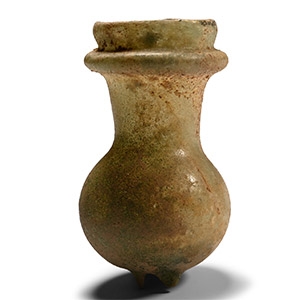
Roman Green Glass Vessel
1st-2nd century A.D.Sold for (Inc. bp): £59
Toilet bottle with pinched base, flared neck and carination below the mouth, rounded rim. 28.7 grams, 82 mm
Ex London art market 1990s. From a London, UK, collection. This lot is accompanied by an illustrated lot declaration signed by the Head of the Antiquities Department, Dr Raffaele D’Amato. -
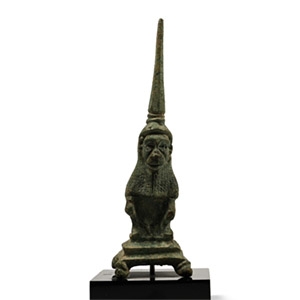
Roman Bronze Pricket Candlestick
2nd-4th century A.D.Sold for (Inc. bp): £1,300
Pricket formed as a baboon crouching on a tiered base with bun feet; the animal wearing a pounced hood with tall octagonal-section spike above; mounted on a custom-made stand. 95.7 grams total, 99 mm including stand
From a Cambridgeshire, UK, collection, 1990s. This lot is accompanied by an illustrated lot declaration signed by the Head of the Antiquities Department, Dr Raffaele D’Amato. -
.jpg)
Roman Bronze Horse Whorl Brooch
3rd-4th century A.D.Sold for (Inc. bp): £130
With horse-head decoration to each arm, each head with punched ring-and-dot eye, and a similar motif to the centre; catchplate and hinged pin to verso. 14.9 grams, 41 mm
Ex German art market, 2000s. Acquired from an EU collector living in London. From the collection of Surrey, UK, gentleman. This lot is accompanied by an illustrated lot declaration signed by the Head of the Antiquities Department, Dr Raffaele D’Amato.
