
Loading, please wait...
LOT 0146
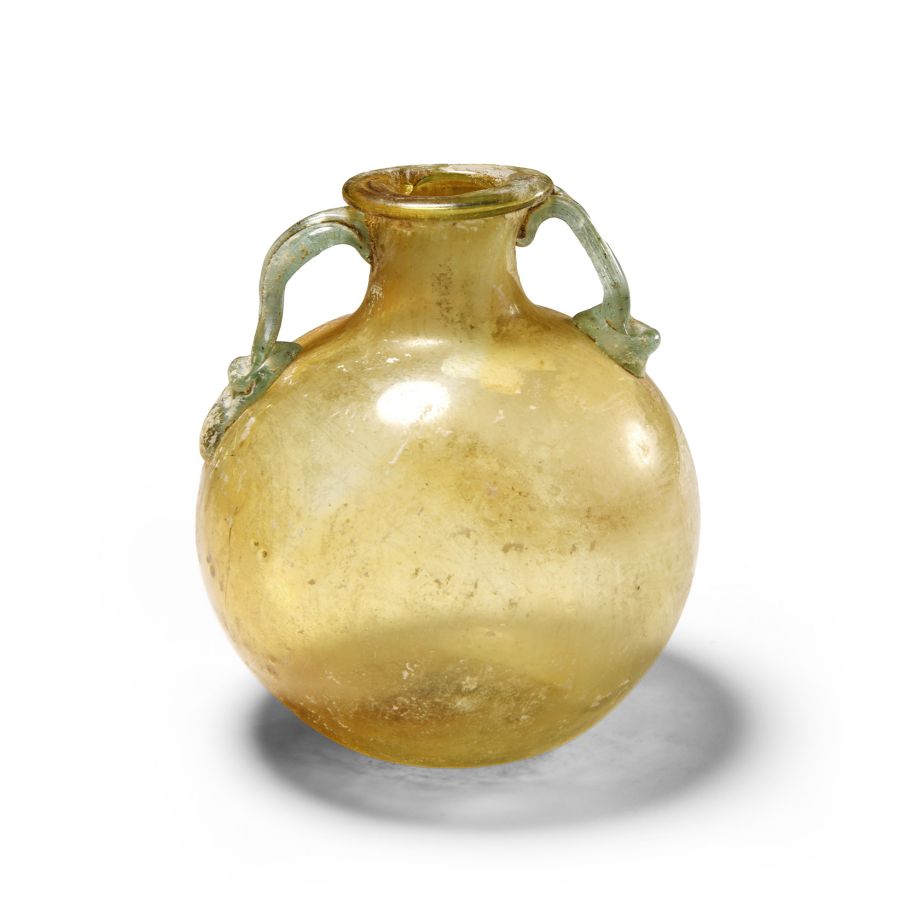
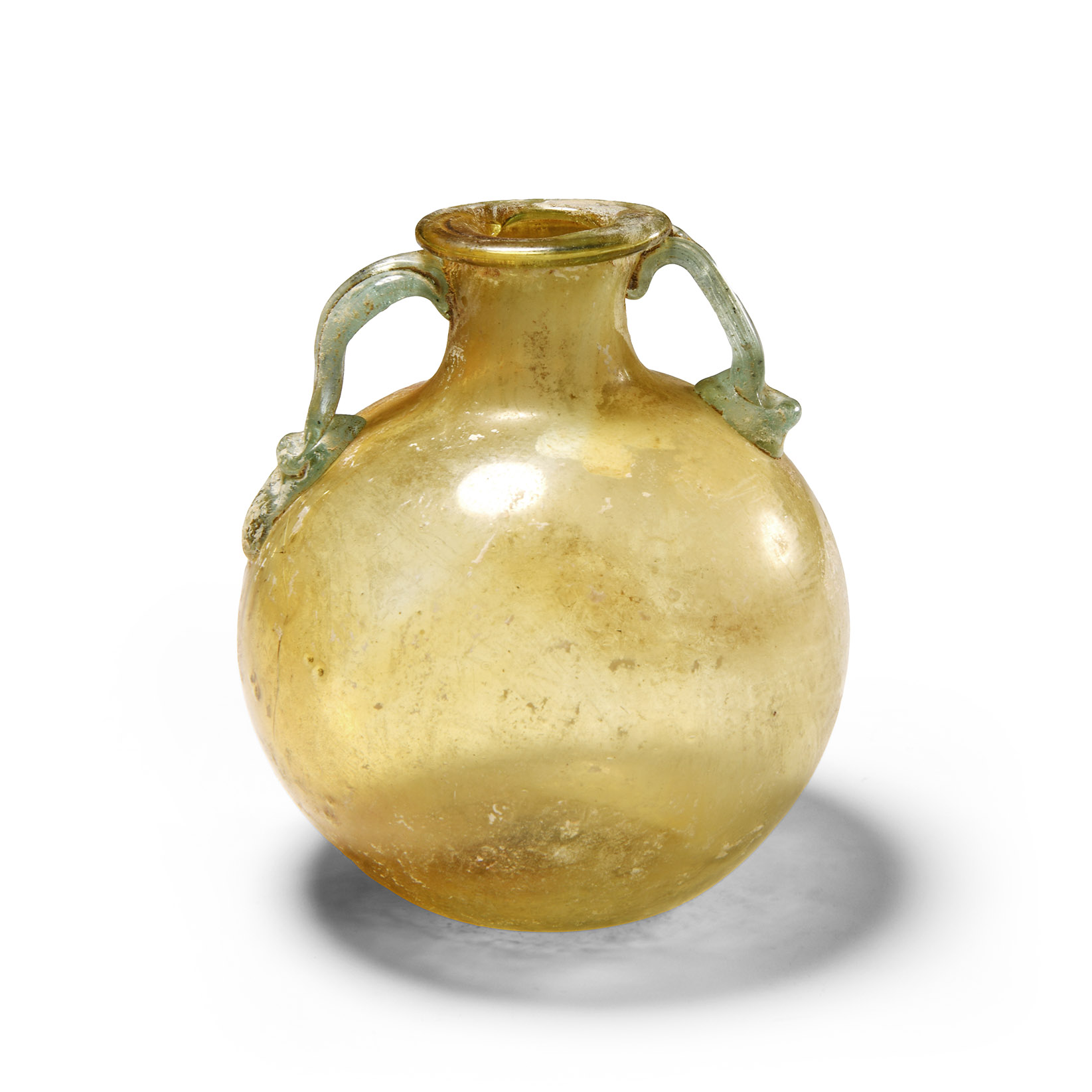
Roman Yellow Glass Alabastron
1ST-2ND CENTURY A.D.
4 in. (66.2 grams, 10.1 cm).
Globular body with slightly dimpled base, short neck, everted rim, applied pale green handles
ProvenanceAcquired 1980-2015.
Ex Abelita family collection.
TimeLine Auctions follows a vetting process to ensure the authenticity and legality of all items, reinforcing our commitment to integrity and responsible trading. Each antiquity, antique, and coin lot undergoes thorough examination by a vetting committee of at least ten external specialists, professional trade association members, scientists, and archaeologists: Our Vetting Process
AUCTIONS:
TimeLine is a leading auction house specialising in antiquities, ancient art, collectables, natural history, coins, medals, and books. Our auctions offer museums, collectors, historians, and enthusiasts the opportunity to acquire unique and historically significant pieces.
LOT 0146
Roman Yellow Glass Alabastron
Estimate £800 - 1,000€930 - 1,160 (for guidance only)$1,080 - 1,350 (for guidance only)
-
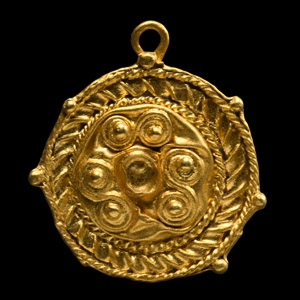
Roman Gold Earring Element
2nd-3rd century A.D.Sold for (Inc. bp): £208
Of discoid form with filigree and pellet outer border, crimped and twisted wire borders within, central filigree scrolls with granules, central circular cell; suspension bar and loop applied to reverse. 1.95 grams, 20 mm
From the collection of a North American gentleman, formed in the 1990s. -
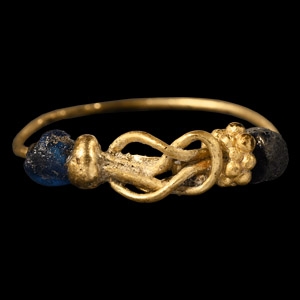
Roman Gold Hercules Knot Ring with Beads
1st century A.D.Sold for (Inc. bp): £260
With slender wire shank formed into a knot for the bezel, blue glass seed beads to the shoulders and a gold collar with applied granule detailing. 0.99 grams, 17.07 mm overall, 15.75 mm internal diameter (approximate size British F 1/2, USA 3, Europe 4.3, Japan 4)
From a late Japanese specialist collector, 1970-2000s. -
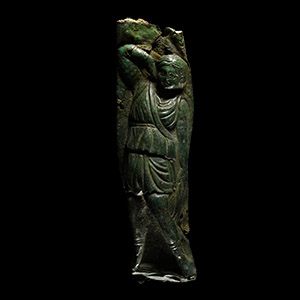
Roman Bronze Military Staff Finial with Standing Figure
1st century A.D.Sold for (Inc. bp): £572
Sheet bronze with repoussé design of a youthful maiden standing with her right hand raised to her hair, let hand relaxed caressing a draped textile banner; wearing a palla gathered at the waist and bloused, with a strap to the right shoulder. 21.8 grans, 11.2 cm
Acquired 1980-2015. Ex Abelita family collection.
