
Loading, please wait...
Details
LOT 248504
Roman Wooden Tablet with Testamentary Dispositions
4TH CENTURY A.D.
5 1/2 x 6 3/8 in. (27 grams, 14 x 16.1 cm).
A square tablet with Latin writing on twelve rows. [No Reserve]
Provenance
Acquired by Albert Sfez in the early 1950s.
Formerly the property of Monsieur Alain Sfez, a Belgian collector; acquired by gift from his father, Albert Sfez, in 1965.
Acquired by a London dealer in 1973.
From an important London collection since 1975; thence by descent.
Literature
See Bowman, A.K., Life and letters on the Roman frontier: Vindolanda and its people, London, 1994, for discussion of the uses of Roman writing tablets; Rothenhoefer, P., Neue römische Rechtsdokumente aus dem Byzacena-Archiv / New Roman Legal Documents from the Byzacena Archive, (forthcoming).
Footnotes
Wax tablets written in Greek or Latin, were used by Romans as account registers (codices accepti et expensi); for transactions (for example, the tablets of the banker Lucius Caecilius Iucundus found in Pompeii); for lists of goods, inventories, and notes to be kept and archived; for Roman magistrates to annotate the salient events of their bureaucratical activities; for writing letters; for drawing up legal texts of various kinds: legacies, declarations of births and citizenship, reports of trials and diplomata militaria.
CONDITIONVETTING:
TimeLine Auctions follows a vetting process to ensure the authenticity and legality of all items, reinforcing our commitment to integrity and responsible trading. Each antiquity, antique, and coin lot undergoes thorough examination by a vetting committee of at least ten external specialists, professional trade association members, scientists, and archaeologists: Our Vetting Process
AUCTIONS:
TimeLine is a leading auction house specialising in antiquities, ancient art, collectables, natural history, coins, medals, and books. Our auctions offer museums, collectors, historians, and enthusiasts the opportunity to acquire unique and historically significant pieces.
LOT 248504
Roman Wooden Tablet with Testamentary Dispositions
Estimate £1,500 - 2,000€1,740 - 2,320 (for guidance only)$2,030 - 2,700 (for guidance only)
Opening Bid
£5 (EUR 6; USD 7) +BP*
RELATED LOTS
-

Romano-British Lead Gaming Die
England, 1st-3rd century A.D.Estimate: £30 - 40 (+bp*)
Opening Bid: £5
Cuboid type with lightly-impressed pellet markings. 6.42 grams, 9 mm
Found UK. From the collection of a Bedfordshire, UK, lady. -
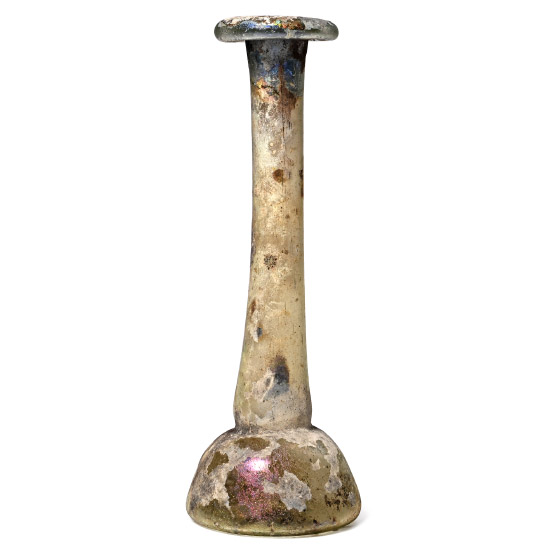
Roman Glass Candlestick Vial
1st-3rd century A.D.Estimate: £100 - 140 (+bp*)
Opening Bid: £50
With a low conical body and slightly convex wall, dimple base; tall cylindrical neck flaring to a thick everted rim. 24 grams, 14 cm
Acquired in the 1990s from London dealerships and auction houses. From the Lonson collection. -
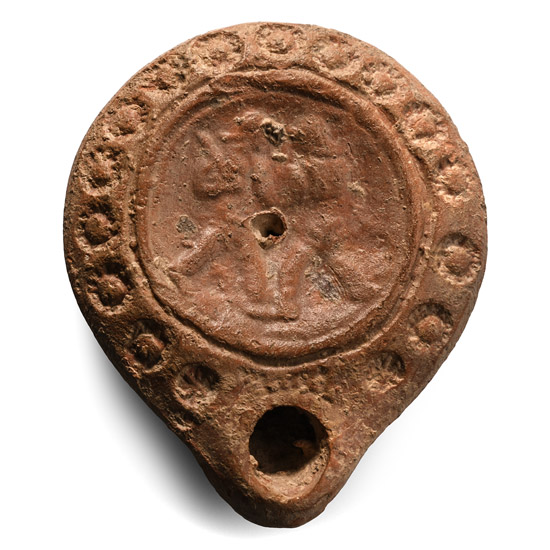
Roman Terracotta Oil Lamp with Fighting Gladiators
2nd century A.D.Estimate: £200 - 300 (+bp*)
Opening Bid: £100
Broad and squat with short stub nozzle, concentric rings to the base, row of impressed annulets to the shoulder, discus with central filler hole; low-relief scene of two murmillo gladiators in combat. 62 grams, 82 mm
From a German private collection, 1980s. Property of an Essex, UK, gentleman.
