
Loading, please wait...
_900x900.jpg "Roman White Chalcedony Cameo of a Theatrical Mask")
_200x200.jpg "Roman White Chalcedony Cameo of a Theatrical Mask")
.jpg "Roman White Chalcedony Cameo of a Theatrical Mask")
LOT 0088
Roman White Chalcedony Cameo of a Theatrical Mask
1ST CENTURY A.D.
1/2 in. (1.07 grams, 13 mm).
Showing a New Comedy, 'Cook' type theatre mask with an open mouth; supplied with a museum-quality impression.
ProvenancePrivate English collection, formed between the late 1970s and early 1990s.
Private collection, London, UK.
Cf. Spier, J., Ancient Gems and finger Rings, catalogue of the collections, the J. Paul Getty Museum, Malibu, 1992, no.292, for a gemstone with a similar bearded comic mask in three-quarter profile.
FootnotesMiniature models of theatrical masks were mass-produced in the ancient world, and can be linked with the Dionysiac mysteries, in association with funeral rites, illustrating the Dionysiac thiasos, the orgiastic world of satyrs and maenads. However, they can also be miniature models of masks linked with highbrow Sophoclean and Euripidean tragedy, or with so-called Middle Comedy, which now only survives in fragments.
CONDITIONTimeLine Auctions follows a vetting process to ensure the authenticity and legality of all items, reinforcing our commitment to integrity and responsible trading. Each antiquity, antique, and coin lot undergoes thorough examination by a vetting committee of at least ten external specialists, professional trade association members, scientists, and archaeologists: Our Vetting Process
AUCTIONS:
TimeLine is a leading auction house specialising in antiquities, ancient art, collectables, natural history, coins, medals, and books. Our auctions offer museums, collectors, historians, and enthusiasts the opportunity to acquire unique and historically significant pieces.
-
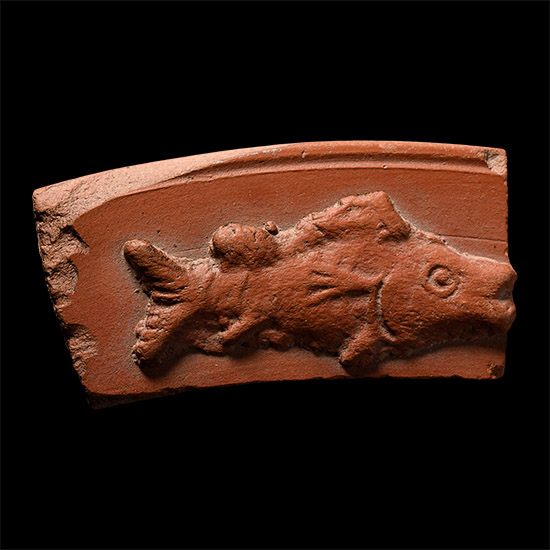
Roman Redware Sherd with Ornate Fish
Circa 4th century A.D.Sold for (Inc. bp): £91
Rectangular fragment from the lip of a large plate depicting an exotic fish with a sail-like dorsal fin and open jaws. 1.34 grams, 48 mm
Ex P. Chapman collection, 1980s-1990s. -
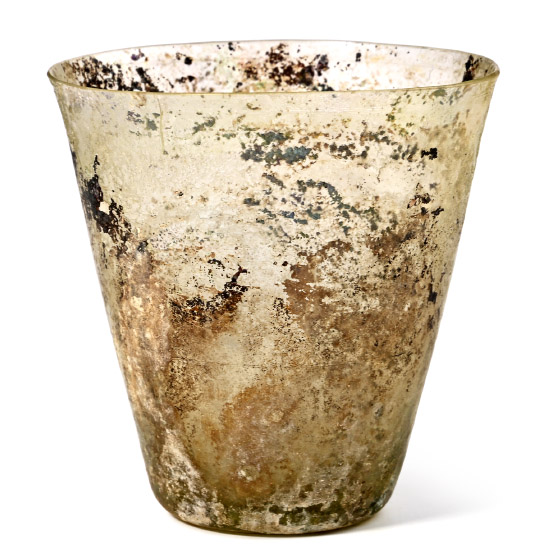
Roman Iridescent Glass Flared Kalathos
3rd-4th century A.D.Estimate: £300 - 400 (+bp*)
Opening Bid: £150
Conical body with a flat base. 67 grams, 79 mm
Acquired in the 1990s from London dealerships and auction houses. From the Lonson collection. -
.jpg)
Roman Bronze Decorated Statuette Base
1st century A.D.Sold for (Inc. bp): £130
Broad and squat with stepped rim, low-relief foliage decoration, tondo with attachment point for figure. 37.9 grams, 55 mm
Previously belonging to J Stewart, Mayfair, London, UK; acquired in the early 1980s. Property of a Middlesex gentleman.
