
Loading, please wait...
LOT 0968
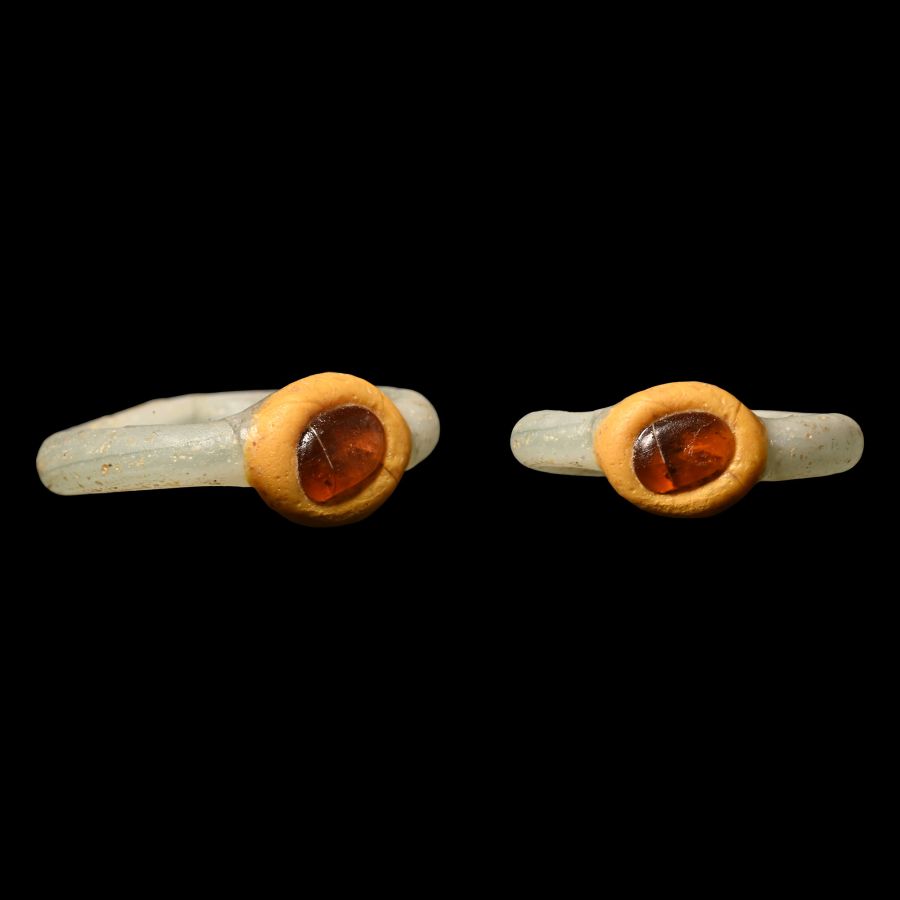
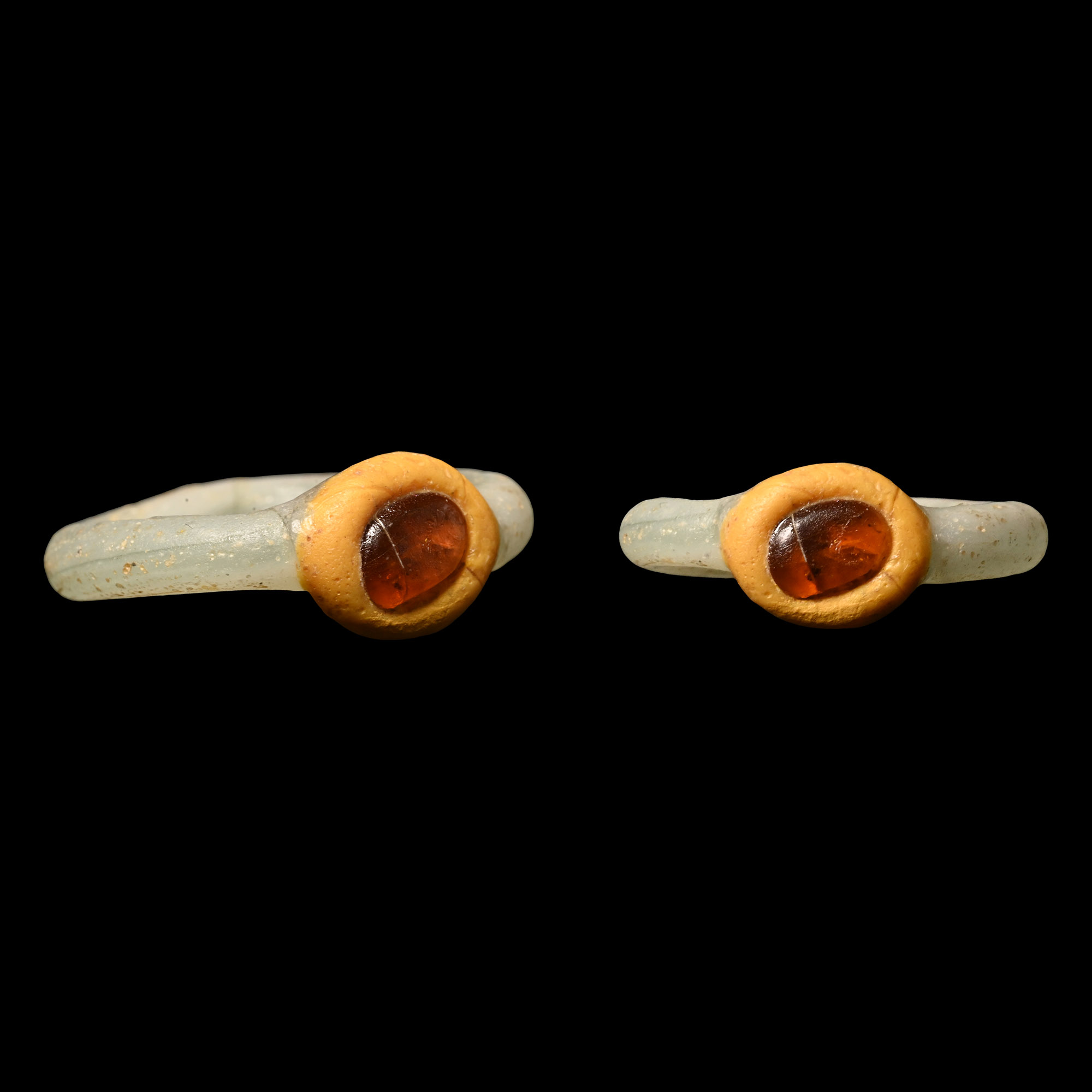
Roman White and Orange Glass Ring with Amber Inlay
2ND-3RD CENTURY A.D.
7/8 in. (1.30 grams, 21.04 mm overall, 13.89 x 14.39 mm internal diameter (approximate size British F, USA 2 3/4, Europe 3.67, Japan 3)).
Round section hoop, oval bezel set with amber.
ProvenanceWith J.Bagot Ancient Art, Barcelona, Spain.
The Nico F.Bijnsdorp Collection (NFB 282), acquired from the above, 4 June 2013.
Acquired on the English art market.
Bagot 2012, The Hephaestus Legacy, no.513 & 515.
CONDITIONTimeLine Auctions follows a vetting process to ensure the authenticity and legality of all items, reinforcing our commitment to integrity and responsible trading. Each antiquity, antique, and coin lot undergoes thorough examination by a vetting committee of at least ten external specialists, professional trade association members, scientists, and archaeologists: Our Vetting Process
AUCTIONS:
TimeLine is a leading auction house specialising in antiquities, ancient art, collectables, natural history, coins, medals, and books. Our auctions offer museums, collectors, historians, and enthusiasts the opportunity to acquire unique and historically significant pieces.
-
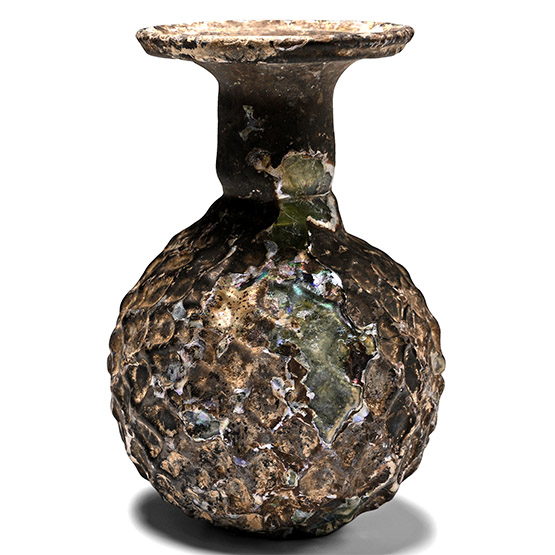
Roman Glass 'Sprinkler' Vessel with Net Pattern
4th century A.D.Sold for (Inc. bp): £910
Mould-blown with reticulated pattern to the body; the rim everted with applied trail beneath; iridescent surface. 70 grams, 10 cm
Ex Hanan Suszm, Herzliyya Pituah. Ex Archaeological Center, Jerusalem, 2015. -
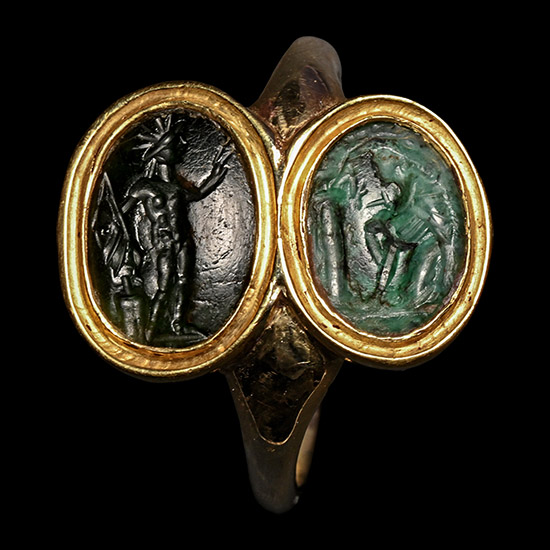
Roman Chrome Chalcedony Intaglios in Double Bezel Gold Ring
1st-2nd century A.D.Sold for (Inc. bp): £2,340
One intaglio carved with the image of an elderly man seated before a column, the other with the figure of the sun god Sol; set into a later gold ring; supplied with a museum-quality impression. 7.59 grams, 23.27 mm overall, 19.02 mm internal diameter (approximate size British Q, USA 8, Europe 17.49, Japan 16)
Private collection, Europe. Acquired on the English art market. This lot has been checked against the Interpol Database of stolen works of art and is accompanied by search certificate number no.13131-248400.
Chrome chalcedony was widely used in jewellery and seals throughout the Roman Empire; it disappeared from use in the ancient world in the 2nd century when the known deposits were mined out. -
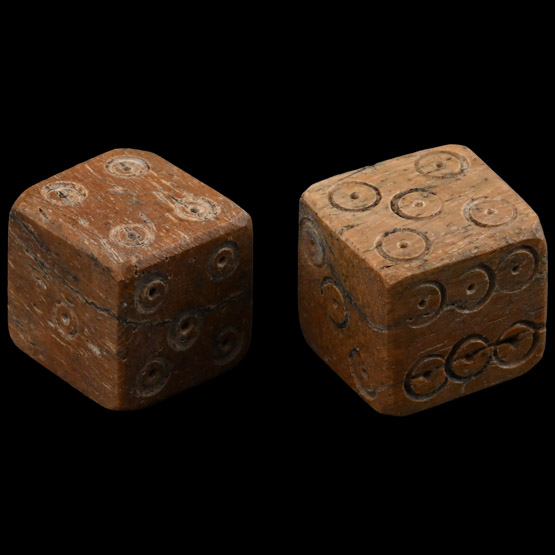
Roman Bone Gaming Dice Pair
3rd-4th century A.D.Sold for (Inc. bp): £390
Cuboid type, each with ring-and-dot markings disposed 1:6, 2:5, 3:4. 8.42 grams total, 13 mm each
From a Cambridgeshire, UK, collection, 1990s.
