
Loading, please wait...
LOT 0798
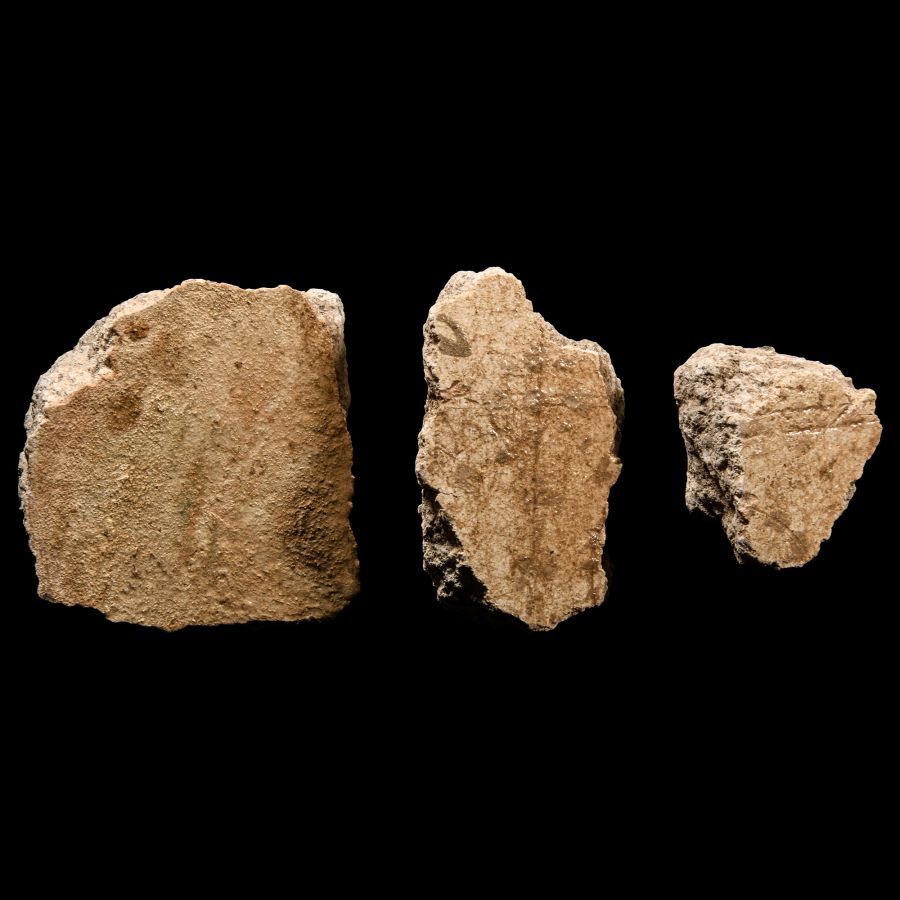
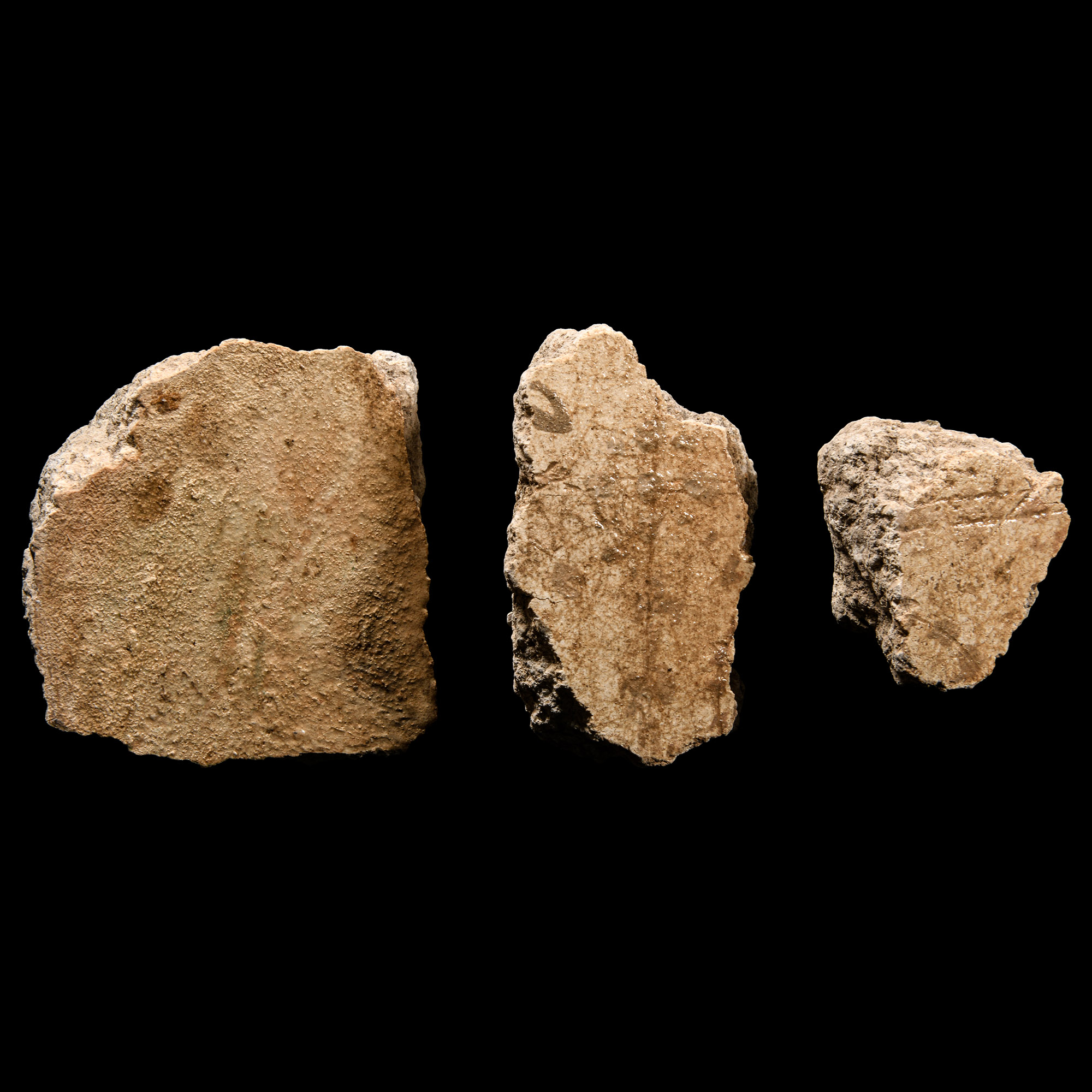
Roman Wall Plaster Fragment Group
CIRCA 1ST CENTURY A.D.
2 1/4 - 3 5/8 in. (494 grams total, 58-91 mm).
Each amorphous fragment displaying one prepared surface and retaining Roman cement to the reverse. [3, No Reserve]
ProvenanceFrom a North London collection in the 1990s.
CONDITIONTimeLine Auctions follows a vetting process to ensure the authenticity and legality of all items, reinforcing our commitment to integrity and responsible trading. Each antiquity, antique, and coin lot undergoes thorough examination by a vetting committee of at least ten external specialists, professional trade association members, scientists, and archaeologists: Our Vetting Process
AUCTIONS:
TimeLine is a leading auction house specialising in antiquities, ancient art, collectables, natural history, coins, medals, and books. Our auctions offer museums, collectors, historians, and enthusiasts the opportunity to acquire unique and historically significant pieces.
-
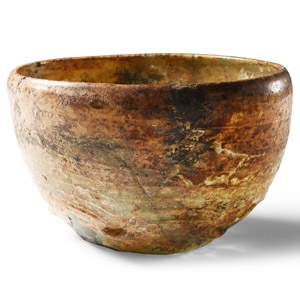
Roman Green Glass Cup with Trail
1st-2nd century A.D.Sold for (Inc. bp): £195
Tapered green bowl with dimpled base and slightly inverted rim; spiral trail to the upper body, formed as pinched arches below; heavily restored. 52 grams, 94 mm wide
Acquired 1970s-1996. Property of a North American collector. London collection, 2016. -
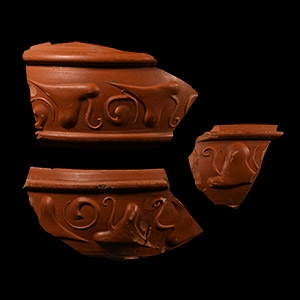
Roman Samian Ware Decorated Bowl Fragments
2nd century A.D.Sold for (Inc. bp): £46
Each fragment decorated with foliate motifs in raised relief to the external sidewall. 195 grams total, 6.7-11.8 cm
Found Bedfordhire, 1980s. Property of a Kempston, UK gentleman. -
.jpg)
Heavy Roman Silvered Bronze Bowl
4th-5th century A.D.Sold for (Inc. bp): £364
With wide flat bottom decorated inside with incised concentric circles, the internal concave surface retaining some of the silver coating; the central umbilicus still visible. 860 grams, 22.8 cm wide
From the family collection of a Surrey gentleman since before 1960.
This vessel (lanx) was part of Roman and provincial bronze instrumentum domesticum, i.e. culinary or domestic utility ware. Such cooking vessels are rare in such condition: some are found in central and northern Gaul, Italy, in Pannonia, Germany and in Britain. Specimens of precious metal, richly decorated and chiselled, sometimes adorned with reliefs, are mentioned by ancient authors such as Cicero (Ad Att., VI,1,13) and Ovid (Pont.III,5,20).
