
Loading, please wait...
LOT 0730
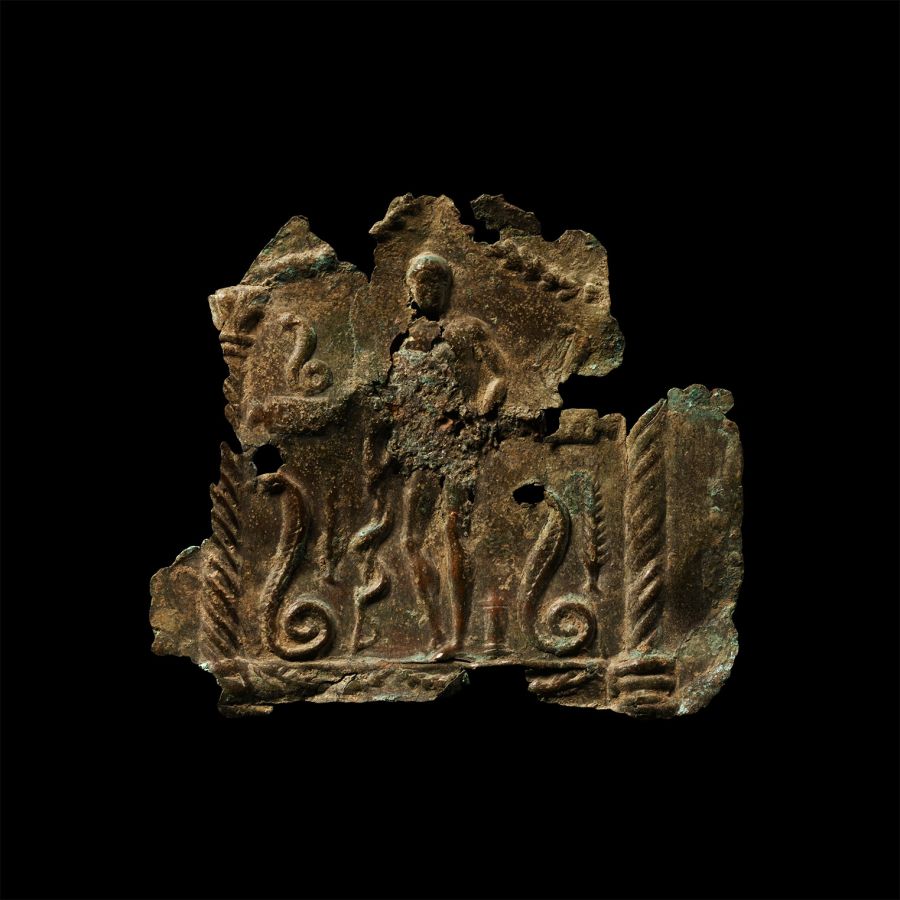
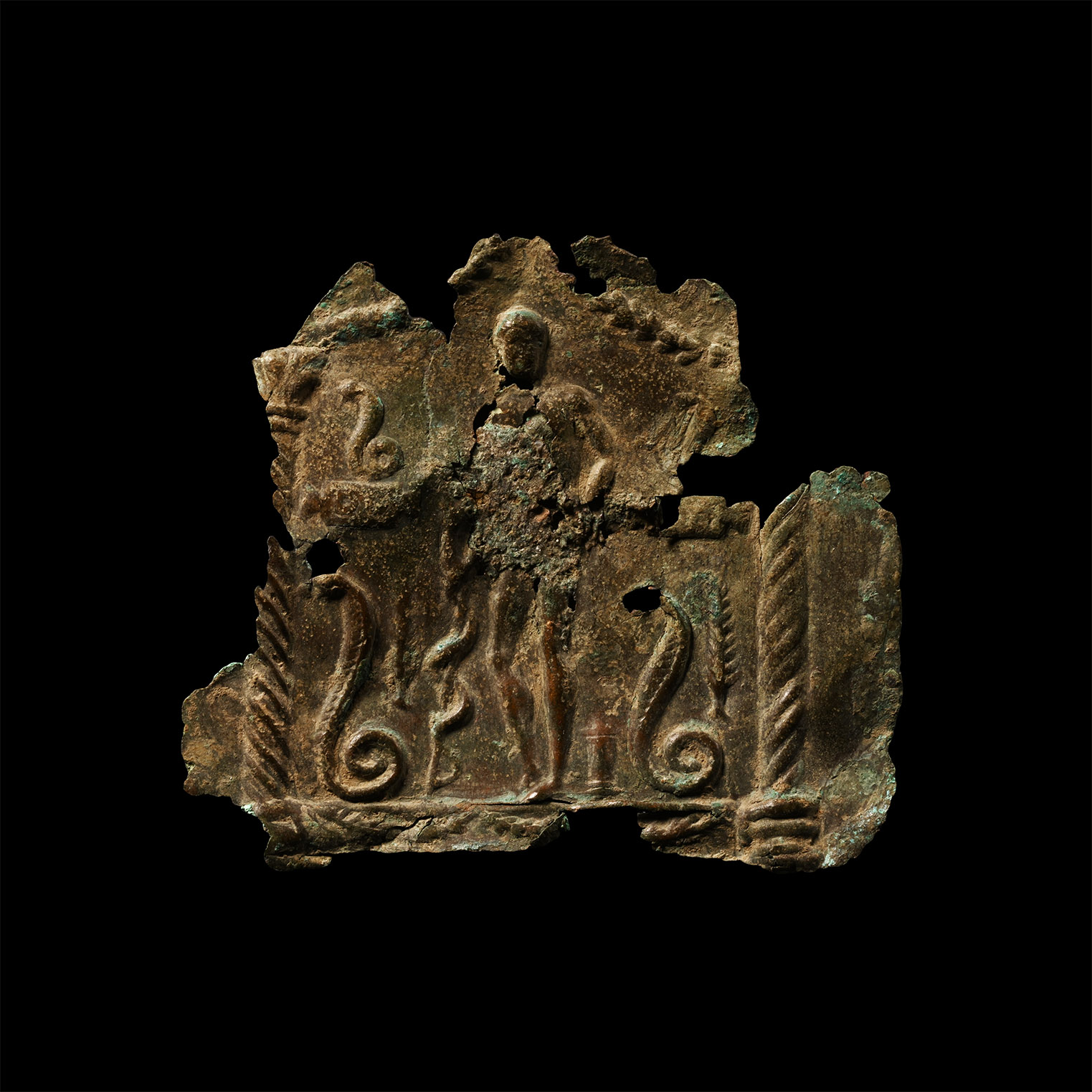
Roman Votive Plaque with Asclepius
2ND-3RD CENTURY A.D.
2 in. (2.67 grams, 52 mm).
A sheet-bronze votive plaque fragment displaying repoussé ornament, likely the god Asclepius holding his snake-entwined staff beneath a columned arch, additional snakes raising their heads and necks beside and above him, other enigmatic symbols in the field.
ProvenanceAcquired before 2000.
From the collection of a European gentleman living in the UK.
Cf. similar style plaque in the British Museum, an embossed plaque of Athena, inventory number 2003.0901.23.
FootnotesAesculapius, god of medicine, the Greek Asclepius, son of Apollo and a mortal, Coronis, is often accompanied by a snake, a symbol of wisdom and healing power. Aesculapius-Asclepius is also often represented with the staff having a snake wrapped around it.
CONDITIONTimeLine Auctions follows a vetting process to ensure the authenticity and legality of all items, reinforcing our commitment to integrity and responsible trading. Each antiquity, antique, and coin lot undergoes thorough examination by a vetting committee of at least ten external specialists, professional trade association members, scientists, and archaeologists: Our Vetting Process
AUCTIONS:
TimeLine is a leading auction house specialising in antiquities, ancient art, collectables, natural history, coins, medals, and books. Our auctions offer museums, collectors, historians, and enthusiasts the opportunity to acquire unique and historically significant pieces.
-
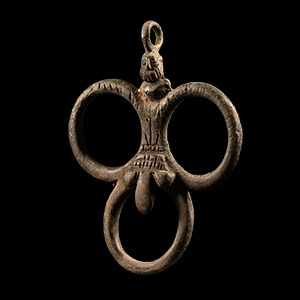
Roman Phallic Pendant with Loops
Circa 1st century A.D.Sold for (Inc. bp): £260
A bronze horse harness pendant composed of three concentric circles surmounted by a bearded figure to which is attached a suspension ring, the body of the figure engraved and ending with phallic attributes. 52.4 grams, 83 mm
Acquired before 2000. From the collection of a European gentleman living in the UK.
Roman military harness included pendants of various typology, ranging from lunules to other decorative elements, often phallic, with the possible intention of protecting the animal. This particular pendant could be connected to the bearded image of the god Priapus. -
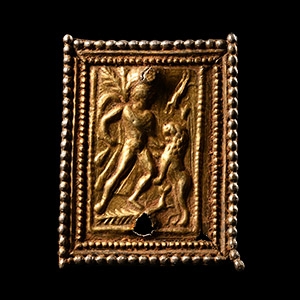
Roman Silver-Gilt Military Belt Plate with Hercules Killing the Nemean Lion
4th century A.D.Sold for (Inc. bp): £1,040
A silver-gilt strap tongue from military belt, rectangular shape with soldered bead on the back, a repoussé work representing Hercules, naked and covered only by a mantle, killing the Nemean lion, a palm of victory under the feet of the hero, a dog attacking the lion from above, foliage around the scene. 18.5 grams, 53 mm
Acquired 1980-2015. Ex Abelita family collection.
The belt fitting finds parallels with parts of belt from Asia Minor, today at the British Museum, inv. EC 252-254. These kind of plates, decorative and engraved with classical scenes, can be dated possibly to the age of Theodosius I. The quality of decoration can support the thesis of their belonging to officers of the Comitatus (the Imperial mobile army). -
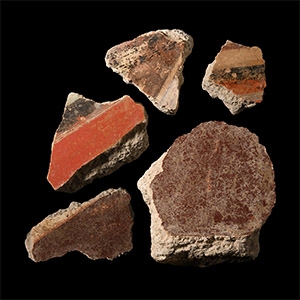
Roman Fresco Painted Wall Plaster Collection
1st century A.D.Sold for (Inc. bp): £65
A mixed group of coarse white wall plaster fragments from a fresco, with painted designs in white, ochre, claret, crimson and blue. 1.36 kg total, 7.3-15.3 cm
Fair condition.
Acquired in the 19th century. Jeger collection, Switzerland. Property of an English gentleman.
