
Loading, please wait...

LOT 0183
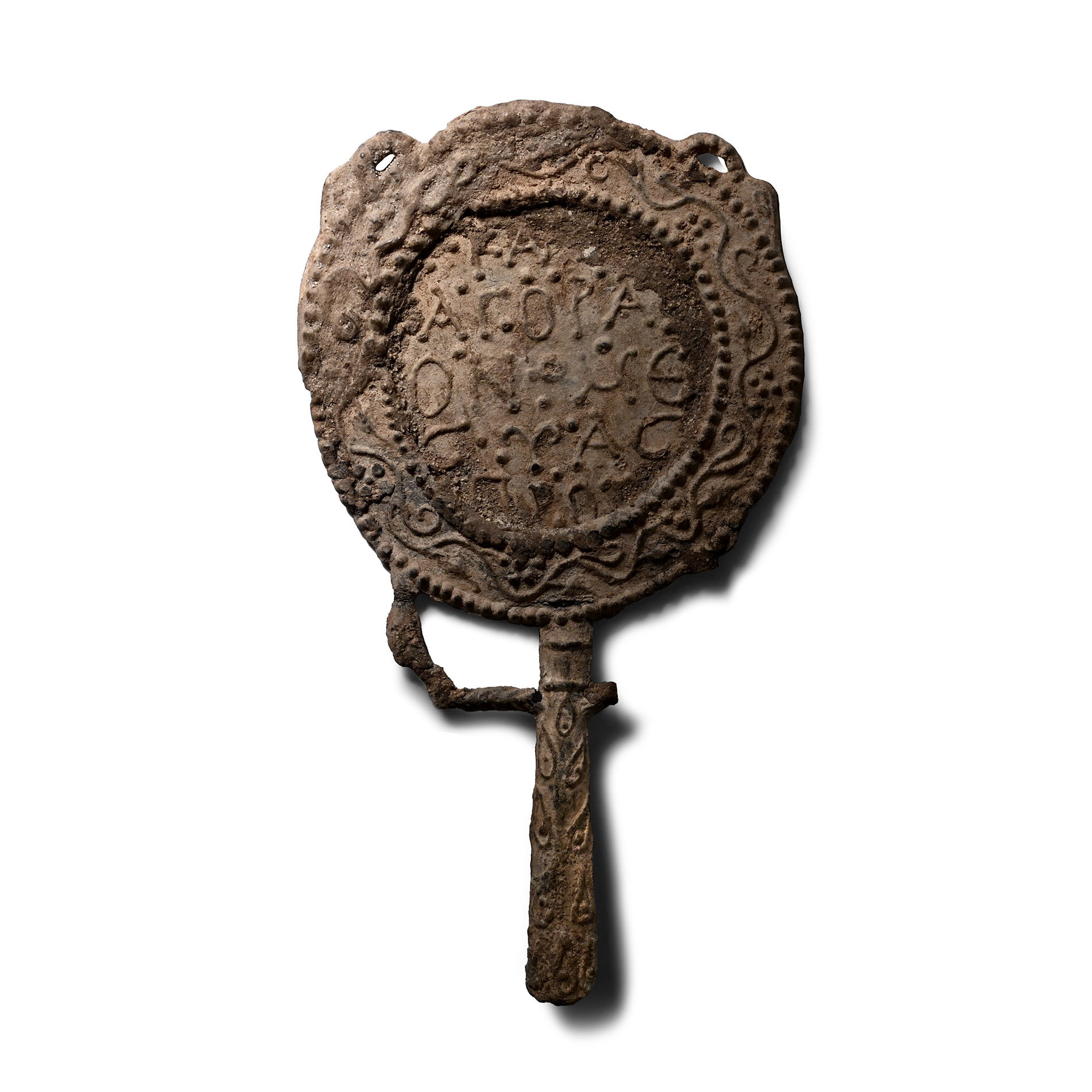
Roman Votive Lead Mirror with Inscription
3RD CENTURY A.D.
5 1/2 in. (100 grams, 14 cm).
Comprising a discoid plate with running scroll border, lentoid-section handle with raised teardrop decoration; applied central reflective disc with Greek inscription to the reverse.
ProvenanceAcquired in the mid 1980s-1990s.
Private collection, Switzerland, thence by descent.
Private collection, since the late 1990s.
Cf. Spasić Durić, D., Град Виминацијум-The city of Viminacium, (in Serbian), Pozarevac, 2015, fig.78, for similar.
CONDITIONTimeLine Auctions follows a vetting process to ensure the authenticity and legality of all items, reinforcing our commitment to integrity and responsible trading. Each antiquity, antique, and coin lot undergoes thorough examination by a vetting committee of at least ten external specialists, professional trade association members, scientists, and archaeologists: Our Vetting Process
AUCTIONS:
TimeLine is a leading auction house specialising in antiquities, ancient art, collectables, natural history, coins, medals, and books. Our auctions offer museums, collectors, historians, and enthusiasts the opportunity to acquire unique and historically significant pieces.
-
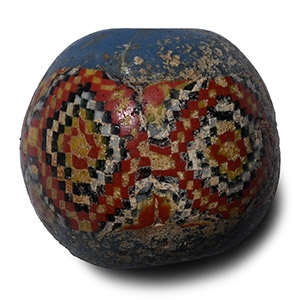
Roman Blue Chequerboard Glass Bead
1st-3rd century A.D.Sold for (Inc. bp): £780
Spherical-shaped with band of millefiori in red, white, blue and yellow, blue borders. 4.48 grams, 15 mm
From the private collection of Mr K.A., acquired in the 1980s. -
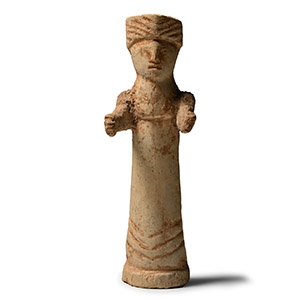
Roman Bone Female Pin Head
Eastern Roman, 3rd century B.C.-2nd century A.D.Estimate: £300 - 400 (+bp*)
Opening Bid: £120
Carved and polished female figure with chignon hairstyle, floor-length robe with stepped rim, separate arms fixed in place; old collector's label 'IV / 00 33'. 32.1 grams, 11.4 cm
with a London, UK gallery, 1971-early 2000s. -
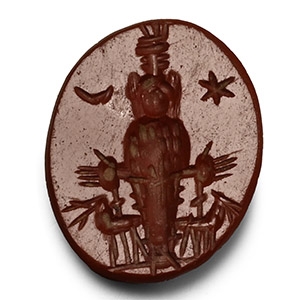
Roman Red Jasper Gemstone of Diana of Ephesus
2nd-3rd century A.D.Sold for (Inc. bp): £572
Intaglio figure of Diana facing, flanked by a crescent moon and star, a deer to each side. 0.50 grams, 12 mm
From the collection of a London, UK, gentleman, 1970s onwards.
