
Loading, please wait...
_900x900.jpg "Roman Vine Leaf Mount")
_200x200.jpg "Roman Vine Leaf Mount")
.jpg "Roman Vine Leaf Mount")
LOT 0779
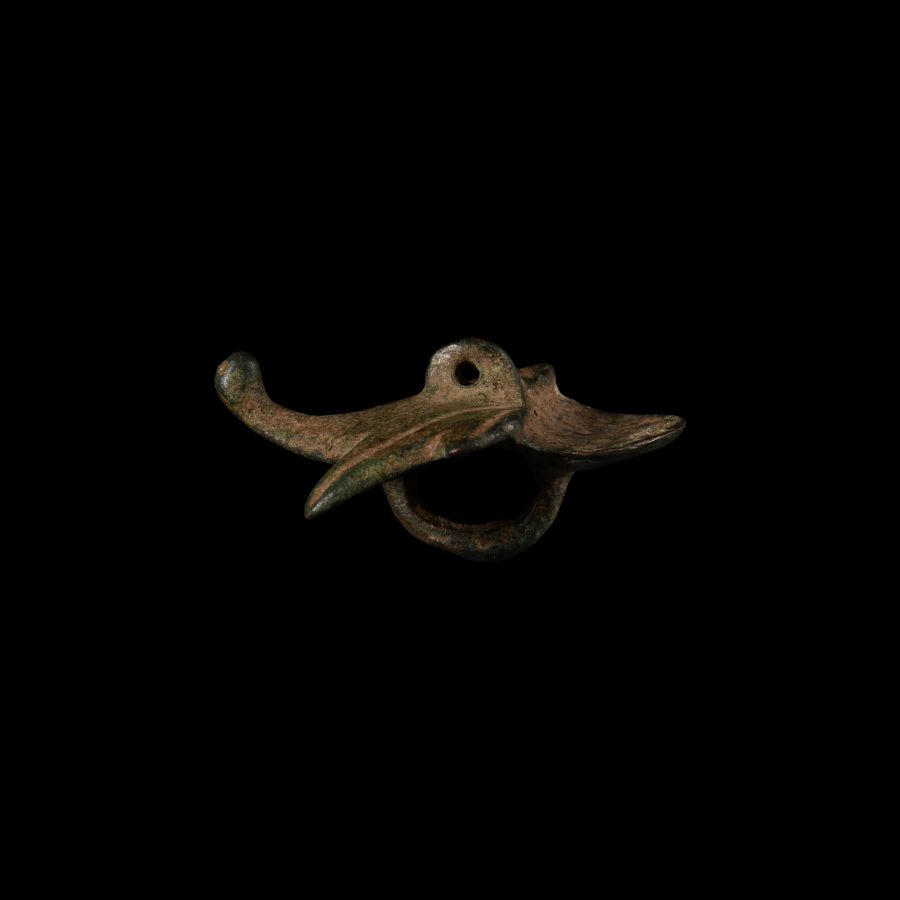
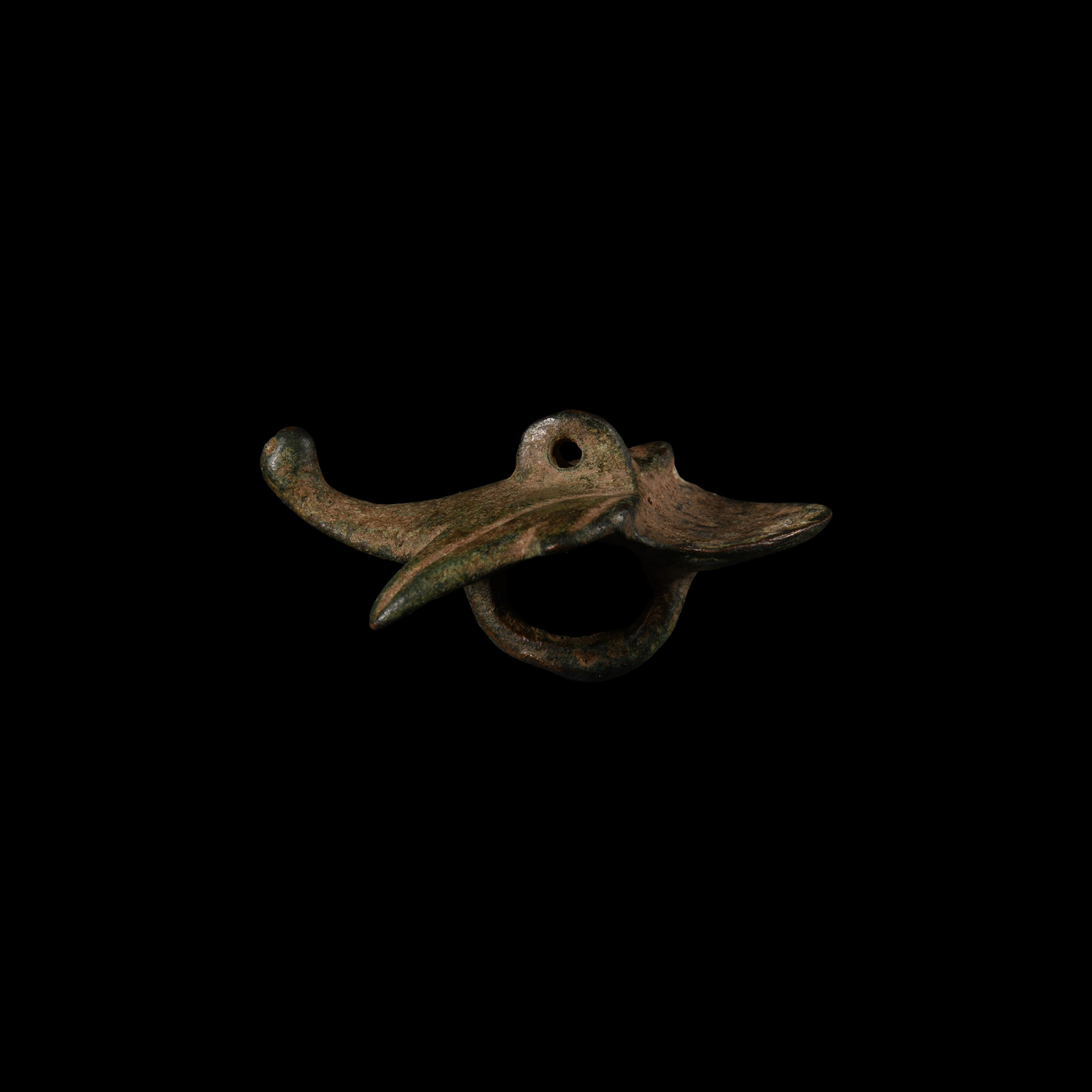
Roman Vine Leaf Mount
1ST-2ND CENTURY A.D.
2 1/4 in. (57 grams, 58 mm).
A bronze mount or harness fitting in the form of a vine leaf displaying simple stylised detailing to the front face, together with a raised perforated lug and scooped plaque above; suspension loop to the reverse. [No Reserve]
ProvenanceFound Cambridgeshire in the 1990s.
LiteratureCf. The British Museum's Portable Antiquities Scheme database, record id. NMS-DA253B, for similar, identified as a harness fitting.
CONDITIONTimeLine Auctions follows a vetting process to ensure the authenticity and legality of all items, reinforcing our commitment to integrity and responsible trading. Each antiquity, antique, and coin lot undergoes thorough examination by a vetting committee of at least ten external specialists, professional trade association members, scientists, and archaeologists: Our Vetting Process
AUCTIONS:
TimeLine is a leading auction house specialising in antiquities, ancient art, collectables, natural history, coins, medals, and books. Our auctions offer museums, collectors, historians, and enthusiasts the opportunity to acquire unique and historically significant pieces.
-
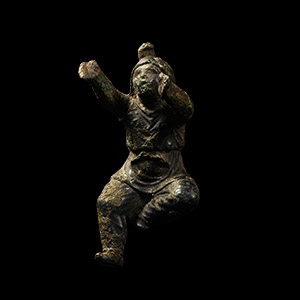
Roman Figure of a Boy in Oriental Dress
1st-2nd century A.D.Estimate: £1,000 - 1,400 (‡+bp*)
Opening Bid: £500
A bronze figure of a child sitting with one leg extended and the other bent beneath the body, arms raised in supplication; loose fitting trousers and knee-length tunic gathered at the waist, boots on the feet and a separate pointed hood on the head; Scythian or similar costume. 14.6 grams, 61 mm
Private Swiss collection, acquired 2001. -
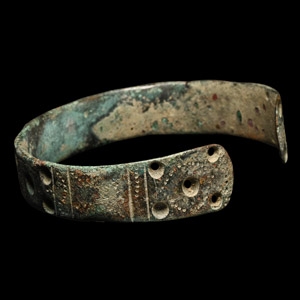
Roman Decorated Bracelet
Circa 1st-2nd century A.D.Sold for (Inc. bp): £72
A copper-alloy penannular bracelet with rounded terminals, decorated with incised and pierced geometric motifs comprising alternating panels of five piercings with dotted roundels to each, vertical bands creating rectangular panels, populated with pricked dot arches and waves. 23.9 grams, 59 mm
Acquired since the 1970s. Ex property of an Austrian private collector. -
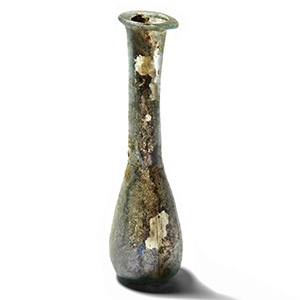
Roman Translucent Unguentarium
1st-3rd century A.D.Sold for (Inc. bp): £72
A clear glass unguentarium with a pear-shaped body, tubular neck and rolled rim; iridescent surfaces. 35 grams, 13.5 cm high
French collection, 1960s-early 2000s. From an important Paris gallery, France.
