
Loading, please wait...
LOT 0178
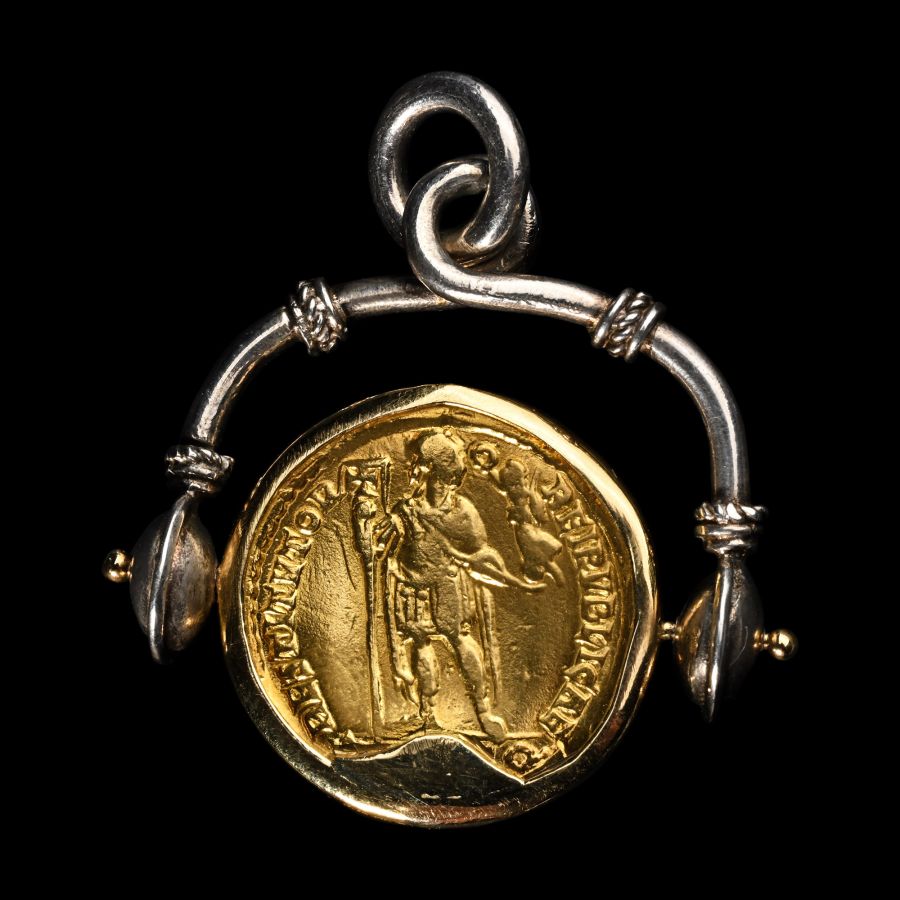
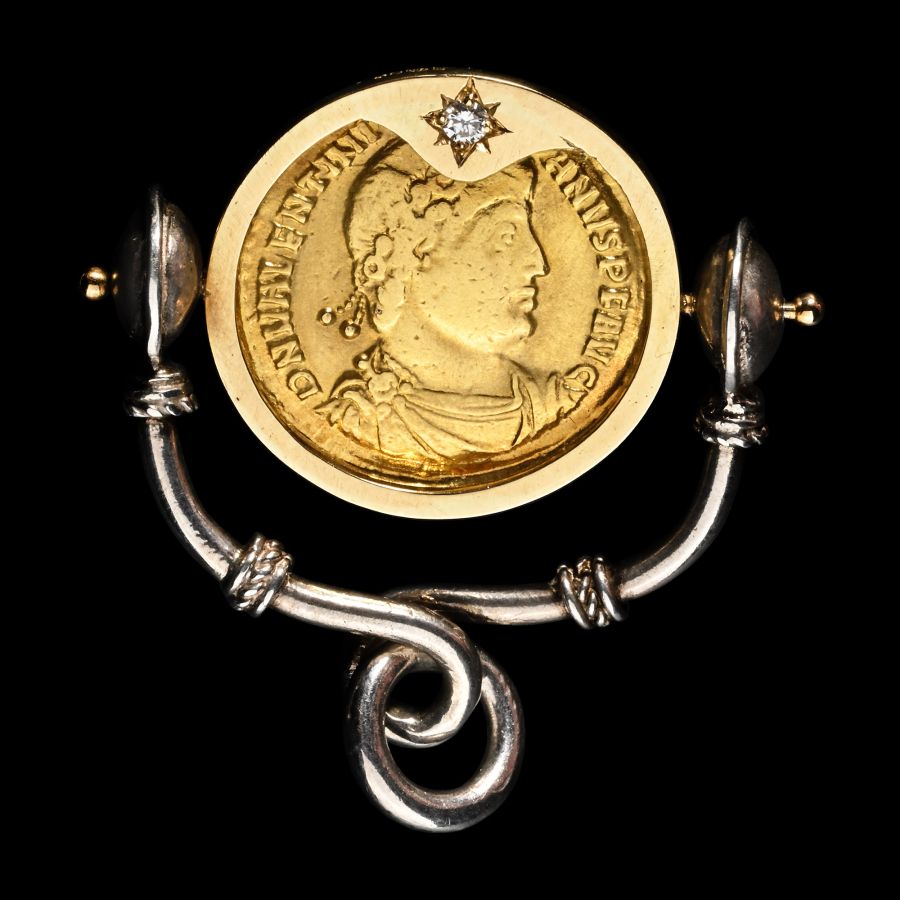
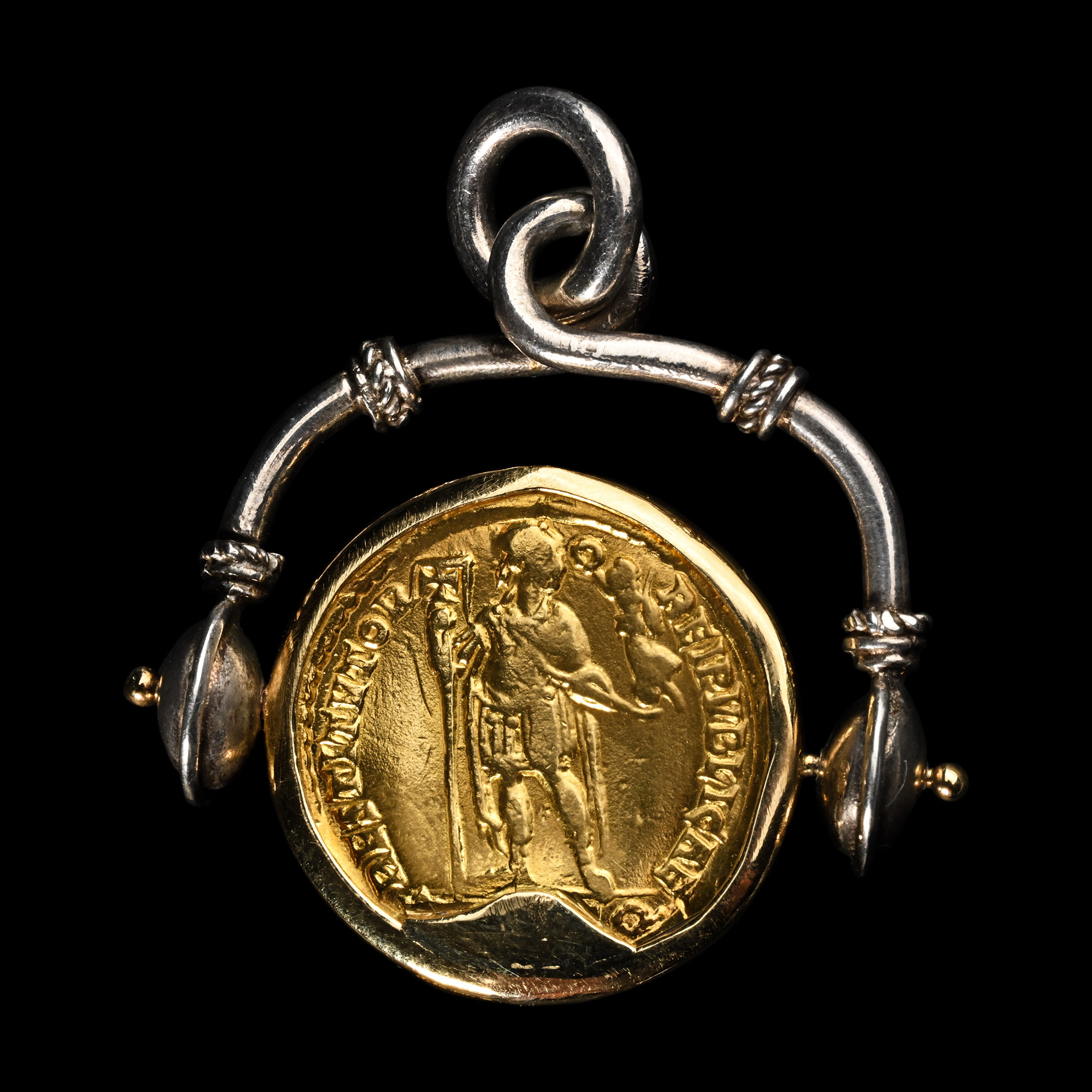
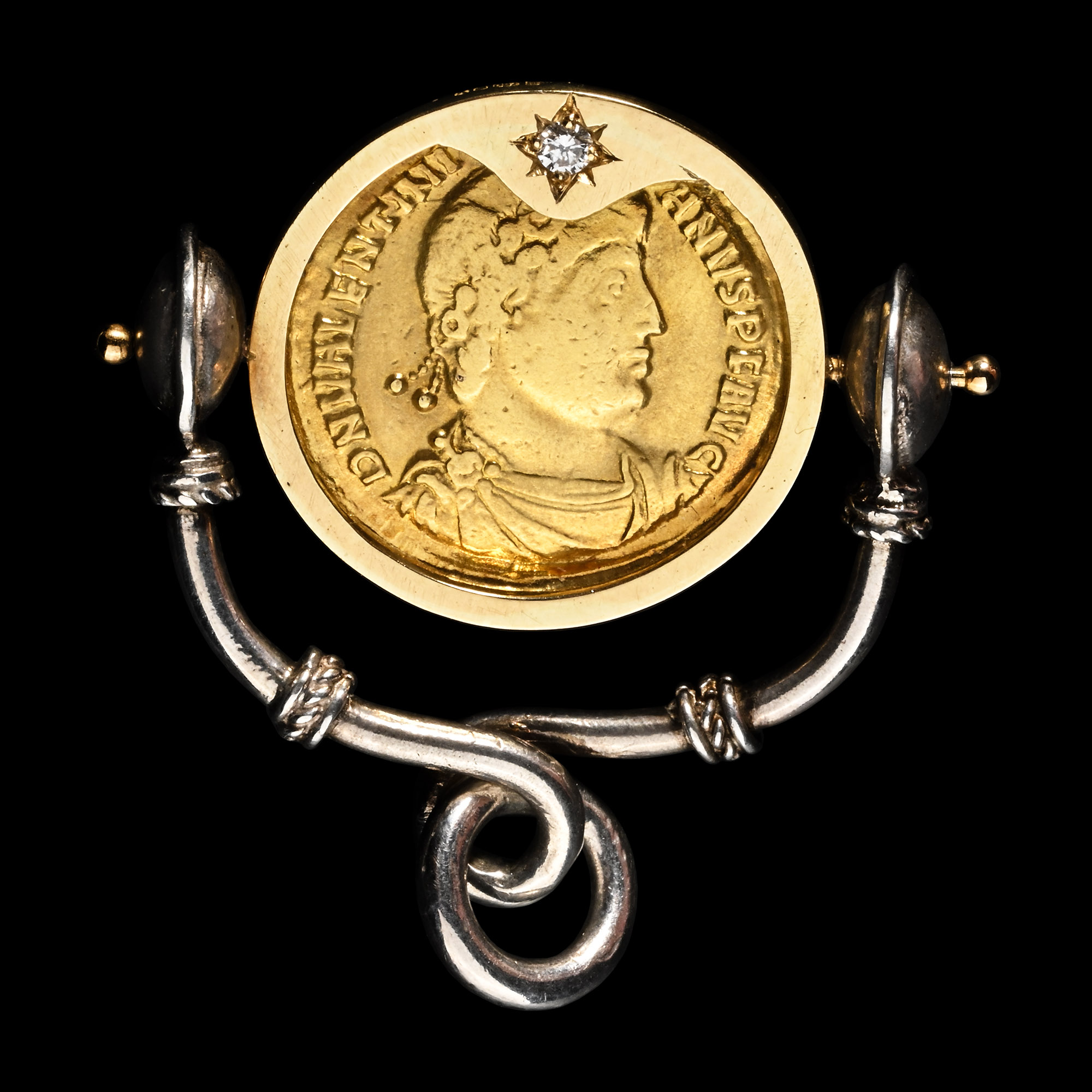
Roman Valentinian I Gold Solidus Coin Set in Gold Pendant Mount
364-375 A.D. AND LATER
1 1/2 in. (12.05 grams, 38 mm).
Obverse with pearl-diademed bust with legend 'DN VALENTINIANVS PF AVG', the reverse with 'RESTITVTOR REIPVBLICAE', Valentinian standing facing, holding a labarum and Victory on globe; set in a later 18 carat gold mount with diamond, set in a silver swivel mount with ropework decoration.
ProvenanceAcquired 1960s-1990s.
From the private collection of the late Alison Barker (1951-2021).
TimeLine Auctions follows a vetting process to ensure the authenticity and legality of all items, reinforcing our commitment to integrity and responsible trading. Each antiquity, antique, and coin lot undergoes thorough examination by a vetting committee of at least ten external specialists, professional trade association members, scientists, and archaeologists: Our Vetting Process
AUCTIONS:
TimeLine is a leading auction house specialising in antiquities, ancient art, collectables, natural history, coins, medals, and books. Our auctions offer museums, collectors, historians, and enthusiasts the opportunity to acquire unique and historically significant pieces.
LOT 0178
Roman Valentinian I Gold Solidus Coin Set in Gold Pendant Mount
Estimate £1,000 - 1,400€1,160 - 1,620 (for guidance only)$1,350 - 1,890 (for guidance only)
-
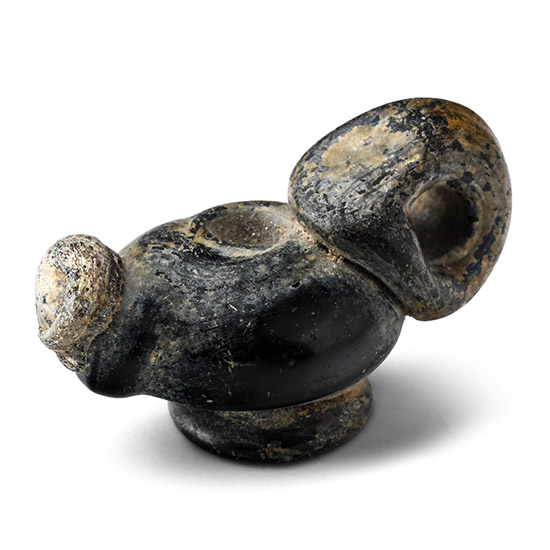
Roman Ceramic Miniature Oil Lamp Pendant
1st-4th century A.D.Estimate: £100 - 140 (+bp*)
Opening Bid: £50
Formed as a small oil lamp with a loop handle to the rear. 3.85 grams, 25 mm
Ex the private collection of the late Mr S.M., London, UK, 1970s-1990s. -
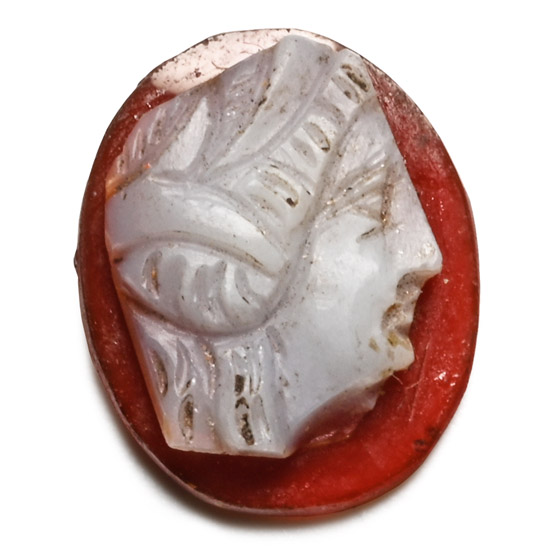
Roman Agate Cameo with Bust of an Empress
Circa 2nd century A.D.Sold for (Inc. bp): £104
An oval gemstone showing a female facing right. 0.26 grams, 9 mm
From the private collection of a European gentleman (1942-2024), formed since the 1970s. -
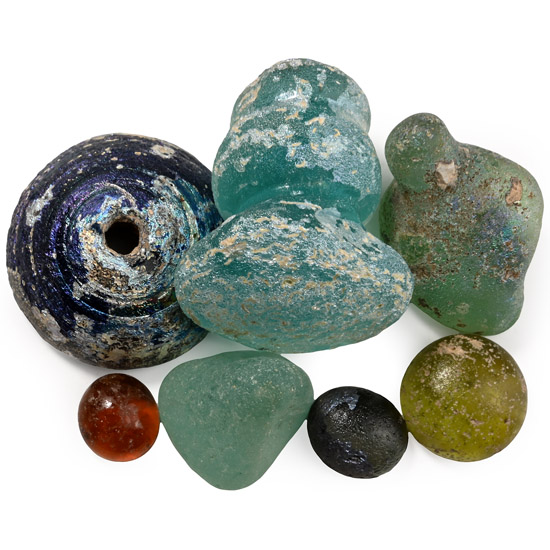
Roman Glass Artefact Collection
1st-4th century A.D.Sold for (Inc. bp): £33
Including aqua glass stopper with knop handle, plano-convex spindle whorl with iridescent surface and other items; probably used as counters in boardgames. 32 grams total, 9-27 mm
From the private collection of Mr Brian Edwards, New Malden, Surrey, UK, formed from the late 1970s-early 1980s; thence by descent. Accompanied by the original collector's data sheet(s) with reference nos.A70, A99, & A118.
