
Loading, please wait...
LOT 0684
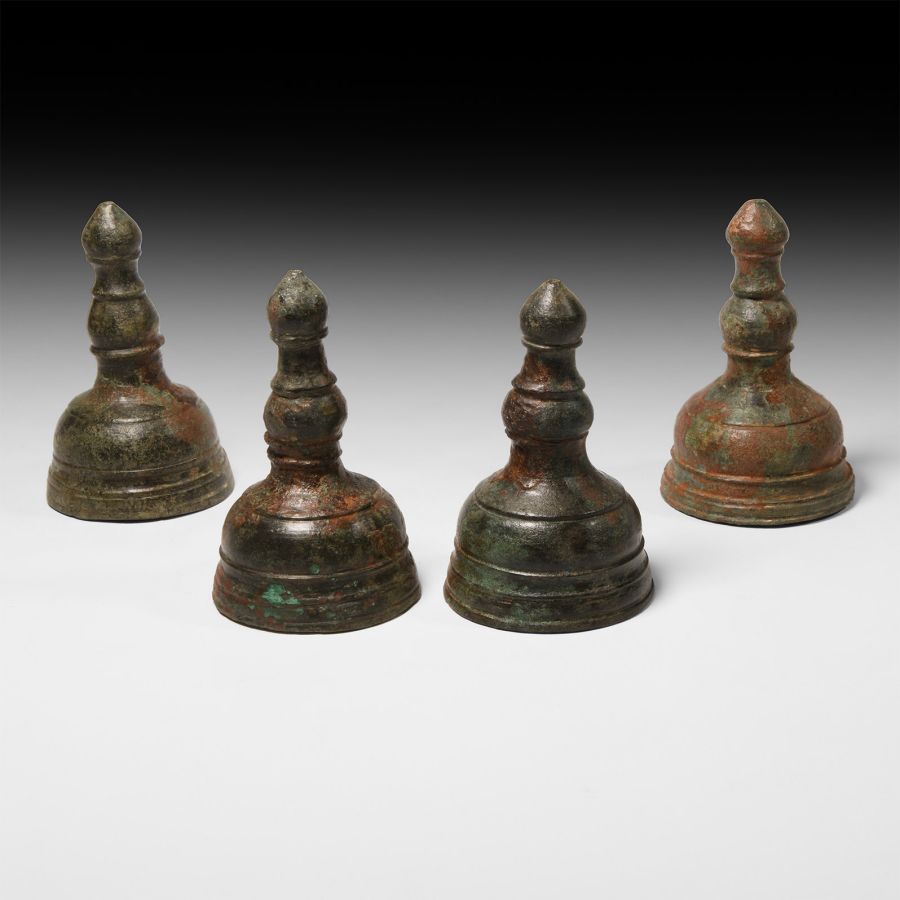
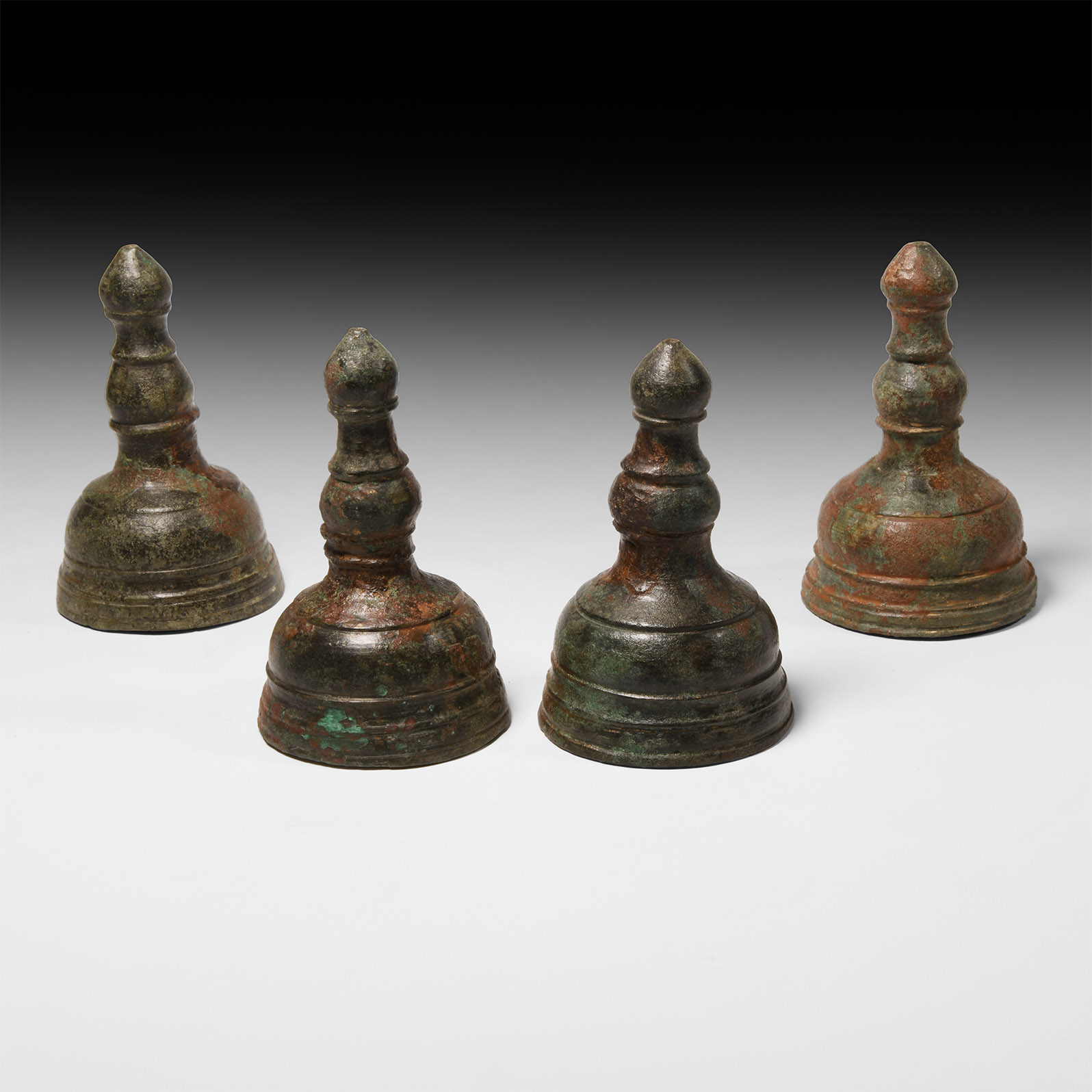
Roman Triclinium Finial Set
1ST-4TH CENTURY A.D.
3 3/4 - 4 in. (1.18 kg total, 9.6-10.1 cm).
A set of four copper-alloy triclinium (bed) finials, each with a bell-shaped body and baluster style finial; hollow to base. [4]
ProvenanceAcquired before 2000.
From the collection of a European gentleman living in the UK.
See Cavalieri, M., 'Ipotesi sulla produzione bronzea dell’Emilia occidentale in età romana' in Santoro, S., Artigianato e produzione nella Cisalpina. Parte I. Proposte di metodo e prime applicazioni, Firenze, 2004, pp.173-198, fig.5.
FootnotesThe Romans, like the Greeks, ate whilst reclined on beds. The eating bed (lectus triclinaris) was a luxury furniture item crafted by carpenters. From the 2nd century B.C., Romans started to create 'lecti aerati, inargentati, inaurati, eborati, testudinei,' i.e. beds made of wood and covered with bronze, silver, gold and ivory fittings (as in our specimens) or with scales of other precious material. Such elements were sometimes sculpted in the shape of an animal protome, or were simply bell-shaped, like our specimens.
CONDITIONTimeLine Auctions follows a vetting process to ensure the authenticity and legality of all items, reinforcing our commitment to integrity and responsible trading. Each antiquity, antique, and coin lot undergoes thorough examination by a vetting committee of at least ten external specialists, professional trade association members, scientists, and archaeologists: Our Vetting Process
AUCTIONS:
TimeLine is a leading auction house specialising in antiquities, ancient art, collectables, natural history, coins, medals, and books. Our auctions offer museums, collectors, historians, and enthusiasts the opportunity to acquire unique and historically significant pieces.
LOT 0684
Roman Triclinium Finial Set
Estimate £400 - 600€460 - 700 (for guidance only)$540 - 810 (for guidance only)
-
.jpg)
Roman Medical Instrument Group
1st-3rd century A.D.Sold for (Inc. bp): £25
A group of two medical instruments comprising: a probe with one thick rounded end and a triangular blade to the other; a probe with one knopped end and a flat spoon or pallette to the other. 26.9 grams total, 12.3-16 cm
Fine condition.
Ex UK art market, 1970s. Property of a London gentleman. -
Roman Statuette of a Bound Barbarian Captive
2nd-4th century A.D.Sold for (Inc. bp): £702
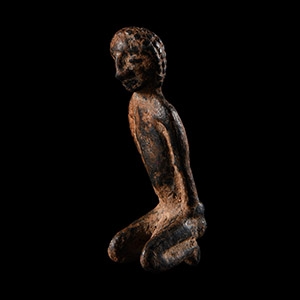
A bronze statuette of a bound Mauritanian prisoner with his hands tied behind his back, naked body with exposed genitals, hair arranged in tight curls. 40 grams, 60 mm high
Acquire in the 1990s. Ex Cambridgeshire, UK, collection.
The face of this bound barbarian, who is forced into a squatting position by the way he is bound, is framed by rich locks betraying his Moorish origin. Numerous statuettes of bound barbarians have been found at the Empire’s outer boundaries. Many have vertical and horizontal bores, which have led to the interpretation that they were ornaments for horse bridles or snaffle fittings. -
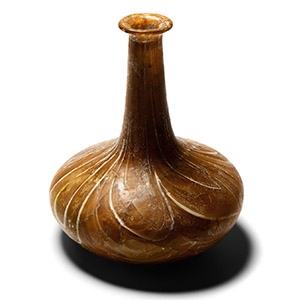
Roman Amber Marbled Glass Vase
4th century A.D.Estimate: £800 - 1,000 (‡+bp*)
Opening Bid: £200
A toffee-coloured glass vase of squat carinated form, slender tapering neck with everted rim, decorative white marbling over the body. 47 grams, 85 mm high
Acquired early 1990s. Ex private American collection; thence by descent. Private collection since 1998.
