
Loading, please wait...
LOT 0621
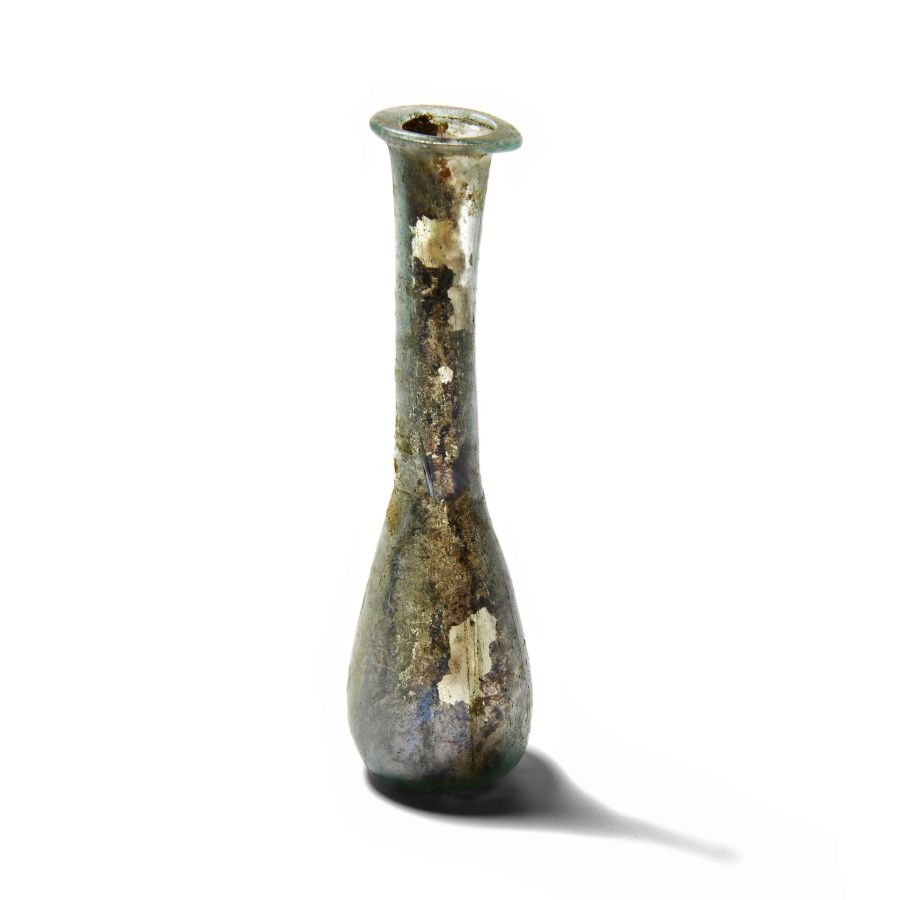
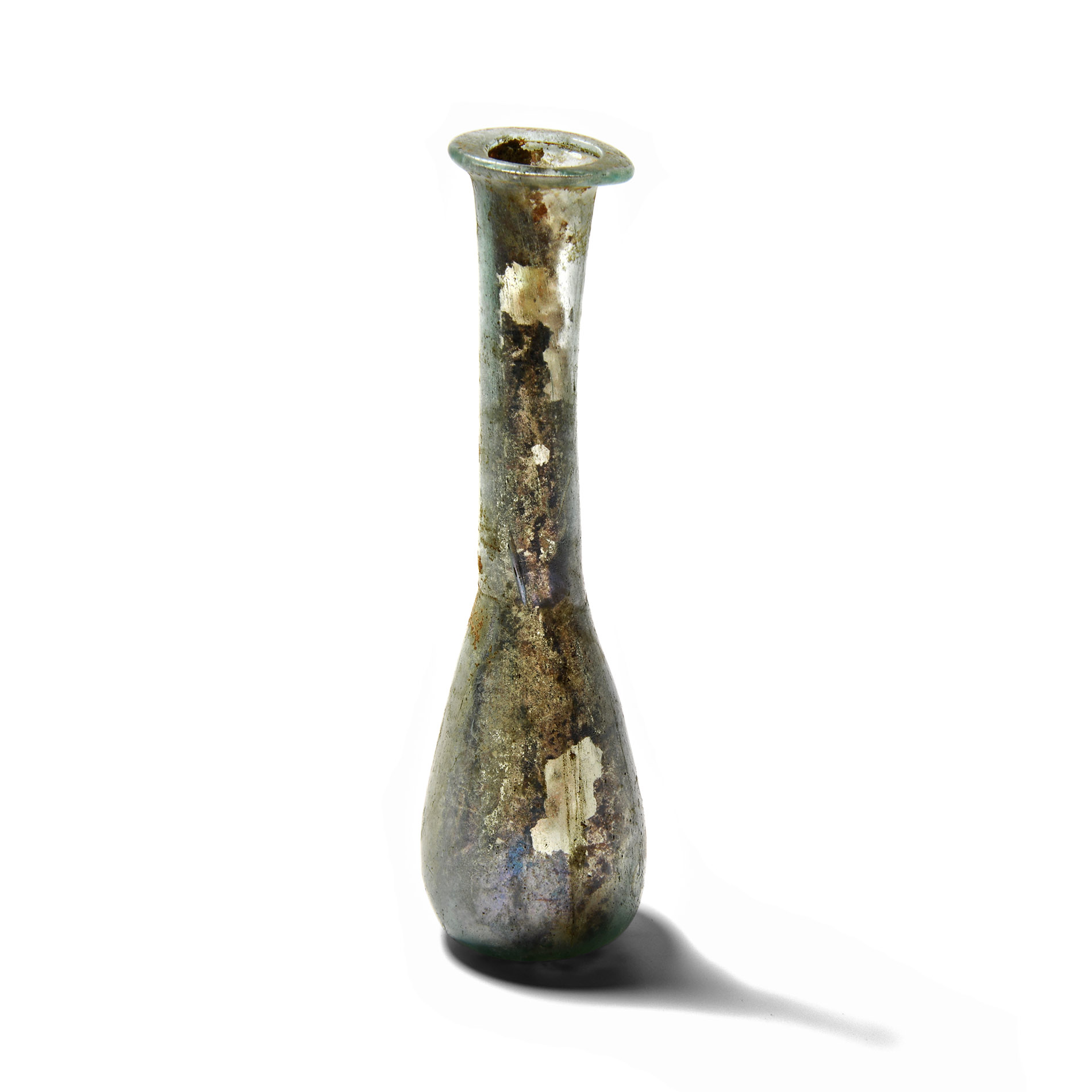
Roman Translucent Unguentarium
1ST-3RD CENTURY A.D.
5 1/4 in. (35 grams, 13.5 cm high).
A clear glass unguentarium with a pear-shaped body, tubular neck and rolled rim; iridescent surfaces. [No Reserve]
ProvenanceFrench collection, 1960s-early 2000s.
From an important Paris gallery, France.
TimeLine Auctions follows a vetting process to ensure the authenticity and legality of all items, reinforcing our commitment to integrity and responsible trading. Each antiquity, antique, and coin lot undergoes thorough examination by a vetting committee of at least ten external specialists, professional trade association members, scientists, and archaeologists: Our Vetting Process
AUCTIONS:
TimeLine is a leading auction house specialising in antiquities, ancient art, collectables, natural history, coins, medals, and books. Our auctions offer museums, collectors, historians, and enthusiasts the opportunity to acquire unique and historically significant pieces.
-
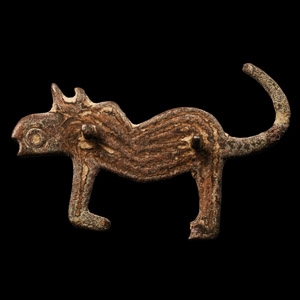
Roman Dog brooch
2nd-3rd century A.D.Estimate: £150 - 200 (+bp*)
Opening Bid: £75
An unusual copper-alloy zoomorphic plate brooch in the shape of a dog with two legs and a long tail, the body characterised by a series of horizontal grooves, raised pins to the front and back, the ones on the back probably for the attachment of the hinged pin. 2.5 grams, 34 mm
Acquire in the 1990s. Ex Cambridgeshire, UK, collection.
This unusual fibula was probably a provincial production. The dog was connected to the Celtic divinities and also with Silvanus, who was associated with healing, hunting, and dogs. -
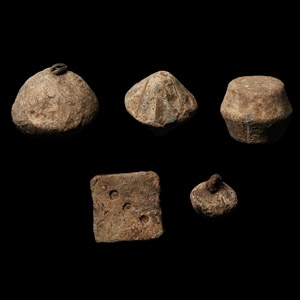
Roman Steelyard and Other Weight Group
1st-4th century A.D.Sold for (Inc. bp): £26
A group of various weights comprising three biconical steelyard weights each with the remains of the iron loop, a barrel-shaped weight with five dots to one end, and a tabular-shaped weight with three large stamped dimples to one fate surface. 478 grams total, 24-34 mm
Found Rodings, Essex, UK. Acquired on the UK antiques market between 1974-1985. Albert Ward collection, Essex, UK. -
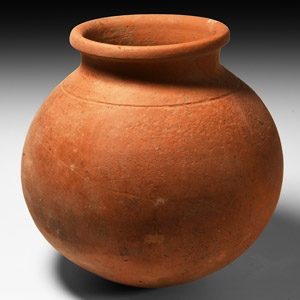
Roman Terracotta Jar
1st-4th century A.D.Sold for (Inc. bp): £182
A bulbous ceramic jar with a short neck and rounded base. 998 grams, 20 cm wide
Acquired 1980-2015. Ex Abelita family collection.
