
Loading, please wait...


LOT 1191
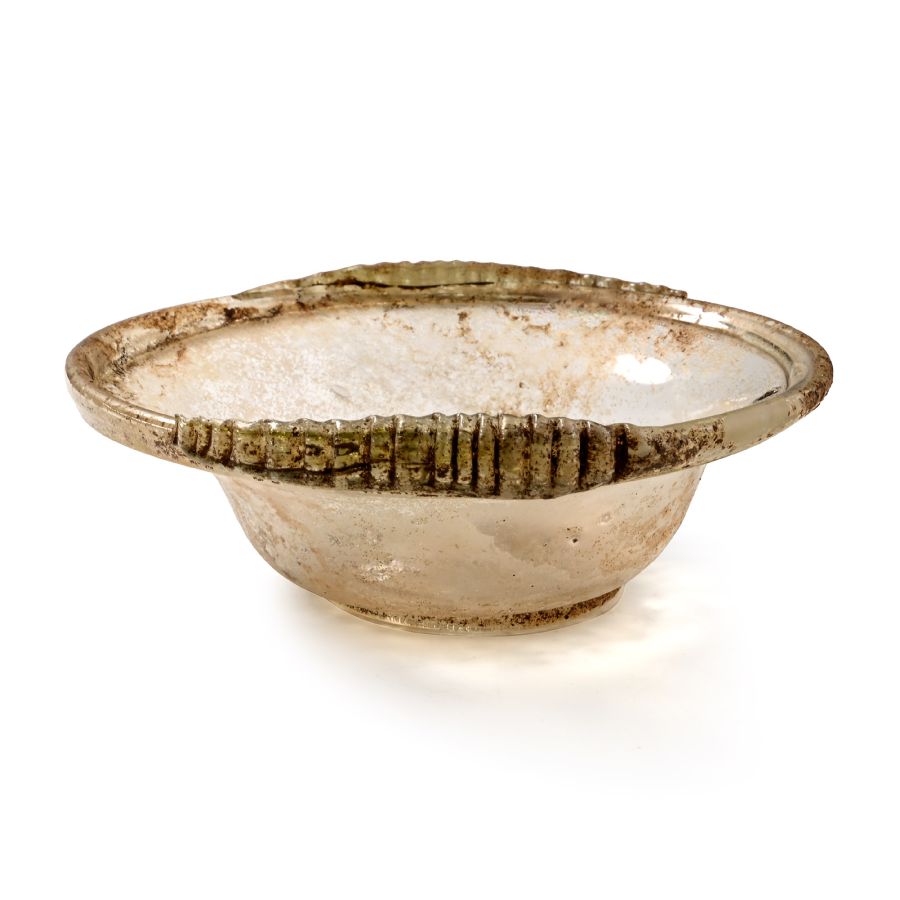
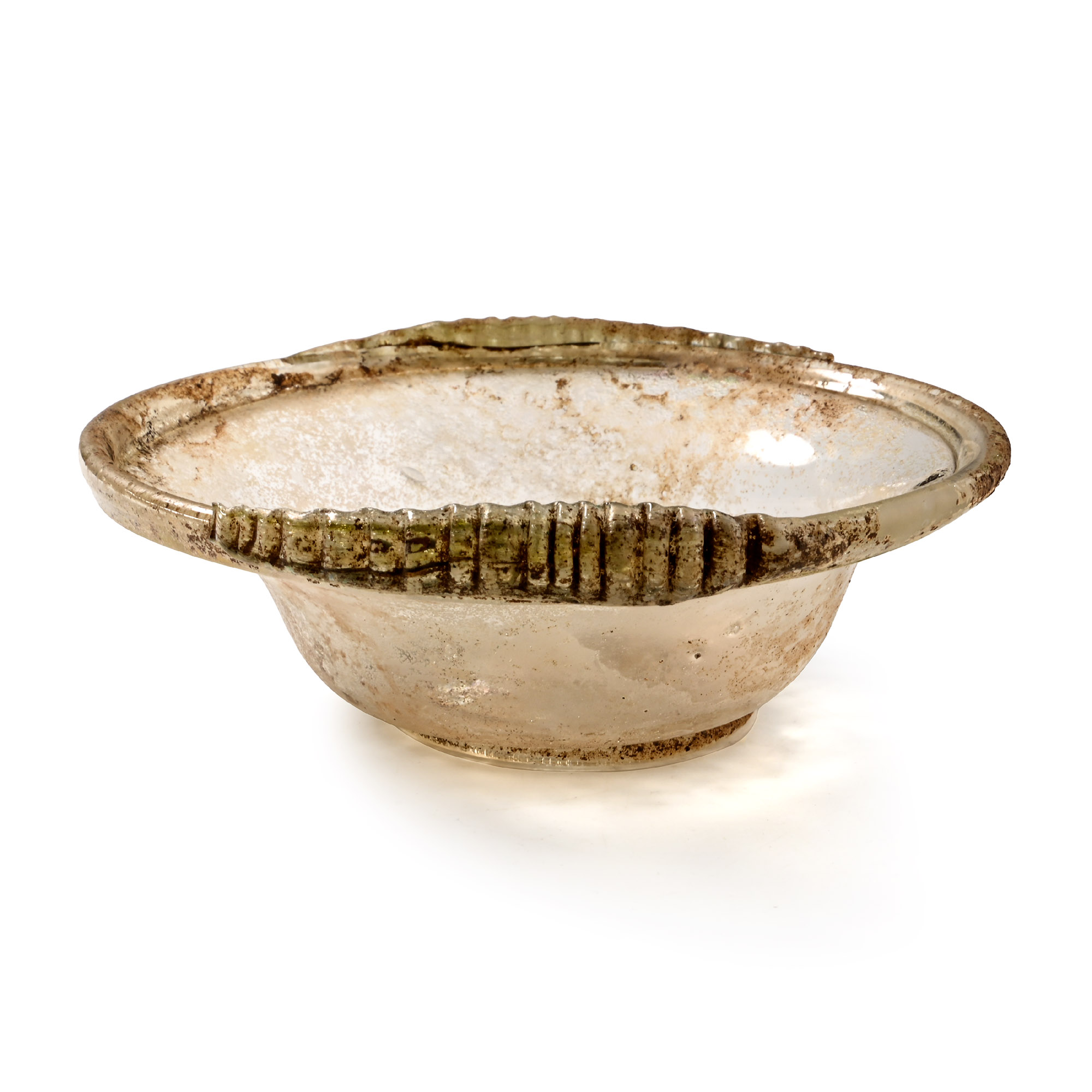
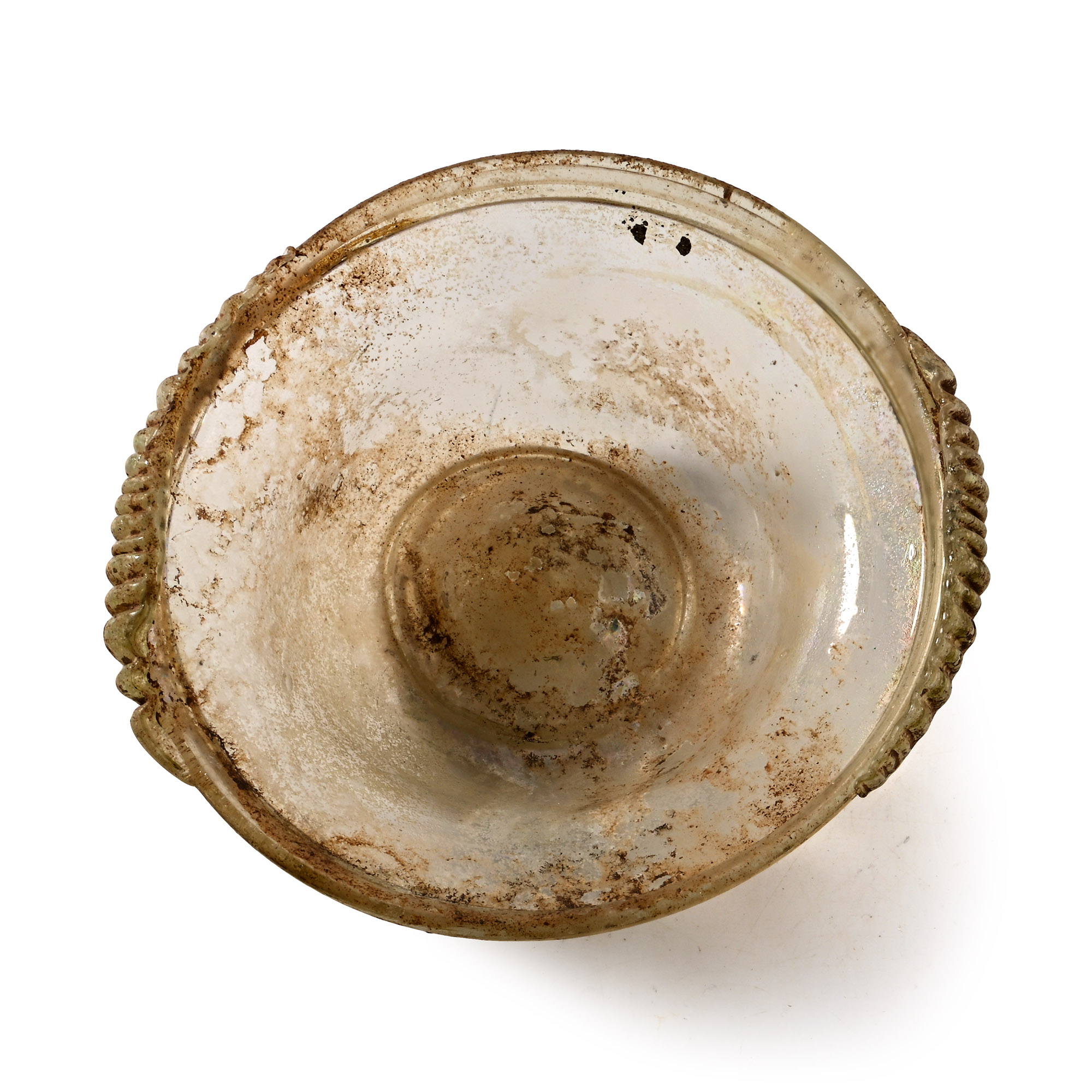
Roman Translucent Glass Dish with Ribbed Tail Handles
1ST-4TH CENTURY A.D.
4 1/2 in. (48.8 grams, 11.5 cm wide).
Discoid base with expanding body and everted rim with ribbed detailing; remains of iridescence.
ProvenanceFrom the collection of a late London gentleman, 1970s-1990s.
LiteratureCf. Bergman, M. et al., Ancient Glass in the Carnegie Museum of Natural History, Pittsburgh, 1980, items 131-132.
CONDITIONTimeLine Auctions follows a vetting process to ensure the authenticity and legality of all items, reinforcing our commitment to integrity and responsible trading. Each antiquity, antique, and coin lot undergoes thorough examination by a vetting committee of at least ten external specialists, professional trade association members, scientists, and archaeologists: Our Vetting Process
AUCTIONS:
TimeLine is a leading auction house specialising in antiquities, ancient art, collectables, natural history, coins, medals, and books. Our auctions offer museums, collectors, historians, and enthusiasts the opportunity to acquire unique and historically significant pieces.
LOT 1191
Roman Translucent Glass Dish with Ribbed Tail Handles
Estimate £500 - 700€580 - 810 (for guidance only)$680 - 950 (for guidance only)
Opening Bid
£250 (EUR 290; USD 338) +BP*
-
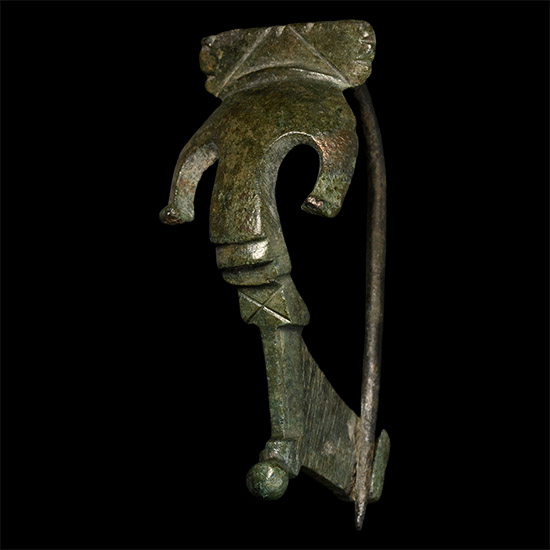
Roman Bronze Anchor Bow Brooch
Circa 2nd-3rd century A.D.Estimate: £40 - 60 (+bp*)
Opening Bid: £5
A bow brooch of the kräftig profilierte 'anchor' type, with a wide crescent-shaped head with extended arms, broad flat footplate with catch and pin to the reverse. 21.4 grams, 54 mm
Ex German art market, 2000s. Acquired from an EU collector living in London. From the collection of a Surrey, UK, gentleman. -
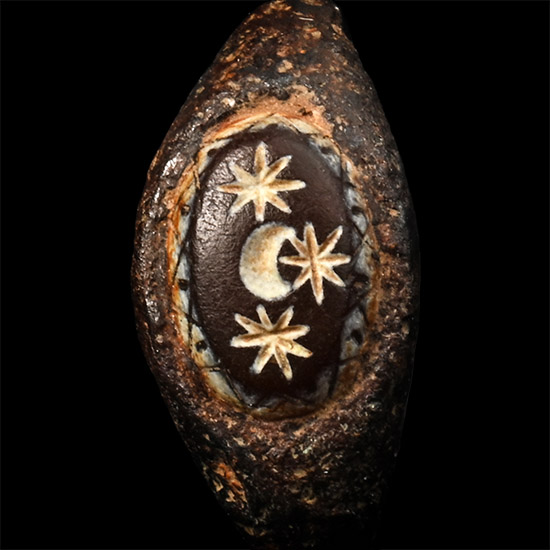
Roman Bronze Ring with Moon and Stars Gemstone
1st-2nd century A.D.Estimate: £100 - 140 (+bp*)
Opening Bid: £5
With broad tapering shoulders, plaque with inset onyx cabochon, band of saltires and pellets to the chamfered edge, crescent moon and three stars to the upper face. 3.56 grams, 21.76 mm overall, 17.07 x 12.69 mm internal diameter (approximate size British E 1/2, USA 2 1/2, Europe 3, Japan 3)
From the private collection of a European gentleman (1942-2024), formed since the 1970s. -
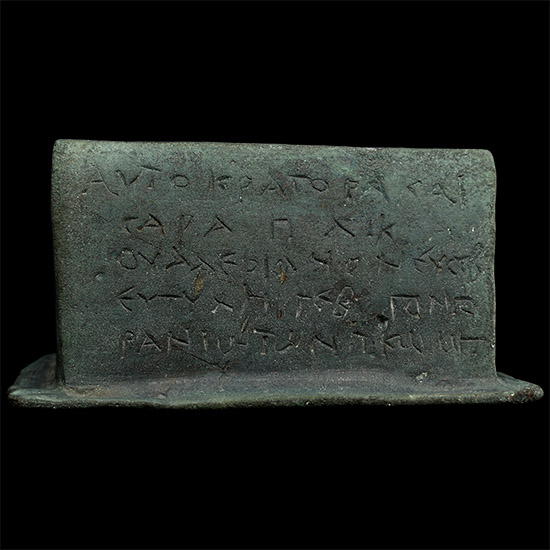
Roman Bronze Statue Plinth with Inscription for Emperor Valerian
253-260 A.D.Estimate: £2,000 - 3,000 (‡+bp*)
Opening Bid: £1,175
Hollow rectangular plinth with everted basal rim; hastily incised, five-line Greek inscription on one side: 'Αυτοκρατορα Και/σαρα Π Λικ/Ουαλεριανον ευσεβ/ευτυχη Σεβ 50-Ν-50 (?)/ρανιωτων η κωμ(ι)τ' (translated as 'To the Imperator Caesar P(ublius) Licinius Valerianus, pious and good-fortuned Augustus ... the village of the Raniotes'. 1.04 kg, 12.8 cm
with Hirsch Auction 246, 19-20 September 2006, no.838. This lot has been checked against the Interpol Database of stolen works of art and is accompanied by search certificate no.13547-263147.
Probably the base of a statuette of the Roman Emperor Publius Licinius Valerianus (r. 253–260 A.D.), presumably used by devotees of the imperial cult. Marks made by the standing statuette are still visible on top of the plinth. An important document from the time of Valerian, who is also known for having persecuted the Christians. Similar inscriptions set up, for instance by cities, municipalities and other local communities indicating their loyalty, must be seen in this context.
