
Loading, please wait...
LOT 0684
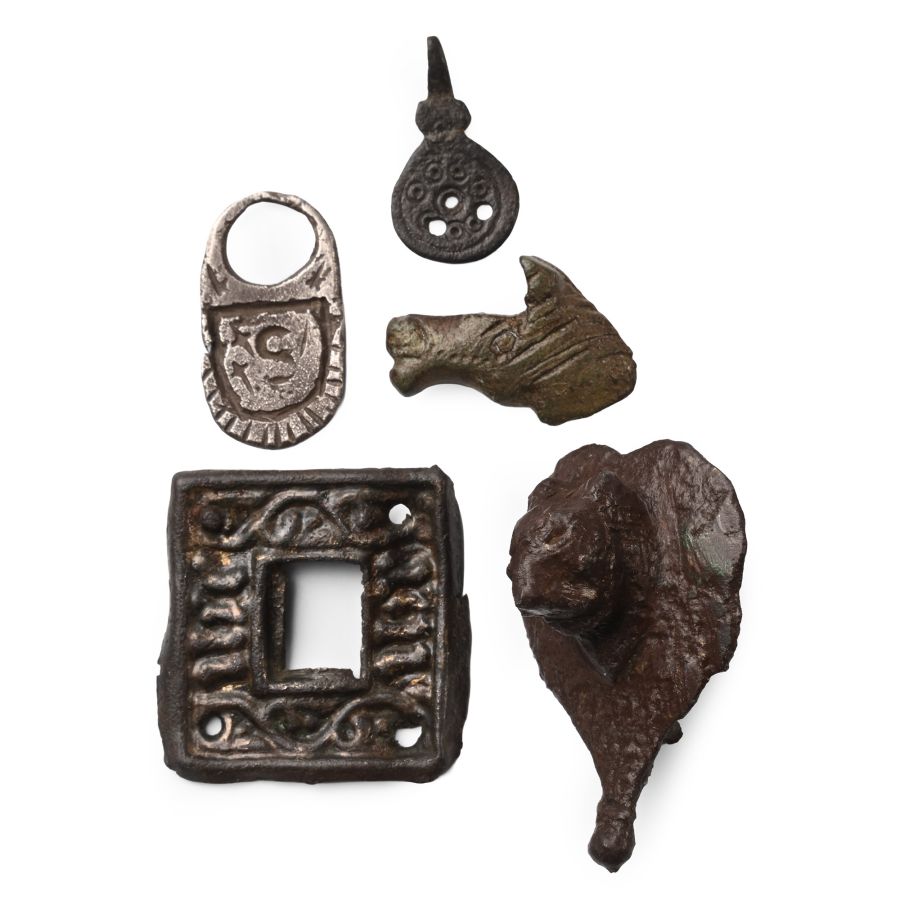
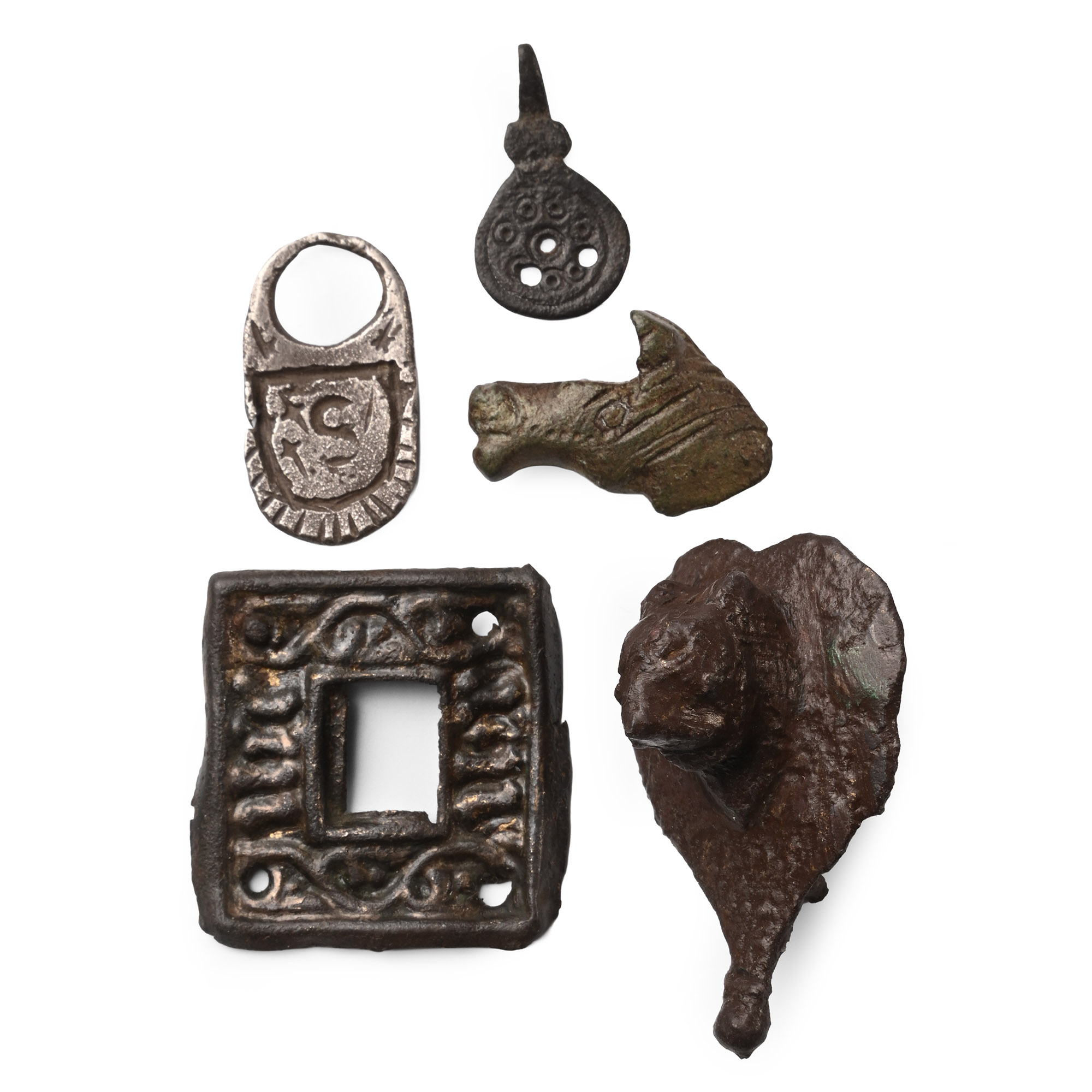
Roman to Tudor Bronze Artefact Group
2ND-16TH CENTURY A.D.
1 - 1 5/8 in. (38.7 grams total, 23-42 mm).
Comprising: a heart-shaped mount with a central lion-head; a rectangular mount with decorative border in low-relief; a horse head modelled in the round; an oval silver pendant with S and stars; hooked tag with ring-and-dot motifs. [5, No Reserve]
ProvenanceAcquired on the UK art market in the 1970s-1990s.
Property of a Nottinghamshire, UK, gentleman.
This lot is accompanied by an illustrated lot declaration signed by the Head of the Antiquities Department, Dr Raffaele D'Amato.
For a similar hooked tag of the early Medieval period see PAS NLM-0E59DC and NLM-0E0E3D.
FootnotesThe use of hooked tags for fastening first became fashionable during the Anglo-Saxon period. They are usually triangular or circular in shape, of sheet metal (normally bronze or occasionally in silver) and have two or three attachment holes at the widest end.
CONDITIONTimeLine Auctions follows a vetting process to ensure the authenticity and legality of all items, reinforcing our commitment to integrity and responsible trading. Each antiquity, antique, and coin lot undergoes thorough examination by a vetting committee of at least ten external specialists, professional trade association members, scientists, and archaeologists: Our Vetting Process
AUCTIONS:
TimeLine is a leading auction house specialising in antiquities, ancient art, collectables, natural history, coins, medals, and books. Our auctions offer museums, collectors, historians, and enthusiasts the opportunity to acquire unique and historically significant pieces.
-
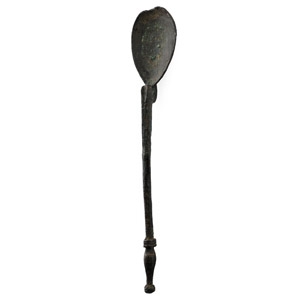
Roman Bronze Swan-Necked Spoon
1st-4th century A.D.Sold for (Inc. bp): £85
Shallow piriform bowl attached to a stepped baluster, hexagonal-section handle with baluster finial. 14.7 grams, 12.1 cm
Acquired on the UK art market during the late 20th century. From the private collection of David King (1940-2024), Hoddesdon, Hertfordshire, UK. This lot is accompanied by an illustrated lot declaration signed by the Head of the Antiquities Department, Dr Raffaele D'Amato. -
.jpg)
Roman Silver-Gilt Statuette of Fortuna
1st-2nd century A.D.Sold for (Inc. bp): £780
Modelled in the round and finely detailed, the goddess standing with a cornucopia in the crook of her left arm, wearing a floor-length palla. 18.48 grams, 39 mm
Acquired in the late 1980s-early 1990s. Private collection, London, UK. This lot is accompanied by an illustrated lot declaration signed by the Head of the Antiquities Department, Dr Raffaele D'Amato. -
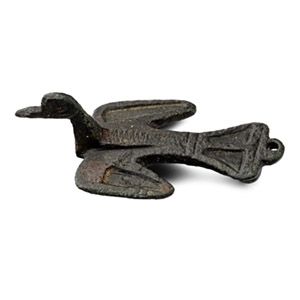
Late Roman Bird in Flight Plate Brooch
6th century A.D.Sold for (Inc. bp): £143
Aviform brooch with inset panels to to wings, tail and head to accept enamel; pin-lug and catchplate below. 6.19 grams, 39 mm
Property of a gentleman; acquired in the 1970s. This lot is accompanied by an illustrated lot declaration signed by the Head of the Antiquities Department, Dr Raffaele D'Amato.
