
Loading, please wait...
LOT 0767
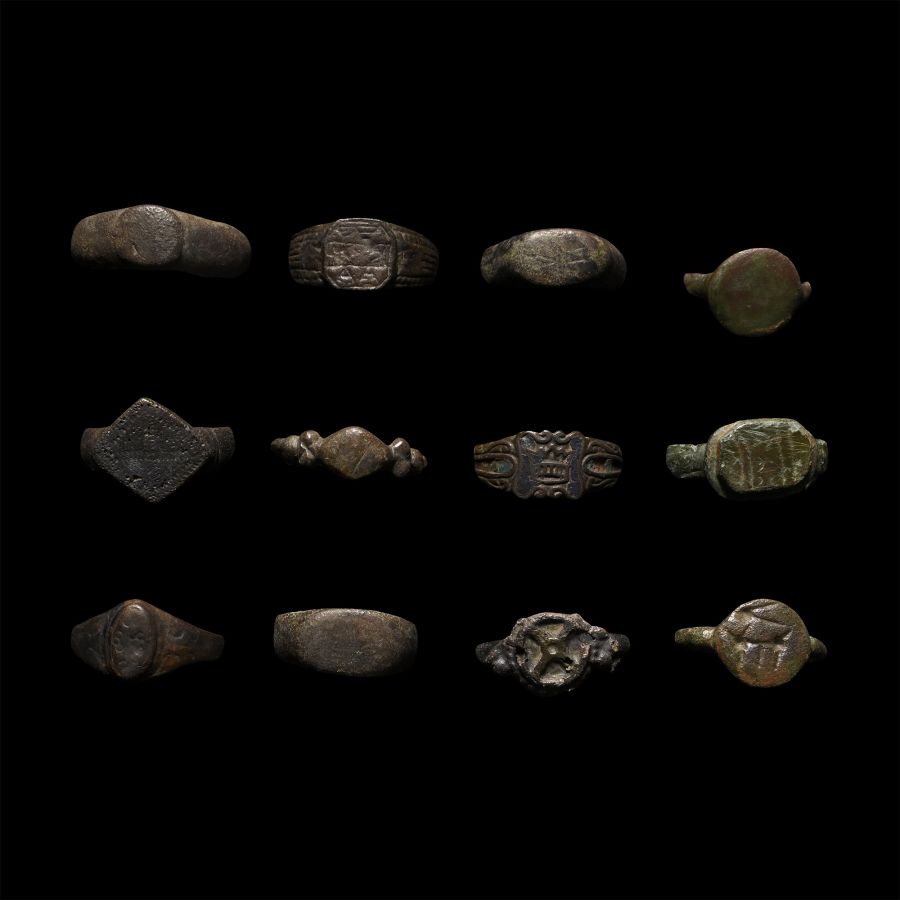
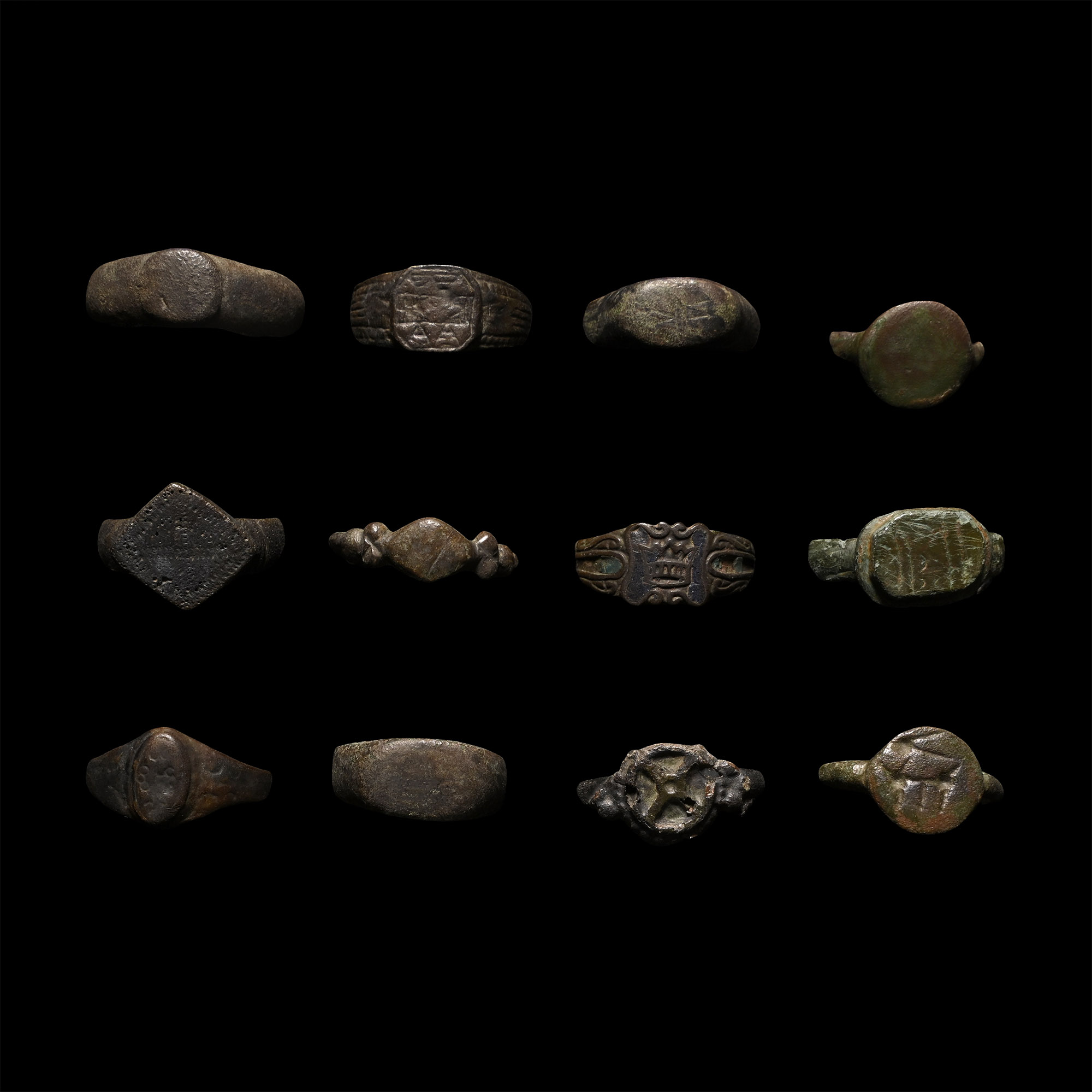
Roman to Post Medieval Bronze Ring Collection
1ST-18TH CENTURY A.D.
3/4 - 1 in. (60 grams total, 21-28 mm).
Including lozenge bezel with tremolier design, disc bezel with reserved wheel-cross and other types. [12]
ProvenanceEx German art market, 2000s.
Acquired from an EU collector living in London.
From the collection of a Surrey, UK, gentleman.
TimeLine Auctions follows a vetting process to ensure the authenticity and legality of all items, reinforcing our commitment to integrity and responsible trading. Each antiquity, antique, and coin lot undergoes thorough examination by a vetting committee of at least ten external specialists, professional trade association members, scientists, and archaeologists: Our Vetting Process
AUCTIONS:
TimeLine is a leading auction house specialising in antiquities, ancient art, collectables, natural history, coins, medals, and books. Our auctions offer museums, collectors, historians, and enthusiasts the opportunity to acquire unique and historically significant pieces.
-

Roman Iridescent Glass Double Unguentarium
2nd-3rd century A.D.Estimate: £1,000 - 1,400 (‡+bp*)
Opening Bid: £500
With rolled rim to each tapering tube, applied trail detailing to the body, lateral angled handles and large applied loop handle above; iridescent surface. 59 grams, 17 cm
Acquired in the mid 1980s-1990s. Private collection, Switzerland, thence by descent. Private collection, since the late 1990s. This lot has been checked against the Interpol Database of stolen works of art and is accompanied by search certificate number no.12237-222167. -
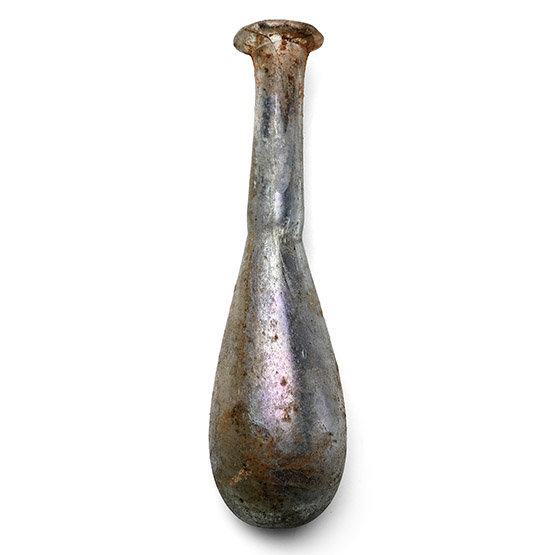
Roman Glass Flask
Circa 1st-4th century A.D.Sold for (Inc. bp): £117
Piriform body, slender tubular neck with everted wide rim. 19 grams, 10.9 cm
From a London, UK, collection of glass, 1970-2000s. -
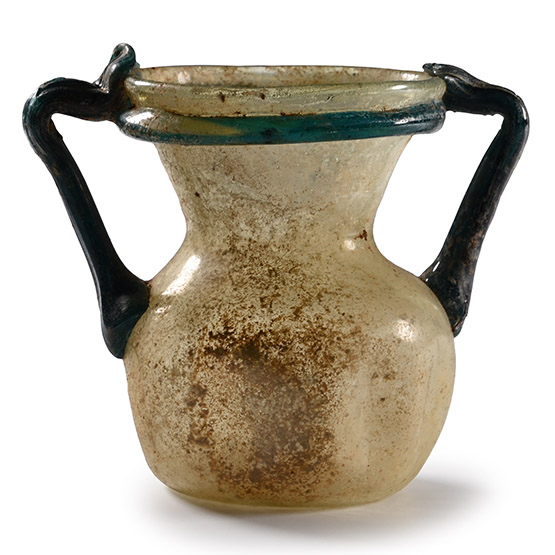
Roman Glass Handled Jar
4th century A.D.Sold for (Inc. bp): £312
With dimpled base, bulbous body with opposed dimples to the sidewall, applied flange to the neck, applied trails forming lateral handles. 39.4 grams, 78 mm wide
From an important London collection of glass, 1990s.
These biconical jars with opposed handles, rounded lips and overhanging tubular flanges are typical of the late Roman period. There are Syro-Palestinian types, with similar examples having been found in Beit Fajjar, West Bank, Palestine.
