
Loading, please wait...
LOT 0863
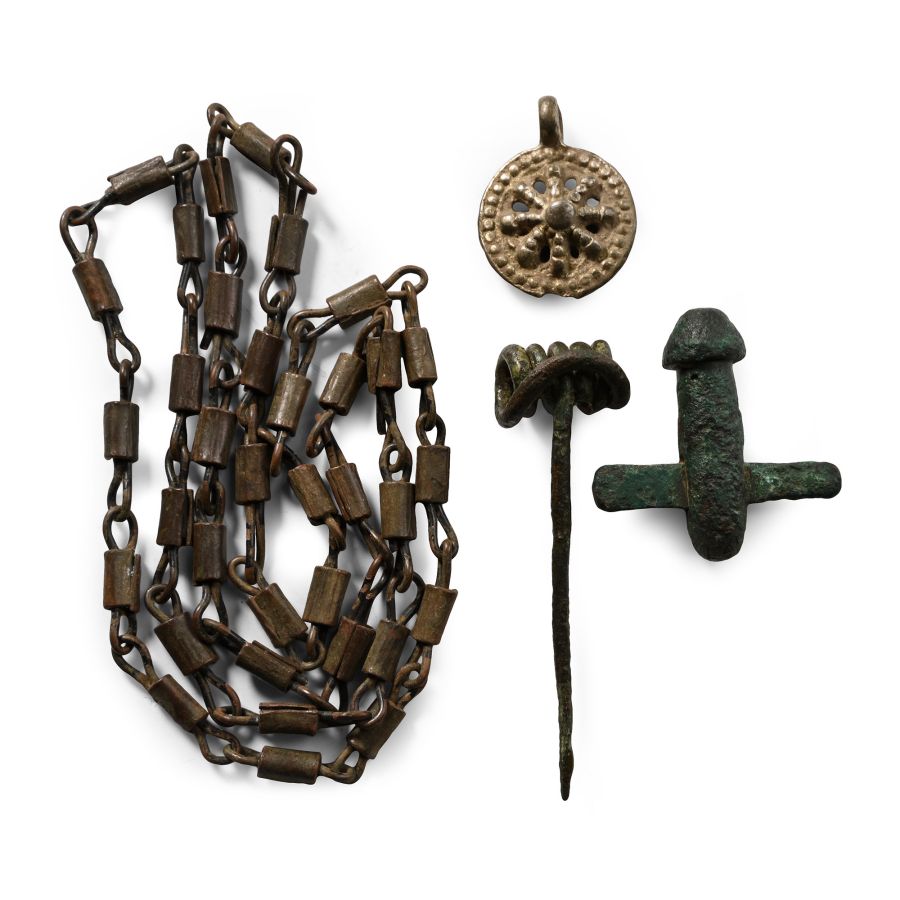
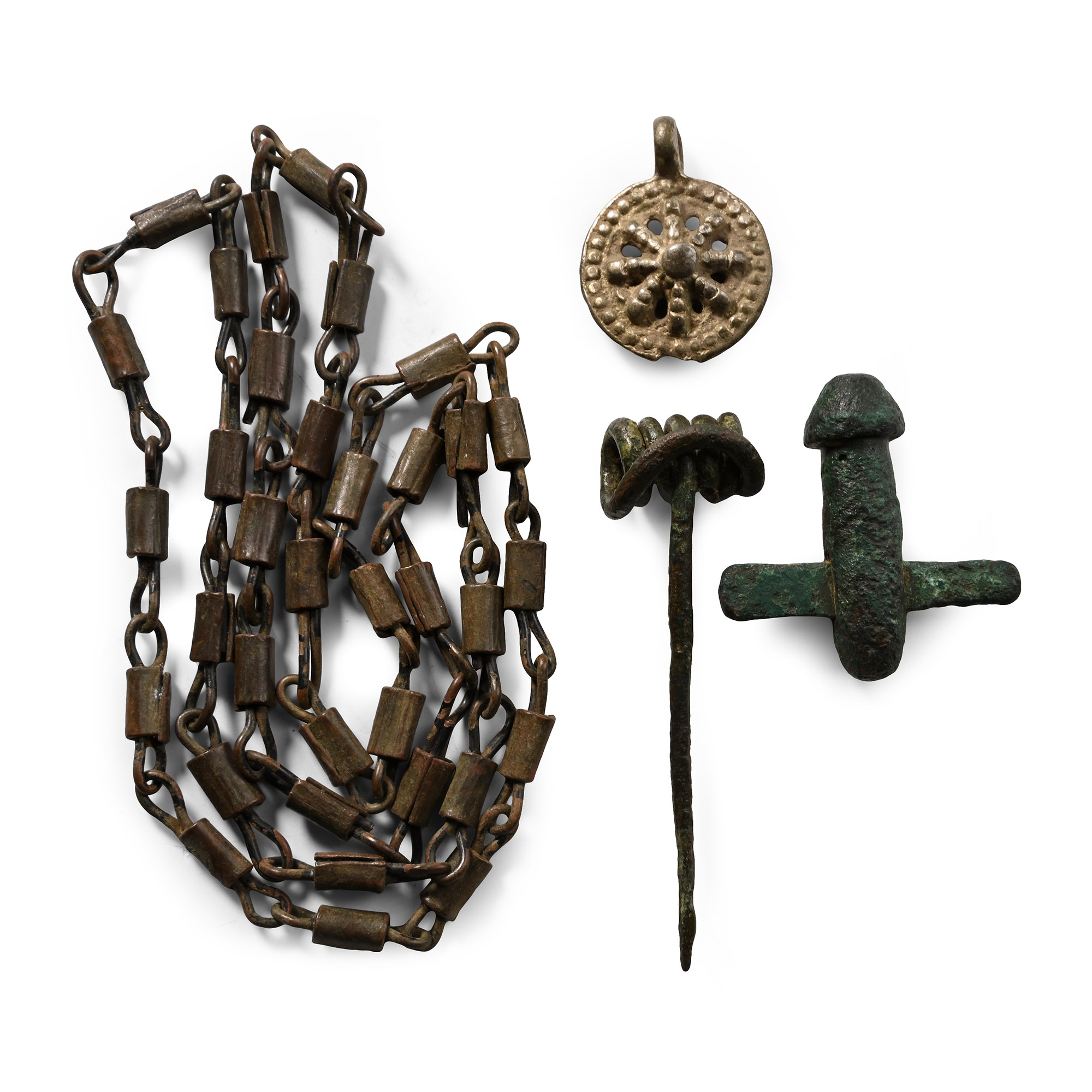
Roman to Post Medieval Artefact Group
1ST-20TH CENTURY A.D.
1 1/8 - 25 5/8 in. (62.2 grams total, 2.8-65 cm).
Comprising: a looped chain with collars; a phallic fitting; a coiled pin; a white metal discoid pendant with a star motif. [4, No Reserve]
ProvenanceFrom the private coin collection of a West London, UK, gentleman, formed since the mid 1980s.
CONDITIONTimeLine Auctions follows a vetting process to ensure the authenticity and legality of all items, reinforcing our commitment to integrity and responsible trading. Each antiquity, antique, and coin lot undergoes thorough examination by a vetting committee of at least ten external specialists, professional trade association members, scientists, and archaeologists: Our Vetting Process
AUCTIONS:
TimeLine is a leading auction house specialising in antiquities, ancient art, collectables, natural history, coins, medals, and books. Our auctions offer museums, collectors, historians, and enthusiasts the opportunity to acquire unique and historically significant pieces.
-
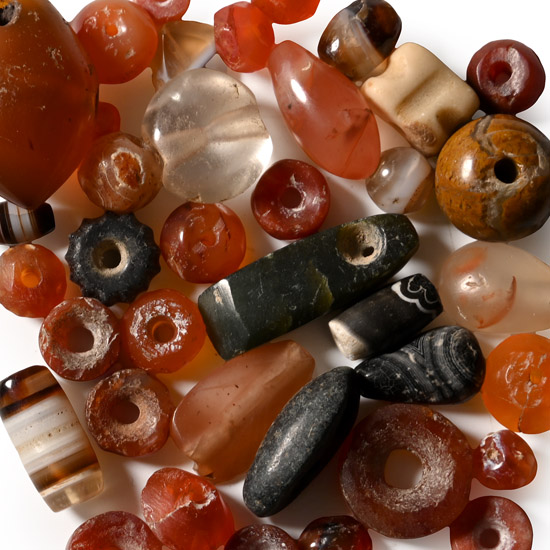
Roman Agate and Carnelian Bead and Pendant Collection
1st-4th century A.D. and laterSold for (Inc. bp): £143
Including oblate, biconical, cylindrical, and other types, including a rock crystal bead. 29 grams total, 4-23 mm
From the private collection of a European gentleman (1942-2024), formed since the 1970s. -
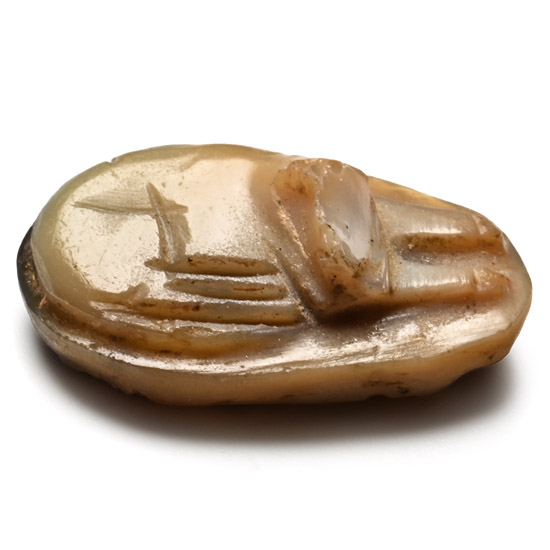
Roman Agate Cameo with Sleeping Dog
Circa 2nd century A.D.Sold for (Inc. bp): £390
Pear-shaped cameo with a raised image of a reclining hound resting its head on its front paws. 0.84 grams, 15 mm
From the private collection of a European gentleman (1942-2024), formed since the 1970s. -
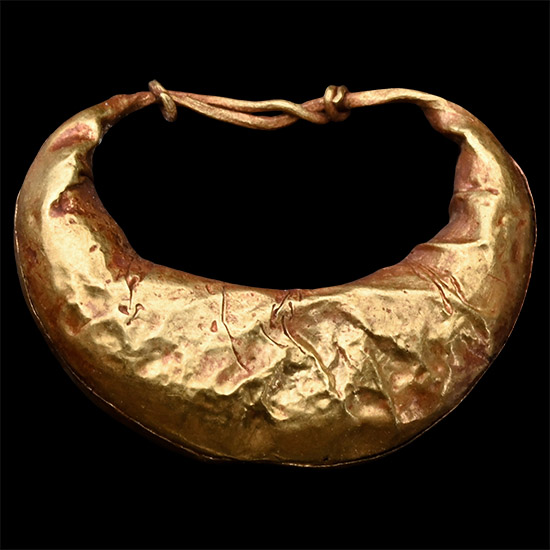
Roman Gold Crescent-Shaped Earring
1st-4th century A.D.Sold for (Inc. bp): £72
Hollow-formed with narrow ends developing into wires twisted around the shank. 0.49 grams, 14 mm
From the private collection of Mr Brian Edwards, New Malden, Surrey, UK, formed from the late 1970s-early 1980s; thence by descent.
