
Loading, please wait...
LOT 0698
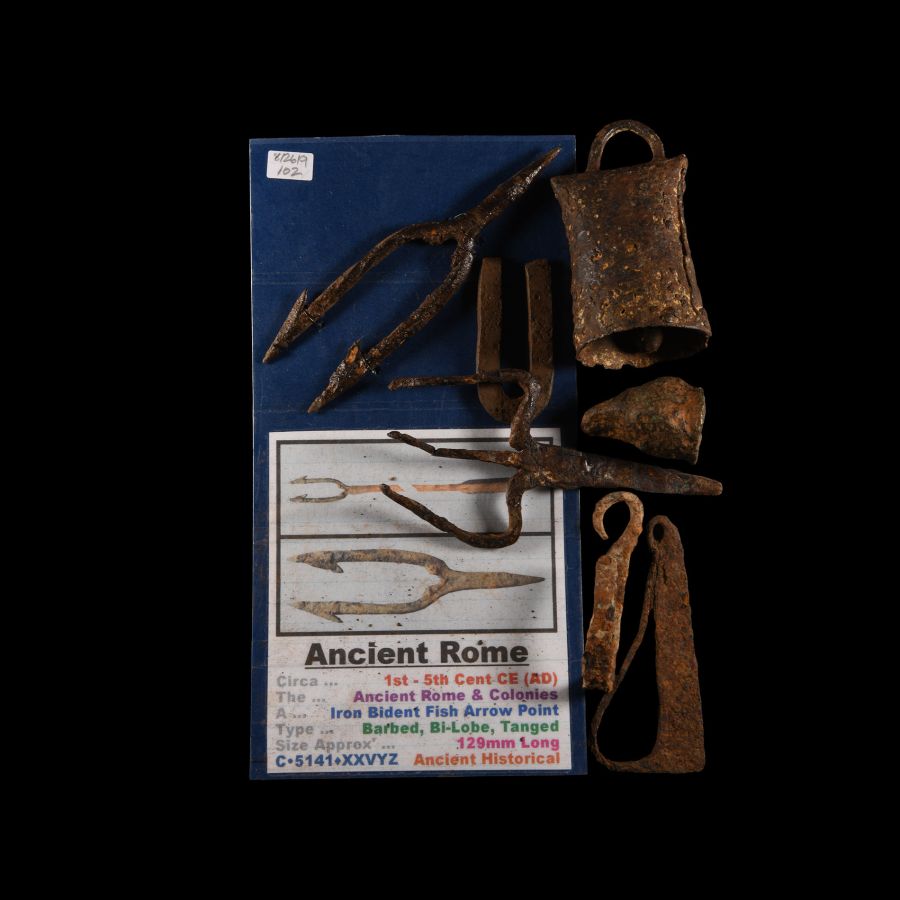
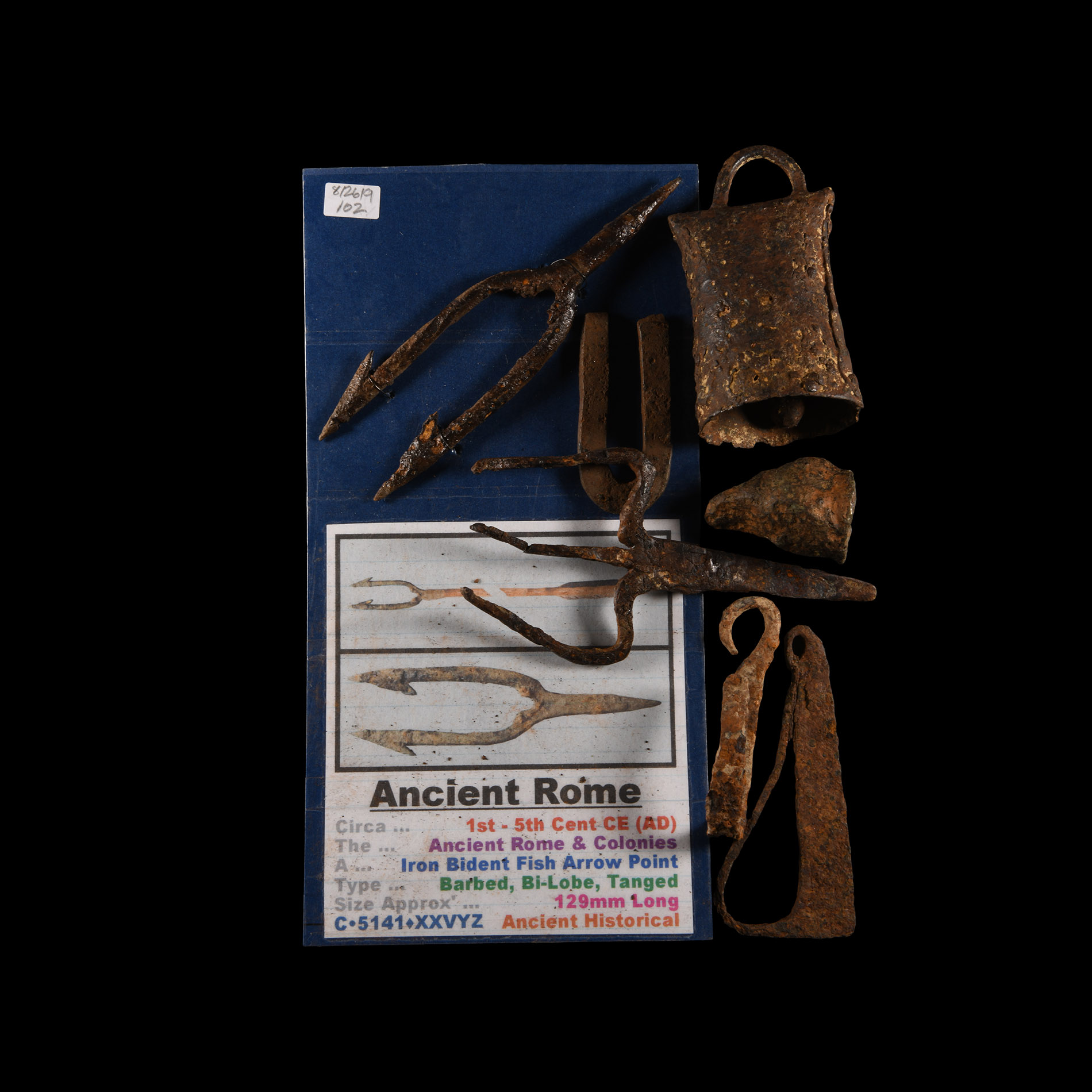
Roman to Medieval Iron Artefact Group
CIRCA 1ST-16TH CENTURY A.D.
1 3/4 - 5 in. (368 grams total, 4.3-12.5 cm).
Comprising: a bell; fire steel; fish arrow point; tanged 'fork'; ram's head mount; together with other miscellaneous items. [7, No Reserve]
ProvenanceAcquired on the UK art market.
Property of a Ruislip, UK, gentleman, by inheritance.
TimeLine Auctions follows a vetting process to ensure the authenticity and legality of all items, reinforcing our commitment to integrity and responsible trading. Each antiquity, antique, and coin lot undergoes thorough examination by a vetting committee of at least ten external specialists, professional trade association members, scientists, and archaeologists: Our Vetting Process
AUCTIONS:
TimeLine is a leading auction house specialising in antiquities, ancient art, collectables, natural history, coins, medals, and books. Our auctions offer museums, collectors, historians, and enthusiasts the opportunity to acquire unique and historically significant pieces.
-
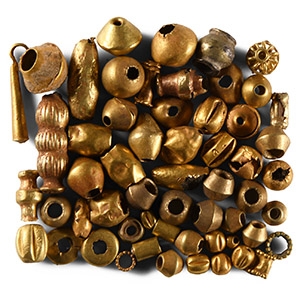
Roman and Other Gold Necklace Bead Collection
1st millennium B.C. and laterSold for (Inc. bp): £975
Composed mainly of sheet-gold beads of various types, including biconical, ribbed, doughnut-shaped, filigree and openwork examples, together with other forms, some possibly from India. 19.31 grams total, 3-17 mm
UK gallery, early 2000s. -
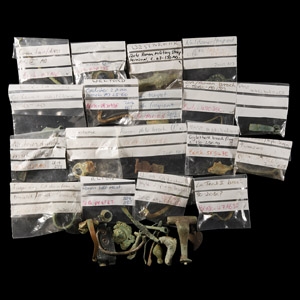
Roman Bronze Artefact Collection
1st-4th century A.D.Sold for (Inc. bp): £247
Mainly comprising fragmentary brooches, mounts, dress pins, strap ends, a finger ring, together with other items; including a number displaying punched and engraved ornament and examples accompanied by PAS record numbers. 190 grams total, 14-74 mm
Found Berkshire, UK. -
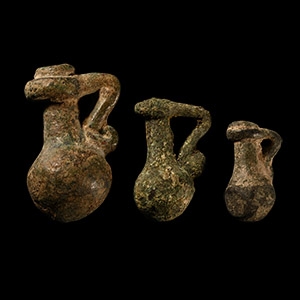
Roman Bronze Jug Weight Collection
1st-4th century A.D.Sold for (Inc. bp): £91
Three graduated jug-shaped weights, each with a globular body, cylindrical neck and handle with scrolling base. 30.1 grams total, 17-26 mm
Ex Simmons Gallery, London E11, UK, in the 1990s. From a North London collection.
