
Loading, please wait...
LOT 0746
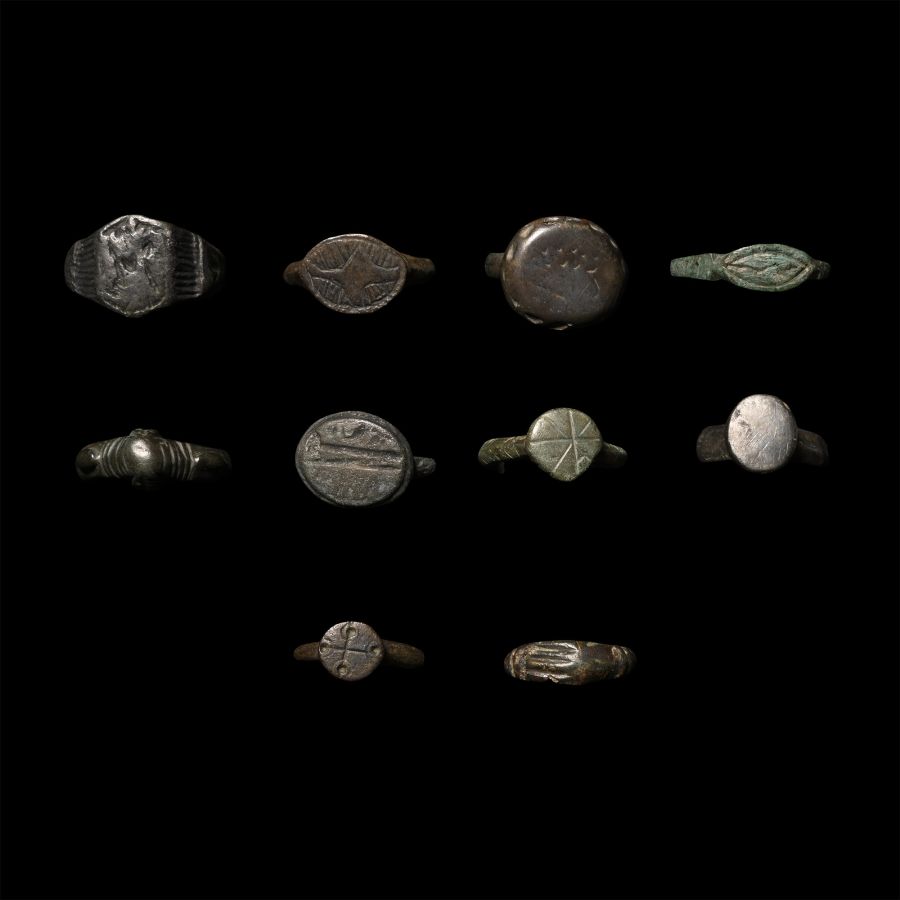
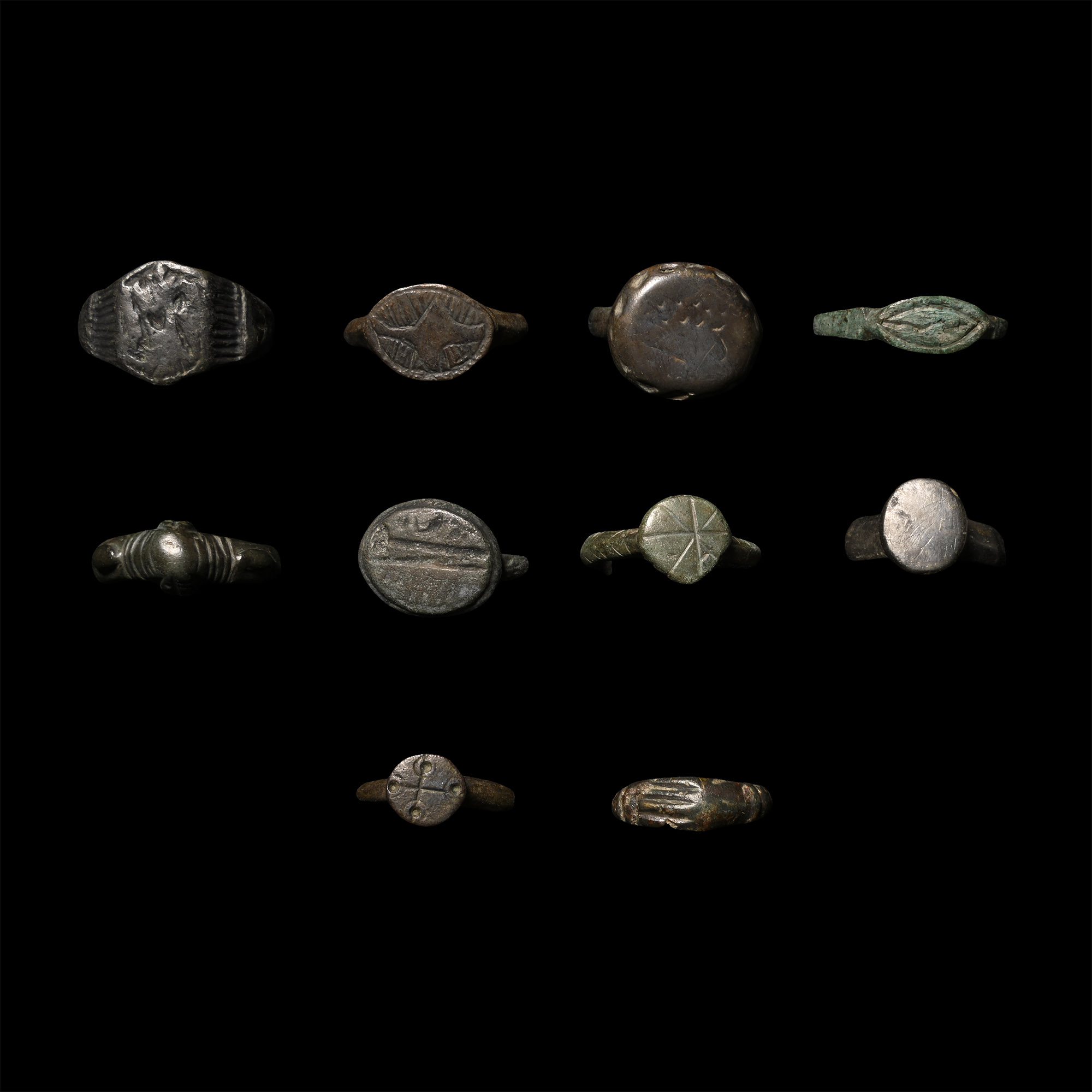
Roman to Medieval Bronze Ring Collection
1ST-16TH CENTURY A.D.
5/8 - 1 in. (42.1 grams total, 16.5-25.2 mm).
Comprising ten rings with various motifs, including a clasped hands ring and one with a cross motif. [10]
ProvenanceEx German art market, 2000s.
Acquired from an EU collector living in London.
From the collection of a Surrey, UK, gentleman.
TimeLine Auctions follows a vetting process to ensure the authenticity and legality of all items, reinforcing our commitment to integrity and responsible trading. Each antiquity, antique, and coin lot undergoes thorough examination by a vetting committee of at least ten external specialists, professional trade association members, scientists, and archaeologists: Our Vetting Process
AUCTIONS:
TimeLine is a leading auction house specialising in antiquities, ancient art, collectables, natural history, coins, medals, and books. Our auctions offer museums, collectors, historians, and enthusiasts the opportunity to acquire unique and historically significant pieces.
-
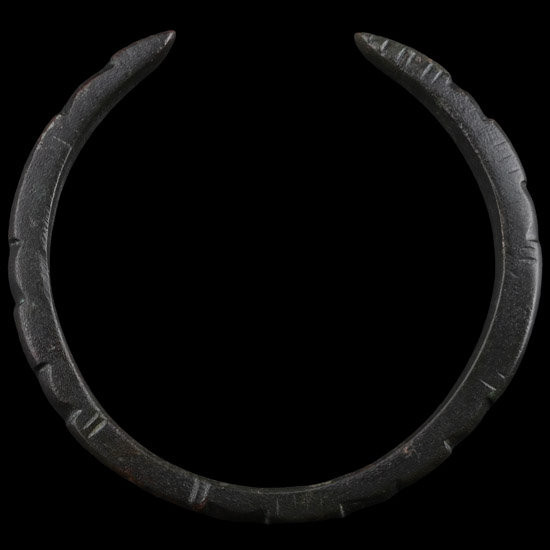
Roman Bronze Decorated Armilla Bracelet
1st-4th century A.D.Sold for (Inc. bp): £91
Penannular rectangular-section body divided into segments with linear decoration. 29.7 grams, 59 mm
Ex German art market, 2000s. Acquired from an EU collector living in London. From the collection of a Surrey, UK, gentleman. -
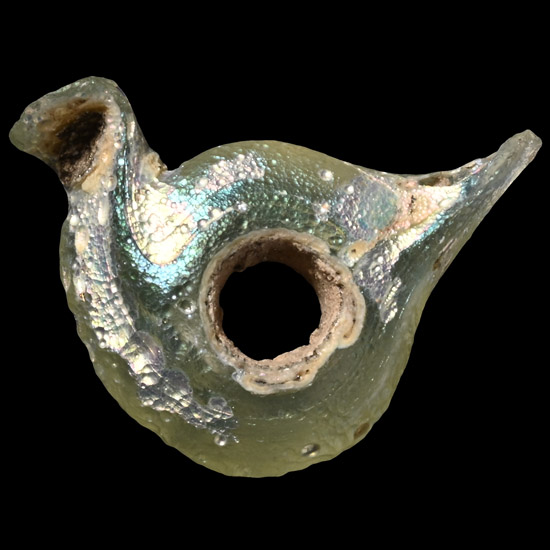
Roman Glass Bird Pendant
1st-4th century A.D.Sold for (Inc. bp): £117
Formed in iridescent aqua glass with pinched head and tail. 1.25 grams, 19 mm
From the London collection of the late Mr S.M., 1969-1999. -
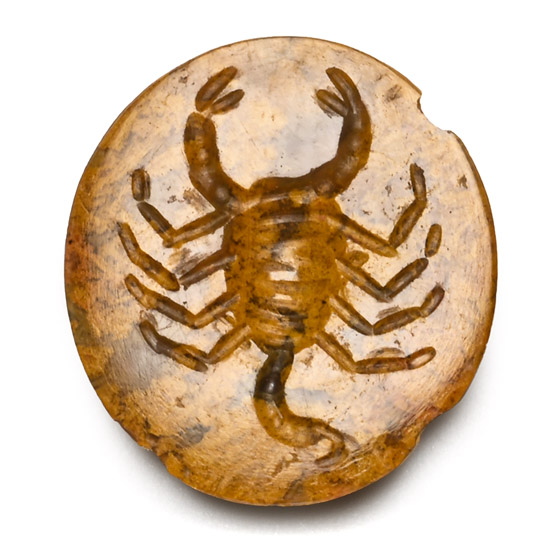
Roman Orange Jasper Gemstone with Scorpion
2nd-3rd century A.D.Sold for (Inc. bp): £845
With intaglio scorpion motif; supplied with a museum-quality impression. 0.91 grams 14.33 mm
From the private collection of a European gentleman (1942-2024), formed since the 1970s.
It is possible that the intaglio was once part of a ring carried by a Praetorian guardsman, as the scorpion was one of their emblems.
