
Loading, please wait...
LOT 0987
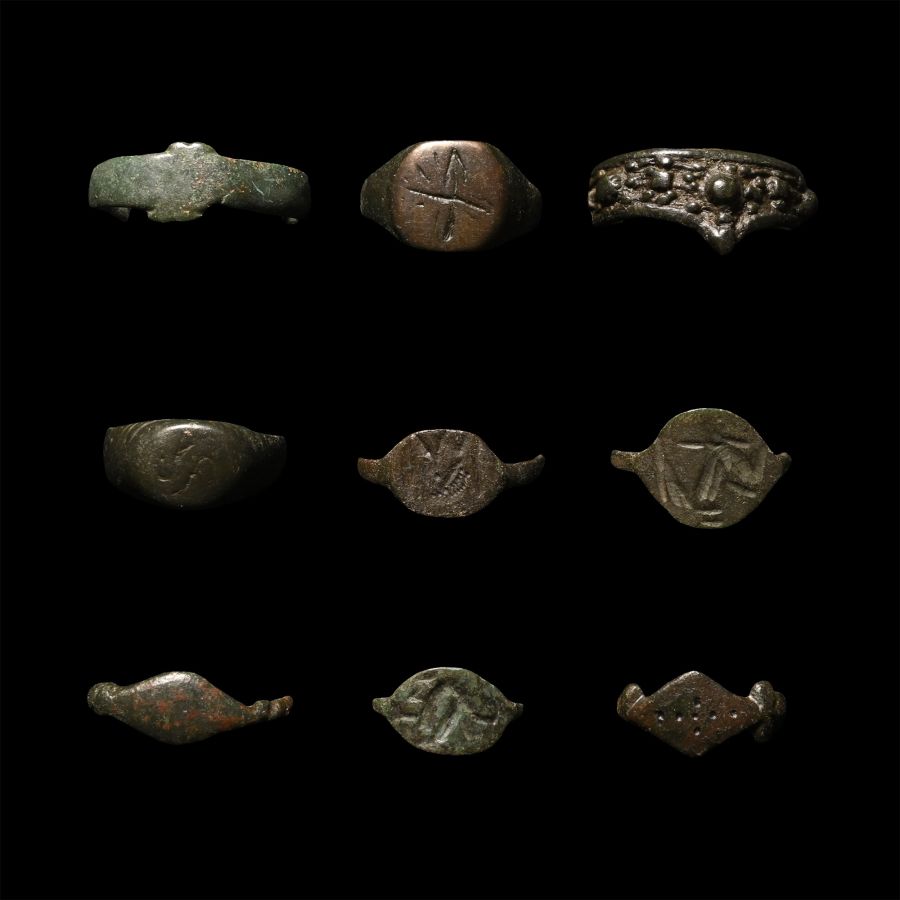
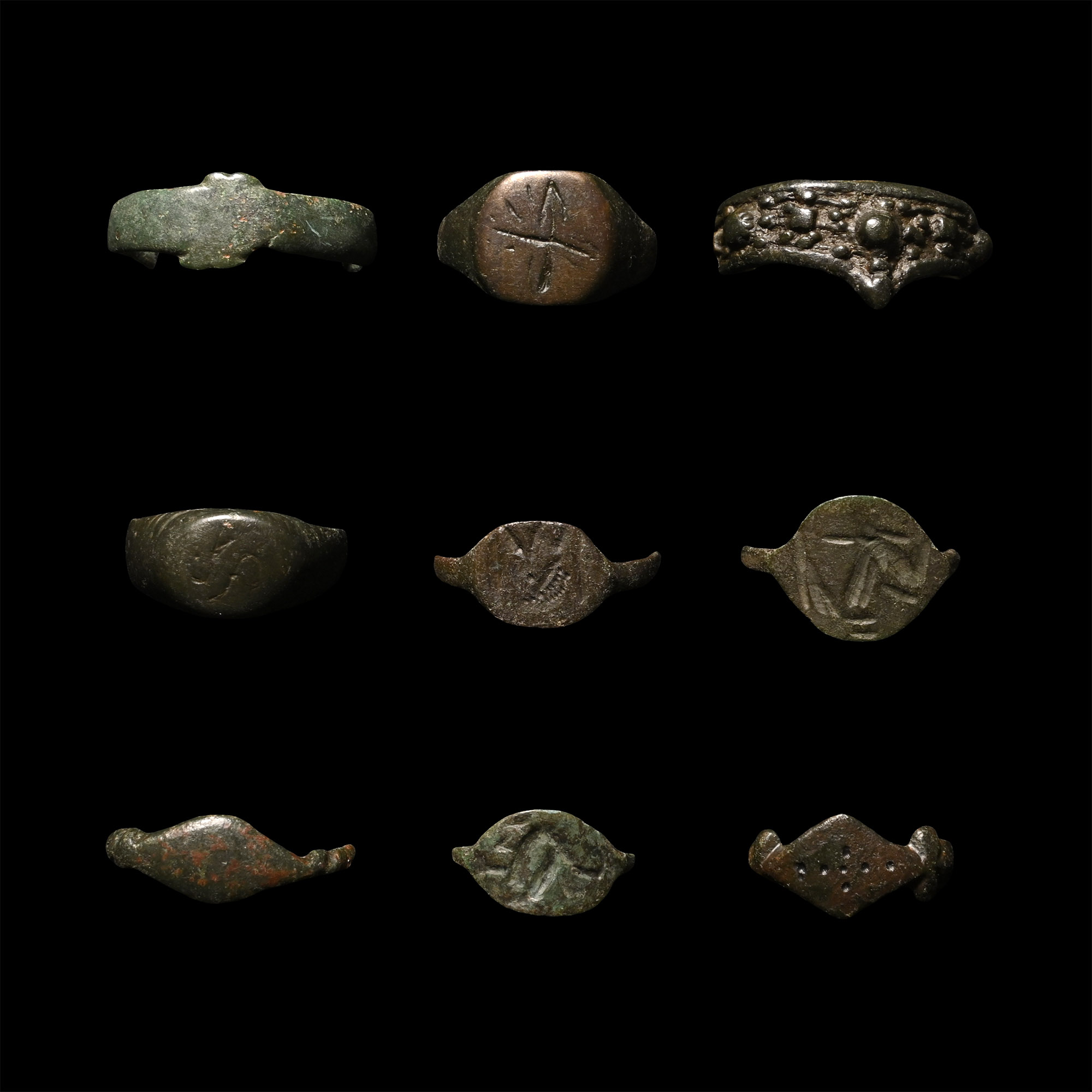
Roman to Medieval Bronze Ring Collection
1ST-16TH CENTURY A.D.
3/4 - 1 in. (30.7 grams total, 18-26 mm).
Including bezel with 'JA' monogram, lozenge bezel with punched points and other types. [9, No Reserve]
ProvenanceEx German art market, 2000s.
Acquired from an EU collector living in London.
From the collection of a Surrey, UK, gentleman.
TimeLine Auctions follows a vetting process to ensure the authenticity and legality of all items, reinforcing our commitment to integrity and responsible trading. Each antiquity, antique, and coin lot undergoes thorough examination by a vetting committee of at least ten external specialists, professional trade association members, scientists, and archaeologists: Our Vetting Process
AUCTIONS:
TimeLine is a leading auction house specialising in antiquities, ancient art, collectables, natural history, coins, medals, and books. Our auctions offer museums, collectors, historians, and enthusiasts the opportunity to acquire unique and historically significant pieces.
-
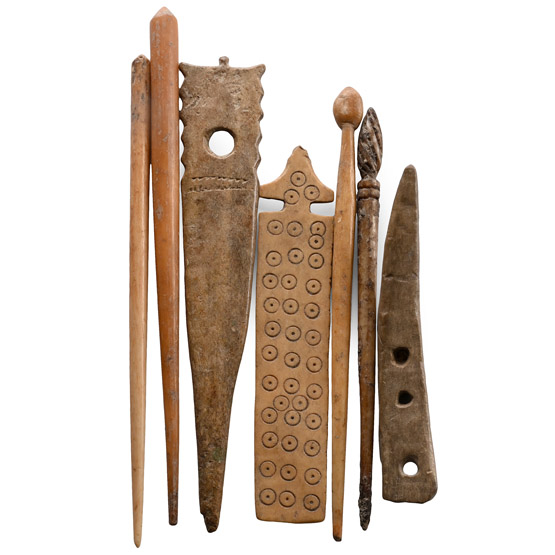
Late Roman to Byzantine Bone Artefact Collection
1st-8th century A.D.Sold for (Inc. bp): £182
Including tapering dress pins, hair pins, lucet and other items. 43.9 grams total, 8.1-13.3 cm
Ex German art market, 2000s. Acquired from an EU collector living in London. From the collection of a Surrey, UK, gentleman. -

Large Roman Bronze Robed Torso
1st century B.C.-1st century A.D.Estimate: £30,000 - 40,000 (+bp*)
Opening Bid: £16,667
Likely representing Harpocrates, depicted frontally and wearing a draped full-length himation, the right arm raised and left arm bent at the elbow; mounted on a custom-made display stand. 7.55 kg total, 53.5 cm high including stand
Private collection, Hong Kong, acquired in the 1970s. Spanish art market. Acquired by the present owner from the above. Accompanied by an academic report by Dr Raffaele D'Amato. This lot has been checked against the Interpol Database of stolen works of art and is accompanied by a search certificate number no.13040-248071.
The body of this statue was hollow-cast by the lost wax method; traces of solder within the arm sockets and around the neck indicate that the arms and head were cast separately. The position of the body and comparative images suggest the statue represents Harpocrates. Harpocrates, the son of Isis and Horus, was one of the most represented children, especially after the diffusion of his cult into the Roman Empire. He is usually depicted naked, but draped figures of the god were produced in the Hellenised east and spread throughout the Empire. Statues of Harpocrates were at the entrance of almost all temples, to indicate that in those places the gods should have been honoured with silence, or, according to Plutarch, men who had an imperfect knowledge of the divinity should only speak of it with respect. -

Bronze Roman Coin and Framed Limited Edition Print
3rd century A.D. and laterSold for (Inc. bp): £10
The coin of Constantine the Great (272-337 A.D.) mounted on 22 carat gold foil, framed with an art print signed by the artist David McAllister, depicting scenes of Roman military activity; limited edition number 172/1150. 1.26 kg, 49.5 x 37.5 cm
UK gallery, early 2000s. Accompanied by a previous numbered certificate of authenticity.
David McAllister's exciting design is a 'one of a kind' work that portrays the might and riches of the Roman civilisation. This limited edition print is a celebration of the award winning artist's lifetime dedication to historical paintings of the ancient world. To enhance appreciation of this rare and historic work, each individual print is signed and numbered by the artist.
