
Loading, please wait...
LOT 0695
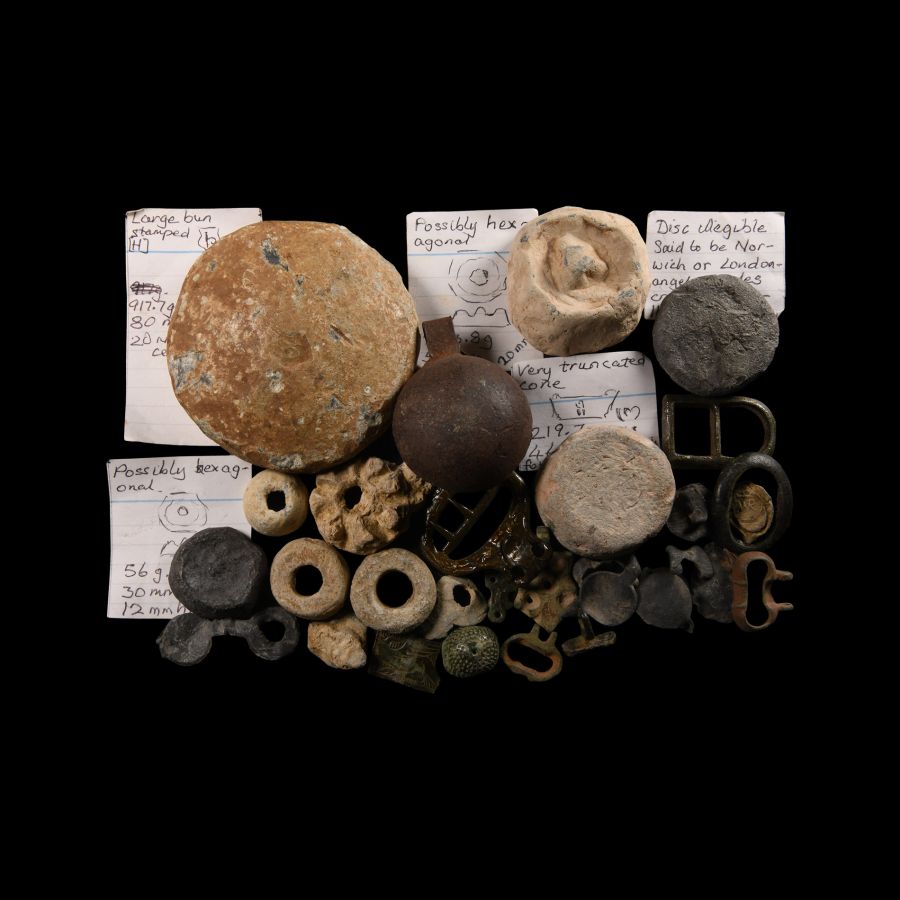
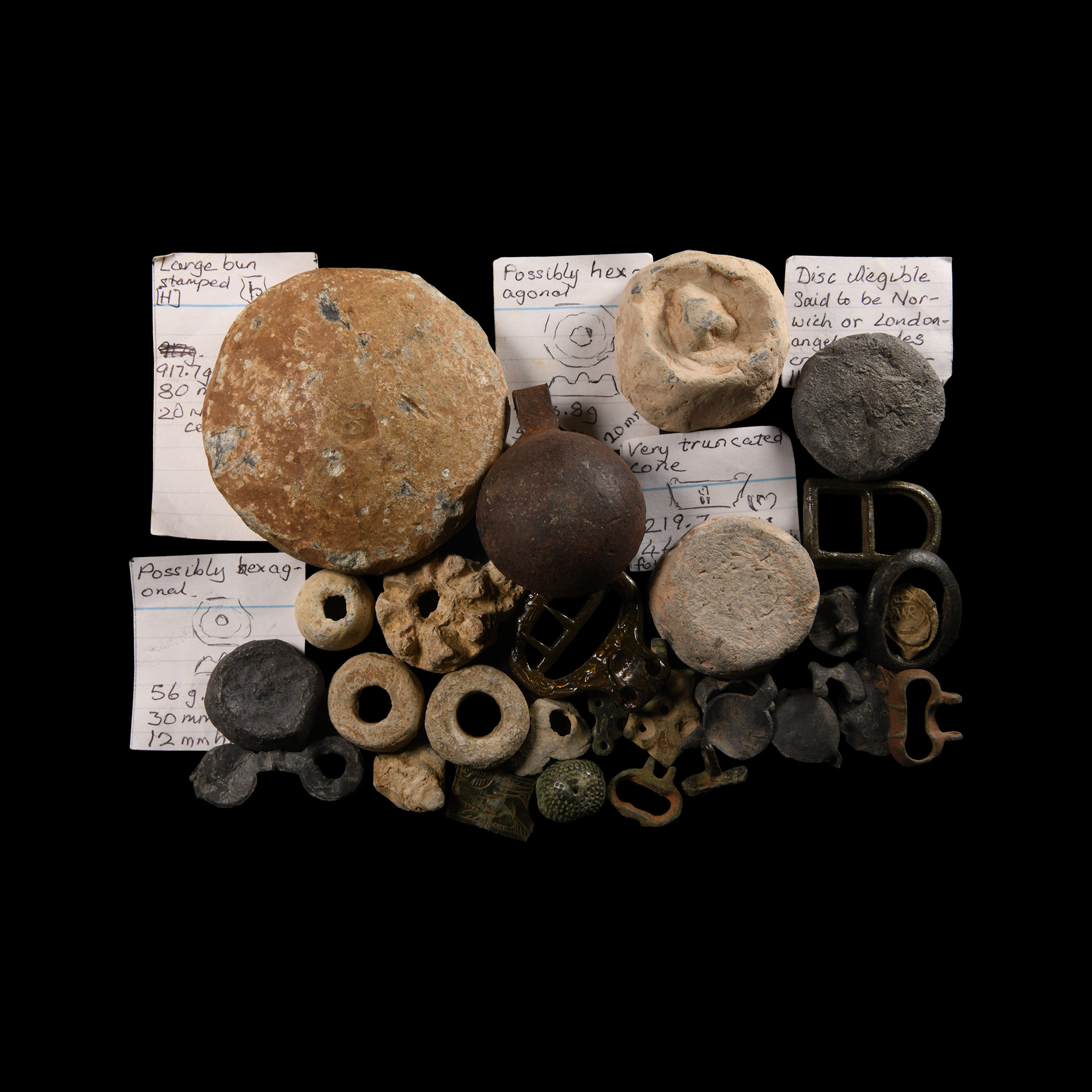
Roman to Civil War Artefact Group
1ST-17TH CENTURY A.D.
3/4 - 3 in. (1.87 kg total, 19-78 mm).
A group of detector finds including lead trade weights, thimbles, buckles, seals, buttons and other items. [28, No Reserve]
ProvenanceFound UK.
Ex property of a Nottingham, UK, collector.
TimeLine Auctions follows a vetting process to ensure the authenticity and legality of all items, reinforcing our commitment to integrity and responsible trading. Each antiquity, antique, and coin lot undergoes thorough examination by a vetting committee of at least ten external specialists, professional trade association members, scientists, and archaeologists: Our Vetting Process
AUCTIONS:
TimeLine is a leading auction house specialising in antiquities, ancient art, collectables, natural history, coins, medals, and books. Our auctions offer museums, collectors, historians, and enthusiasts the opportunity to acquire unique and historically significant pieces.
-
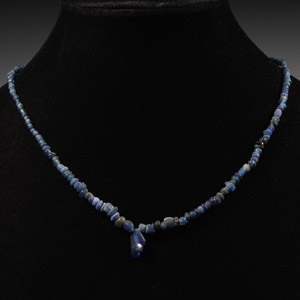
Roman and Other Bead Necklace
1st century A.D. and laterSold for (Inc. bp): £39
A restrung group of mainly opaque blue glass beads of various types. 9.54 grams, 65 cm long
Acquired 1980-2015. Ex Abelita family collection. -
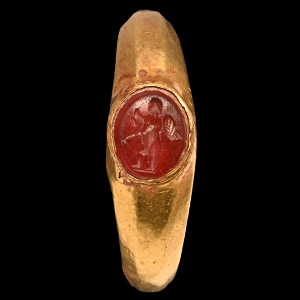
Roman Gold ring with Winged Eros Gemstone
1st-2nd century A.D.Estimate: £1,500 - 2,000 (‡+bp*)
Opening Bid: £750
A hollow-formed gold finger ring with facetted shoulders, inset cabochon intaglio of Eros (Cupid) in flight. 3.22 grams, 24.20 mm overall, 16.84 mm internal diameter (approximate size British J 1/2, USA 5, Europe 9.32, Japan 9)
Acquired early 1990s. Ex private American collection; thence by descent. Private Swiss collection since 1998. -
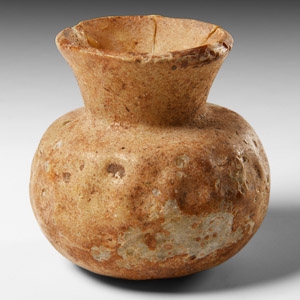
Roman Dimpled Glass Jar
1st-4th century A.D.Sold for (Inc. bp): £78
An opaque glass jar of squat, bulbous form and with trumpet-style neck and mouth, the body decorated with shallow dimples; repaired. 36.9 grams, 47 mm wide
Acquired 2000s. Ex London, UK, collection.
