
Loading, please wait...
LOT 1040
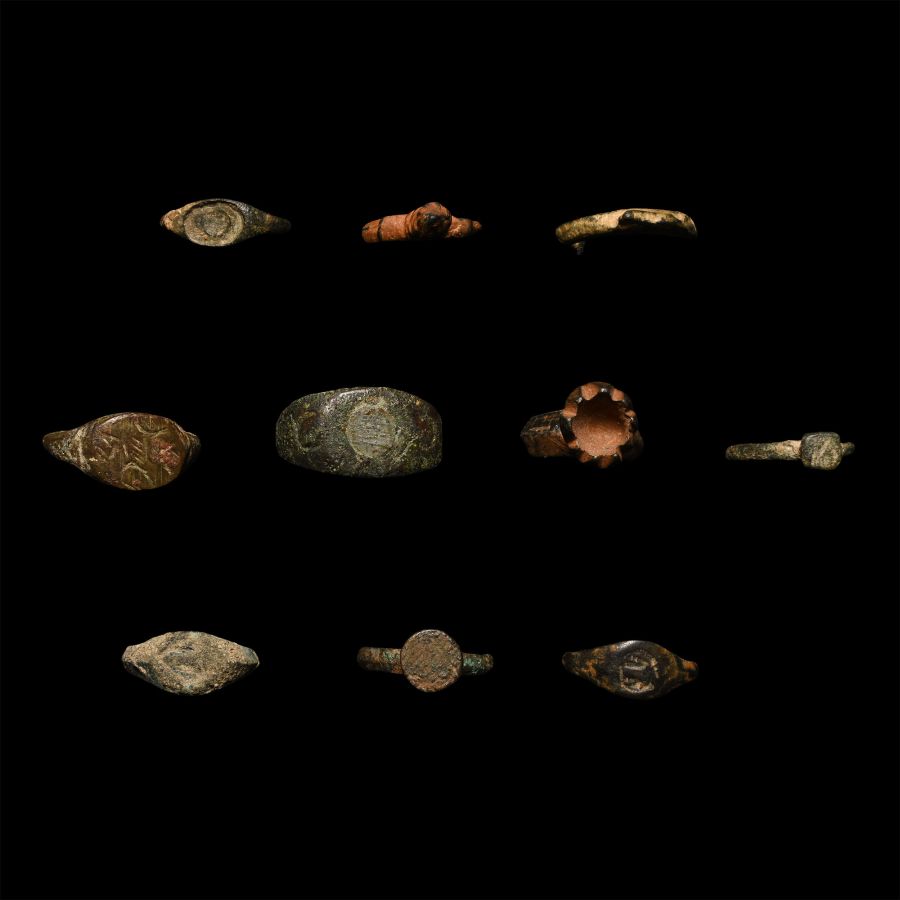
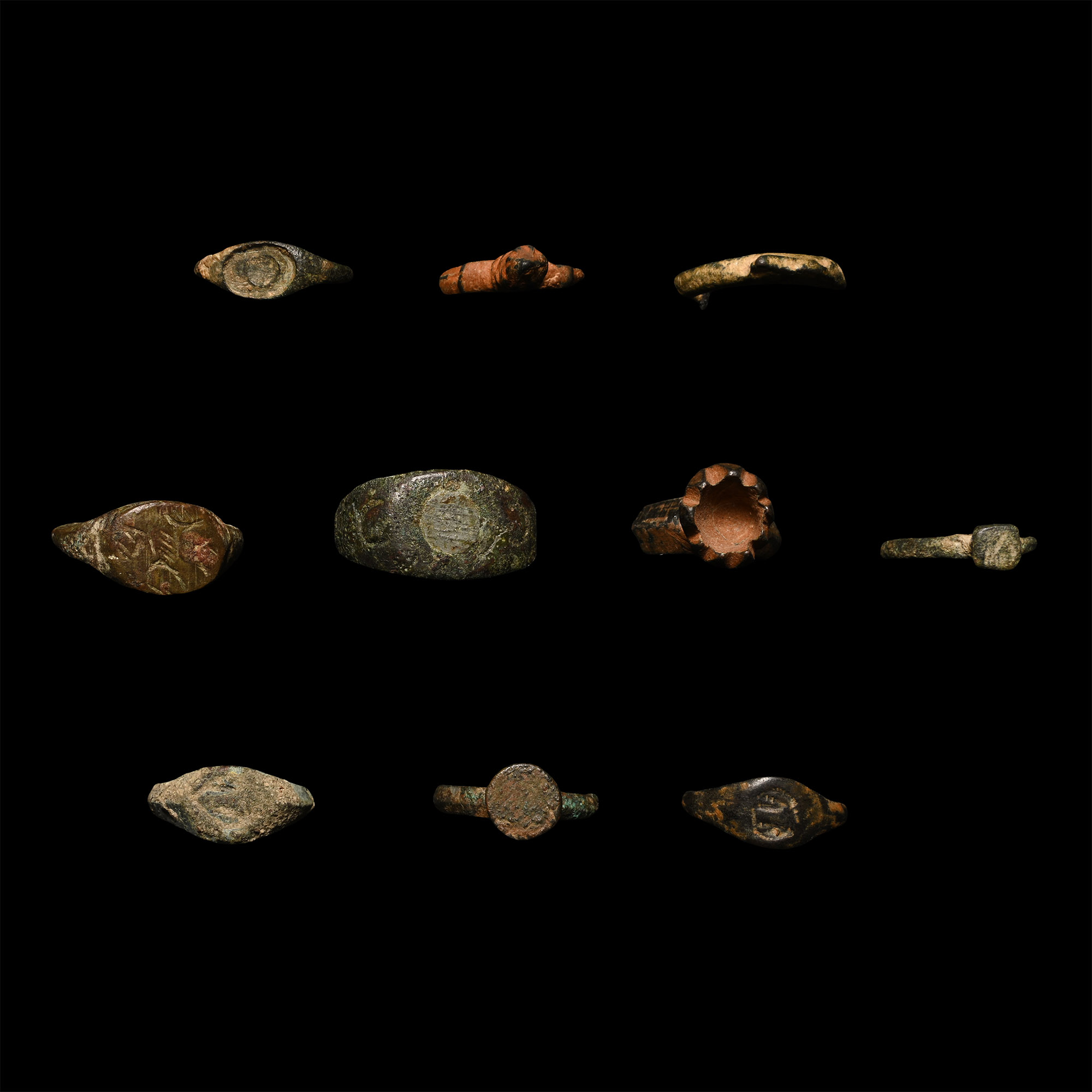
Roman to Byzantine Bronze Ring Group
2ND-8TH CENTURY A.D.
5/8 - 1 in. (25.58 grams total, 16-27 mm).
Comprising nine rings with bezels, one possibly representing a coiled snake. [10, No Reserve]
ProvenanceBonhams, Knightsbridge, London, Antiquities Sale, Thursday 22nd April 1999, no.143 (part).
Property of a West Northamptonshire, UK, gentleman.
Accompanied by a copy of the Bonhams invoice.
TimeLine Auctions follows a vetting process to ensure the authenticity and legality of all items, reinforcing our commitment to integrity and responsible trading. Each antiquity, antique, and coin lot undergoes thorough examination by a vetting committee of at least ten external specialists, professional trade association members, scientists, and archaeologists: Our Vetting Process
AUCTIONS:
TimeLine is a leading auction house specialising in antiquities, ancient art, collectables, natural history, coins, medals, and books. Our auctions offer museums, collectors, historians, and enthusiasts the opportunity to acquire unique and historically significant pieces.
-
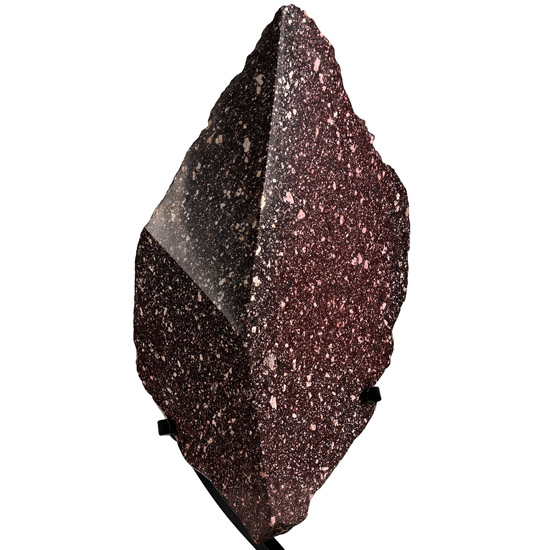
Historic Roman Cut and Polished Roman Imperial Purple Porphyry Section
Sold for (Inc. bp): £1,170
Comprising a triangular piece, cut and polished on several sides, probably recycled material mined in ancient Roman times between the 1st and 5th centuries A.D.; mounted on a custom-made metal display stand. 5.97 kg total, 38 cm including stand
Acquired on the UK art market since the 1990s. From the private collection of a Somerset gentleman.
Mons Porphyrites (today Jabal Abu Dukhkhan) is the mountainous site of a group of ancient quarries in the Red Sea Hills of the inhospitable eastern desert in Egypt, a five-day trip from the Nile during Roman times. They were discovered by Caius Cominus Leugas in 18 A.D., and during the Roman Empire, the mines officially belonged to the emperor and were the only known source of the Imperial Porphyry, Mons Porphyrites. This dark purple stone was associated with royalty and used for prestigious sculpture and architecture. The location of the mines was lost sometime in the 5th century and rediscovered in the early 19th century. Excavations in the area have revealed the well-preserved quarries and the dwelling places of the quarrymen, and also thousands of ostraca have been discovered containing messages that provide details of how the quarrying took place, and of how the highly skilled quarrymen ordered their food. -
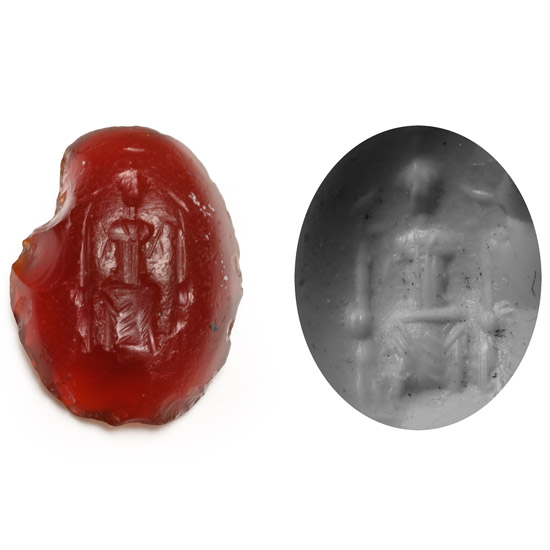
Roman Carnelian Gemstone with Minerva
2nd-3rd century A.D.Sold for (Inc. bp): £65
Plano-convex in section with intaglio facing figure of Minerva with a spear in each hand; supplied with a museum-quality impression. 0.80 grams, 14.03 mm
From the private collection of a European gentleman (1942-2024), formed since the 1970s. -
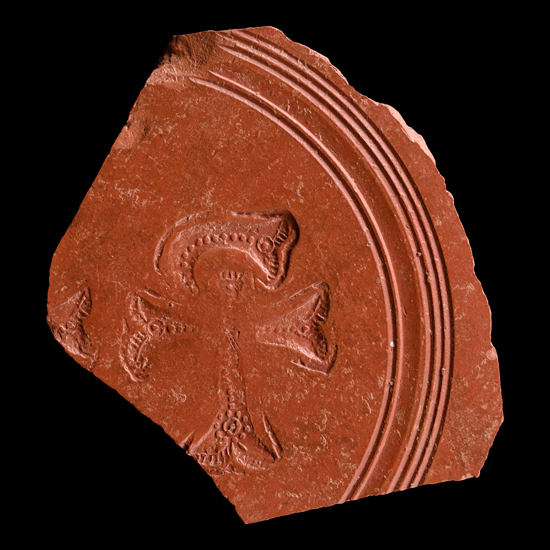
Roman Redware Plate Fragment with Chi Rho
4th century A.D.Sold for (Inc. bp): £85
An irregular fragment showing concentric banding and a stylised Christogram motif. 49 grams, 83 mm
Acquired on the UK art market from the 1990s. From the private collection of a Lincolnshire, UK, gentleman.
