
Loading, please wait...
LOT 0868
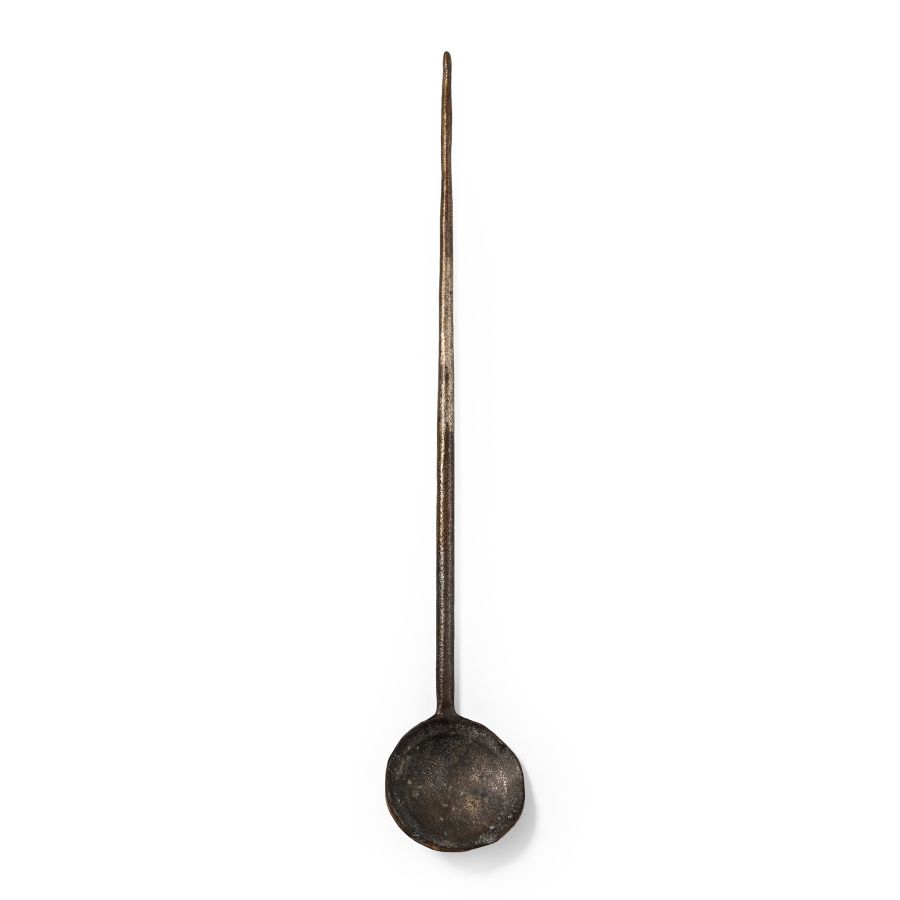
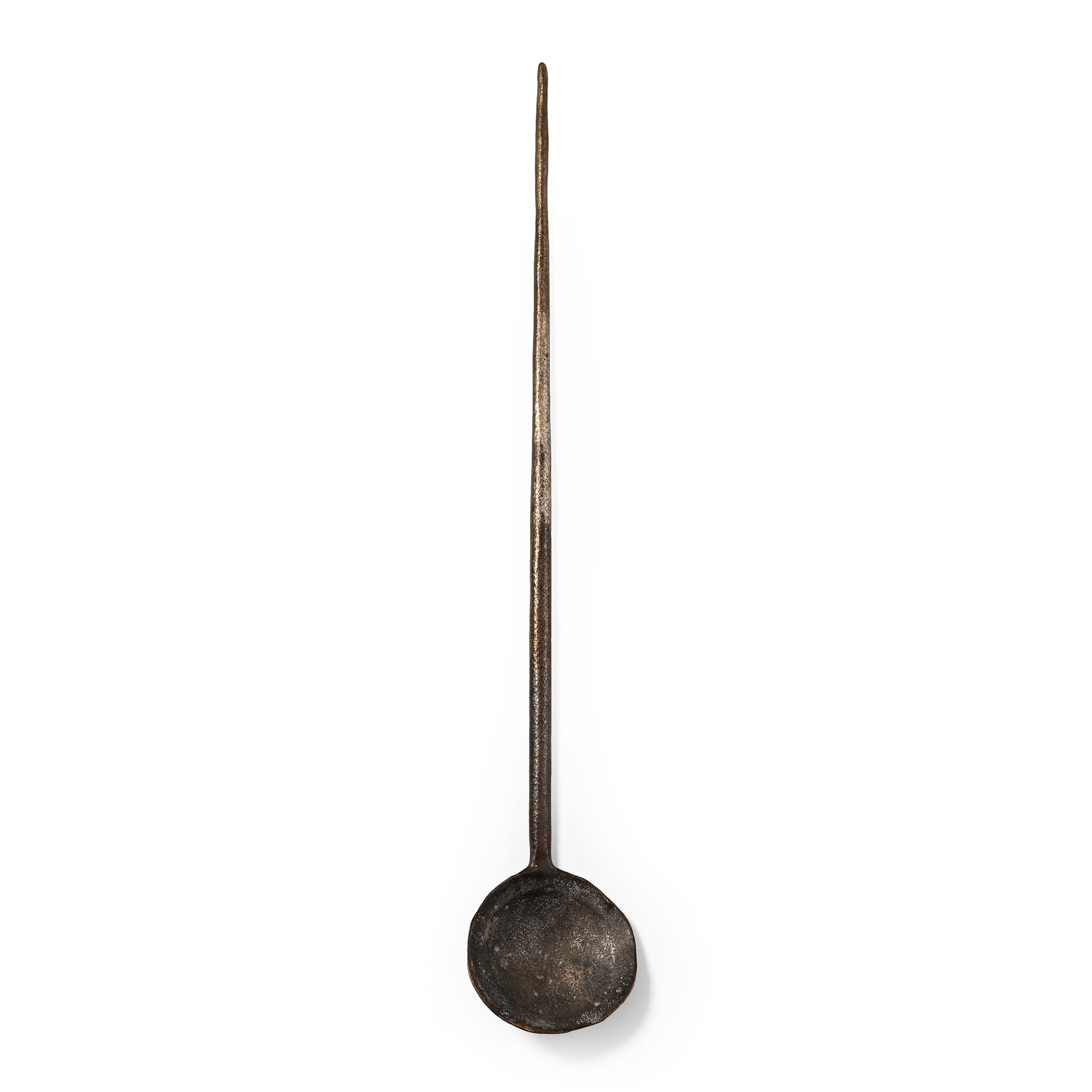
Roman Tinned Bronze Cochlear Spoon
CIRCA 2ND-3RD CENTURY A.D.
5 1/4 in. (6.91 grams, 13.5 cm).
Featuring a long, pointed handle and a round bowl. [No Reserve]
ProvenanceFrom the private collection of a South London, UK, gentleman, formed since the early 1970s; thence by descent 2006.
CONDITIONTimeLine Auctions follows a vetting process to ensure the authenticity and legality of all items, reinforcing our commitment to integrity and responsible trading. Each antiquity, antique, and coin lot undergoes thorough examination by a vetting committee of at least ten external specialists, professional trade association members, scientists, and archaeologists: Our Vetting Process
AUCTIONS:
TimeLine is a leading auction house specialising in antiquities, ancient art, collectables, natural history, coins, medals, and books. Our auctions offer museums, collectors, historians, and enthusiasts the opportunity to acquire unique and historically significant pieces.
-
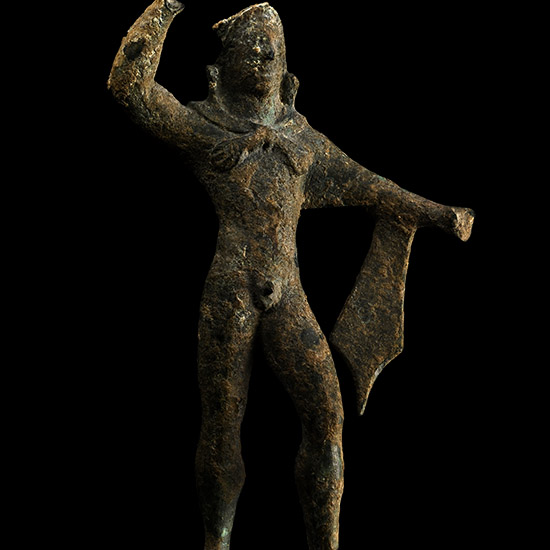
Roman Bronze Figure of Hercules with Lion-Skin Headdress
2nd century B.C.Sold for (Inc. bp): £780
Depicting Hercules in heroic nudity, standing with his legs slightly apart, the right leg set back and the left, slightly bent, advanced outward; his right arm raised, the forearm bent at a right angle, while the clenched hand originally held a club, now lost; the left arm extending forward and supporting the lion skin; the left hand, also clenched, probably held a further attribute; the stylised lion skin draped over the hero's head, terminating in two pointed flaps at either side, and fastened across the chest with the so-called 'Heracles knot', beneath which the forepaws of the lion are rendered with deeply incised claw; accompanied by a display stand. 443 grams total, 14 cm including stand
The surface retains a thick, undisturbed green patina. Minor losses are present and may plausibly be interpreted as the result of ritual damage in antiquity.
Acquired in Germany before 2000s. English private collection. Bertolami Fine Art, London, Auction 85, 14 December 2020, no.11. This lot has been checked against the Carabinieri Database of stolen works of art.
The sculpture reproduces the iconographic type of the charging Hercules, a motif widely attested in ancient Italy, particularly in the Umbro-Sabellian region, and ultimately derived from the Magna Graecia artistic tradition. The widespread adoption of this iconographic scheme, repeated with only minor variations, reflects the development of local cults dedicated to the hero, who was at times assimilated to indigenous deities. It has also been suggested that this type ultimately derives from a bronze original identified as the Herakles Alexikakos, attributed to the Argive sculptor Hageladas, active between the late 6th and early 5th century B.C. -
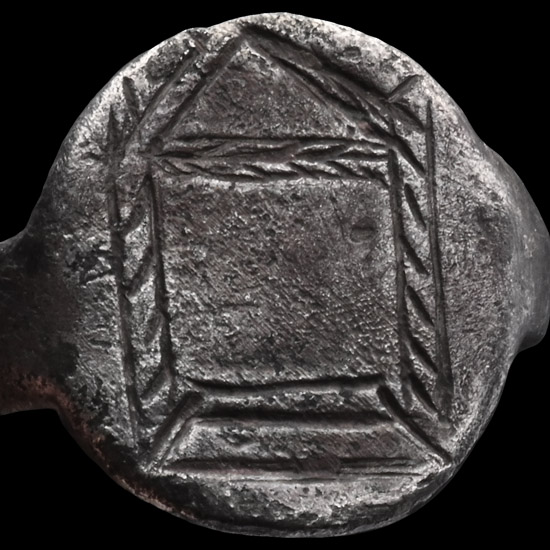
Roman Silver Ring with Building
Circa 2nd-4th century A.D.Sold for (Inc. bp): £364
Comprising a thick hoop and a large oval bezel with a temple(?) with two pillars and a portico. 11.20 grams, 24.82 mm overall, 19.60 mm internal diameter (approximate size British R, USA 8 1/2, Europe 18 3/4, Japan 18)
Acquired on UK art market. Property of a Middlesex gentleman. -
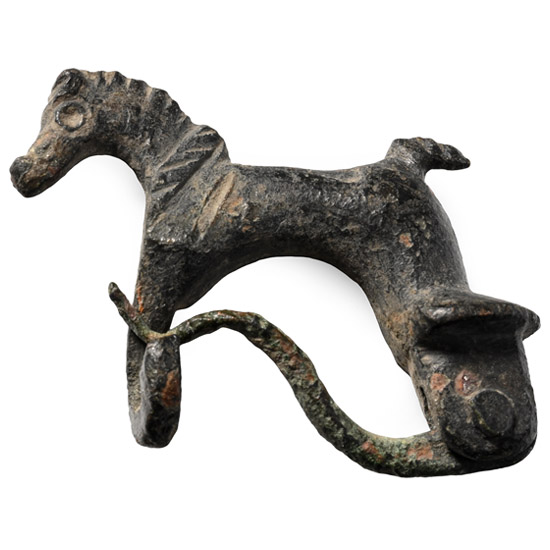
Roman Bronze Horse Brooch
2nd-3rd century A.D.Sold for (Inc. bp): £169
Bow brooch formed as a standing horse with the forelegs forming the catch, hind legs forming the pin-lugs, notched mane and pellet eyes. 8.89 grams, 34 mm
From the private coin collection of a West London, UK, gentleman, formed since the mid 1980s.
