
Loading, please wait...
LOT 0721
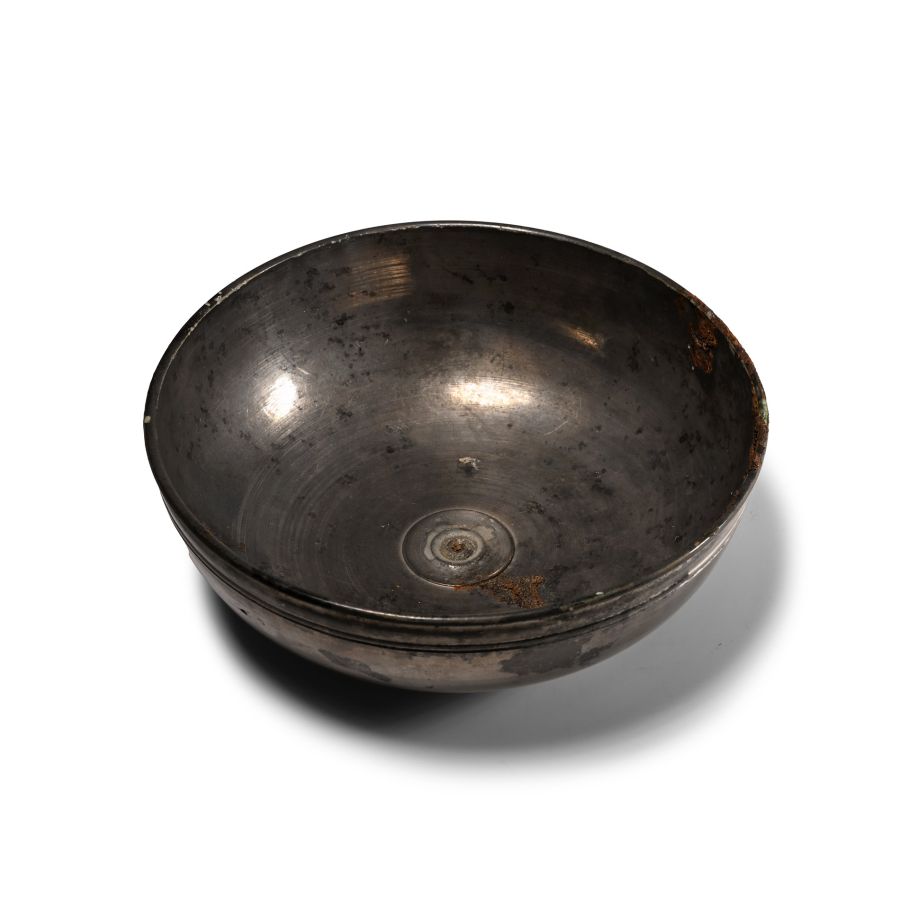
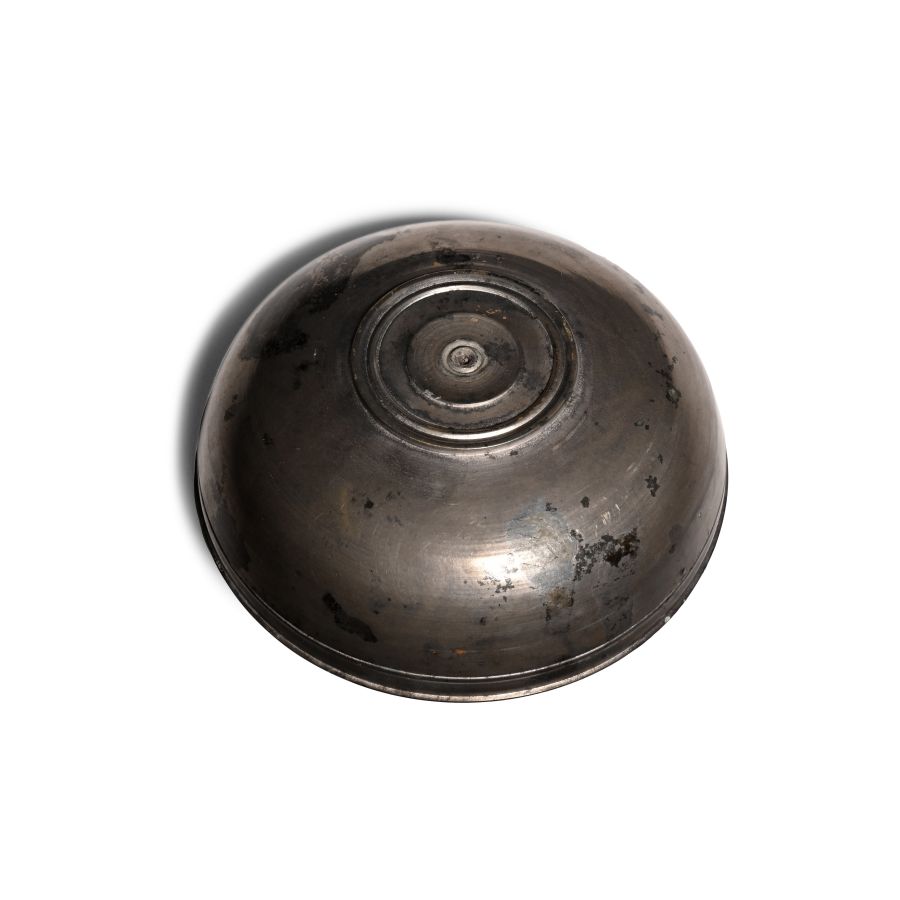
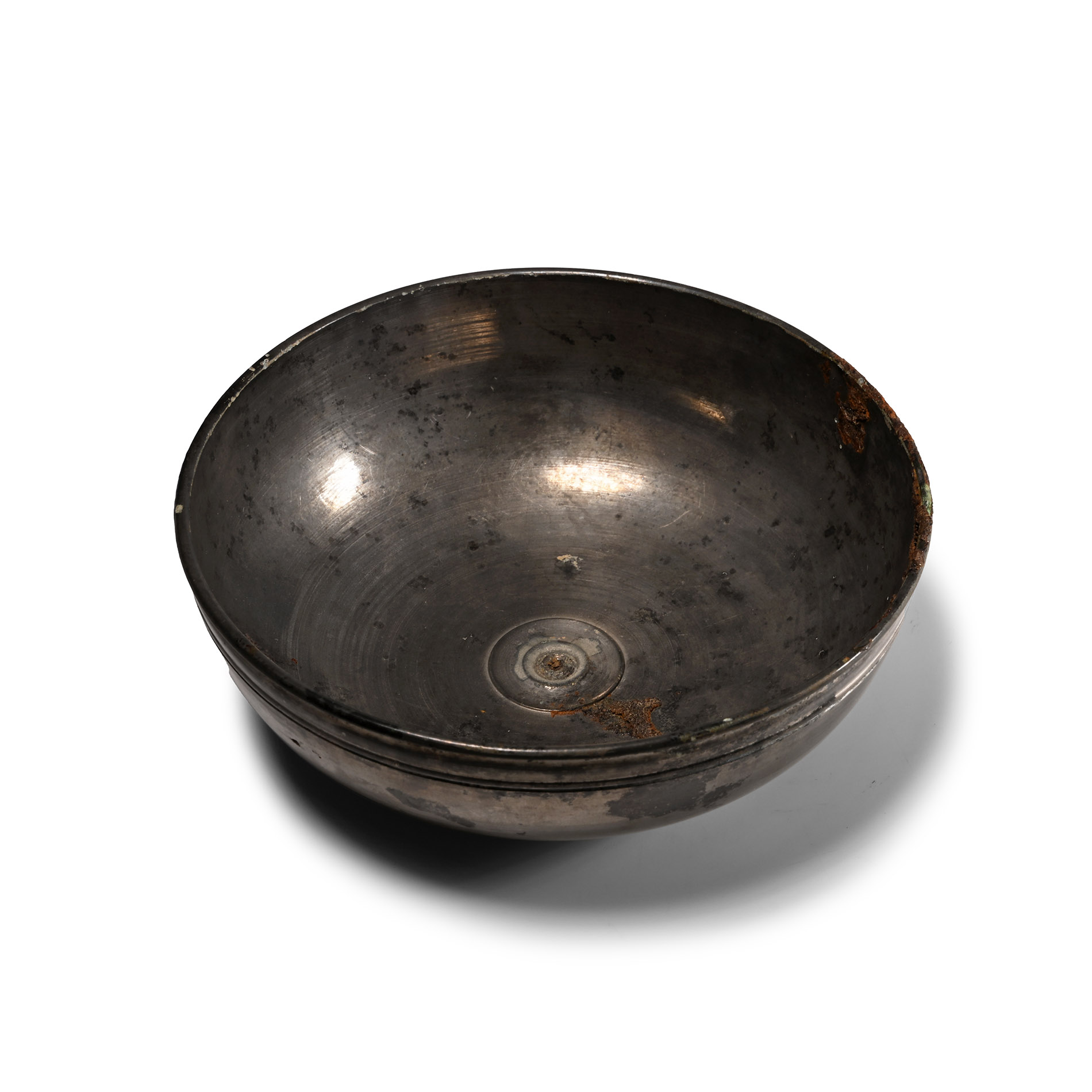
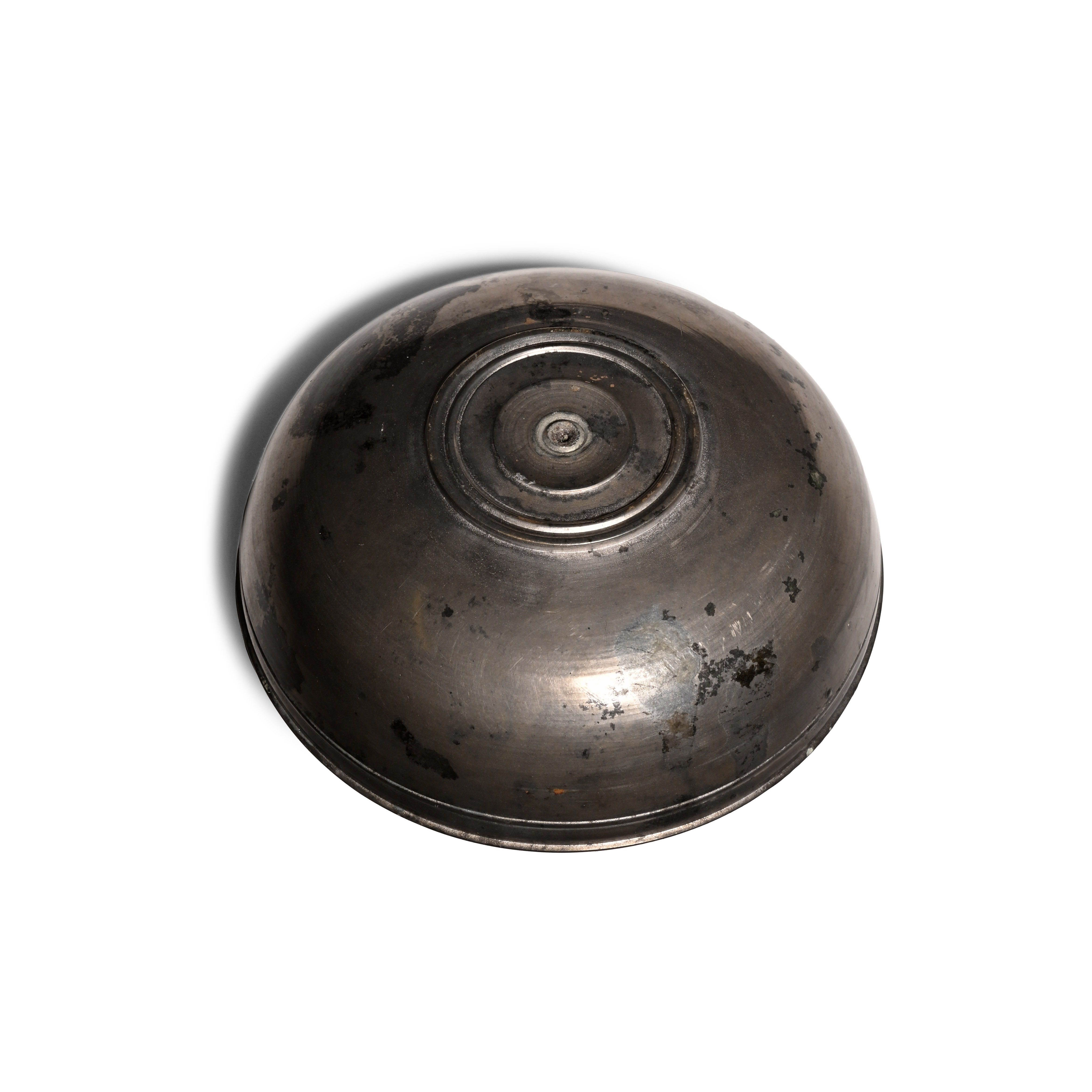
Roman Tinned Bronze Bowl
1ST-3RD CENTURY A.D.
4 1/4 in. (177 grams, 10.3 cm).
Hemispherical in profile with low foot, incised circumferential lines to rim; high-tin surface with silvery appearance.
ProvenanceAcquired in the mid 1980s-1990s.
Private collection, Switzerland, thence by descent.
Private collection, since the late 1990s.
This lot has been checked against the Interpol Database of stolen works of art and is accompanied by search certificate number no.12234-222176.
This lot has been cleared against the Art Loss Register database, and is accompanied by an illustrated lot declaration signed by the Head of the Antiquities Department, Dr Raffaele D'Amato.
Cf. Tassinari, S., La Vaisselle de Bronze, Romaine et Provinciale, au Musée des Antiquités Nationales, XXIXe supplément de Gallia, Paris, 1975, items 88, 90, for similar types.
CONDITIONTimeLine Auctions follows a vetting process to ensure the authenticity and legality of all items, reinforcing our commitment to integrity and responsible trading. Each antiquity, antique, and coin lot undergoes thorough examination by a vetting committee of at least ten external specialists, professional trade association members, scientists, and archaeologists: Our Vetting Process
AUCTIONS:
TimeLine is a leading auction house specialising in antiquities, ancient art, collectables, natural history, coins, medals, and books. Our auctions offer museums, collectors, historians, and enthusiasts the opportunity to acquire unique and historically significant pieces.
LOT 0721
Roman Tinned Bronze Bowl
Estimate £1,500 - 2,000€1,740 - 2,320 (for guidance only)$2,030 - 2,700 (for guidance only)
-
.jpg)
Roman Silver Statuette of Cybele
1st-2nd century A.D.Sold for (Inc. bp): £585
Modelled in the round wearing a floor-length palla draped over her head and over her robe, with staff (broken) in her left hand and patera in her right; thick dorsal loop. 14.01 grams, 34 mm
Acquired in the late 1980s-early 1990s. Private collection, London, UK. This lot is accompanied by an illustrated lot declaration signed by the Head of the Antiquities Department, Dr Raffaele D'Amato. -
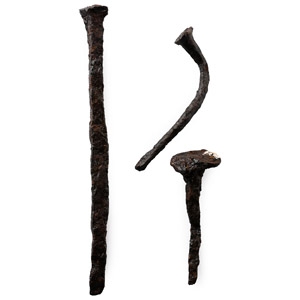
Roman Iron Nail Collection
1st-4th century A.D.Sold for (Inc. bp): £26
Including clout nail with narrow shank, and other types. 31.4 grams total, 4.9-11.4 cm
Found Roman Palace, Fishbourne, Chichester, Sussex, UK. From the private collection of Kenneth Machin (1936-2020), Buckinghamshire, UK; his collection of antiquities and natural history was formed since 1948; thence by descent. This lot is accompanied by an illustrated lot declaration signed by the Head of the Antiquities Department, Dr Raffaele D'Amato. -
.jpg)
Roman Silver-Gilt Pin with Nude Cupid Holding Bee
1st-2nd century A.D.Sold for (Inc. bp): £650
Comprising a tapering shank and square head supporting a nude Cupid in conical hat clutching a winged insect to his chest. 12.31 grams, 76 mm
Acquired in the late 1980s-early 1990s. Private collection, London, UK. This lot is accompanied by an illustrated lot declaration signed by the Head of the Antiquities Department, Dr Raffaele D'Amato.
