
Loading, please wait...
LOT 0792
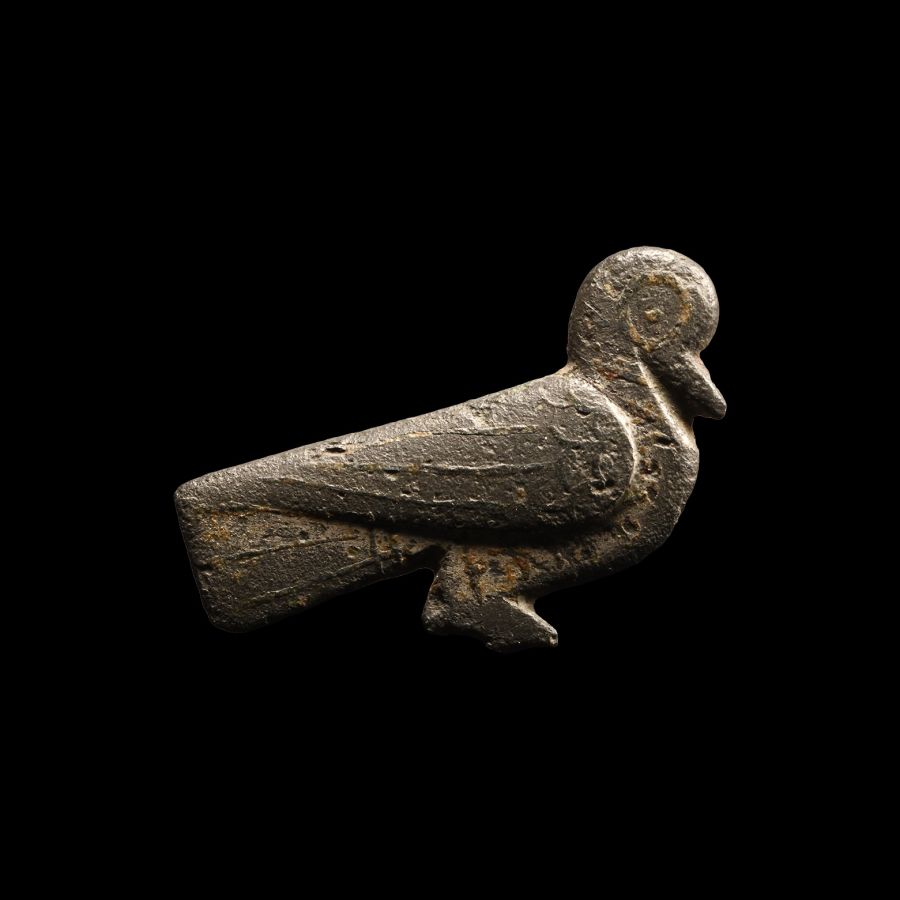
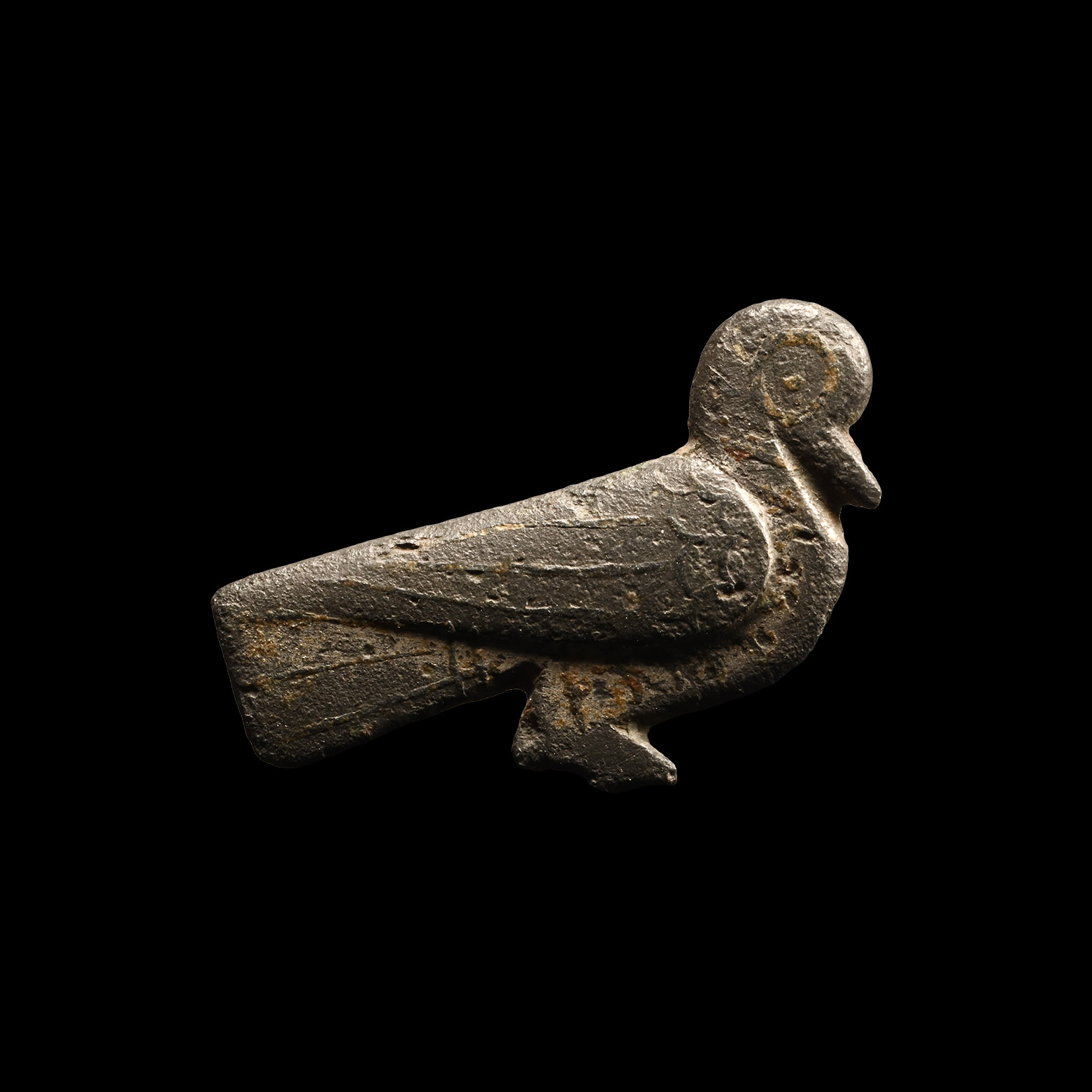
Roman 'The Rodings' Silvered Bronze Bird Brooch
CIRCA 2ND CENTURY A.D.
1 in. (2.9 grams, 25 mm).
Complete with pin lug, pin and catchplate to reverse; bird standing right with wings folded against the body, remains of silvered detailing to the feathers and head. [No Reserve]
ProvenanceFound The Rodings, Essex, UK.
LiteratureSee PAS WAW-FFAE08, WILT-98EBB0, WILT-695751, for Roman duck brooches.
FootnotesExcavating an archaeological site at Salthouse in October 1980, Alex Vines found a bronze bird thought to be part of a Roman duck brooch. The shape was slightly different from our specimen, but it confirmed that brooches shaped as ducks were used by civilians in 2nd-3rd century Roman Britannia. The zoomorphic brooches were typical in Britain as many of the birds shown were either representative of native birds or of ducks.
CONDITIONTimeLine Auctions follows a vetting process to ensure the authenticity and legality of all items, reinforcing our commitment to integrity and responsible trading. Each antiquity, antique, and coin lot undergoes thorough examination by a vetting committee of at least ten external specialists, professional trade association members, scientists, and archaeologists: Our Vetting Process
AUCTIONS:
TimeLine is a leading auction house specialising in antiquities, ancient art, collectables, natural history, coins, medals, and books. Our auctions offer museums, collectors, historians, and enthusiasts the opportunity to acquire unique and historically significant pieces.
-
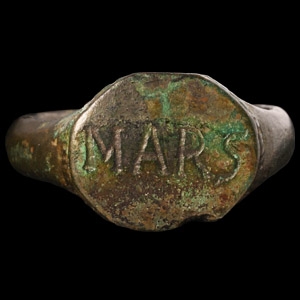
Roman Bronze Ring with Inscription
1st-4th century A.D.Sold for (Inc. bp): £494
The hoop with convex outer face and rounded octagonal bezel, later inscribed 'MARS'. 4.54 grams, 23.00 mm overall, 16.93 mm internal diameter (approximate size British N, USA 6 1/2, Europe 13.72, Japan 13)
Acquired on the German art market around 2000s. From the collection of an EU gentleman living in the UK. -
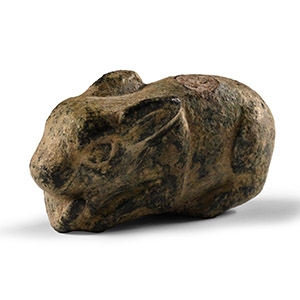
Roman Bronze Crouching Rabbit Statuette
1st-4th century A.D.Estimate: £200 - 300 (+bp*)
Opening Bid: £111
Modelled in the round with naturalistic detailing, its front paws holding onto a food item. 39.9 grams, 34 mm
‘The Ancient Menagerie Collection’ formerly the property of a Cambridgeshire lady, collected since the 1990s and acquired from auctions and dealers throughout Europe and the USA, now ex London collection. -
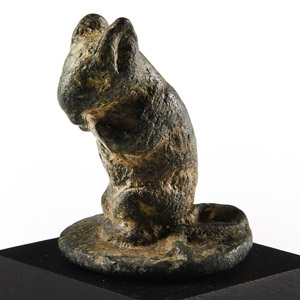
Roman Bronze Seated Upright Mouse Statuette
1st-4th century A.D.Sold for (Inc. bp): £260
Modelled with naturalistic detailing standing as if nibbling at food held between the forepaws, on a circular base. 52 grams, 36 mm
‘The Ancient Menagerie Collection’ formerly the property of a Cambridgeshire lady, collected since the 1990s and acquired from auctions and dealers throughout Europe and the USA, now ex London collection.
