
Loading, please wait...
LOT 0634
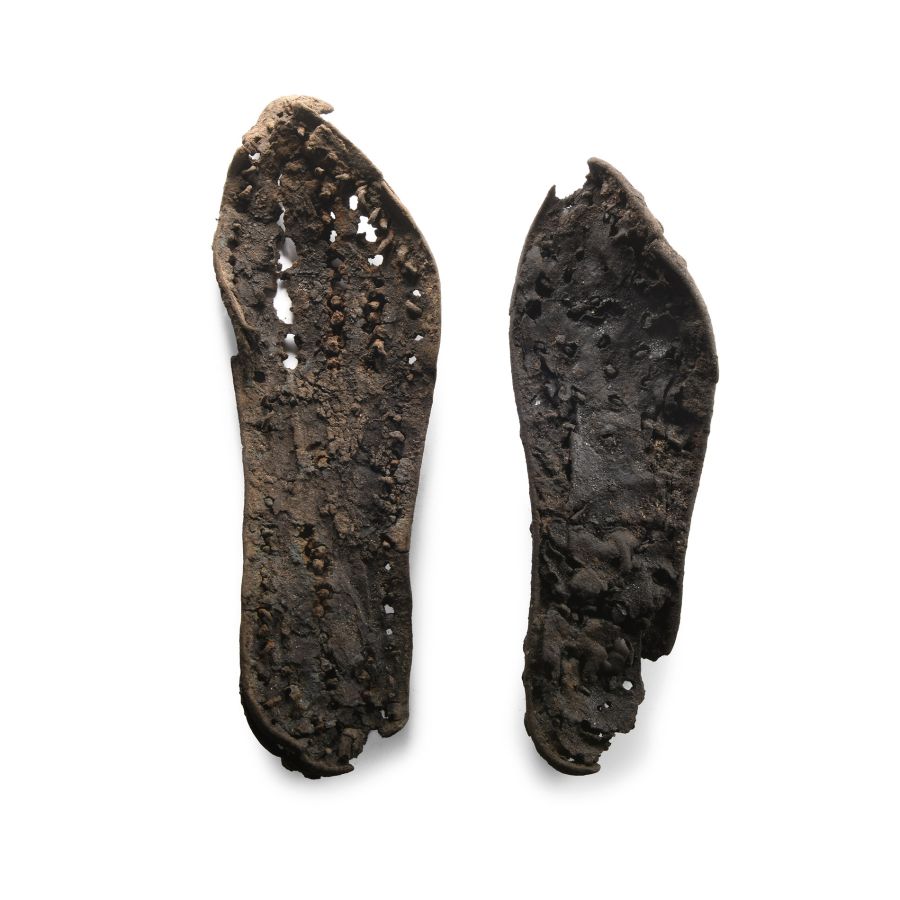
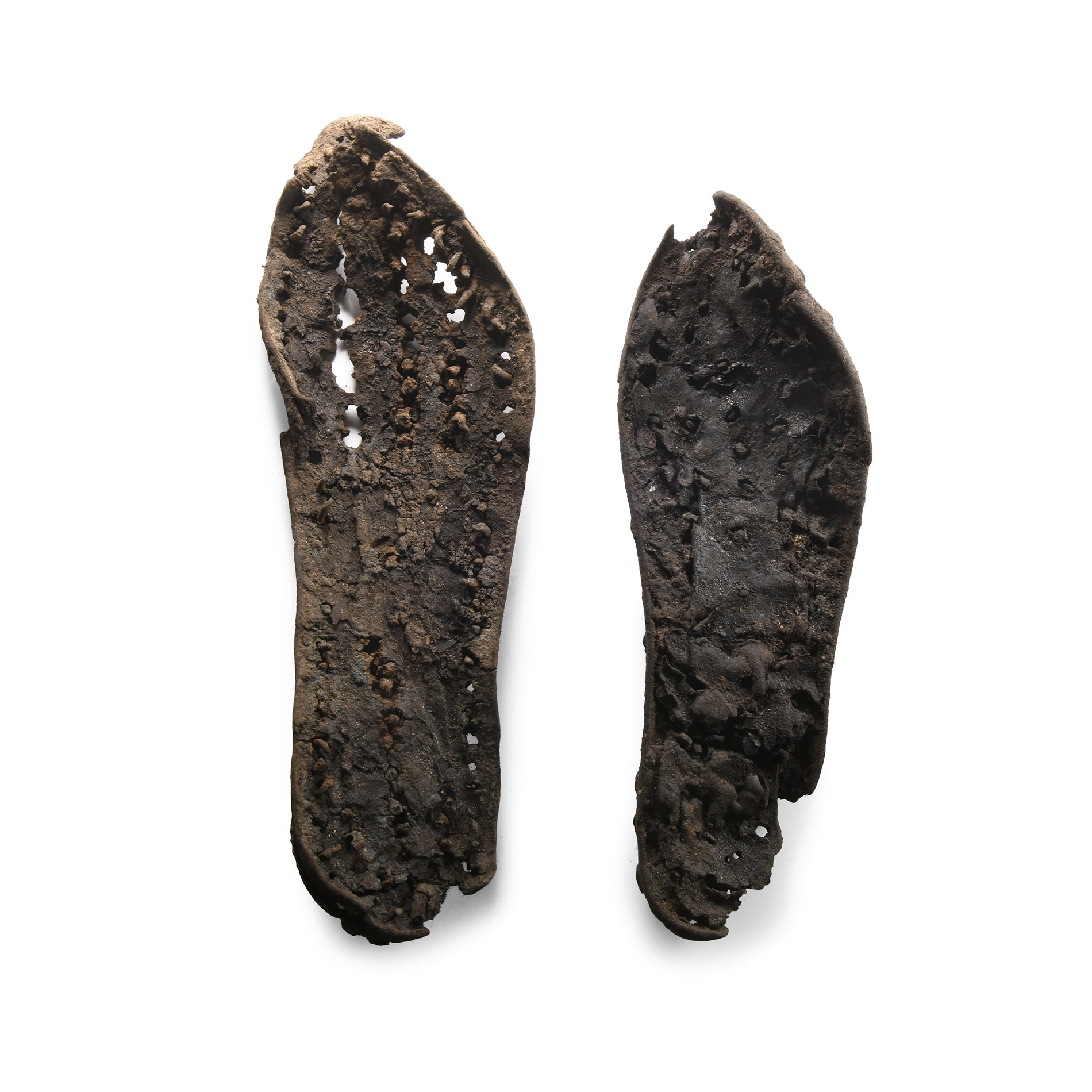
Roman 'Thames' Leather Marching Shoe Sole Group
1ST-4TH CENTURY A.D.
8 7/8 - 9 5/8 in. (248 grams total, 22.5-24.5 cm).
With perforations for attachment to the shoe uppers through nails; one fragmentary. [2, No Reserve]
ProvenanceFound by Steve Brooker on the Thames foreshore at Embankment, London, UK, 2001.
Property of a Nottinghamshire gentleman.
Cf. Trustees of the British Museum, Antiquities of the Roman Britain, London, 1964, p.11 fig.4, for similar, from London.
FootnotesWaterlogged conditions on the Thames waterfront have created the oxygen-free environment needed for the survival of ancient organic artefacts. Among the studied or published Roman leatherwork from London, 89% is composed of footwear. The introduction of vegetable tanned leather and the expansion of ironworking were some of the major technological innovations of the Roman period; allowing the mass production of sturdy, hobnailed shoes.
CONDITIONTimeLine Auctions follows a vetting process to ensure the authenticity and legality of all items, reinforcing our commitment to integrity and responsible trading. Each antiquity, antique, and coin lot undergoes thorough examination by a vetting committee of at least ten external specialists, professional trade association members, scientists, and archaeologists: Our Vetting Process
AUCTIONS:
TimeLine is a leading auction house specialising in antiquities, ancient art, collectables, natural history, coins, medals, and books. Our auctions offer museums, collectors, historians, and enthusiasts the opportunity to acquire unique and historically significant pieces.
-
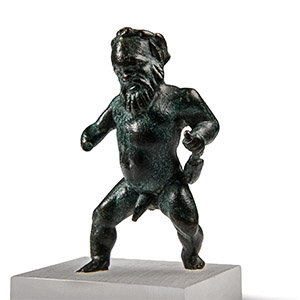
Roman Bronze Silenus Figurine
1st-2nd century A.D.Estimate: £3,000 - 4,000 (‡+bp*)
Opening Bid: £1,400
Standing nude with vine-leaf wreath on the brow, muscular physique, dressed beard and stern facial expression, holding a bunch of grapes in the left hand; accompanied by a custom-made display stand. 104 grams, 65 mm high (127 grams total, 71 mm high including stand)
Private Swiss collection, acquired 2001. This lot has been checked against the Interpol Database of stolen works of art and is accompanied by search certificate no.11621-199008.
Silenus was closely associated with the Dionysian cult. He was a deity associated with the forest, wine, drunkenness, the treading-dance of the wine press as an orgiastic ritual. While intoxicated, Silenus was believed to possess the power of prophecy. He helped raise the god Dionysus, son of Zeus, after he was entrusted to him by Hermes. Once, while travelling with Dionysus through Phrygia, Silenus was captured by King Midas who treated his captive hospitably. As a reward, Dionysus granted the king his famous 'golden touch'. The sacred animal of Silenus is the donkey, the mode of transport he often used according to Greek mythology. -
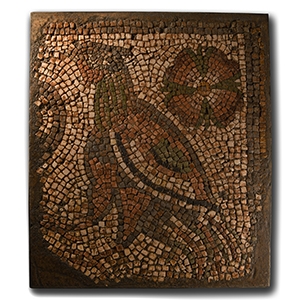
Eastern Roman Mosaic Depicting a Bird
4th-6th century A.D.Sold for (Inc. bp): £2,860
In a rectangular matrix; cream, olive, pink and other tesserae depicting a perching bird with rosette above. 15.4 kg, 43.5 x 50.4 cm
Former collection of Mr Pierre Bart (1889-1964), official of the French mandate in Syria and Lebanon (1919-1936) and delegate to the Lebanese government until 1946. Transmitted by descent. -
.jpg)
Roman Marbled Amber Glass Vase
4th century A.D.Sold for (Inc. bp): £585
Of squat carinated form, slender tapering neck with everted rim, decorative white marbling over the body. 47 grams, 85 mm high
Acquired early 1990s. Ex private American collection; thence by descent. Private collection since 1998.
