
Loading, please wait...
LOT 0824
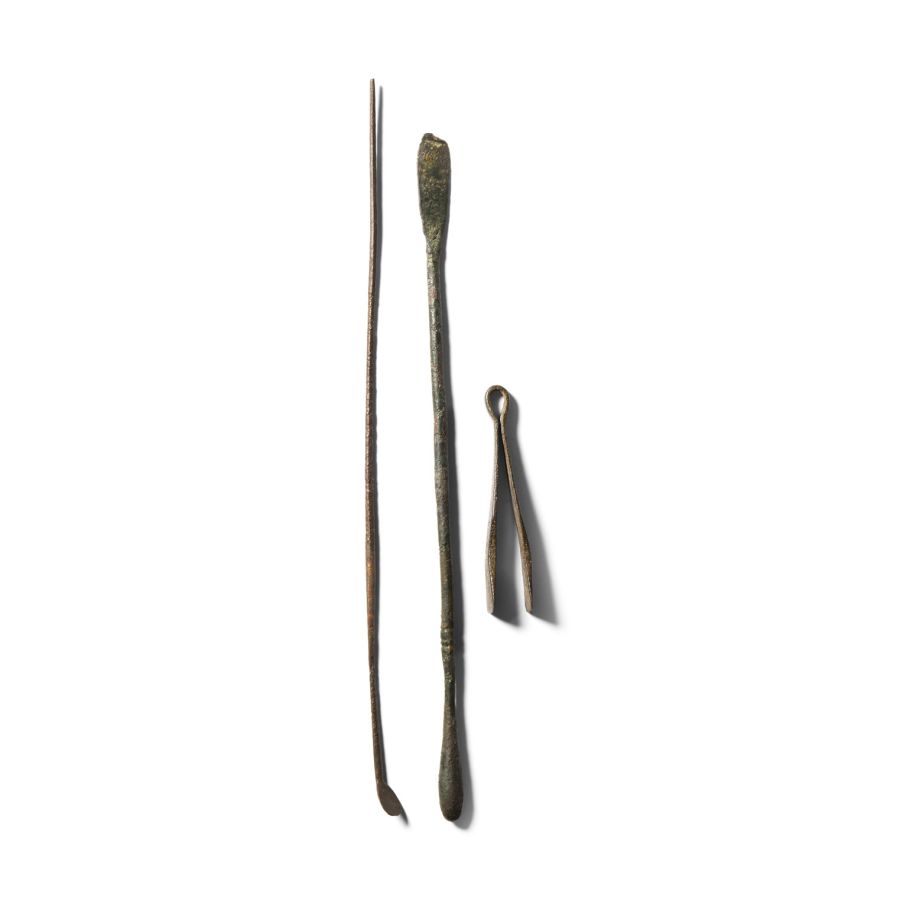
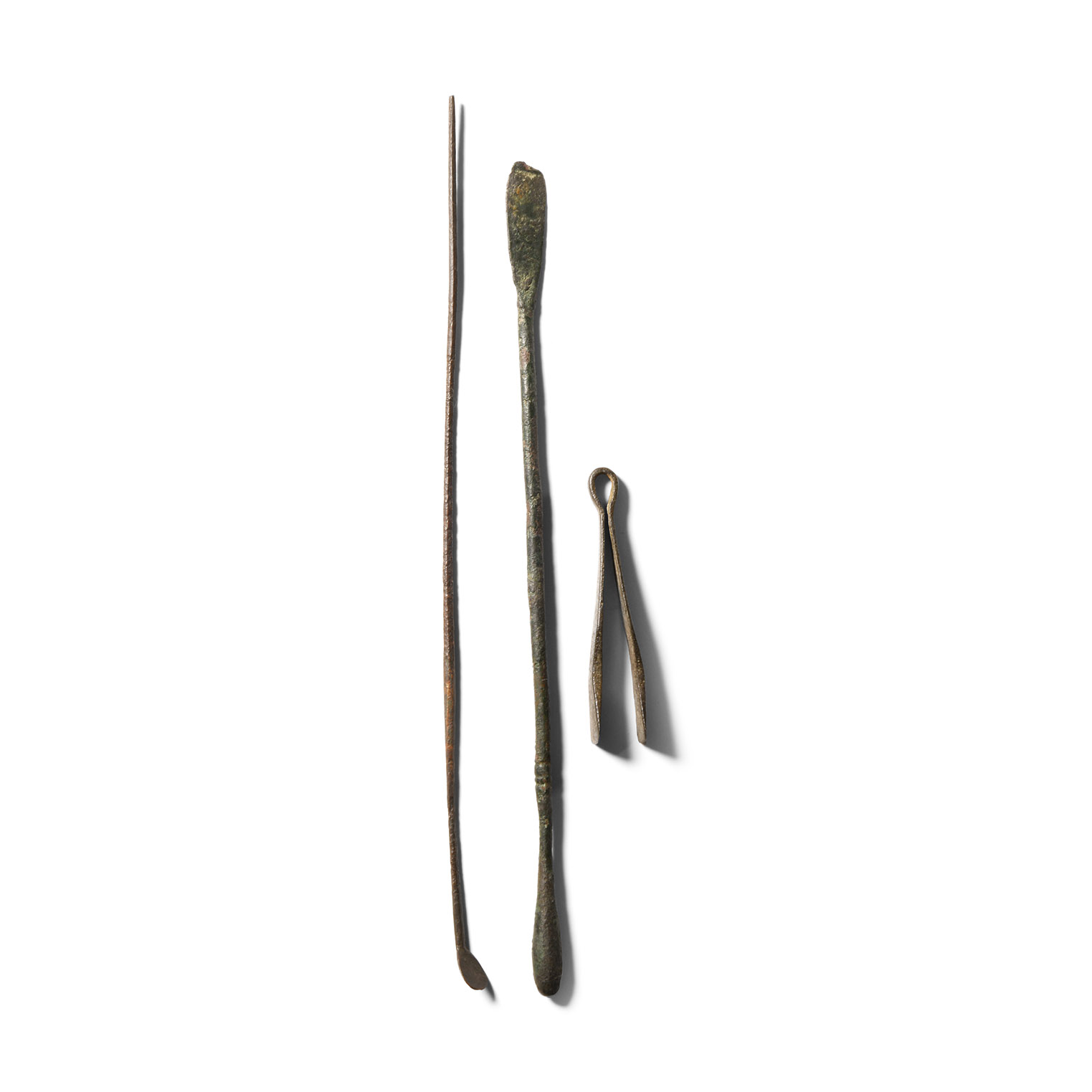
Roman 'Thames' Bronze Medical Implement Group
1ST-4TH CENTURY A.D.
1 3/4 - 5 7/8 in. (13.2 grams total, 4.6-15 cm).
Group comprising: tweezers; spatula probe or spathomele; spatula. [3, No Reserve]
ProvenanceFound Billingsgate spoil from the Thames foreshore, London, UK.
CONDITIONTimeLine Auctions follows a vetting process to ensure the authenticity and legality of all items, reinforcing our commitment to integrity and responsible trading. Each antiquity, antique, and coin lot undergoes thorough examination by a vetting committee of at least ten external specialists, professional trade association members, scientists, and archaeologists: Our Vetting Process
AUCTIONS:
TimeLine is a leading auction house specialising in antiquities, ancient art, collectables, natural history, coins, medals, and books. Our auctions offer museums, collectors, historians, and enthusiasts the opportunity to acquire unique and historically significant pieces.
-
Roman and Later Bronze Ring Collection
1st-19th century A.D.Sold for (Inc. bp): £195
Of various sizes and types, the majority with decorative bezels engraved with text, animals, sunbursts, ropework, geometric motifs, a crown and other designs, including an example with glass inlay. 94 grams total, 16-29 mm
Acquired on the UK art market. Property of a Ruislip, UK, gentleman, by inheritance. -
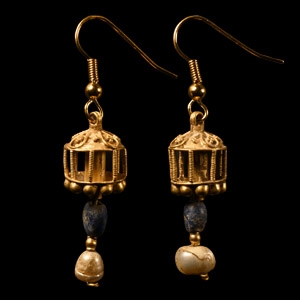
Roman Gold Earring Pair with Modern Clasps
Circa 1st-4th century A.D. and laterEstimate: £500 - 700 (+bp*)
Opening Bid: £250
Each earring composed of an openwork drum-shaped body with domed top face decorated with filigree petals, the underside displaying a ring of bulbs, central dangle suspending a blue stone bead over a collared gold spacer bead and pearl bead below; modern ear-hooks to allow for wearing. 5.17 grams total, 47 mm each
Acquired 1990s-2000s. From the collection of a North London, UK, gentleman. -
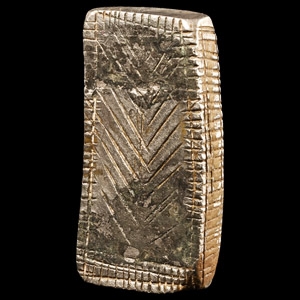
Roman Silver Ingot with Palm Branch
1st-4th century A.D.Sold for (Inc. bp): £780
Incised with a palm frond within a hatched border, hatching to three of the side edges. 14.5 grams, 26 mm
‘The Ancient Menagerie Collection’ formerly the property of a Cambridgeshire lady, collected since the 1990s and acquired from auctions and dealers throughout Europe and the USA, now ex London collection.
