
Loading, please wait...
LOT 0821
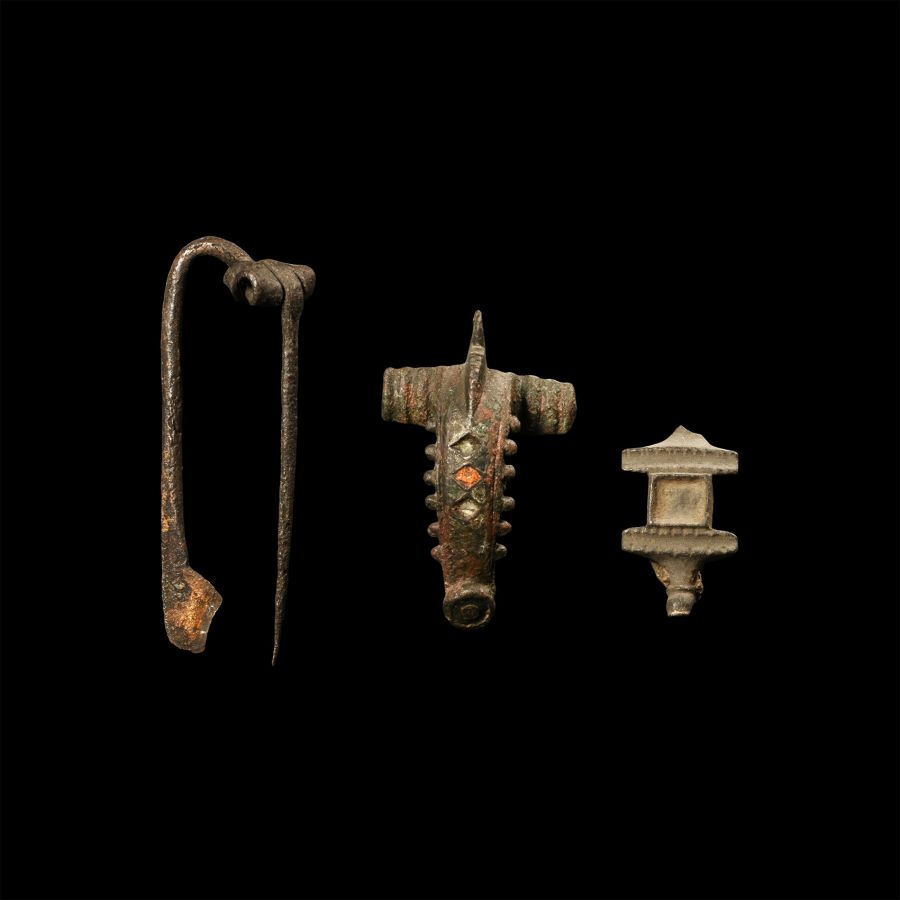
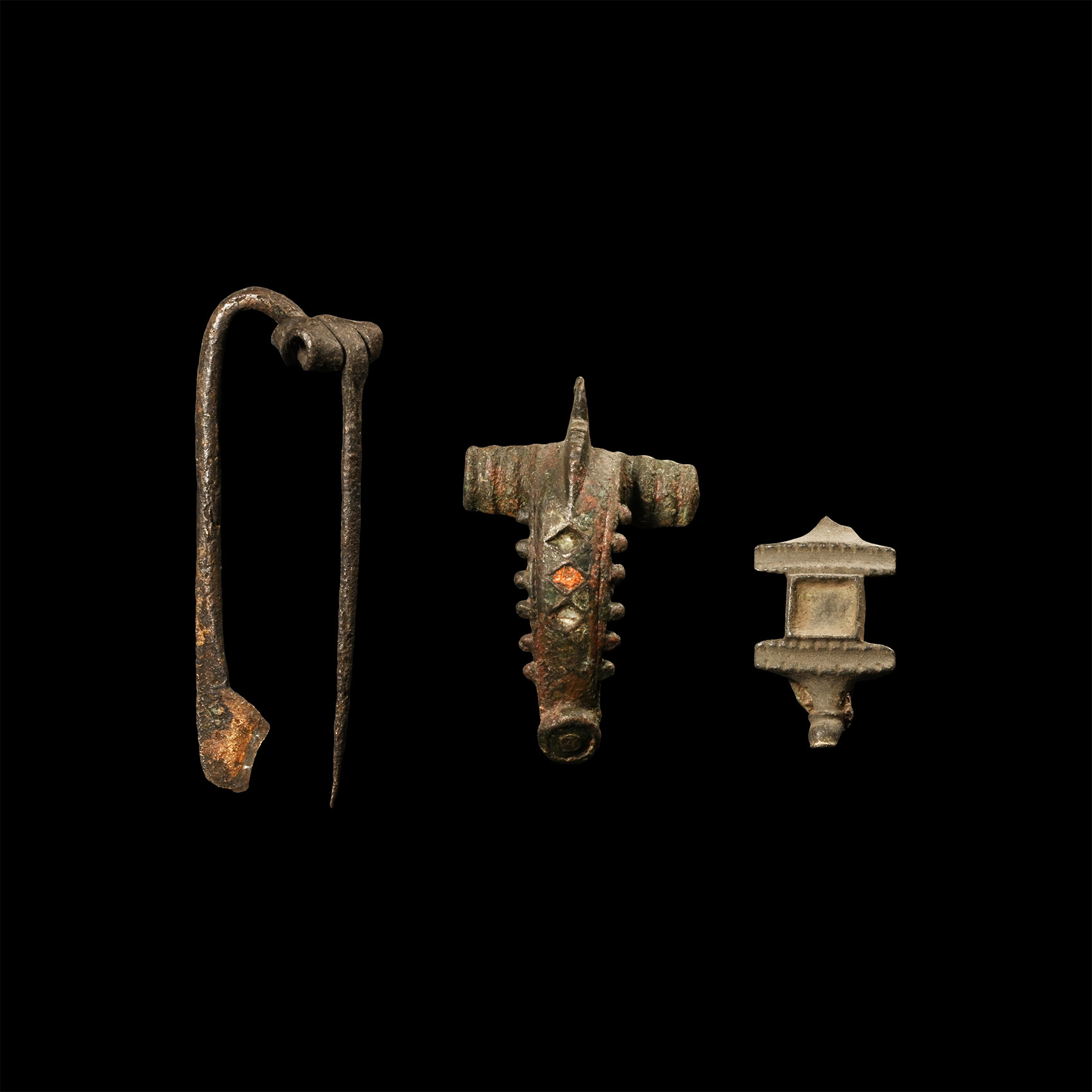
Roman 'Thames' Bronze Brooch Collection with Pins
1ST-4TH CENTURY A.D.
1 - 2 in. (17.5 grams total, 23-49 mm).
Comprising an equal-arm and saw-fish derivative type; including one brooch with remains of enamelling and two retaining their pins. [3, No Reserve]
ProvenanceFound Billingsgate spoil from the Thames foreshore, London, UK.
LiteratureSee Bayley, J. & Butcher, S., Roman Brooches in Britain: A Technological and Typological Study based on the Richborough Collection, London, 2004, for discussion.
CONDITIONTimeLine Auctions follows a vetting process to ensure the authenticity and legality of all items, reinforcing our commitment to integrity and responsible trading. Each antiquity, antique, and coin lot undergoes thorough examination by a vetting committee of at least ten external specialists, professional trade association members, scientists, and archaeologists: Our Vetting Process
AUCTIONS:
TimeLine is a leading auction house specialising in antiquities, ancient art, collectables, natural history, coins, medals, and books. Our auctions offer museums, collectors, historians, and enthusiasts the opportunity to acquire unique and historically significant pieces.
-
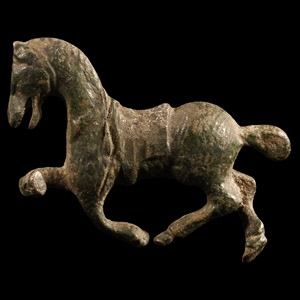
Roman Bronze Horse Statuette
1st-4th century A.D.Sold for (Inc. bp): £156
Modelled with naturalistic detailing; wearing a saddle and head collar. 13 grams, 34 mm wide
‘The Ancient Menagerie Collection’ formerly the property of a Cambridgeshire lady, collected since the 1990s and acquired from auctions and dealers throughout Europe and the USA, now ex London collection. -
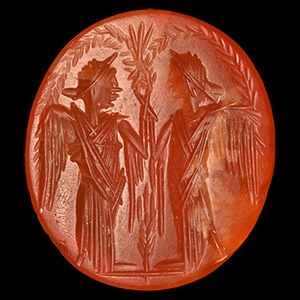
Roman Carnelian Gemstone with Two Victories
4th century A.D.Estimate: £800 - 1,000 (+bp*)
Opening Bid: £444
The oval intaglio engraved with two winged Victories, facing each other in profile, wearing long garments crossed on the breast like a trabea consularis, both holding a staff-standard with a double forked tip. 1.64 grams, 17 mm
Acquired in the late 1980s-early 1990s. Important North West London collection.
The iconography of two Victories facing each other is clearly from Late Antiquity and reflects the images of the two victorious empires - East and West - that, transformed into winged Nikes, are holding together the standard with the chi-rho (the two Greek letters forming the initials of the name of Christ), conceived as a long shaft topped by the Greek letter P (R) and the superimposed letter X. -
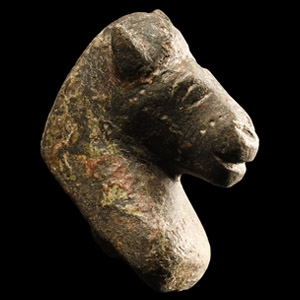
Roman Bronze Horse Head Protome
1st-4th century A.D.Sold for (Inc. bp): £91
Modelled with naturalistic detailing with signs of attachment. 24 grams, 25 mm
‘The Ancient Menagerie Collection’ formerly the property of a Cambridgeshire lady, collected since the 1990s and acquired from auctions and dealers throughout Europe and the USA, now ex London collection.
