
Loading, please wait...
LOT 0890
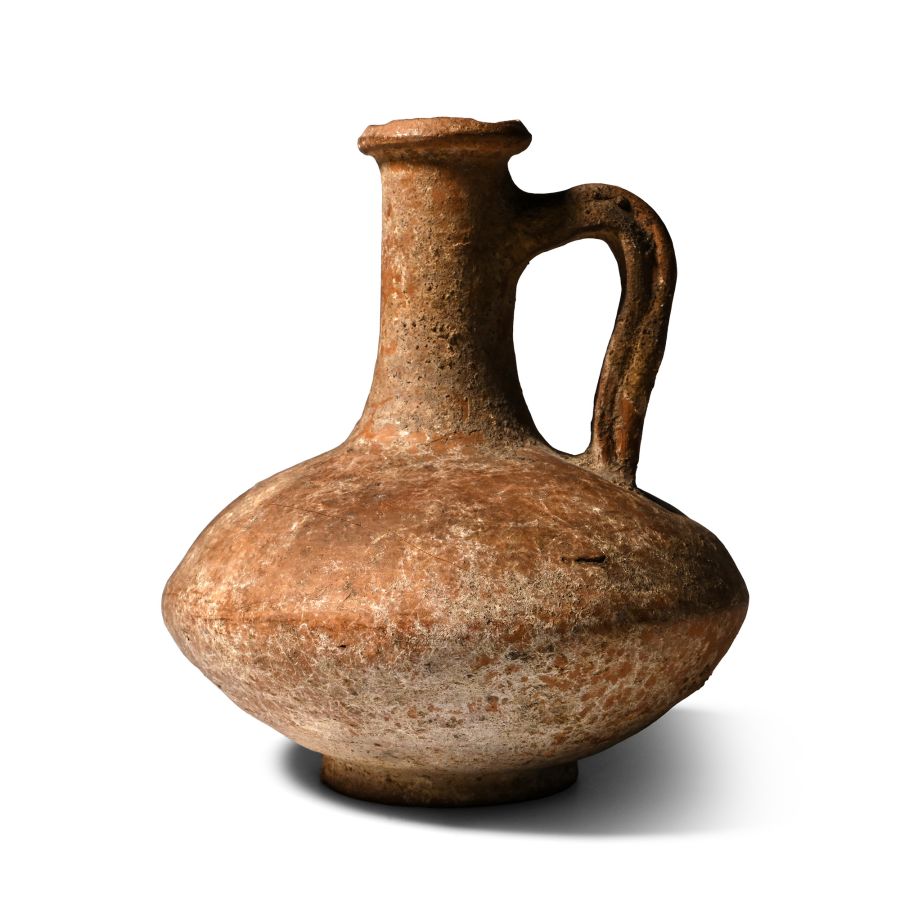
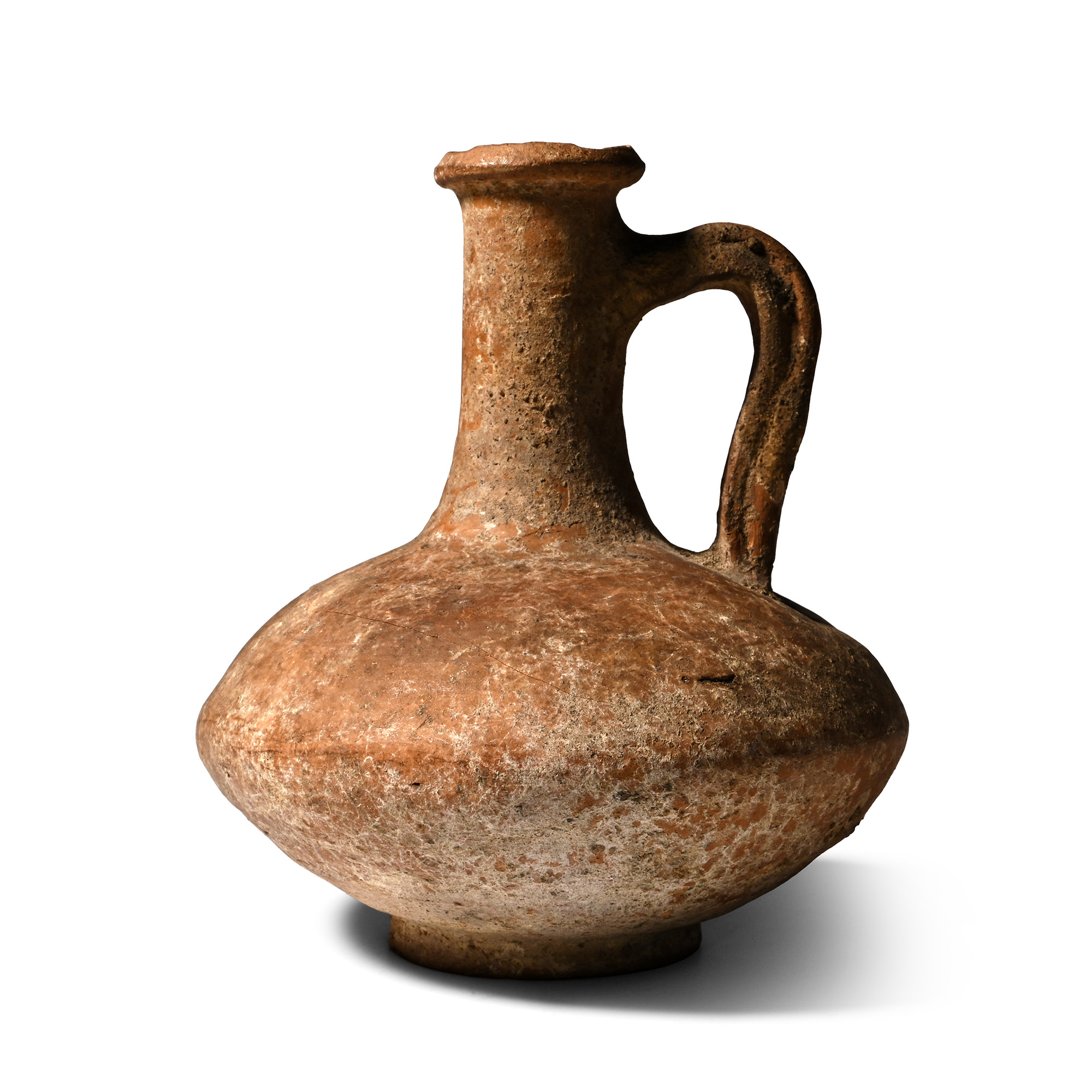
Roman Terracotta Wine Jug
1ST-4TH CENTURY A.D.
5 in. (196 grams, 12.6 cm).
Comprising a biconvex body with applied basal ring, tubular neck with carinated rim, ribbed strap handle to the rear. [No Reserve]
ProvenanceFrom the collection of the late Bernard C. Pickard, Hampshire, UK, the owner of Bernard C. Pickard Antiquities, which closed in 1987, he had been collecting since the mid 1950s.
FootnotesBernard Pickard was a close friend of Richard Hattatt, the renowned author of several books on ancient brooches. Hattatt acknowledges in his first book, Ancient & Romano-British Brooches, published in 1982, that Mr Pickard first aroused his interest in brooches and inspired him in writing his books during his retirement. Mr Pickard also wrote the foreword to the section on Roman animal brooches, op. cit. p.158-160.
CONDITIONTimeLine Auctions follows a vetting process to ensure the authenticity and legality of all items, reinforcing our commitment to integrity and responsible trading. Each antiquity, antique, and coin lot undergoes thorough examination by a vetting committee of at least ten external specialists, professional trade association members, scientists, and archaeologists: Our Vetting Process
AUCTIONS:
TimeLine is a leading auction house specialising in antiquities, ancient art, collectables, natural history, coins, medals, and books. Our auctions offer museums, collectors, historians, and enthusiasts the opportunity to acquire unique and historically significant pieces.
-
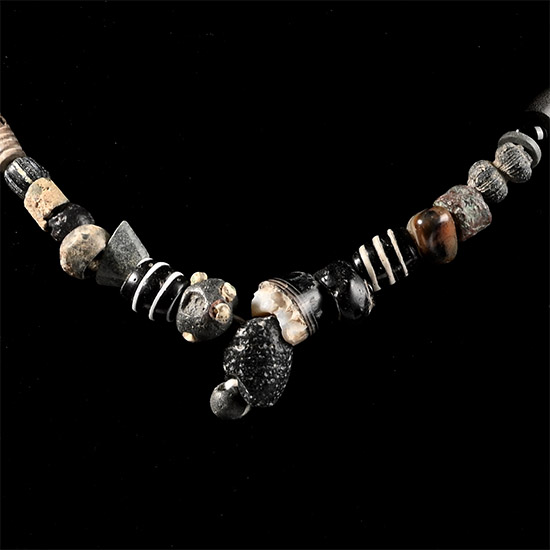
Roman Black Glass and Other Bead Necklace String
1st-4th century A.D. and laterSold for (Inc. bp): £33
Composed of mixed beads, including oblate, tubular, and two with white spiral decoration, restrung. 17.4 grams, 26 cm
Acquired in the 1990s. Ex London, UK, collection. -
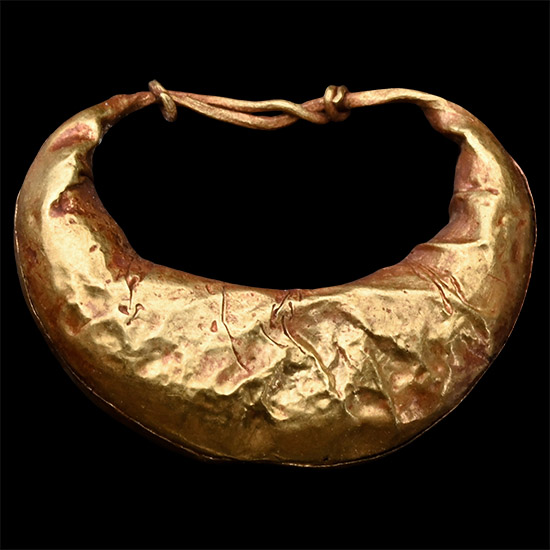
Roman Gold Crescent-Shaped Earring
1st-4th century A.D.Sold for (Inc. bp): £72
Hollow-formed with narrow ends developing into wires twisted around the shank. 0.49 grams, 14 mm
From the private collection of Mr Brian Edwards, New Malden, Surrey, UK, formed from the late 1970s-early 1980s; thence by descent. -
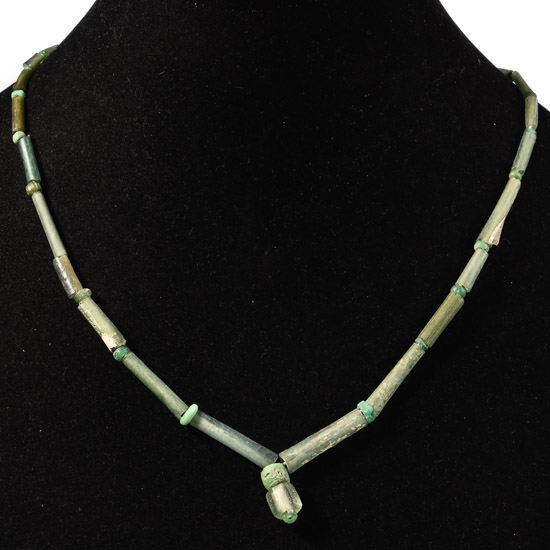
Roman Green Glass Bead Necklace String
1st-4th century A.D. and laterSold for (Inc. bp): £52
Composed of tubular and oblate beads, the central feature composed of a facetted and a large cylindrical bead, restrung. 13.5 grams, 44.5 cm
Acquired in the 1990s. Ex London, UK, collection.
