
Loading, please wait...
LOT 0732
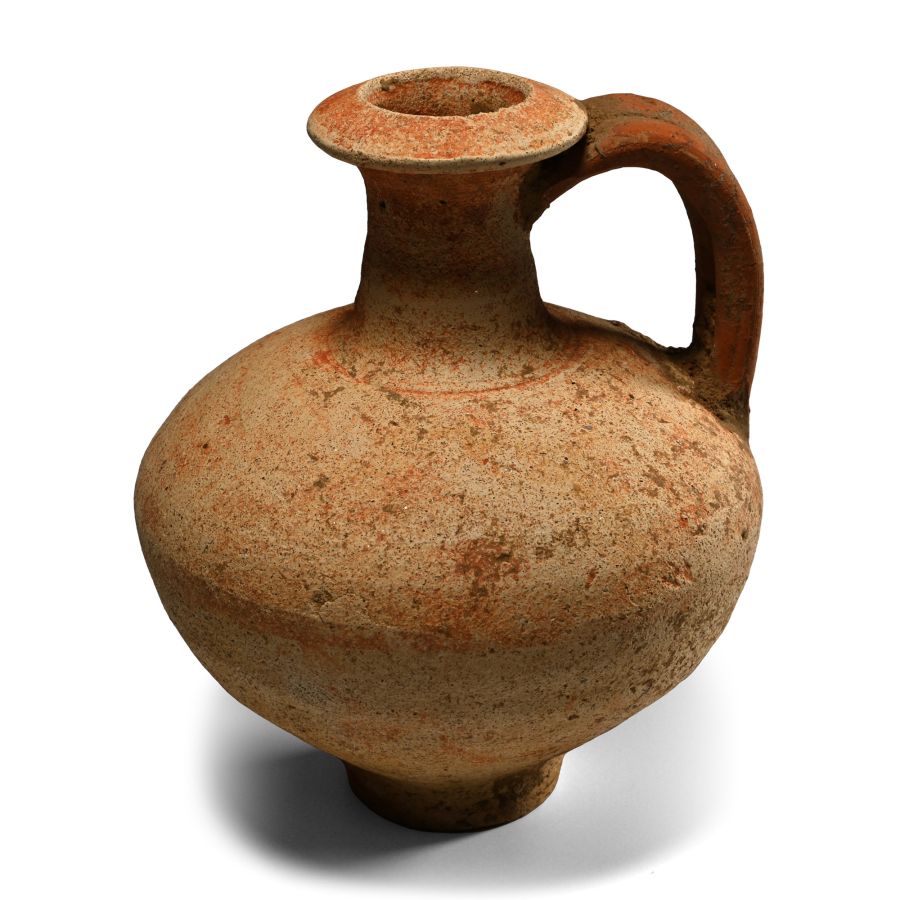
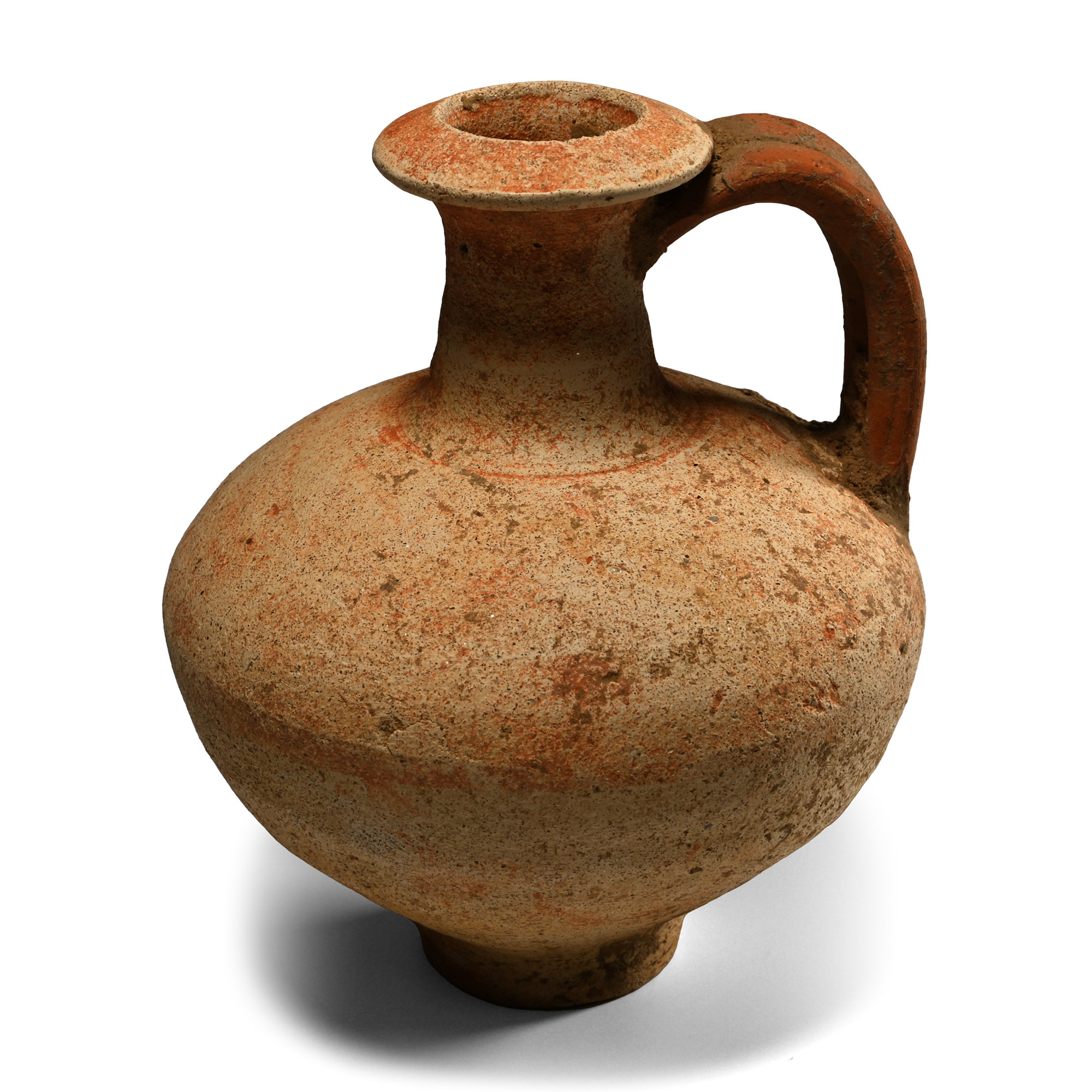
Roman Terracotta Wine Flagon
1ST-4TH CENTURY A.D.
4 1/2 in. (195 grams, 11.4 cm).
With narrow foot and broad shoulder, biconvex mouth and strap handle. [No Reserve]
ProvenanceEx German art market, 2000s.
Acquired from an EU collector living in London.
From the collection of Surrey, UK, gentleman.
This lot is accompanied by an illustrated lot declaration signed by the Head of the Antiquities Department, Dr Raffaele D’Amato.
TimeLine Auctions follows a vetting process to ensure the authenticity and legality of all items, reinforcing our commitment to integrity and responsible trading. Each antiquity, antique, and coin lot undergoes thorough examination by a vetting committee of at least ten external specialists, professional trade association members, scientists, and archaeologists: Our Vetting Process
AUCTIONS:
TimeLine is a leading auction house specialising in antiquities, ancient art, collectables, natural history, coins, medals, and books. Our auctions offer museums, collectors, historians, and enthusiasts the opportunity to acquire unique and historically significant pieces.
-
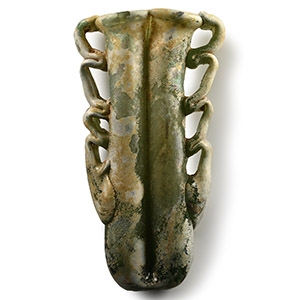
Roman Glass Double Balsamarium with Iridescence
4th century A.D.Sold for (Inc. bp): £410
Comprising two parallel tubes joined at the base and sides, each with flared rim and applied lateral loops; iridescent aqua glass. 73 grams, 11.2 cm
Ex North American collection, 1990s. This lot is accompanied by an illustrated lot declaration signed by the Head of the Antiquities Department, Dr Raffaele D’Amato. -
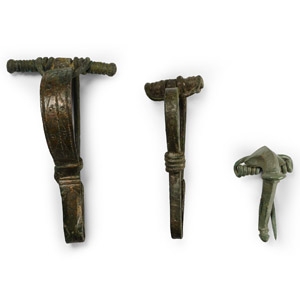
Roman Bronze Bow Brooch Collection
2nd-3rd century A.D.Sold for (Inc. bp): £143
Comprising: kräftig profilierte brooch with carinated collar to the bow, spring chord intact; P-shaped bow brooch with returned foot forming the catch; P-shaped bow brooch with running guilloche to the bow. 61 grams total, 37-73 mm
The P-shaped brooch acquired from Coincraft, London, UK. From the private collection of Kenneth Machin (1936-2020), Buckinghamshire, UK; his collection of antiquities and natural history was formed since 1948; thence by descent. Accompanied by an original certificate of authenticity from Coincraft. This lot is accompanied by an illustrated lot declaration signed by the Head of the Antiquities Department, Dr Raffaele D’Amato. -
.jpg)
Roman Silver Statuette of Aesculapius God of Medicine and Healing
1st-2nd century A.D.Sold for (Inc. bp): £494
Standing wearing a loosely draped himation, with caduceus resting on the right hip; mounted on a custom-made stand. 75 grams total, 55 mm including stand
Ex Ancient Art, North London, UK. From a collection acquired on the UK art market from various auction houses and collections mostly before 2000. From an important Cambridgeshire estate; thence by descent. This lot is accompanied by an illustrated lot declaration signed by the Head of the Antiquities Department, Dr Raffaele D’Amato.
