
Loading, please wait...
LOT 0624
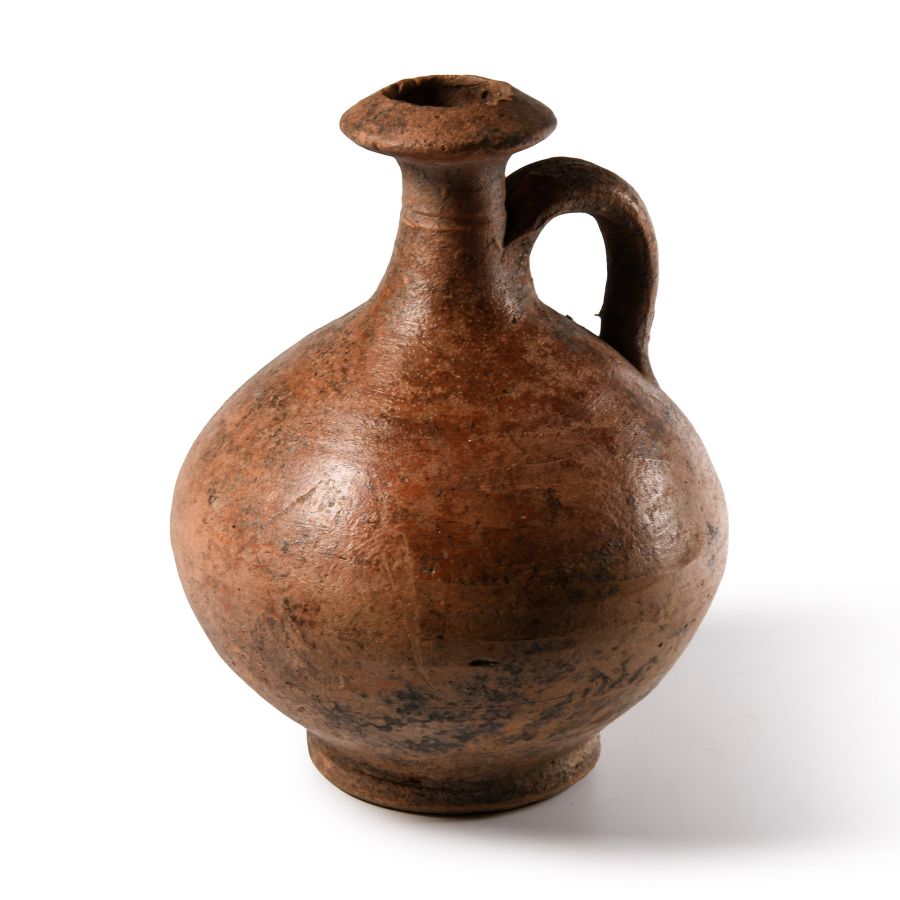
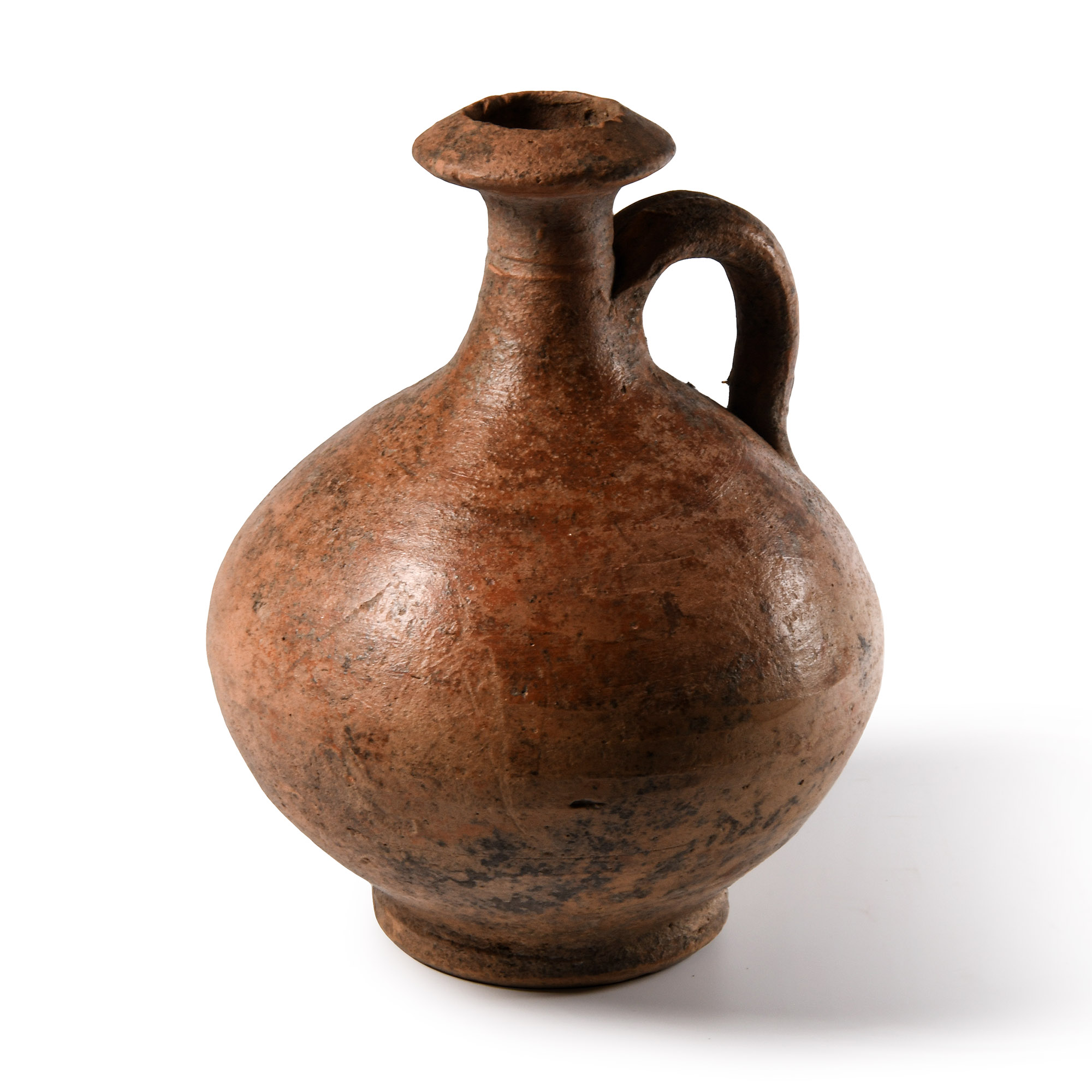
Roman Terracotta Wine Flagon
CIRCA 1ST-2ND CENTURY A.D.
6 in. (360 grams, 15.3 cm).
With globular body, thick basal ring, tall columnar neck with biconical collar, single strap handle to the rear.
ProvenanceFrom the collection of a High Wycombe, Buckinghamshire, UK, gentleman, circa 2000.
CONDITIONTimeLine Auctions follows a vetting process to ensure the authenticity and legality of all items, reinforcing our commitment to integrity and responsible trading. Each antiquity, antique, and coin lot undergoes thorough examination by a vetting committee of at least ten external specialists, professional trade association members, scientists, and archaeologists: Our Vetting Process
AUCTIONS:
TimeLine is a leading auction house specialising in antiquities, ancient art, collectables, natural history, coins, medals, and books. Our auctions offer museums, collectors, historians, and enthusiasts the opportunity to acquire unique and historically significant pieces.
-
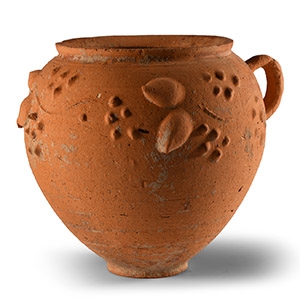
Roman Pale Red Barbotine Cup
Circa 1st century B.C.Estimate: £1,000 - 1,400 (+bp*)
Opening Bid: £500
With horizontal banding to the lower body, high-relief moulded vine and grape decoration to the shoulder, loop handle and raised rim; rare. 211 grams, 11.5 cm wide
Acquired 1980-2015. Ex Abelita family collection. -
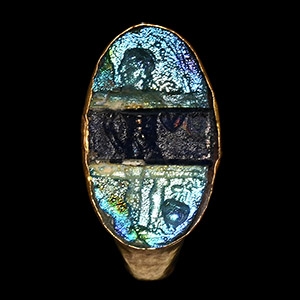
Roman Gold Ring with Banded Glass
1st century B.C.Sold for (Inc. bp): £910
Hollow-formed with ellipsoid bezel, inset panel of banded iridescent glass bearing an image of a nude Greek hero with long hair, the head turned back, carrying branches, an amphora or jug at his feet. 1.18 grams, 18.29 mm overall, 15.66 mm internal diameter (approximate size British G, USA 3 1/4, Europe 4.92, Japan 4)
Acquired early 1990s. Ex private American collection; thence by descent. Private Swiss collection since 1998.
The inset glass bezel is probably archaic Greek or Etruscan and reused in Roman times. The traits of the man point to Archaic Hellenic features, especially the oval eyes and the long hair, and the pointed beard reminiscence of the Achaean heroes. -
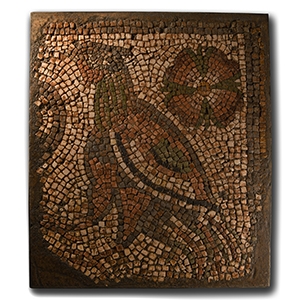
Eastern Roman Mosaic Depicting a Bird
4th-6th century A.D.Sold for (Inc. bp): £2,860
In a rectangular matrix; cream, olive, pink and other tesserae depicting a perching bird with rosette above. 15.4 kg, 43.5 x 50.4 cm
Former collection of Mr Pierre Bart (1889-1964), official of the French mandate in Syria and Lebanon (1919-1936) and delegate to the Lebanese government until 1946. Transmitted by descent.
