
Loading, please wait...
LOT 0628
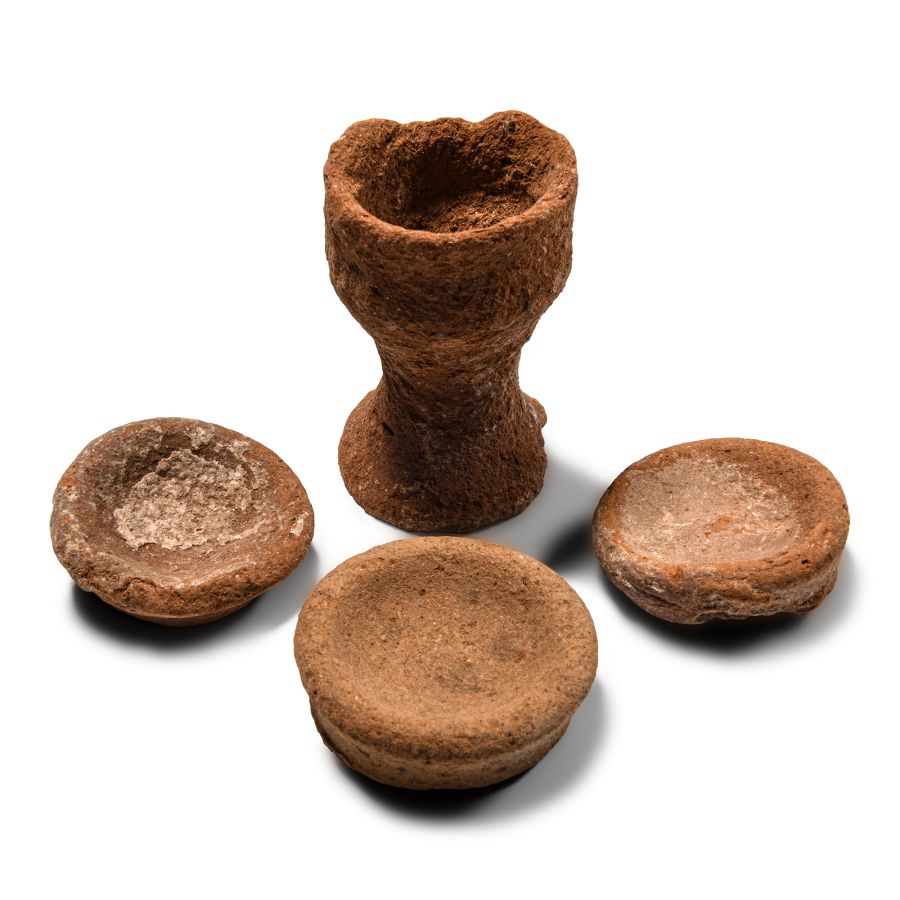
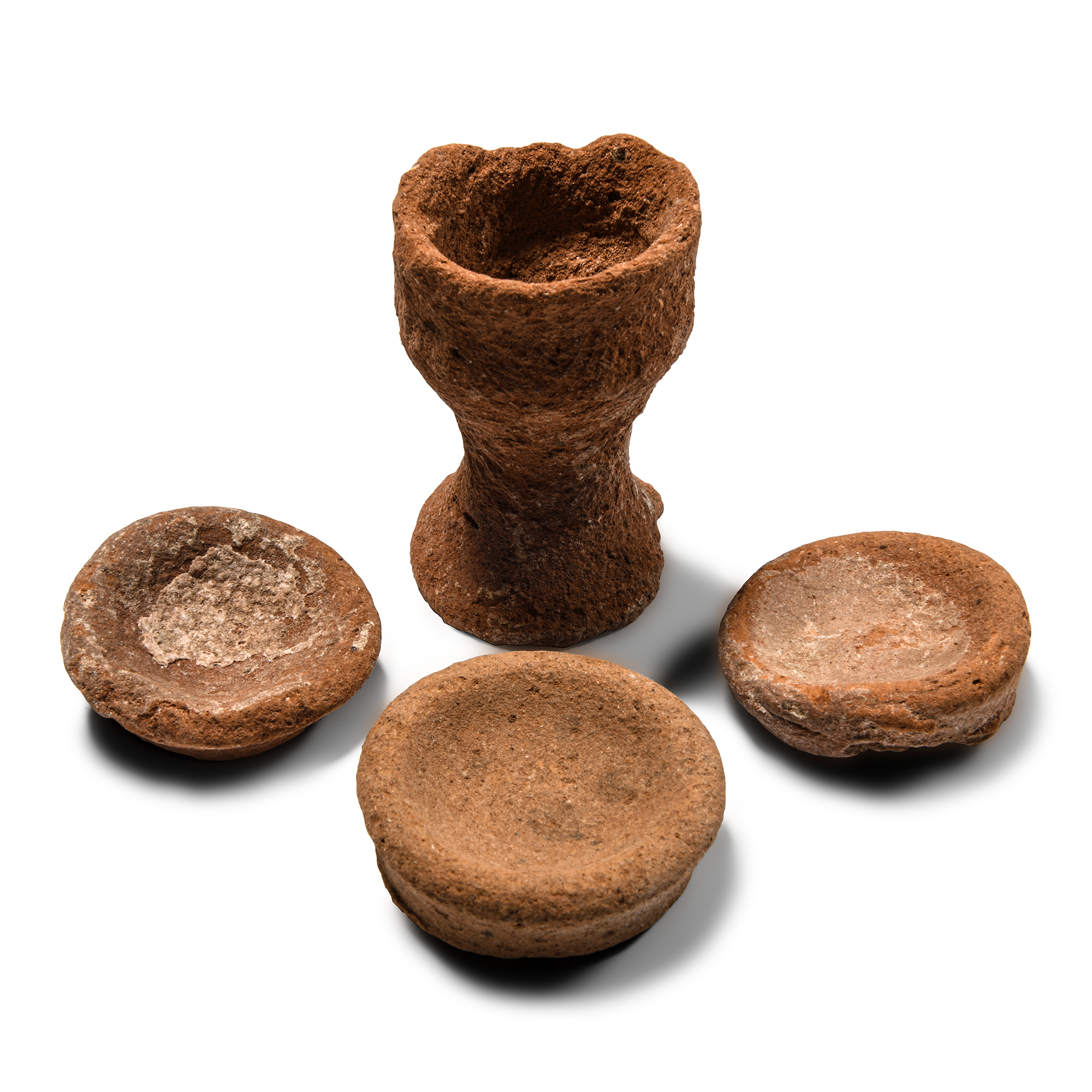
Roman Terracotta Vessel Collection
CIRCA 1ST-4TH CENTURY A.D.
1 3/8 - 2 1/8 in. (78 grams total, 34-54 mm).
Comprising a small chalice-shaped vessel with tall foot and three shallow miniature platters. [4, No Reserve]
ProvenanceProperty of a UK gentleman, acquired in the 1970s.
Property of an East Sussex, UK, gentleman.
TimeLine Auctions follows a vetting process to ensure the authenticity and legality of all items, reinforcing our commitment to integrity and responsible trading. Each antiquity, antique, and coin lot undergoes thorough examination by a vetting committee of at least ten external specialists, professional trade association members, scientists, and archaeologists: Our Vetting Process
AUCTIONS:
TimeLine is a leading auction house specialising in antiquities, ancient art, collectables, natural history, coins, medals, and books. Our auctions offer museums, collectors, historians, and enthusiasts the opportunity to acquire unique and historically significant pieces.
-

Roman Clear Cut-Glass Beaker
Circa 4th century A.D.Estimate: £700 - 900 (+bp*)
Opening Bid: £350
Translucent glass with wheel-cut bands creating registers of ellipses and circles. 189 grams, 11 cm wide
Fine condition, repaired.
Acquired on the French art market, 1990s-early 2000s. From an important Paris gallery, France. Ex private Parisian collection. -
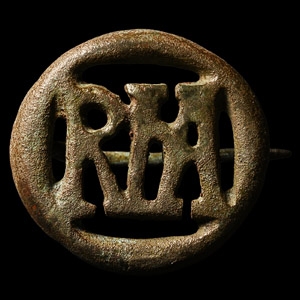
Roman Bronze ROMA Brooch
2nd-3rd century A.D.Sold for (Inc. bp): £247
The monogram in Roman capital letters, ('R'+'M'+'A', with the 'O' represented by the circular rim of the brooch itself), a palindrome 'AMOR'; complete with pin. 15.8 grams, 37 mm
Acquired on the UK art market before 2000. Property of a Surrey, UK, collector.
The brooch is composed of the stylised letters ‘RMA’. When viewed from the obverse RMA + the circle of the brooch form a monogram for ‘Roma’. Roma refers to both the city and its divine personification, the Dea Roma. But if RMA is read from right to left (or the brooch is viewed from the opposite side), the letters display a monogram for ‘AMOR’, the Latin name for Cupid, the god of love. The phrase pertains to Roma-Amor, a widely recognised palindrome espousing Roman wordplay in the ancient times. -
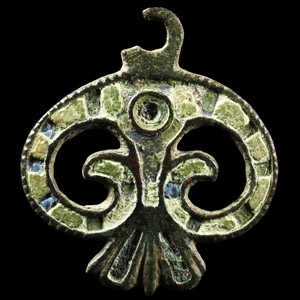
Roman Enamelled Bronze Mount
Late 1st-2nd century A.D.Sold for (Inc. bp): £65
Formed as a volute scroll with flared tail; the body filled with alternating bands of (originally) white and blue enamel, with central roundel above, tail with two further cells; suspension loop and stud to the reverse. 8.26 grams, 40 mm
From the collection of an London antiquarian, 1980s.
The form of the mount resembles early forms of Roman plate brooches, e.g. Hattatt's item 511 of the late 1st century A.D.
