
Loading, please wait...
LOT 0807
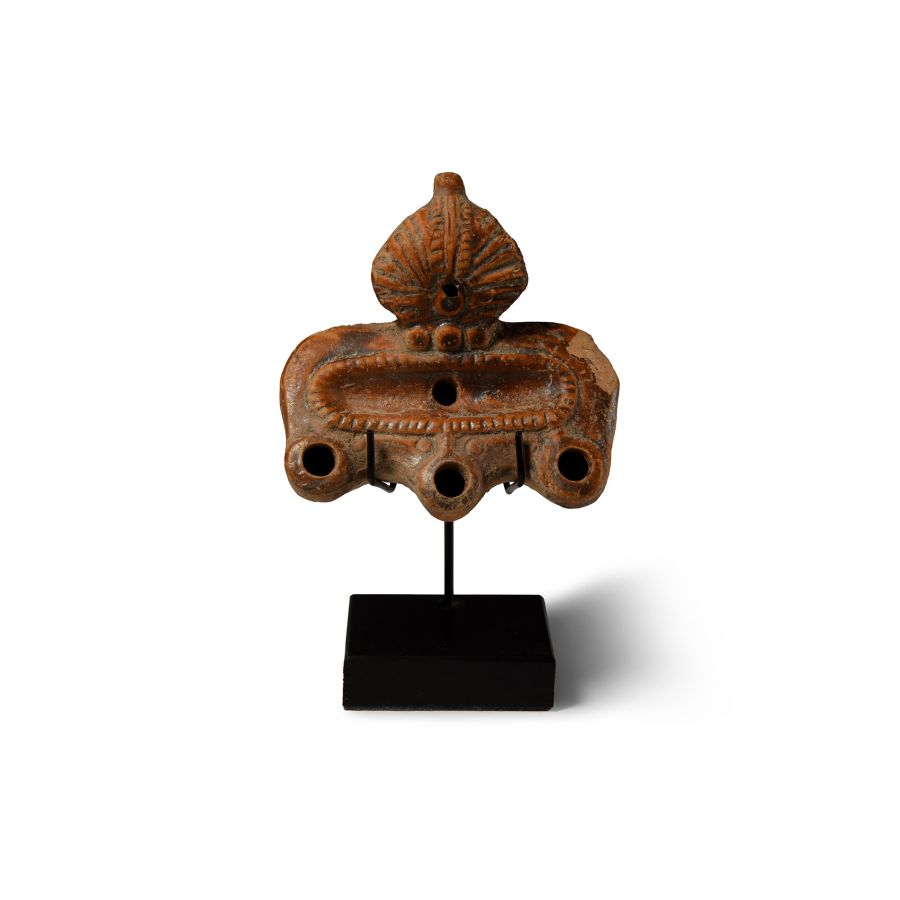
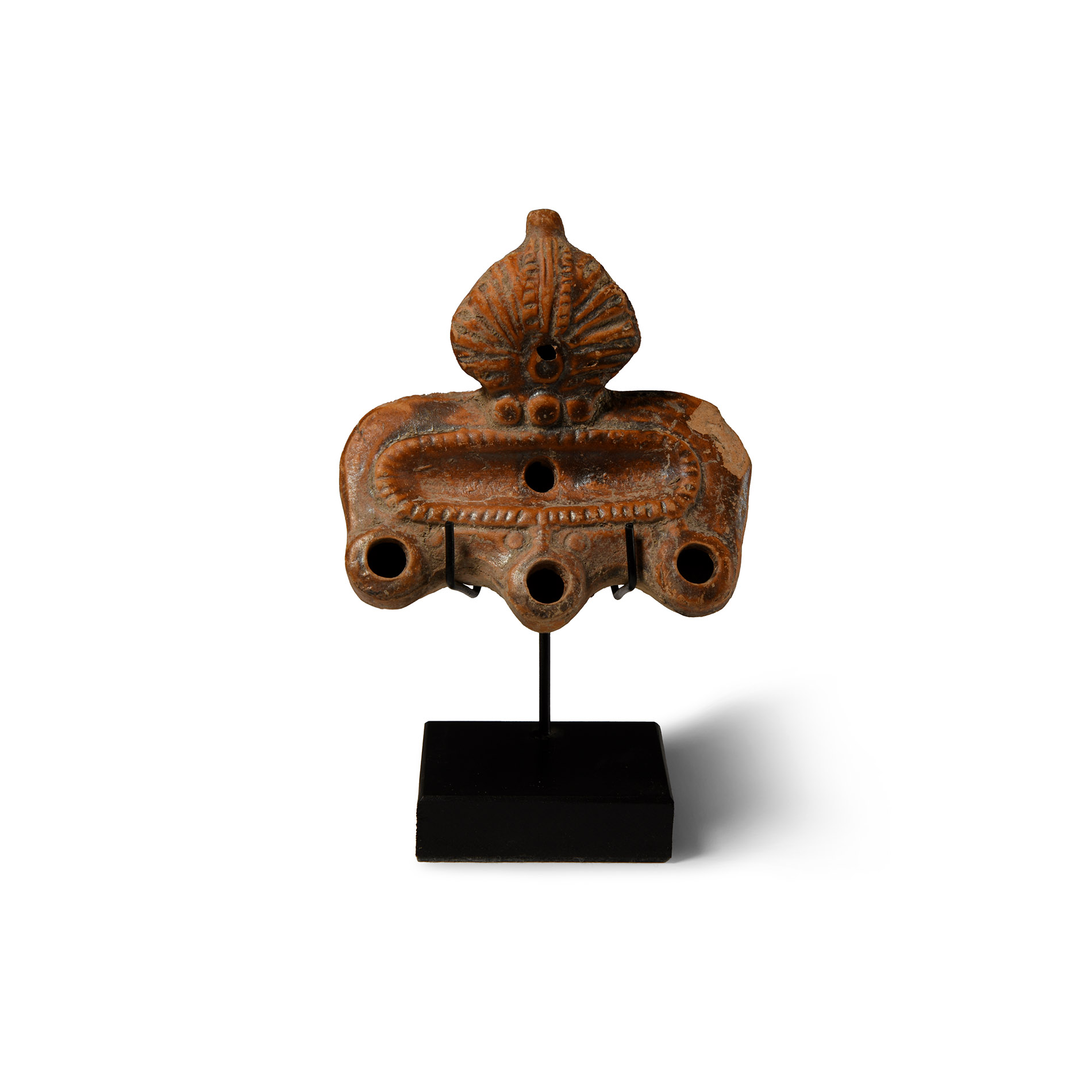
Roman Terracotta Triple-Spouted Lamp
CIRCA 2ND-1ST MILLENNIUM B.C.
6 in. (209 grams total, 15 cm high including stand).
An oblong vessel with three spouts and palmette reflector handle with pierced lug below to reverse; raised and notched discus; accompanied by a custom-made display stand.
ProvenanceFrom the collection of the German specialist Arno Jumpertz, Leverkusen, Germany, 1924-1984.
Most of the collection was exhibited at Neus museum in 1985.
TimeLine Auctions follows a vetting process to ensure the authenticity and legality of all items, reinforcing our commitment to integrity and responsible trading. Each antiquity, antique, and coin lot undergoes thorough examination by a vetting committee of at least ten external specialists, professional trade association members, scientists, and archaeologists: Our Vetting Process
AUCTIONS:
TimeLine is a leading auction house specialising in antiquities, ancient art, collectables, natural history, coins, medals, and books. Our auctions offer museums, collectors, historians, and enthusiasts the opportunity to acquire unique and historically significant pieces.
-
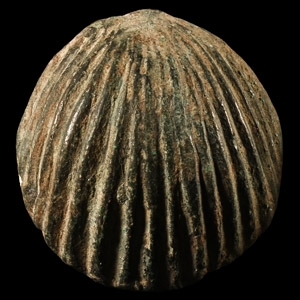
Roman Bronze Scallop Shell Mount
1st-4th century A.D.Sold for (Inc. bp): £104
Modelled in the half-round with naturalistic detailing. 52 grams, 35 mm
‘The Ancient Menagerie Collection’ formerly the property of a Cambridgeshire lady, collected since the 1990s and acquired from auctions and dealers throughout Europe and the USA, now ex London collection. -
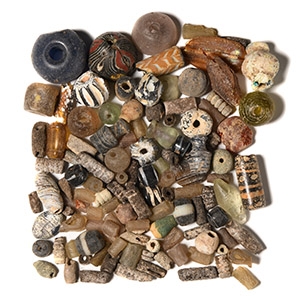
Roman and Other Glass Necklace Bead Collection
1st millennium B.C. and laterSold for (Inc. bp): £130
Comprising a quantity of beads, in mixed shapes, colours and materials; each pierced for stringing. 125 grams total, 5-28 mm
UK gallery, early 2000s. -
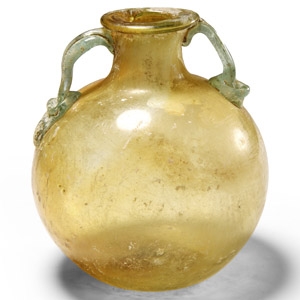
Roman Yellow Glass Alabastron
1st-2nd century A.D.Estimate: £800 - 1,000 (+bp*)
Opening Bid: £400
Globular body with slightly dimpled base, short neck, everted rim, applied pale green handles 66.2 grams, 10.1 cm
Acquired 1980-2015. Ex Abelita family collection.
