
Loading, please wait...
LOT 0891
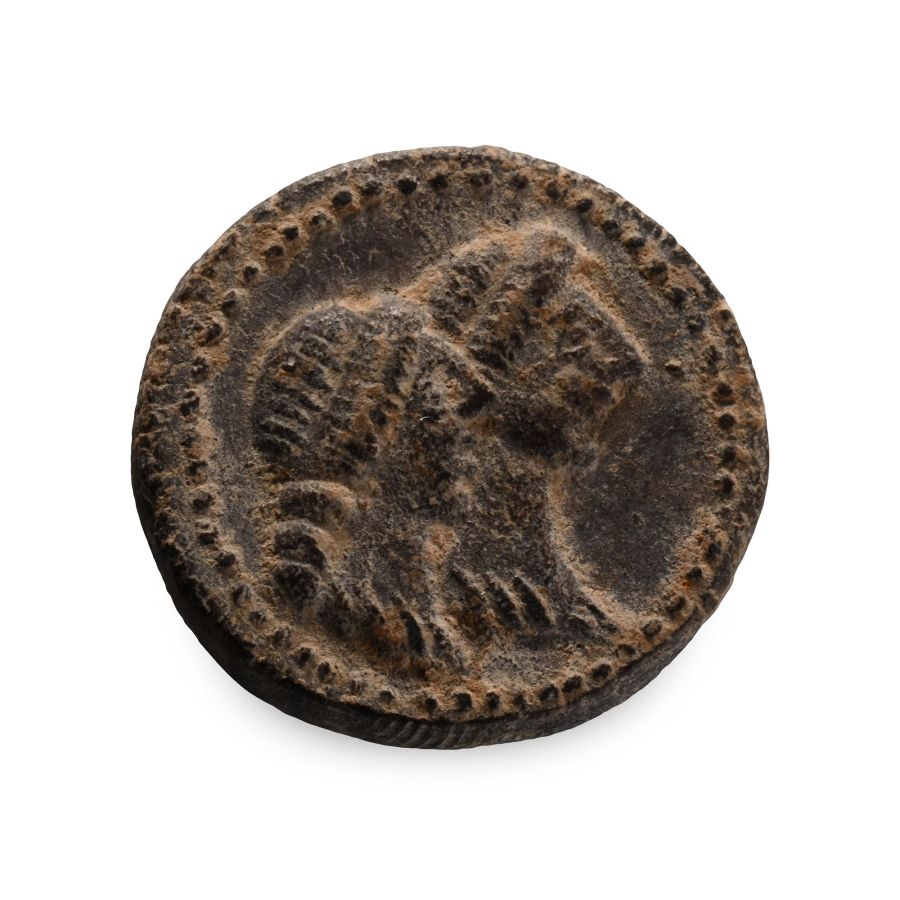
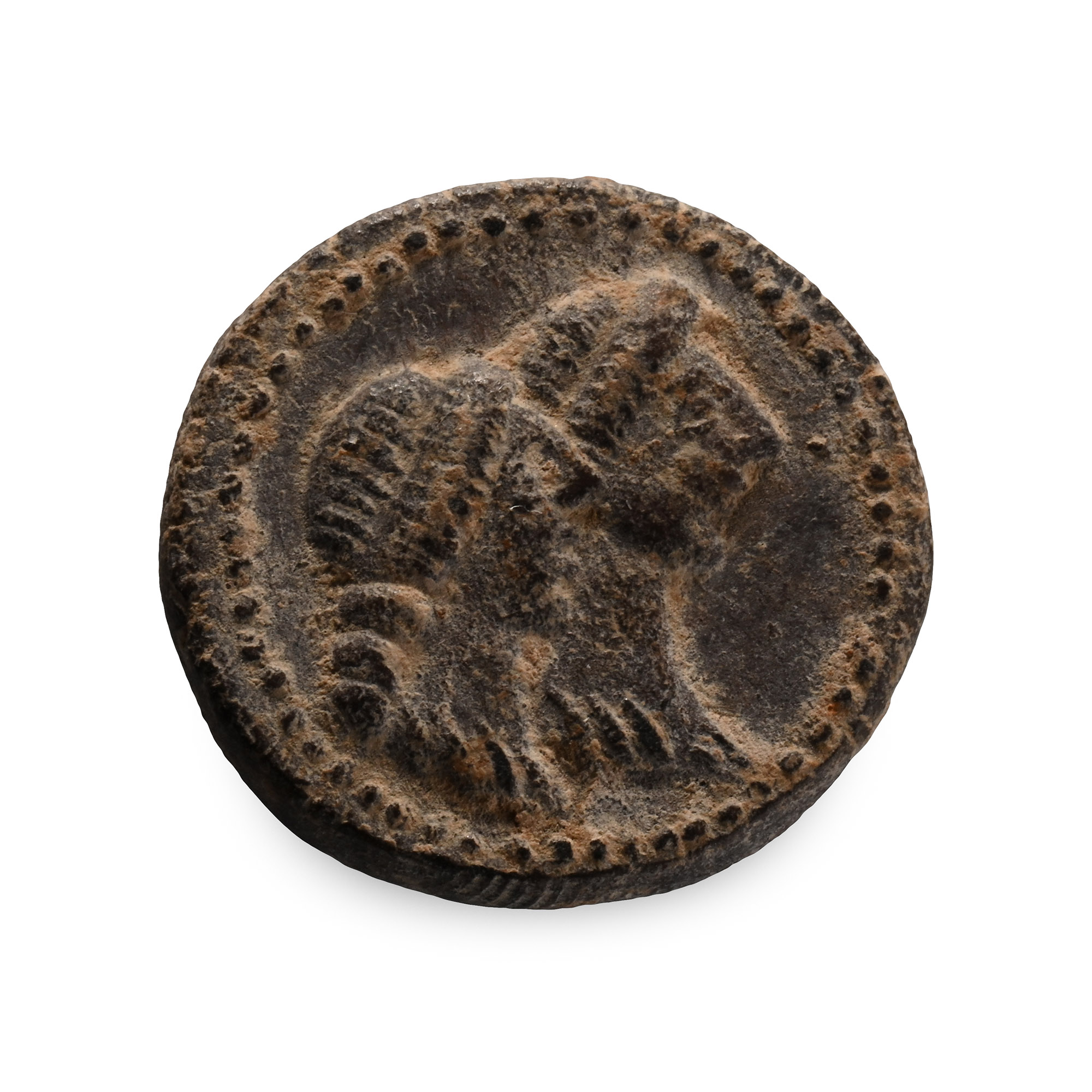
Roman Terracotta Tessera with Arabian Busts
CIRCA 1ST-2ND CENTURY A.D.
7/8 in. (3.46 grams, 22 mm).
Plano-convex in section with pointillé border, two profile busts in low relief. [No Reserve]
ProvenanceEx Abelita family collection, 1980s-2000s.
CONDITIONTimeLine Auctions follows a vetting process to ensure the authenticity and legality of all items, reinforcing our commitment to integrity and responsible trading. Each antiquity, antique, and coin lot undergoes thorough examination by a vetting committee of at least ten external specialists, professional trade association members, scientists, and archaeologists: Our Vetting Process
AUCTIONS:
TimeLine is a leading auction house specialising in antiquities, ancient art, collectables, natural history, coins, medals, and books. Our auctions offer museums, collectors, historians, and enthusiasts the opportunity to acquire unique and historically significant pieces.
-
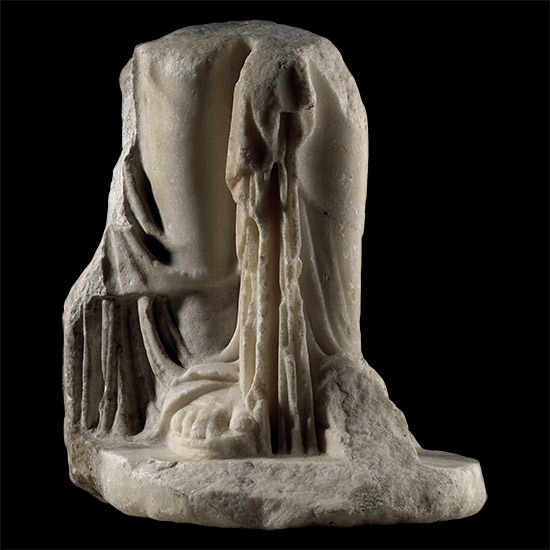
Large Lower Section of a Roman Marble Figure of the Goddess Isis
2nd century A.D.Sold for (Inc. bp): £5,000
Statue fragment of a woman or goddess, including floor-length robe and right foot with sandal; modelled standing with the foot slightly advanced, wearing sandals, chiton and himation. 66.65 kg, 50 cm
American private collection, acquired in the 1980s-1990s. Acquired on the American art market in 2016. with Sotheby's, London, 11 December 2020, no.88. This lot has been checked against the Interpol Database of stolen works of art and is accompanied by search certificate no.13078-249667.
Both the stance and folds of the himation suggest an Archaistic statue, perhaps the goddess Isis. -
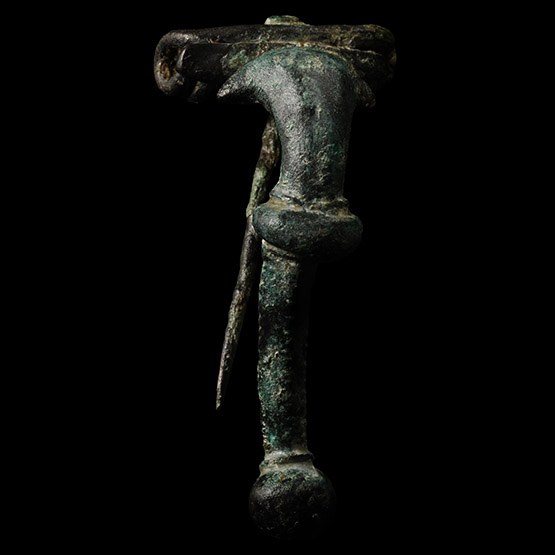
Roman Bronze Bow Brooch
2nd century A.D.Sold for (Inc. bp): £59
With chord and pin (now detached) at the head, D-section bow with lateral spurs, collar and swept foot with notched detailing, bulb finial, catch to the reverse. 26.6 grams, 54 mm
Ex important German collection, 1990s.
This type of fibula, common in Pannonia, was typically worn in men's clothing. It closed the paenula on the chest, arranged horizontally. Naturally, it could also be worn with military attire. -
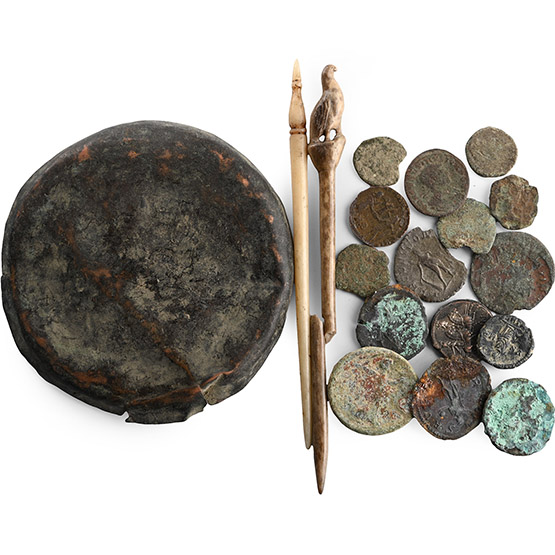
Roman Bronze and Other Artefact and Coin Group
1st-4th century A.D.Sold for (Inc. bp): £124
Comprising several bronze coins, two bone pins (one broken) and a flat discoid mount with upturned rim. 76.7 grams total, 1.4-10.6 cm
UK gallery, early 2000s.
