
Loading, please wait...
_900x900.jpg "Roman Terracotta Sigillata Bowl")
_200x200.jpg "Roman Terracotta Sigillata Bowl")
.jpg "Roman Terracotta Sigillata Bowl")
LOT 0140
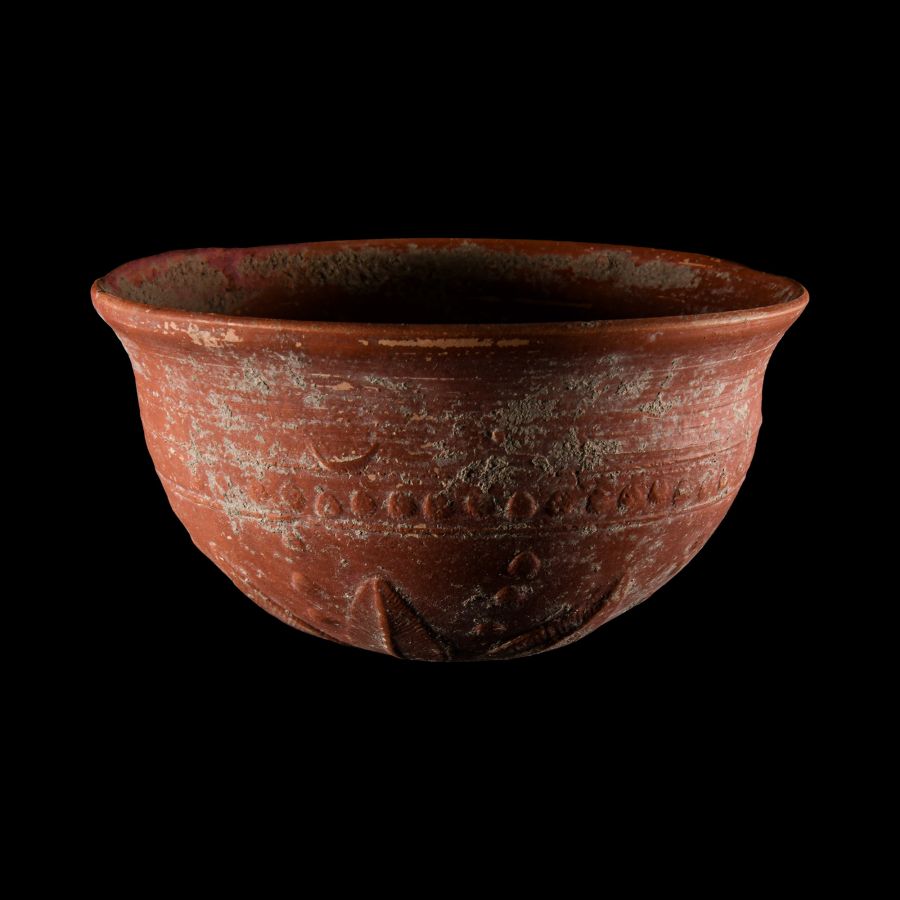
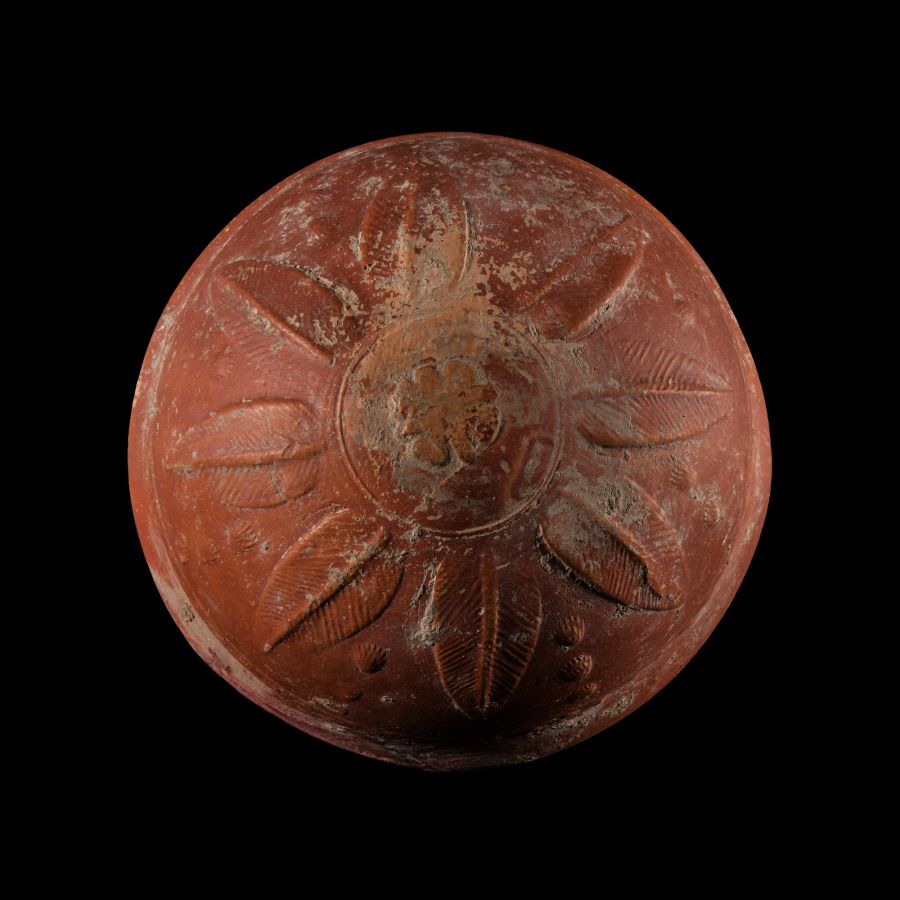
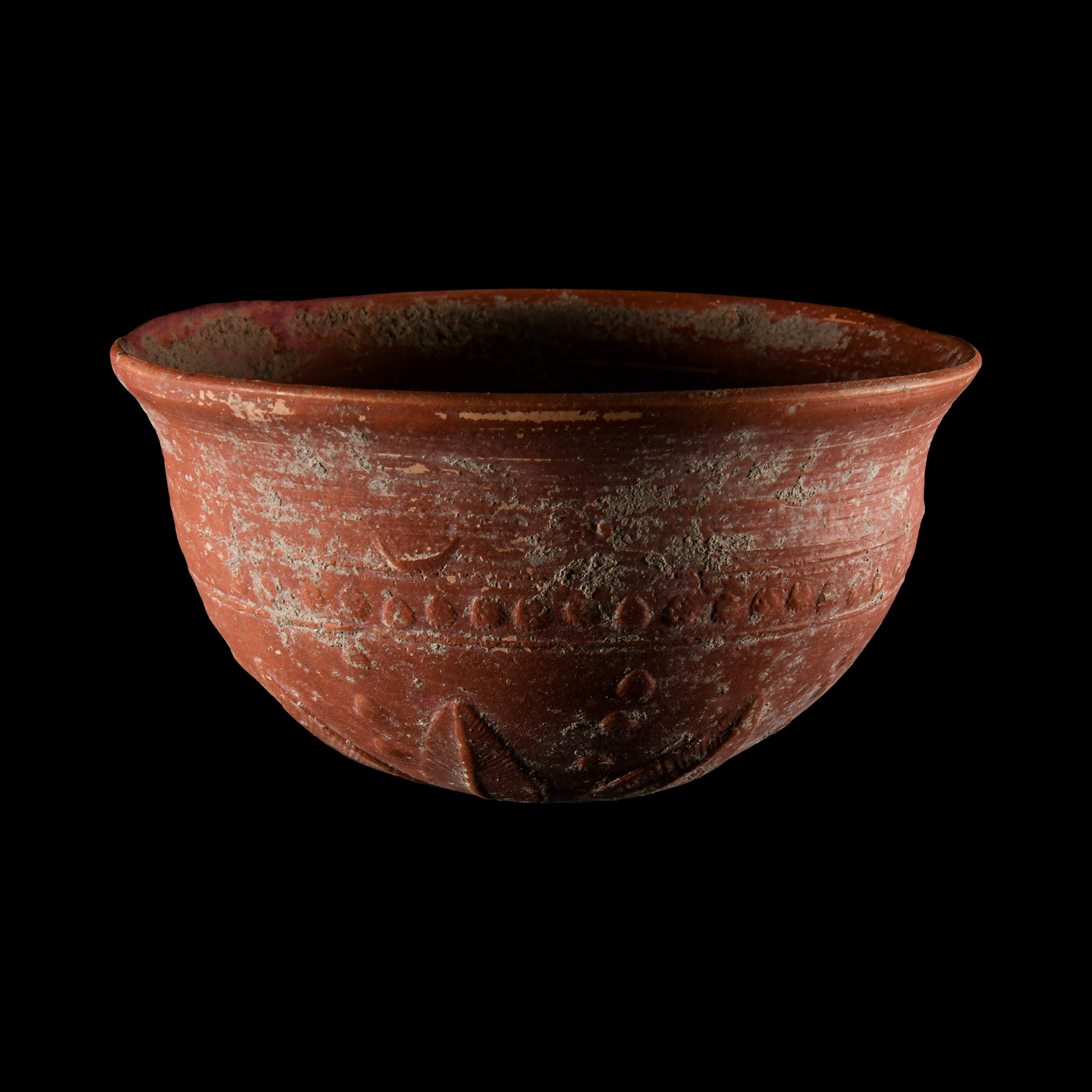
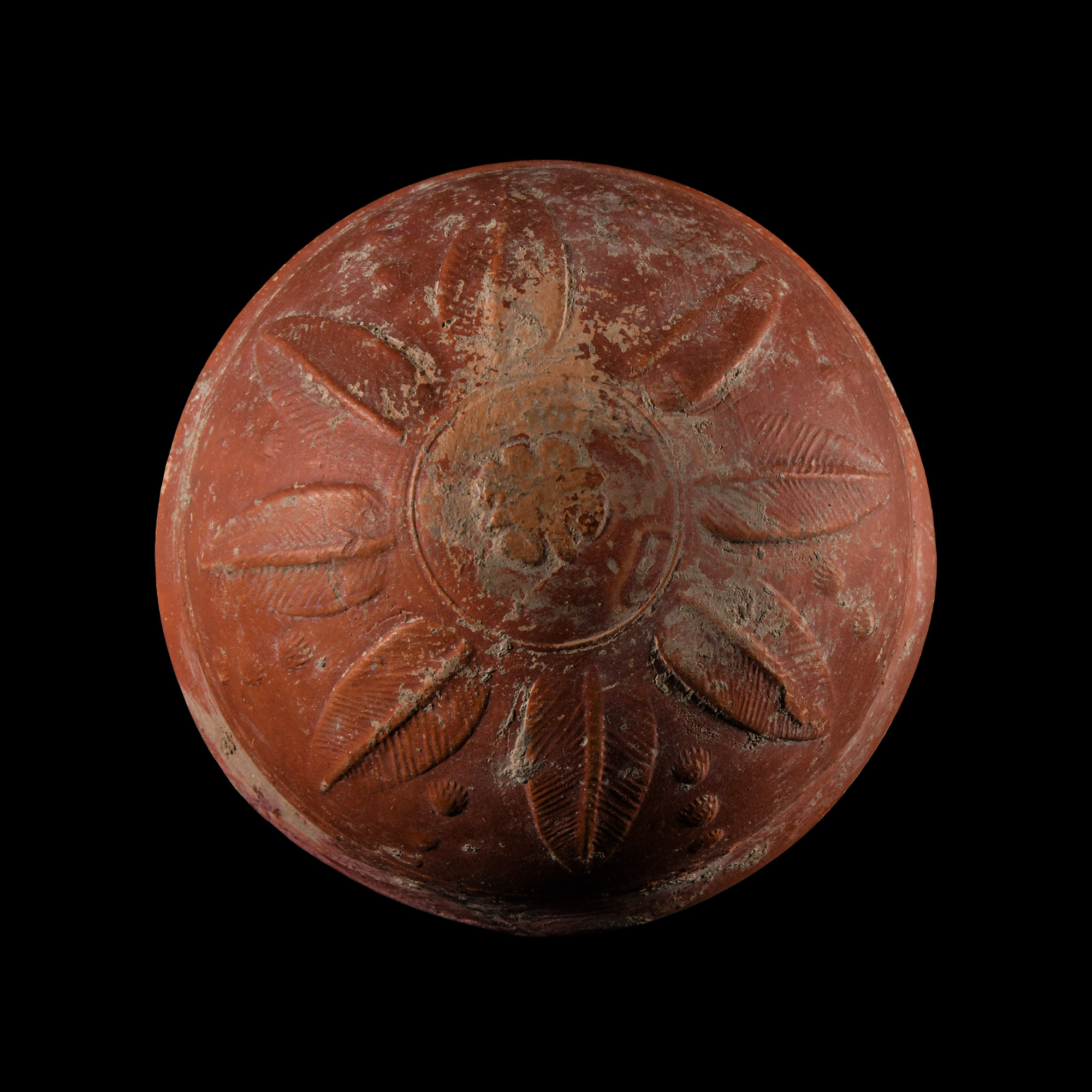
Roman Terracotta Sigillata Bowl
1ST-2ND CENTURY A.D.
5 in. (189 grams, 12.5 cm wide).
With rounded base and everted rim, base exterior decorated with a raised stylised floral motif composed of a large flower head with leaf-like petals and a second smaller flower head to centre.
ProvenanceAcquired early 1990s.
Ex private American collection; thence by descent.
Private Swiss collection since 1998.
TimeLine Auctions follows a vetting process to ensure the authenticity and legality of all items, reinforcing our commitment to integrity and responsible trading. Each antiquity, antique, and coin lot undergoes thorough examination by a vetting committee of at least ten external specialists, professional trade association members, scientists, and archaeologists: Our Vetting Process
AUCTIONS:
TimeLine is a leading auction house specialising in antiquities, ancient art, collectables, natural history, coins, medals, and books. Our auctions offer museums, collectors, historians, and enthusiasts the opportunity to acquire unique and historically significant pieces.
LOT 0140
Roman Terracotta Sigillata Bowl
Estimate £300 - 400€350 - 460 (for guidance only)$410 - 540 (for guidance only)
-
Large Roman Handled Terracotta Jar
1st-4th century A.D.Sold for (Inc. bp): £140
With globular profile, tall conical neck, single strap handle to the shoulder. 1.19 kg, 22.5 cm high
Acquired 1980-2015. Ex Abelita family collection. -
Roman Marble Statue of a Seated Female
Circa 2nd-3rd century A.D.Estimate: £15,000 - 20,000 (+bp*)
Opening Bid: £7,500
A Roman copy after a Hellenistic original, probably representing the goddess Demeter or Aphrodite sitting on a rock with her legs slightly parted, left hand resting on her lap and holding a pomegranate(?); the right arm stretched out to her side and holding a water jug that appears to have been reworked at a later time; dressed in a floor-length chiton with vertical folds and fastened under the breasts by a high belt; himation only covering the lower part of the body leaving her pleated dress clearly visible between her legs; her wavy hair with central parting and collected in a soft chignon at the nape of the neck; the face with schematic features with large eyes and raised eyelids, a small fleshy mouth and a prominent chin. 14.9 kg, 39 cm high
Ex Paris collection. French gallery, Paris, 1990-2000s. Accompanied by an academic report by Dr Marina Mattei and Dr Laura Maria Vigna. This lot has been checked against the Interpol Database of stolen works of art and is accompanied by search certificate number no.11932-209624
The statuette seems to refer to the iconography of the goddess Demeter. Water, an element of purification, is a constant in the cult of this goddess, as is the fruit clutched in her left hand, most likely a pomegranate, an allusive attribute of nourishment and her relationship with Hades. The pomegranate links the iconography to the rape of Persephone, appearing among the funerary symbols as nourishment for the afterlife. Precise references and comparisons can be found with the terracotta statuette, found near Vetralla, in the National Etruscan Museum Rocca Albornoz of Viterbo and with the female bust of the sanctuary of Demeter of San Biagio in Agrigento, for the treatment of the hair and the facial features. The Demeter of Cnidus, a marble statue dated to 350 B.C., today in the British Museum, represents the goddess sitting on a throne wearing a long chiton and himation. The hairstyle with hair gathered in a low knot on the back of the head, however, references directly that of the Cnidian Aphrodite of Praxiteles. The statuette in question could be a copy of the Greek deity Demeter/Persephone created in Roman times, a period in which the cult overlaps with that of Ceres. In the early Imperial age there are examples of contamination of the iconography of Demeter/Persephone with Ceres, as attested among others by the statues of the Capitoline Museums inv. 231 and that of the Roman Theatre of Merida (Spain) in the National Museum of Roman Art, dated to the 1st century A.D. -
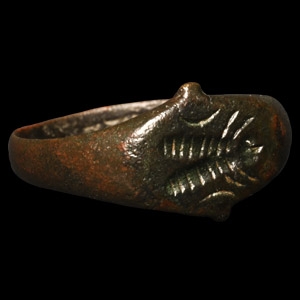
Roman Bronze Ring with Artemis Bee
Circa 1st century A.D.Sold for (Inc. bp): £468
With ellipsoid bezel and lateral spurs, incuse image of a bee. 3.54 grams, 22.10 mm overall, 19.43 mm internal diameter (approximate size British R 1/2, USA 8 3/4, Europe 19.38, Japan 18)
From the collection of a High Wycombe, Buckinghamshire, UK, gentleman, circa 2000.
The image of the bee was associated with various goddesses in the ancient world including Artemis and Melissa among the Greeks and Mellonia among the Romans.
