
Loading, please wait...
LOT 0584
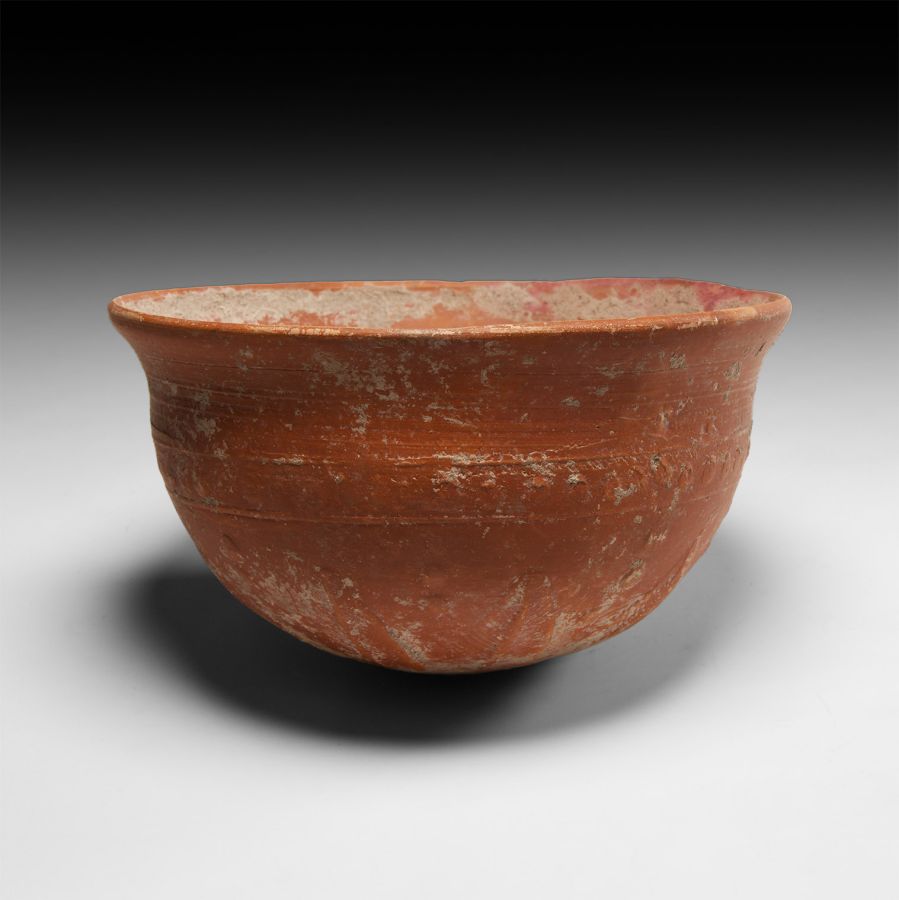
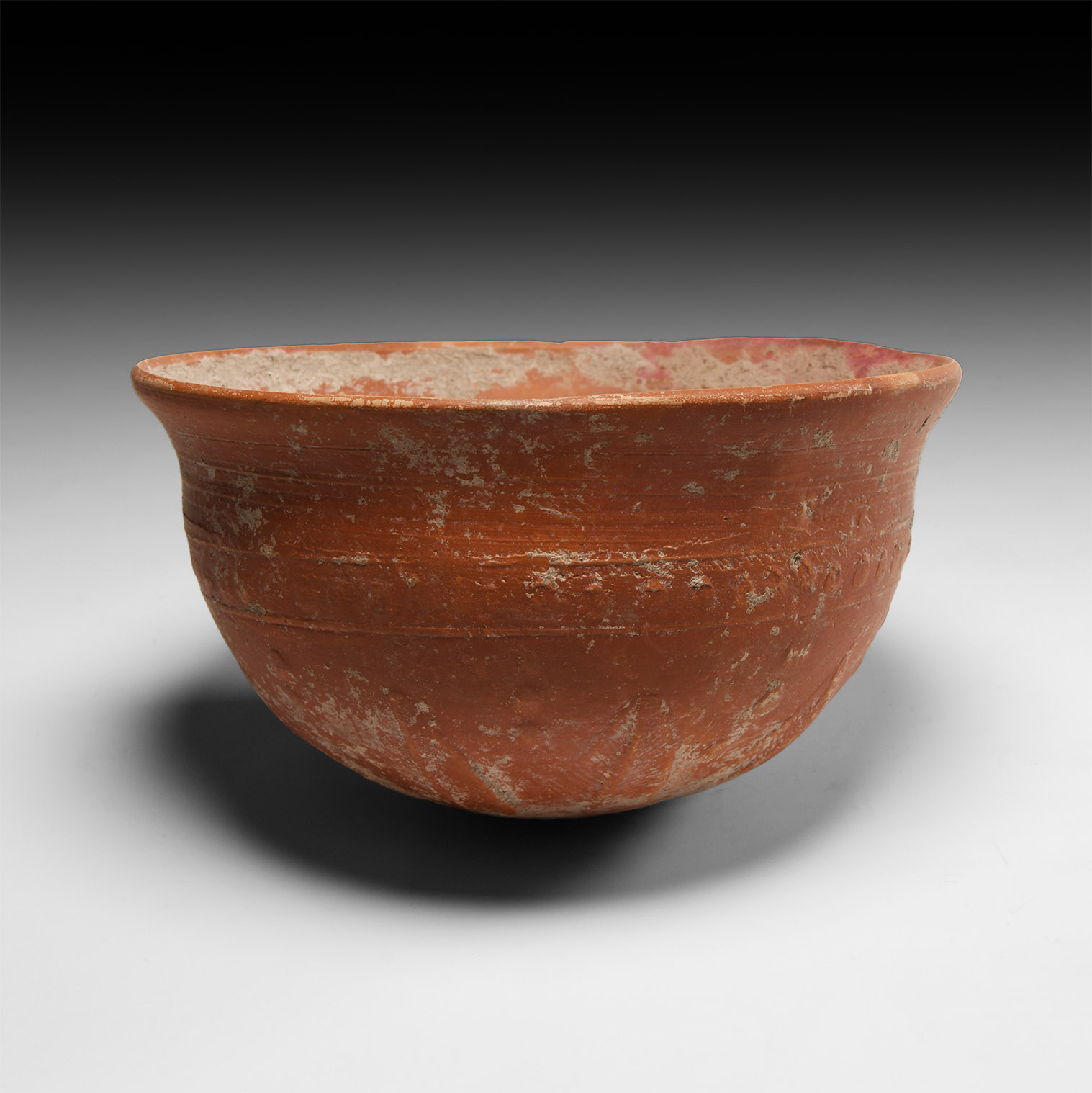
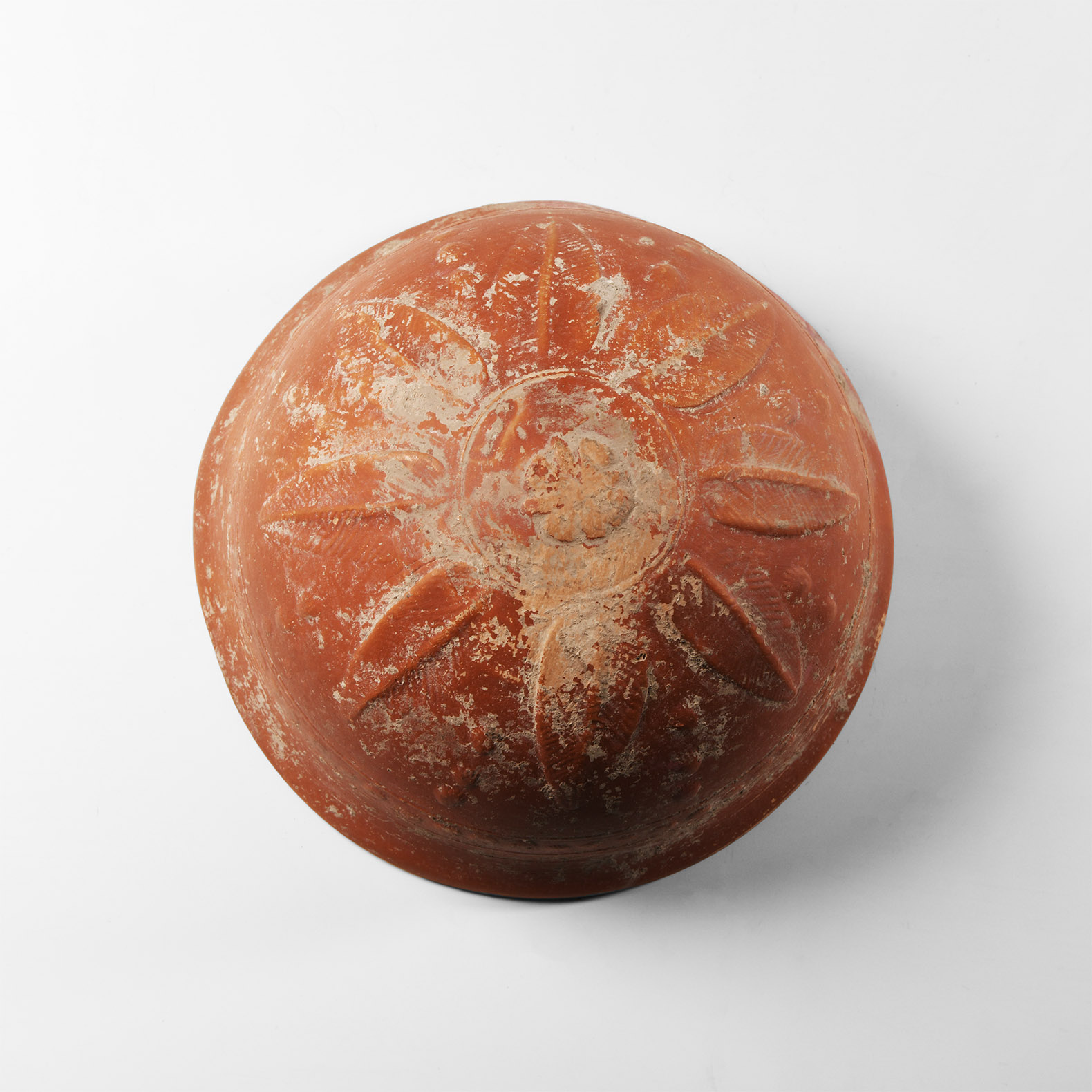
Roman Terracotta Sigillata Bowl
1ST-2ND CENTURY A.D.
5 in. (189 grams, 12.5 cm wide).
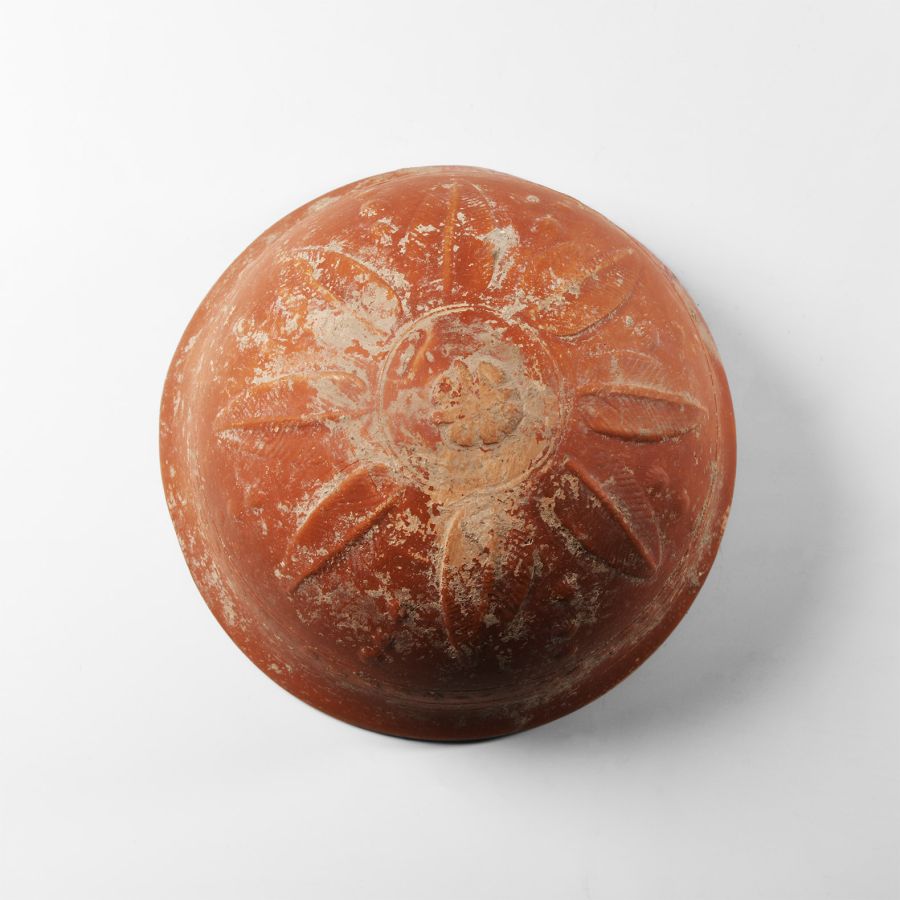
A terra sigillata bowl with rounded base and everted rim, base exterior decorated with a raised stylised floral motif composed of a large flower head with leaf-like petals and a second smaller flower head to centre.
ProvenanceAcquired early 1990s.
Ex private American collection; thence by descent.
Private Swiss collection since 1998.
TimeLine Auctions follows a vetting process to ensure the authenticity and legality of all items, reinforcing our commitment to integrity and responsible trading. Each antiquity, antique, and coin lot undergoes thorough examination by a vetting committee of at least ten external specialists, professional trade association members, scientists, and archaeologists: Our Vetting Process
AUCTIONS:
TimeLine is a leading auction house specialising in antiquities, ancient art, collectables, natural history, coins, medals, and books. Our auctions offer museums, collectors, historians, and enthusiasts the opportunity to acquire unique and historically significant pieces.
LOT 0584
Roman Terracotta Sigillata Bowl
Estimate £400 - 600€460 - 700 (for guidance only)$540 - 810 (for guidance only)
-
.jpg)
Roman Style Silver Ring with Cupid Riding a Dolphin Gemstone
20th century A.D. or earlierEstimate: £300 - 400 (+bp*)
Opening Bid: £150
A silver finger ring with inset onyx gemstone, intaglio of a boy riding on the back of a dolphin and wielding a whip. 9.29 grams, 27.65 mm overall, 20.67 mm internal diameter (approximate size British O, USA 7, Europe 14.98, Japan 14)
English private collection. -
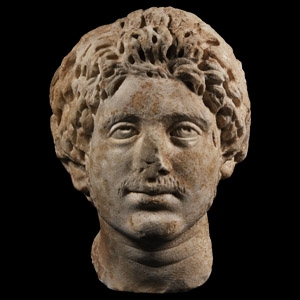
Roman Marble Head of a Germanic Warrior
2nd-3rd century A.D.Estimate: £30,000 - 40,000 (‡+bp*)
Opening Bid: £15,000
A carved marble head of a Germanic tribesman, modelled naturalistically in the round, directing his gaze upwards left, the eyes with sculpted pupils originally decorated with stone insertions, his face framed by voluminous short curls swept up off the forehead, sideburns and a moustache. 5.6 kg, 21 cm
Two neck creases, but in general good condition.
Ex Mario Fumasoli (1901-1989) collection, Switzerland, acquired between 1940-1970; thence by descent. with Christie's London, 24th October 2013, lot 92. Private Swiss collection since 1998. Accompanied by a copy of the relevant Christie's catalogue pages. Accompanied by an academic report by Dr Raffaele D’Amato. This lot has been checked against the Interpol Database of stolen works of art and is accompanied by search certificate number no.11583-198975.
The head was possibly part of a statue or from a relief representing barbarian prisoners or warriors, maybe a part of a monument commemorating the campaigns of Marcus Aurelius along the lower Danube, recorded in his famous column in Piazza Colonna, Rome. -
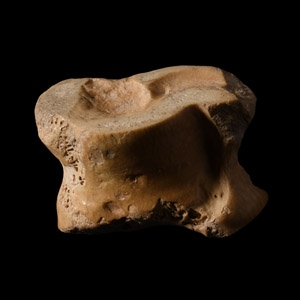
Late Roman Bone Gaming Piece
Circa 3rd century A.D.Sold for (Inc. bp): £6
A bone astragalus gaming piece with flattened base and upper face, from the game of 'knuckle bones'. 9.7 grams, 33 mm
Fine condition.
Ex UK art market, 1970s. Property of a London gentleman.
