
Loading, please wait...
LOT 1062
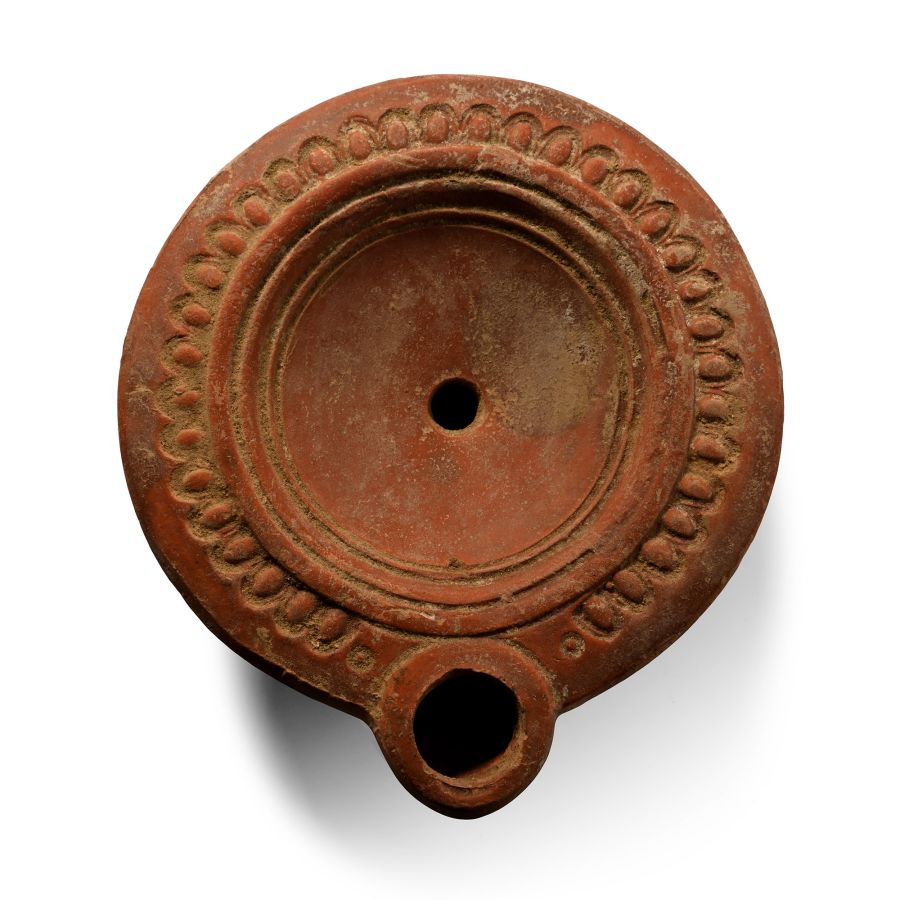
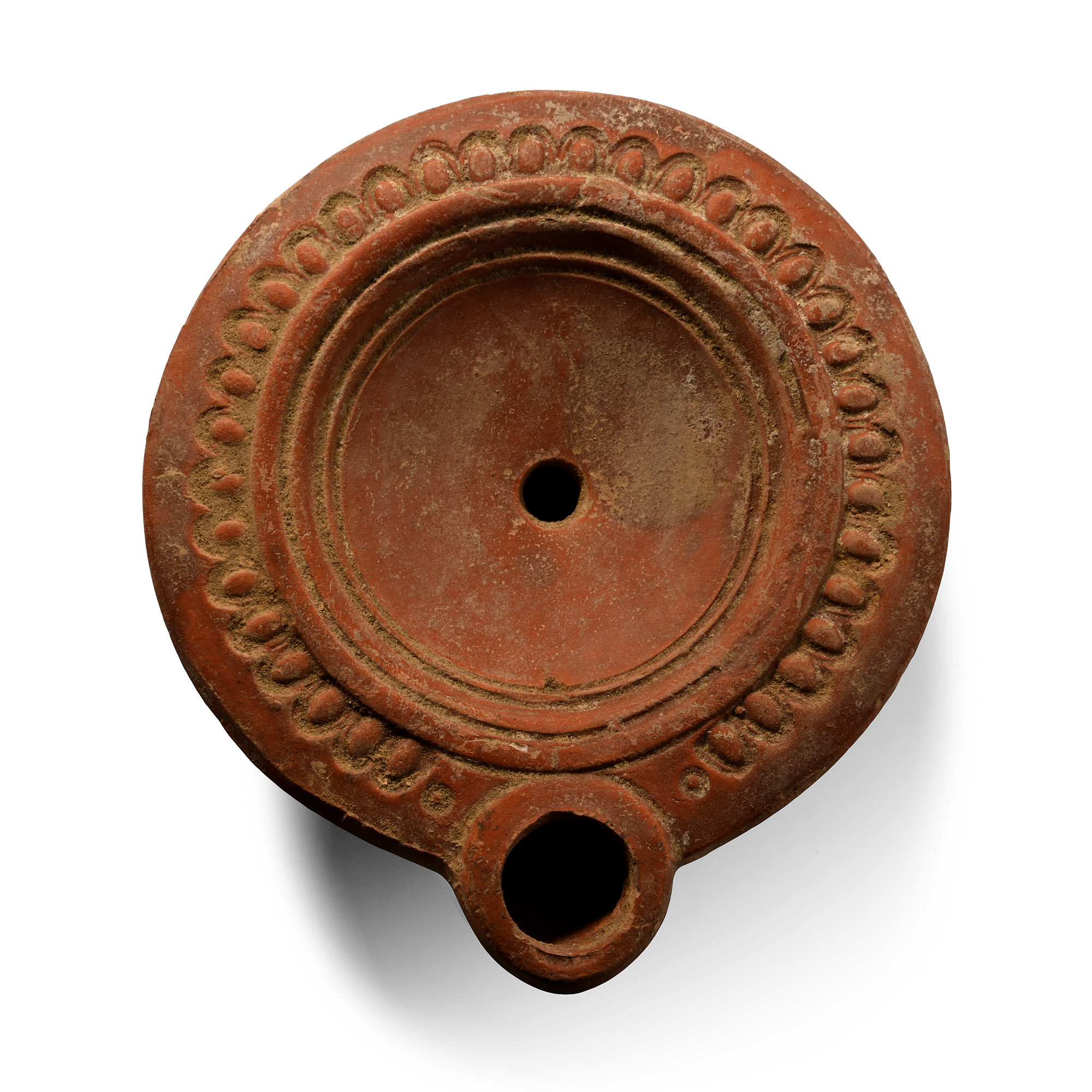
Roman Terracotta Oil Lamp
CYPRUS, CIRCA 2ND CENTURY A.D.
3 3/8 in. (45.1 grams, 86 mm).
Round body with plain discus with pelletted border, label on the base '2nd c. AD M10'. [No Reserve]
ProvenancePrivate collection, Oxfordshire, UK, by direct descent from the collection of Judge George Cyril Griffith-Williams (1893-1983), Supreme Court Judge of the Colony of Cyprus; items having been collected in the 1930s and 1940s in Cyprus during his tenure there.
CONDITIONTimeLine Auctions follows a vetting process to ensure the authenticity and legality of all items, reinforcing our commitment to integrity and responsible trading. Each antiquity, antique, and coin lot undergoes thorough examination by a vetting committee of at least ten external specialists, professional trade association members, scientists, and archaeologists: Our Vetting Process
AUCTIONS:
TimeLine is a leading auction house specialising in antiquities, ancient art, collectables, natural history, coins, medals, and books. Our auctions offer museums, collectors, historians, and enthusiasts the opportunity to acquire unique and historically significant pieces.
-
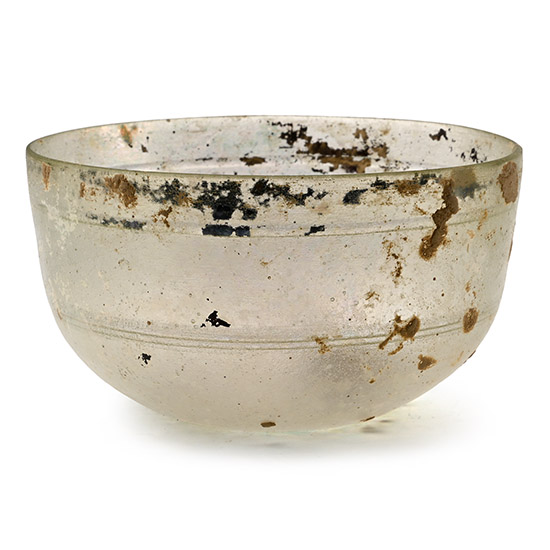
Roman Wheel-Cut Clear Glass Bowl
1st-2nd century A.D.Sold for (Inc. bp): £3,640
Hemispherical in profile with a broad base, bands of wheel-cut horizontal lines to the inner face. 87 grams, 11.4 cm
Private collection, USA and Switzerland, acquired in the late 1980s-early 1990s; thence by descent.
Such bowls are related to the form of Terra Sigillata according to several scholars. The period of their widest use is between 70 and 130 A.D. It was widely used throughout the western parts of the Empire, and especially in Italy. Similar bowls could also be found in the Eastern Mediterranean and were probably produced in Italic workshops, since there are numerous finds in Ticino. -
.jpg)
Roman Marble Head of a Veiled Goddess
1st century A.D.Sold for (Inc. bp): £4,680
With a palla drawn up over her hair, stepped at the rear to indicate a chignon; soft, youthful facial features with fleshy cheeks and a rounded jawline; mounted on a custom-made stand. 1.47 kg total, 18.5 cm including stand
with Gorny & Mosch, Munich, 21 June 2005, no.344. Private collection, Europe. Accompanied by copies of the relevant Gorny & Mosch catalogue pages. This lot has been checked against the Interpol Database of stolen works of art and is accompanied by search certificate number no.13198-250132.
The head comes from a statue that most likely represented a matronly deity, Demeter or Hestia/Vesta, the goddess protector of the home hearth. The latter seems the most likely, as she was usually depicted (as in the Hestia Iustiniani, a prototype often replicated in the Roman era) with a covered head (velato capite), a symbol of modesty and marital virtue for the Roman matron. -
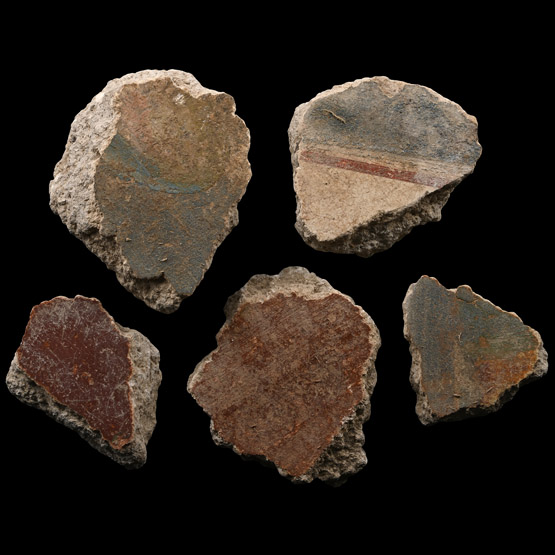
Roman Fresco Wall Plaster Collection
1st century A.D.Sold for (Inc. bp): £52
Fragments of wall plaster with rendered surface painted with mainly Pompeii red, pale blue and white detailing; some with impression of timber laths to the reverse. 613 grams total, 6.2-10.3 cm
Acquired in the 19th century. Ex Jeger collection, Switzerland. UK gallery, early 2000s.
These small fragments, for analogies with the fragments of Pompeii, seem to belong to the second style of Roman painting, red panels representing highlight and shadow, decorated with vegetal interlaces. Some panels were probably framed by a red grenade fillet. A fragment shows alternate blue and red colour over a cream background, maybe pertinent to a socle.
