
Loading, please wait...
LOT 0952
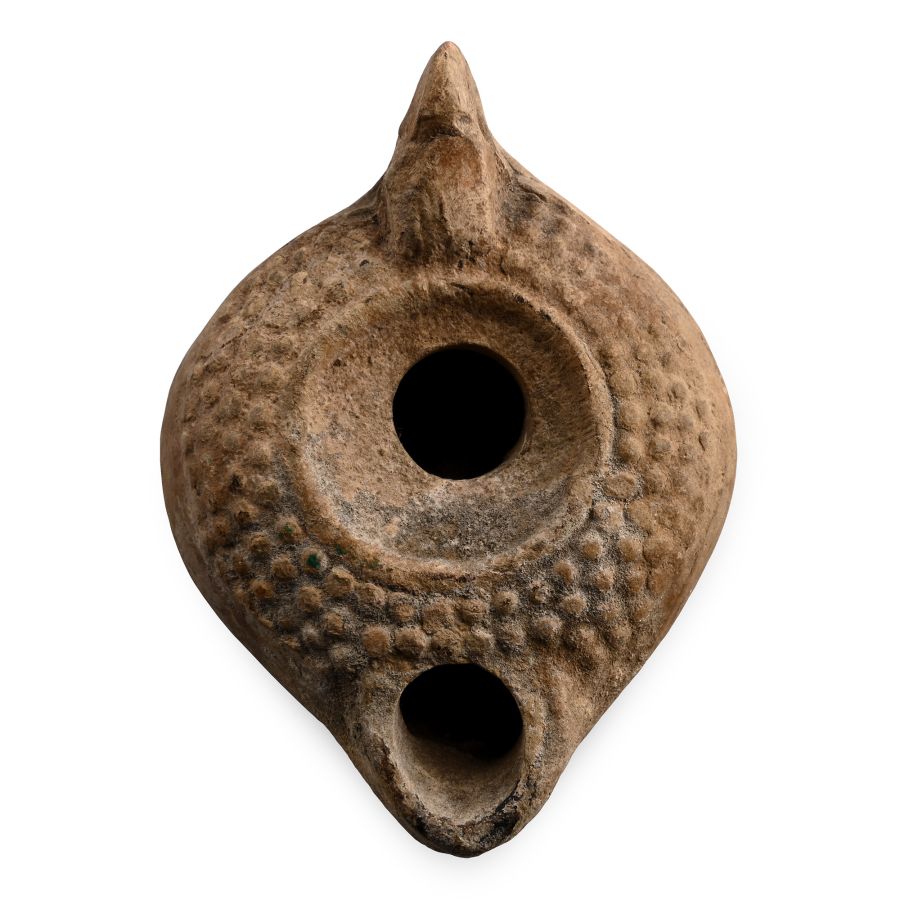
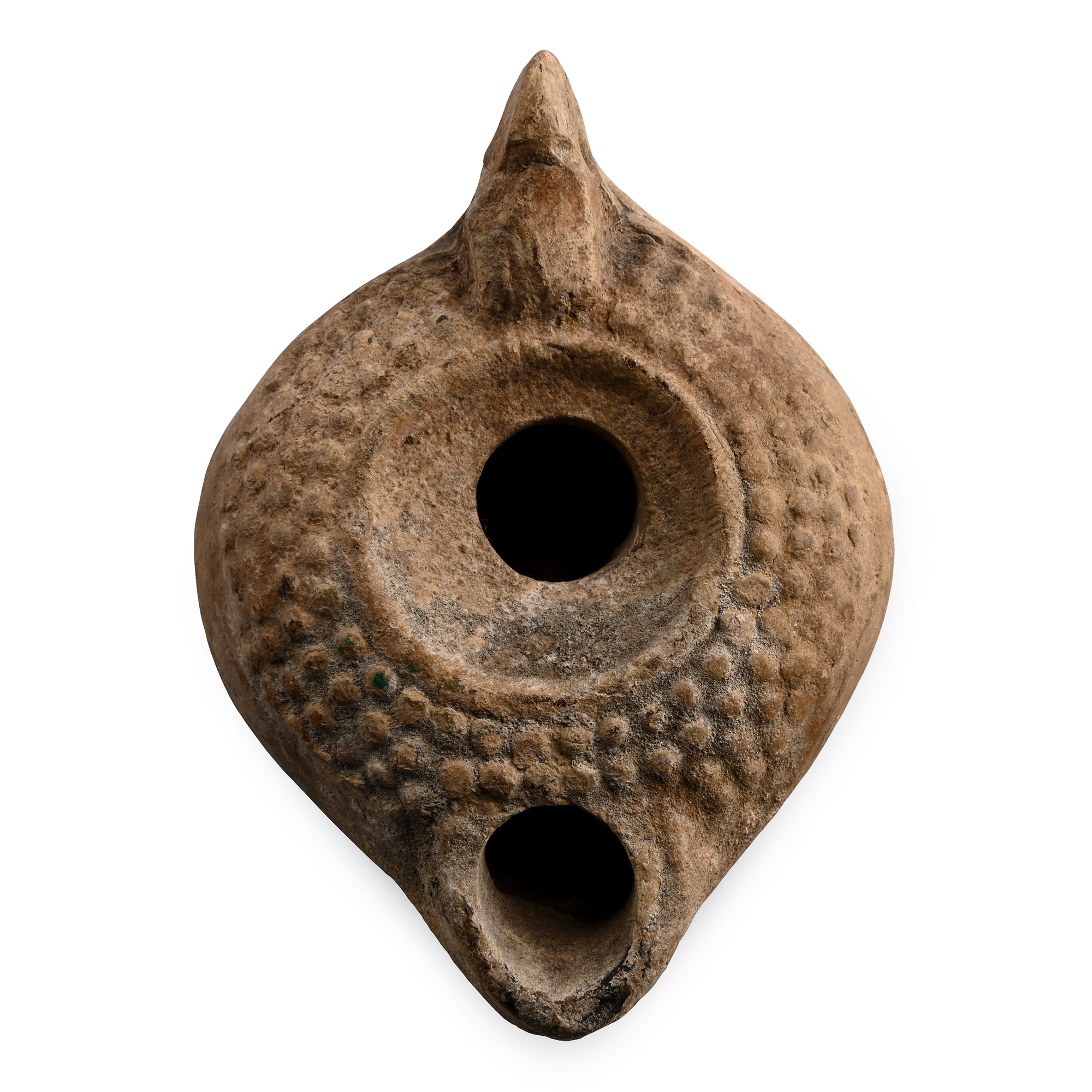
Roman Terracotta Oil Lamp
CIRCA 3RD CENTURY A.D.
3 5/8 in. (101 grams, 91 mm).
Squat bulbous body with broad pelletted shoulder, stub nozzle and lug handle with lateral depressions. [No Reserve]
ProvenanceProbably by descent from the vendor's father-in-law circa 2006.
From the private collection of a Devon, UK, lady.
Cf. Bussière, J., Lindros Wohl, B., Ancient Lamps in the J. Paul Getty Museum, Malibu, 2017, p.383ff., for the type, esp.no.525.
FootnotesThe lamp belongs to the Eastern variant of Loeschcke VIII type. Most of these lamps were made in Ephesus, where several wasters of Loeschcke type VIII lamps have been excavated. Comparative neutron activation analyses of clays have proved the manufacture of Ephesus lamps at Sardis as well as at Ephesus, and we may conjecture the existence of other production centres, for example, Pergamon, where an excavated kiln has yielded a mould and a lamp of Late Asia Minor type.
CONDITIONTimeLine Auctions follows a vetting process to ensure the authenticity and legality of all items, reinforcing our commitment to integrity and responsible trading. Each antiquity, antique, and coin lot undergoes thorough examination by a vetting committee of at least ten external specialists, professional trade association members, scientists, and archaeologists: Our Vetting Process
AUCTIONS:
TimeLine is a leading auction house specialising in antiquities, ancient art, collectables, natural history, coins, medals, and books. Our auctions offer museums, collectors, historians, and enthusiasts the opportunity to acquire unique and historically significant pieces.
-
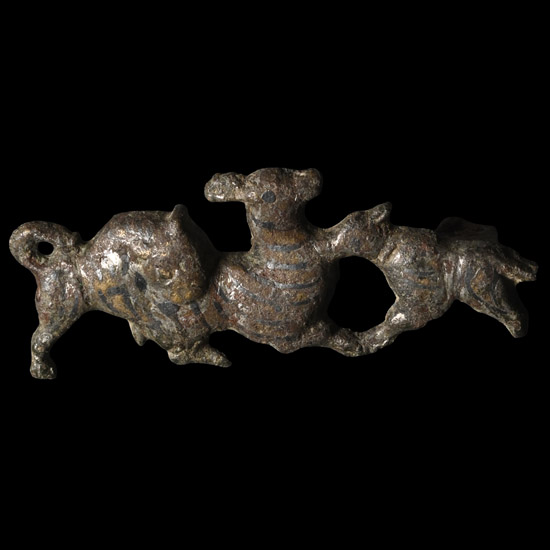
Roman Tinned Bronze Lion Pair Attacking a Deer Plate Brooch
2nd-3rd century A.D.Sold for (Inc. bp): £111
Showing two lions attacking a large deer, one biting the back and the other attacking its jugular, pin and catchplate on the reverse. 3.74 grams, 35 mm
From the private collection of a European gentleman (1942-2024), formed since the 1970s. -
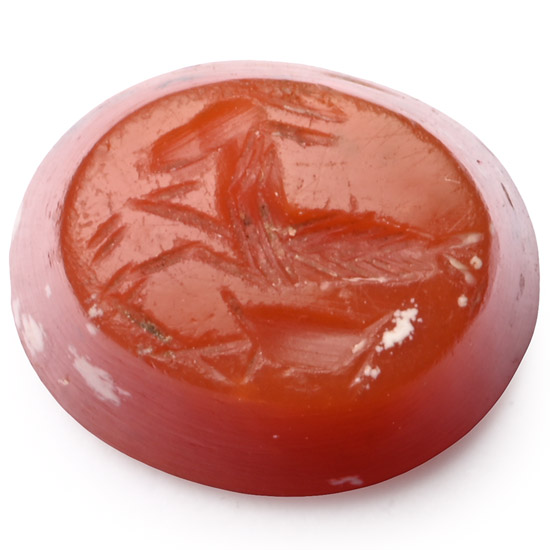
Roman Carnelian Gemstone with Capricorn
2nd-3rd century A.D.Sold for (Inc. bp): £130
With intaglio capricorn, forelegs extended; supplied with a museum-quality impression. 0.39 grams, 8.45 mm
From the private collection of a European gentleman (1942-2024), formed since the 1970s. -
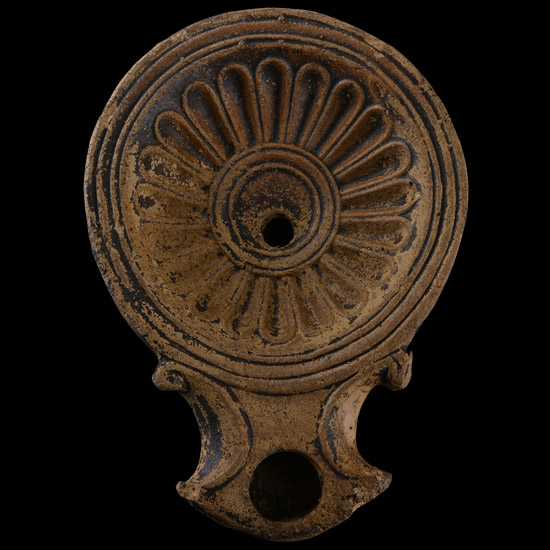
Large High Status Roman Terracotta Oil Lamp with Rosette
Early 1st century A.D.Sold for (Inc. bp): £234
Deep, circular body with volute scrolls flanking the nozzle, concentric circles around the concave discus with radiating petals; maker's mark cross on base. 99 grams, 11.5 cm
From the private collection of Mr Brian Edwards, New Malden, Surrey, UK, formed from the late 1970s-early 1980s; thence by descent. Accompanied by the original collector's data sheet with reference no.A27.
