
Loading, please wait...
LOT 0127
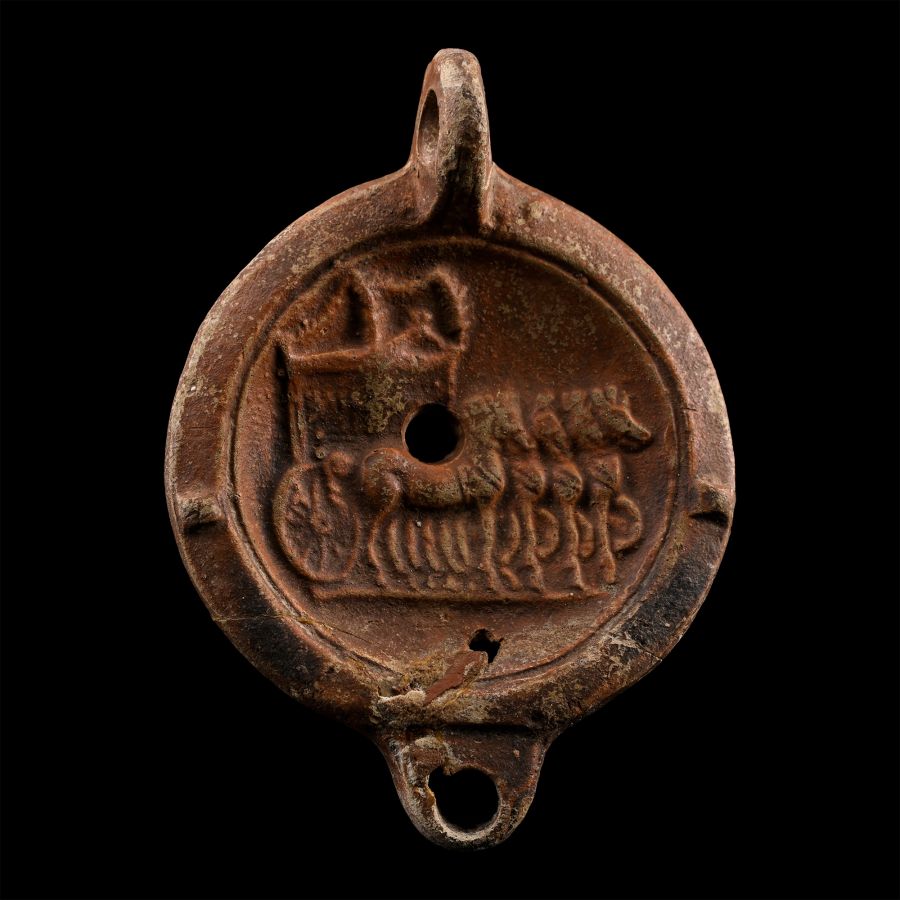
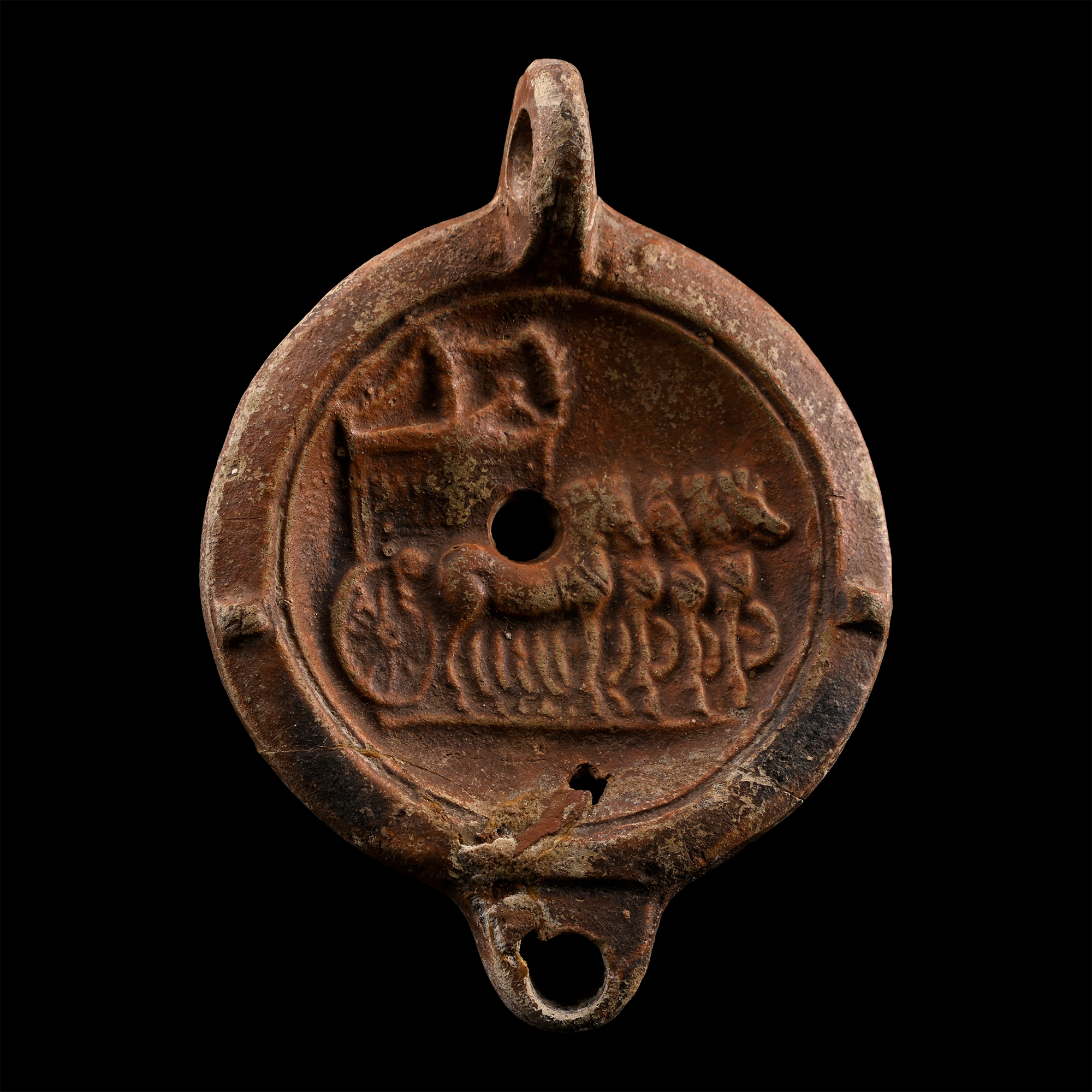
Roman Terracotta Oil Lamp with Victory Quadriga
1ST-2ND CENTURY A.D.
4 3/8 in. (77 grams, 11.2 cm).
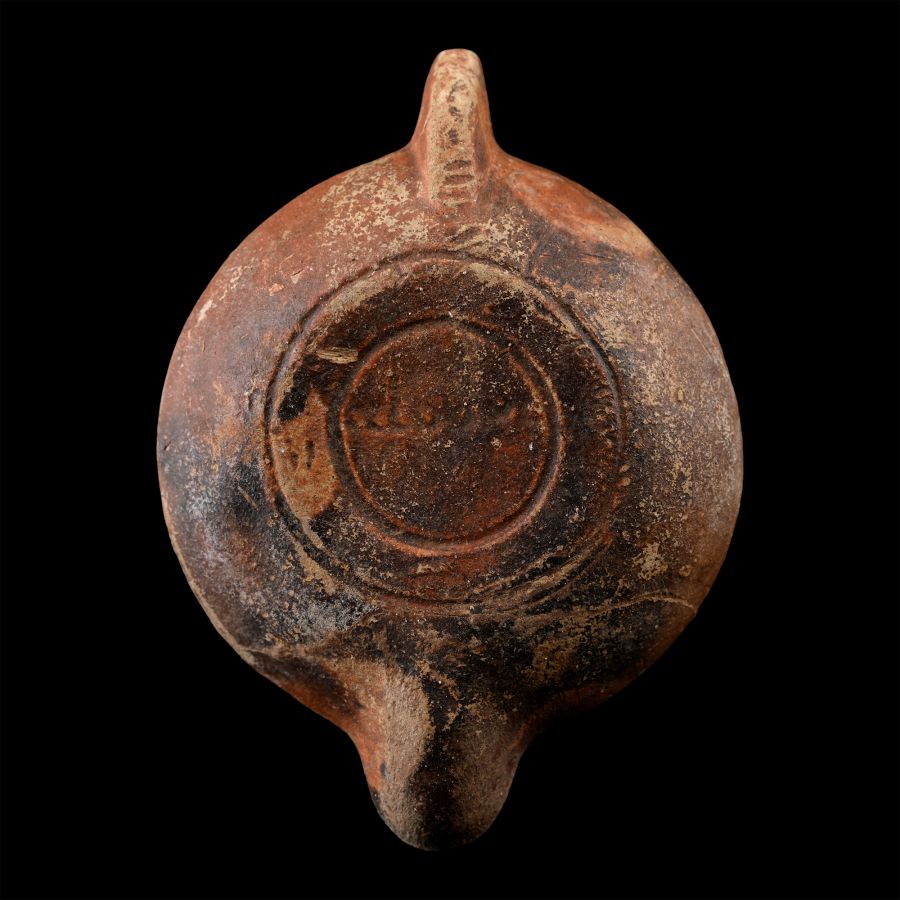
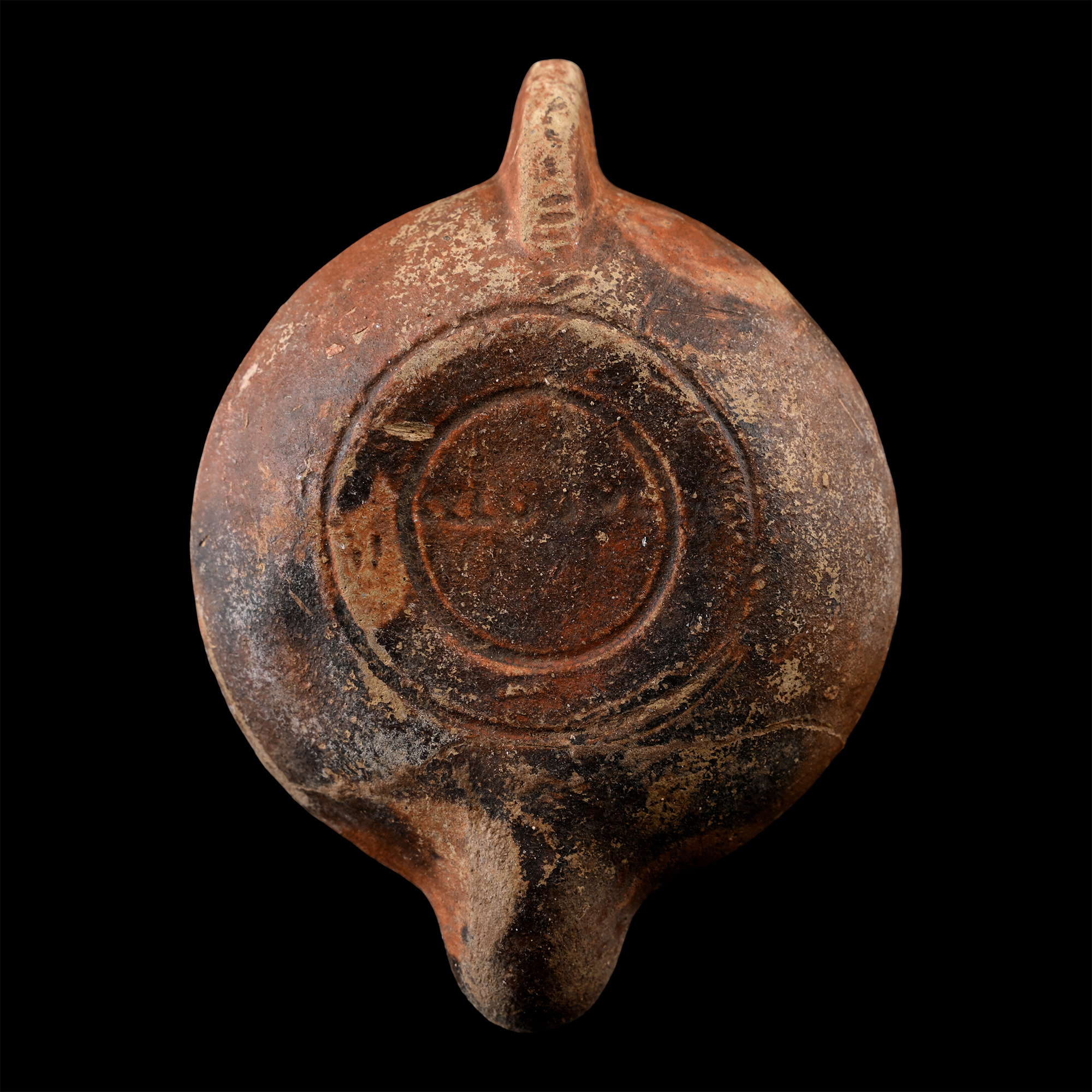
Squat and shallow with broad base; pierced lug handle to rear and small stub nozzle; lateral spurs to shoulder; discus with low-relief quadriga; underside with 'CCLOD' maker's mark. [No Reserve]
ProvenanceFrom the private collection of Mr Brian Edwards, New Malden, Surrey, UK, formed from the late 1970s-early 1980s; thence by descent.
FootnotesThe mark 'CCLOD' appears in the Index of Signatures and Inscriptions for the J. Paul Getty Museum on a late 1st century lamp (Accession No. 83.AQ.377.96).
CONDITIONTimeLine Auctions follows a vetting process to ensure the authenticity and legality of all items, reinforcing our commitment to integrity and responsible trading. Each antiquity, antique, and coin lot undergoes thorough examination by a vetting committee of at least ten external specialists, professional trade association members, scientists, and archaeologists: Our Vetting Process
AUCTIONS:
TimeLine is a leading auction house specialising in antiquities, ancient art, collectables, natural history, coins, medals, and books. Our auctions offer museums, collectors, historians, and enthusiasts the opportunity to acquire unique and historically significant pieces.
-
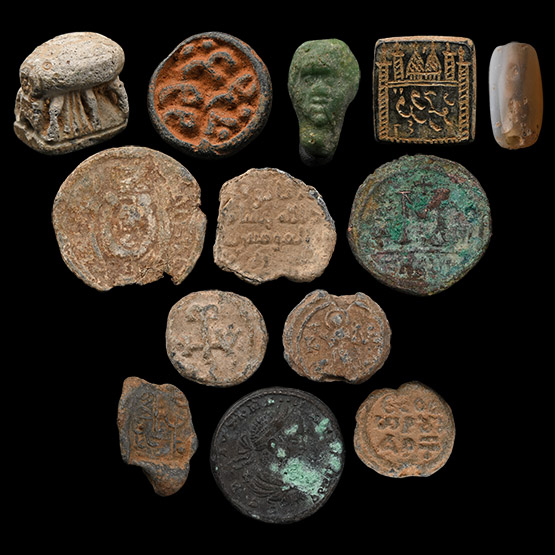
Roman and Later Artefact Collection
Circa 1st millennium A.D.Sold for (Inc. bp): £468
Including scaraboid amulet, fusiform banded agate bead, bronze head from a votive figure and other items. 101 grams total, 17-30 mm
Private collection, acquired on the German art market in 1992; thence by descent.
Among the collection there is an interesting coin (AE follis) of Tiberius II, Μ, above cross, to left ANNO, to right VIII, in ex. THEUP., AD 590-591. -
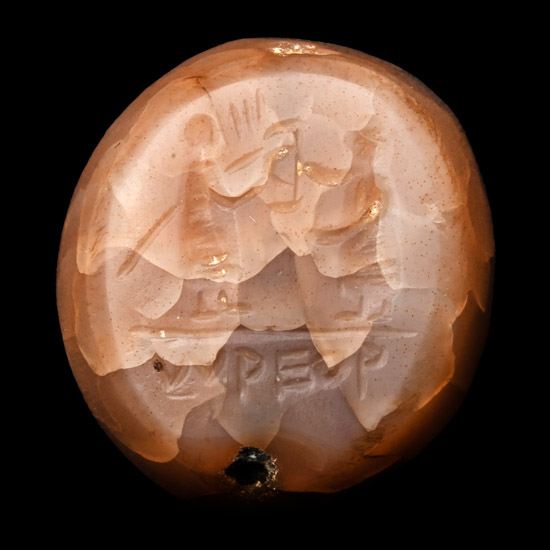
Eastern Roman Agate Amuletic Seal with Inscription
Circa 3rd-4th century A.D.Estimate: £100 - 140 (+bp*)
Opening Bid: £50
Comprising a domed upper face and gently sloping walls, the underside with two opposing figures on a baseline, holding an object, with the inscription 'WPEOP' beneath the figures. 3.9 grams, 18 mm
From the collection of a gentleman, acquired on the London art market in the 1990s. -
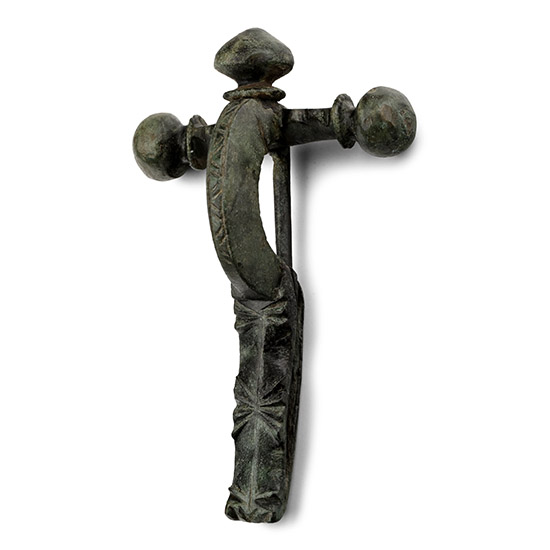
Roman Bronze Crossbow Brooch
4th century A.D.Sold for (Inc. bp): £91
With onion-knop finials, gusset to the bow, chamfered sections to the foot, hinged pin to the reverse. 21.8 grams, 56 mm
Ex German art market, 2000s. Acquired from an EU collector living in London. From the collection of a Surrey, UK, gentleman.
