
Loading, please wait...
LOT 0971
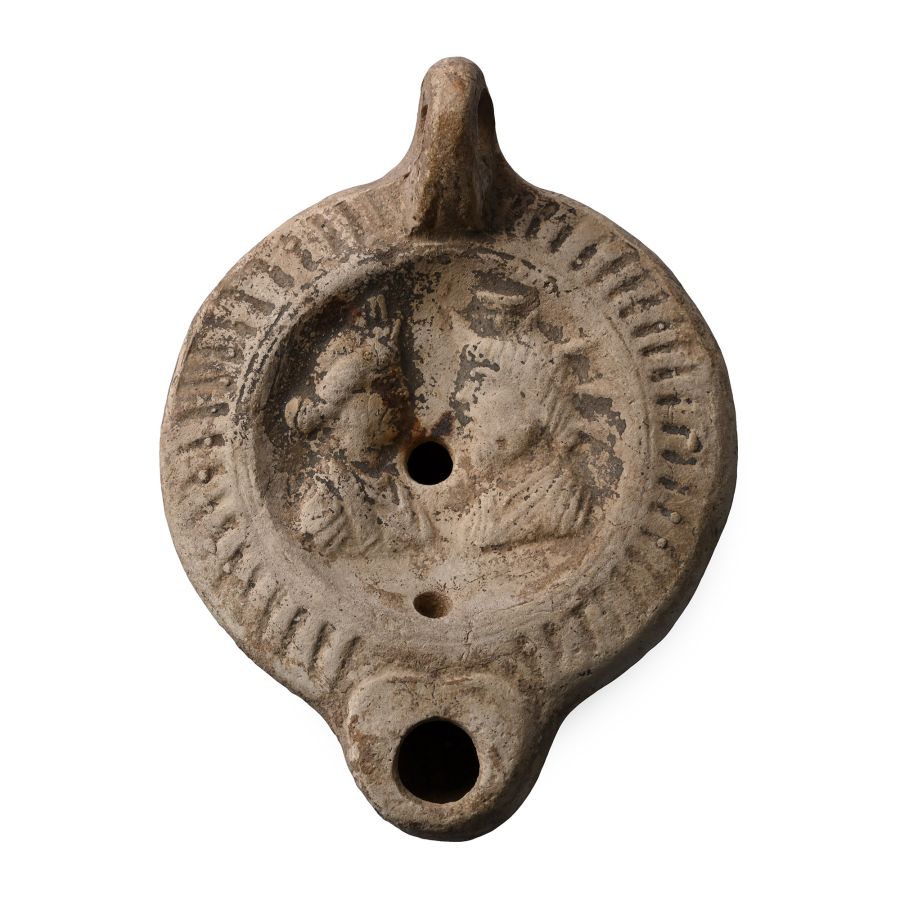
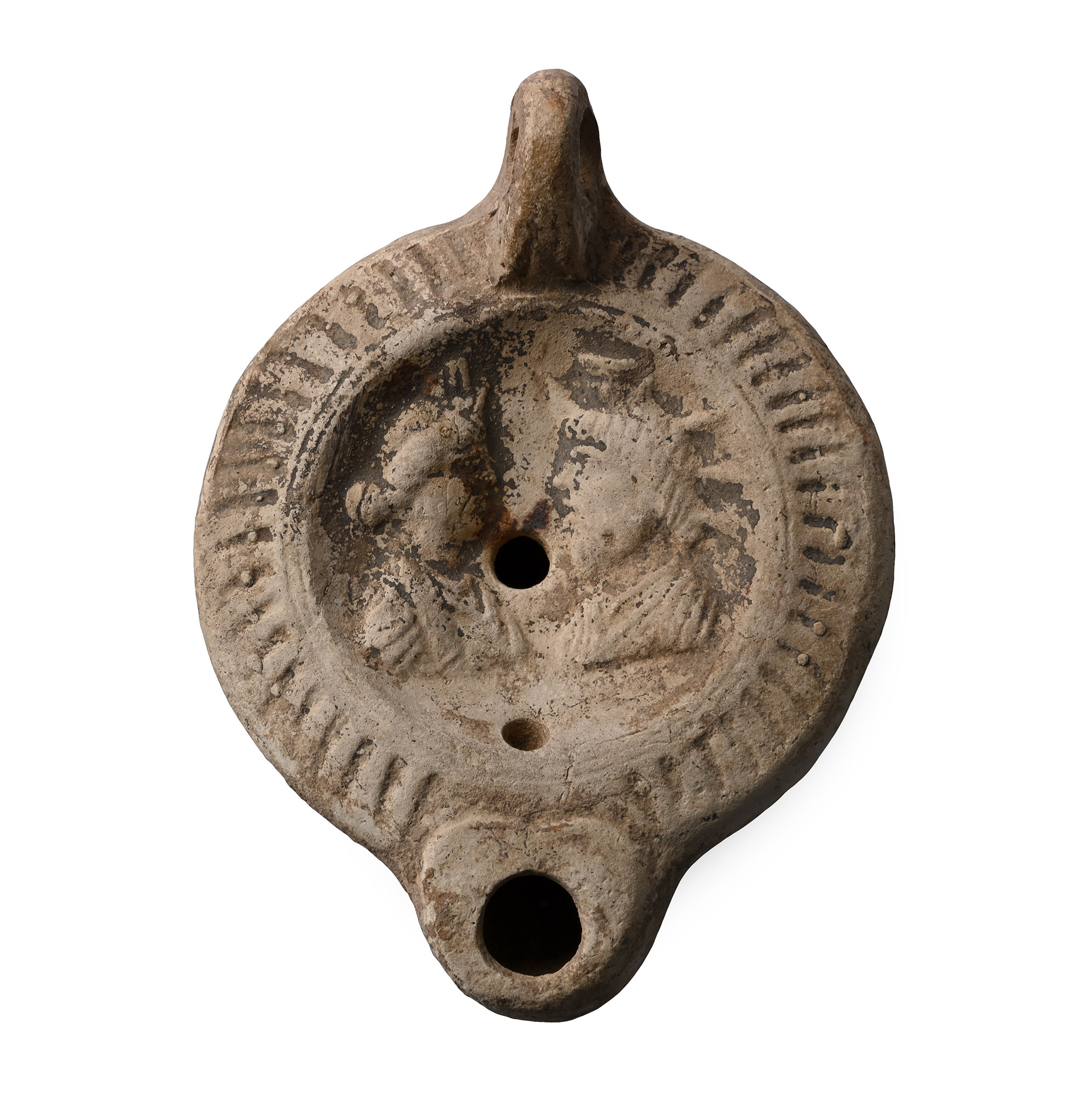
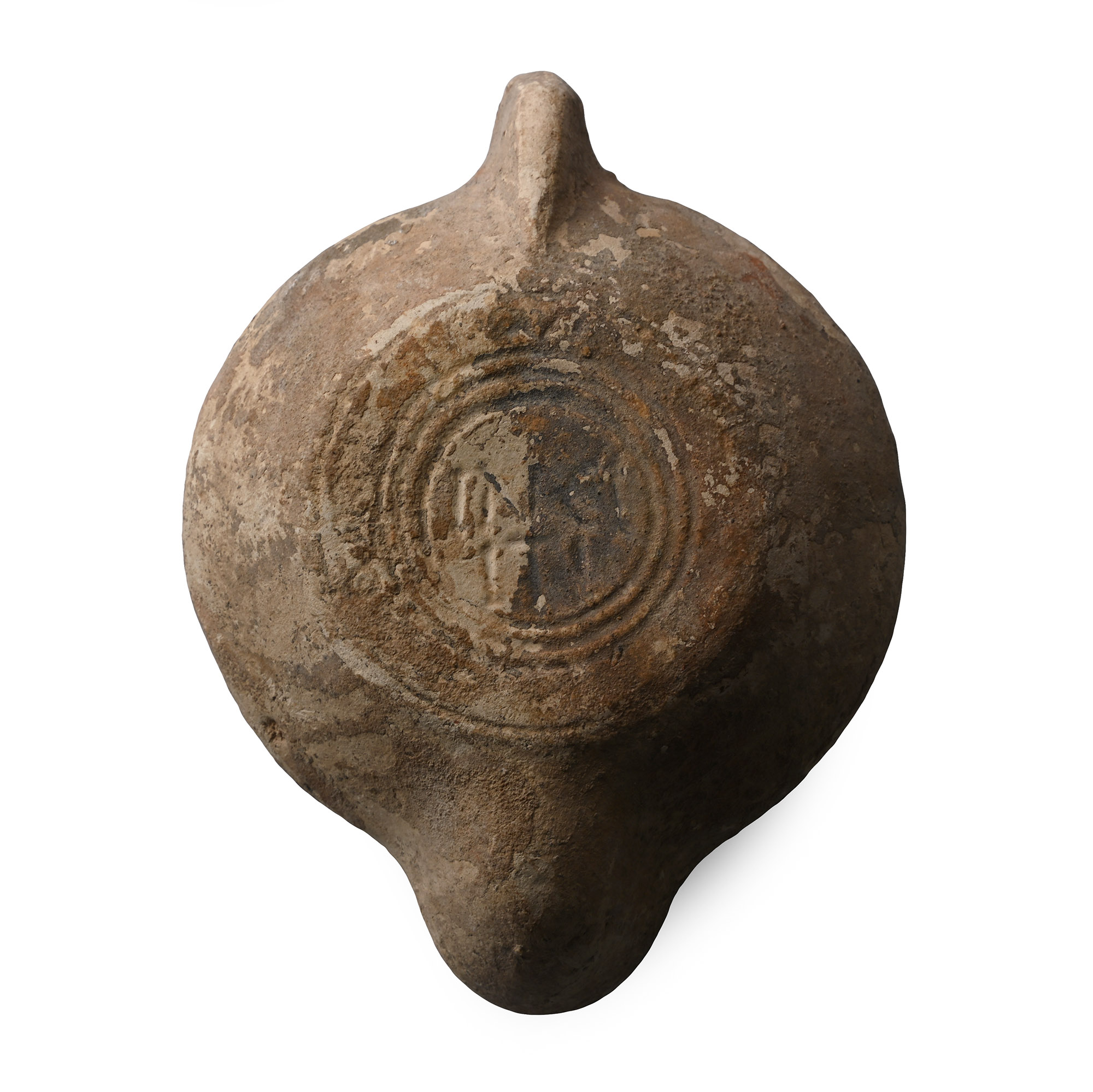
Roman Terracotta Oil Lamp with Isis and Serapis
2ND-3RD CENTURY A.D.
4 1/2 in. (103 grams, 11.6 cm).
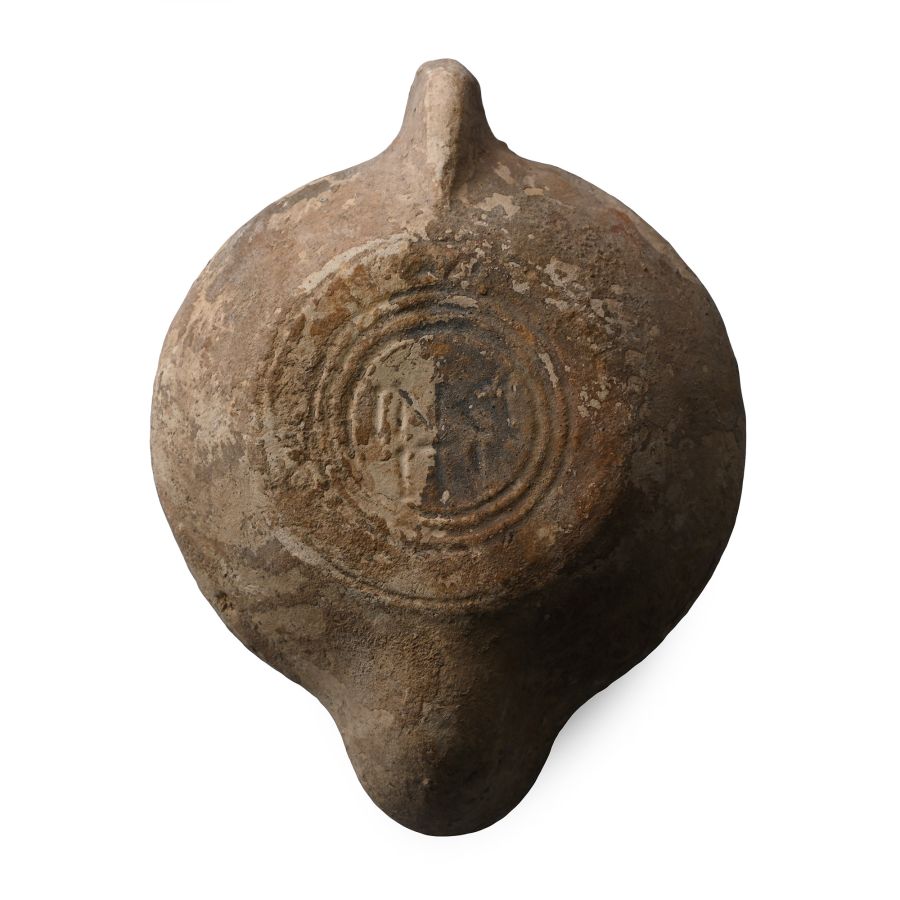
Discoid in plan with short D-shaped nozzle, loop handle, discus with low-relief image of two facing busts representing Isis and Serapis, shoulder with ribbed decoration; marked discoid base. [No Reserve]
ProvenanceFrom the stock of a former UK antiquarian, acquired at trade fairs and from private collection formed in the 1980s-1990s.
Private collection, Europe.
TimeLine Auctions follows a vetting process to ensure the authenticity and legality of all items, reinforcing our commitment to integrity and responsible trading. Each antiquity, antique, and coin lot undergoes thorough examination by a vetting committee of at least ten external specialists, professional trade association members, scientists, and archaeologists: Our Vetting Process
AUCTIONS:
TimeLine is a leading auction house specialising in antiquities, ancient art, collectables, natural history, coins, medals, and books. Our auctions offer museums, collectors, historians, and enthusiasts the opportunity to acquire unique and historically significant pieces.
-
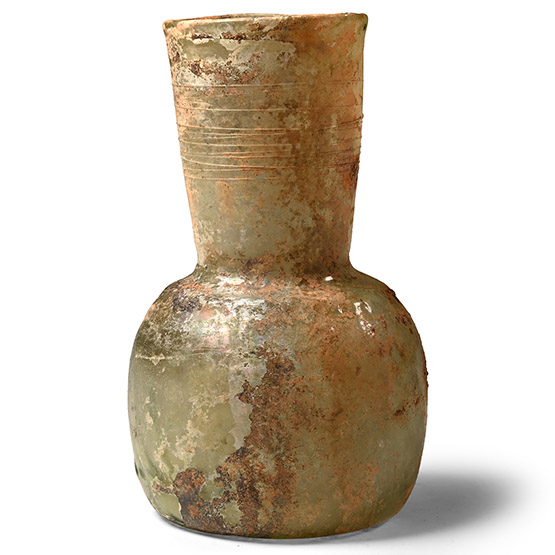
Roman Glass Flask with Everted Spout
4th century A.D.Sold for (Inc. bp): £65
Piriform in profile in aqua glass with broad flared neck; applied trails to the neck, dimple base; areas of iridescence. 38 grams, 98 mm
From a London, UK, collection, 1990s.
The flask is a common Late Roman type, especially diffused in Syria and Palestine. Hayes suggested that examples with straight necks are relatively early in date, while those with necks having a bulge at the top and are narrow below were produced slightly later. -
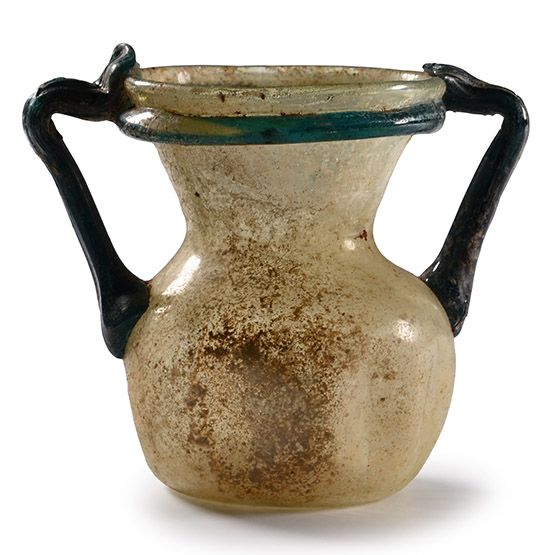
Roman Glass Handled Jar
4th century A.D.Sold for (Inc. bp): £312
With dimpled base, bulbous body with opposed dimples to the sidewall, applied flange to the neck, applied trails forming lateral handles. 39.4 grams, 78 mm wide
From an important London collection of glass, 1990s.
These biconical jars with opposed handles, rounded lips and overhanging tubular flanges are typical of the late Roman period. There are Syro-Palestinian types, with similar examples having been found in Beit Fajjar, West Bank, Palestine. -
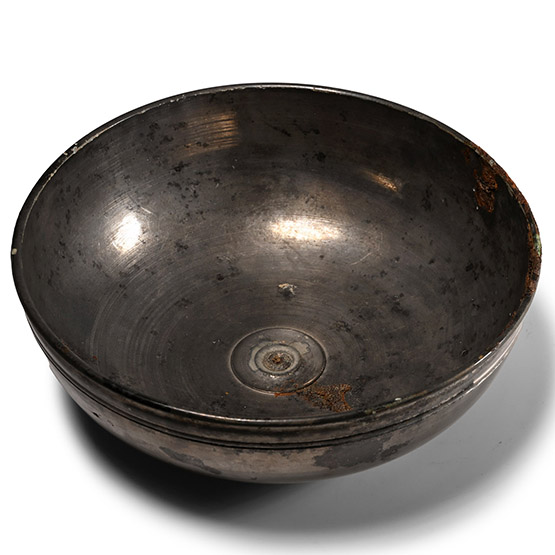
Roman Tinned Bronze Bowl
1st-3rd century A.D.Estimate: £1,200 - 1,700 (‡+bp*)
Opening Bid: £600
Hemispherical in profile with low foot, incised circumferential lines to rim; high-tin surface with silvery appearance. 177 grams, 10.3 cm
Acquired in the mid 1980s-1990s. Private collection, Switzerland, thence by descent. Private collection, since the late 1990s. This lot has been checked against the Interpol Database of stolen works of art and is accompanied by search certificate number no.12234-222176.
