
Loading, please wait...


LOT 0948
Roman Terracotta Oil Lamp with Gladiators
CIRCA 2ND CENTURY A.D.
3 7/8 in. (47 grams, 98 mm).
The discus with two opposing gladiators, one holding a round shield, loop handle to the rear. [No Reserve]
ProvenanceFrom the collection of a Cambridge, UK, gentleman, by direct descent from his father, who acquired the items in London in circa 1960.
LiteratureSee Bussière, J. & Lindros Wohl, B., Ancient Lamps in the J. Paul Getty Museum, Malibu, 2017, no.407, for type (Loeschcke VIII; Bussière form D IX).
CONDITIONTimeLine Auctions follows a vetting process to ensure the authenticity and legality of all items, reinforcing our commitment to integrity and responsible trading. Each antiquity, antique, and coin lot undergoes thorough examination by a vetting committee of at least ten external specialists, professional trade association members, scientists, and archaeologists: Our Vetting Process
AUCTIONS:
TimeLine is a leading auction house specialising in antiquities, ancient art, collectables, natural history, coins, medals, and books. Our auctions offer museums, collectors, historians, and enthusiasts the opportunity to acquire unique and historically significant pieces.
-
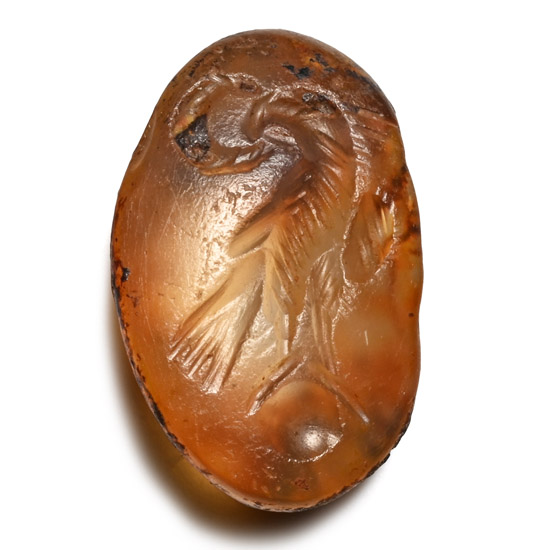
Roman Agate Gemstone with Bird Holding Victory Wreath
2nd-3rd century A.D.Sold for (Inc. bp): £65
Ellipsoid type with incuse design of a bird perching on a globe with its head turned to one side, wreath in its beak; supplied with a museum-quality impression. 0.68 grams, 13 mm
From the private collection of a European gentleman (1942-2024), formed since the 1970s. -
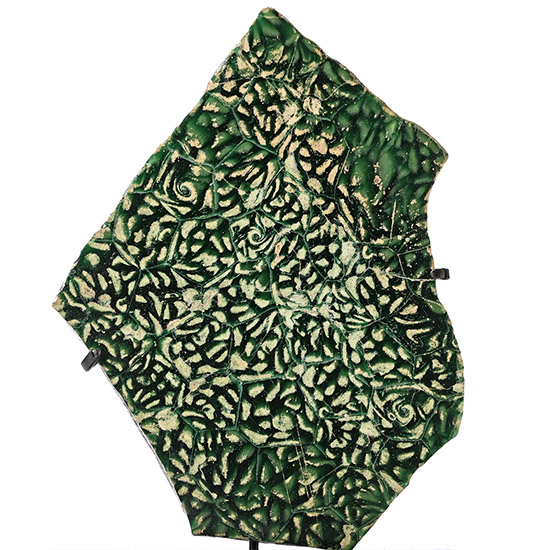
Large Roman Green Mosaic Glass Fragment
Late 1st century B.C.-early 1st century A.D.Estimate: £2,000 - 3,000 (+bp*)
Opening Bid: £1,000
Green glass with white swirls and petals, accompanied by a custom-made display stand. 208 grams, 16 cm (465 gram total including stand)
Dr Jutaro Kawabe, Nagoya, Japan, assembled during the 1960s-1980s. with Hoshigaoka Gallery until the late 1990s. This lot has been checked against the Interpol Database of stolen works of art and is accompanied by search certificate number no.13093-248078.
The decoration is well documented in the Eastern Roman Empire, especially the Syro-Palestinian coast. The most frequently occurring colour in these glass mosaics is opaque red, but green and blue tints are not uncommon. -
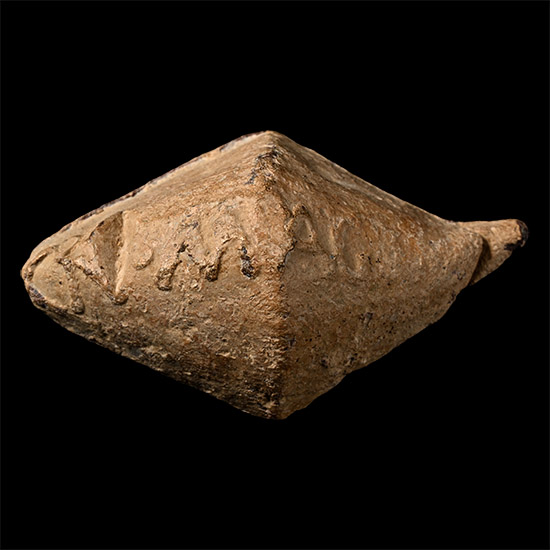
Roman Lead Cnaeus Pompey Battle of Munda Slingshot
1st century B.C.Sold for (Inc. bp): £221
Facetted lentoid-section sling shot (glans) with inscription in Latin letters 'CN' (Cneius) 'MAG' (Magnus) on one side, and 'IMP' for 'IMPERATOR' (victorious general) to the other side, i.e Gnaeus Pompeius Magnus Imperator (Pompey the Great the victorious general). 81grams, 43 mm
Previously from a private Spanish collection. Property of a Middlesex gentleman. Accompanied by a copy of a Spanish export licence.
