
Loading, please wait...
LOT 0887
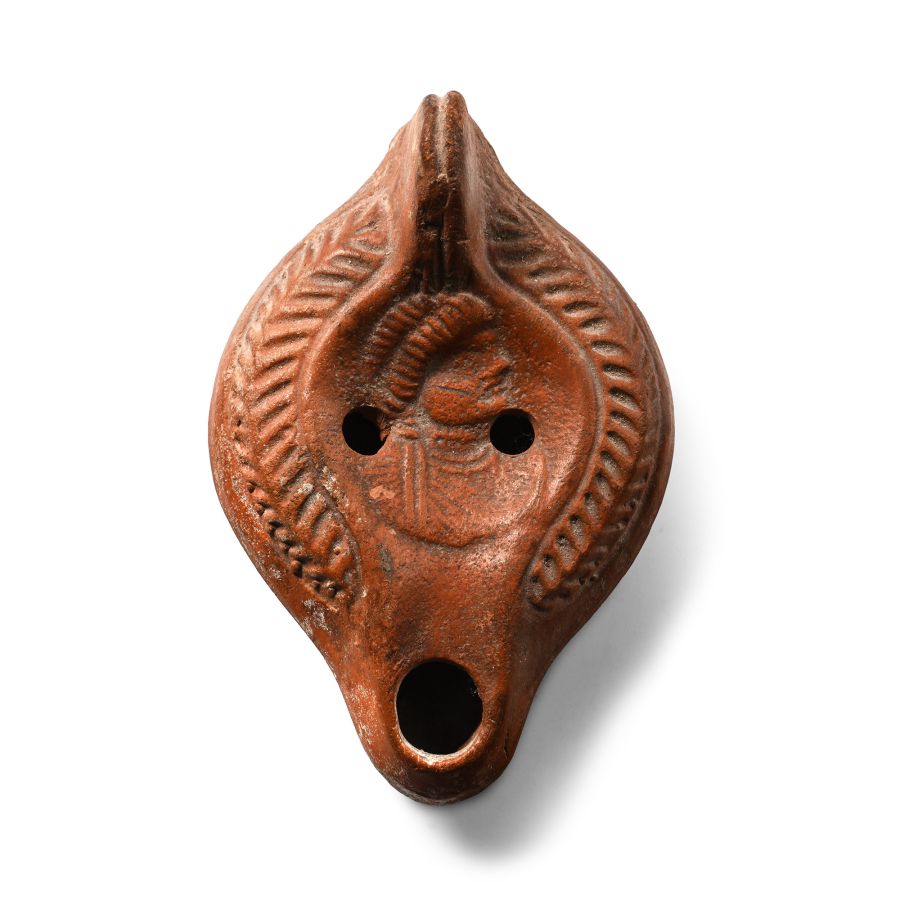
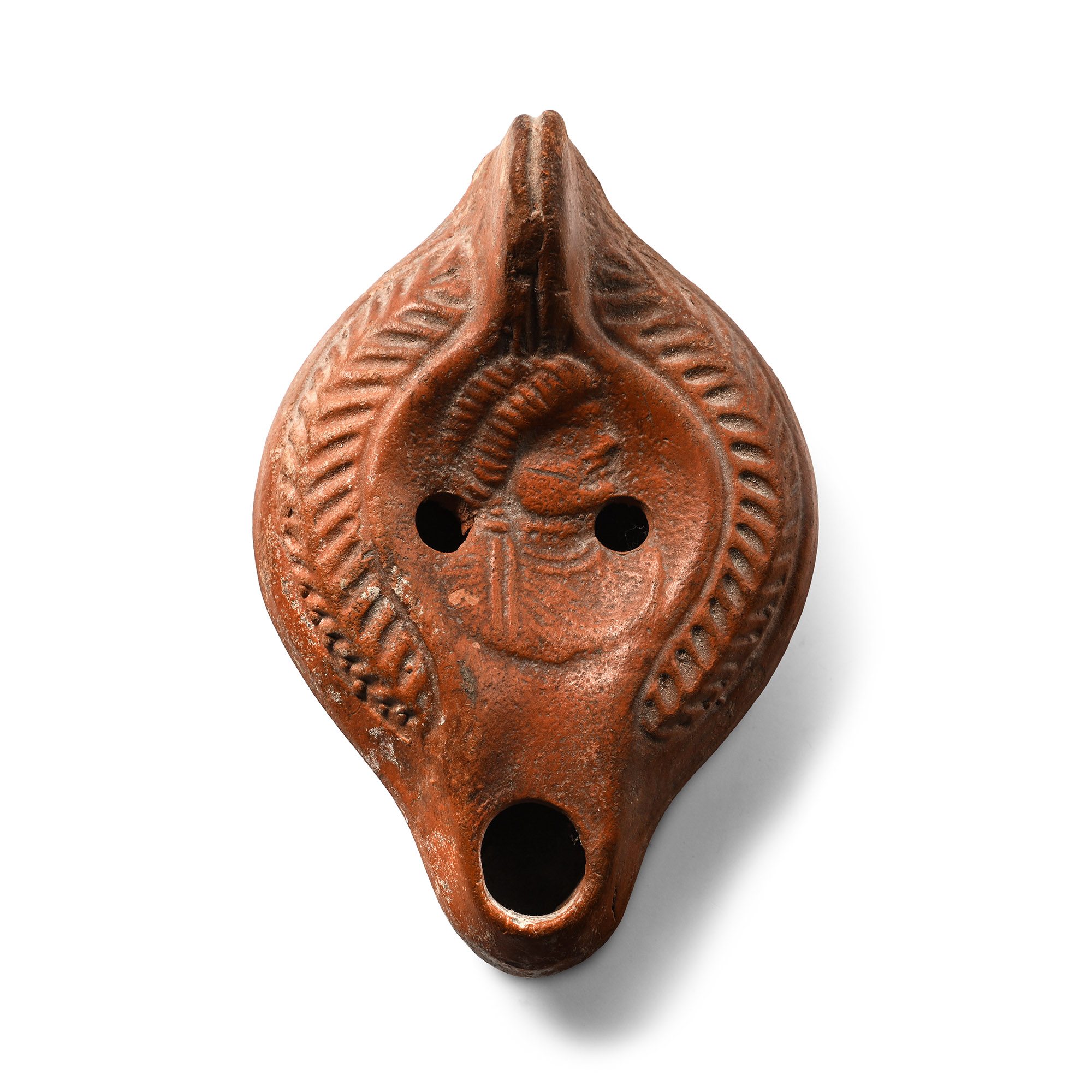
Roman Terracotta Oil Lamp with Female Bust
4TH CENTURY A.D.
4 1/2 in. (110 grams, 11.3 cm).
Low-relief wreath motif decorating the shoulder arranged like a palm tree, a female bust facing right on the discus and a lug handle to the rear. [No Reserve]
ProvenanceFrom the private coin collection of a West London, UK, gentleman, formed since the mid 1980s.
LiteratureCf. Rosenthal, R., Sivan, R., Ancient Lamps in the Schloessinger Collection, Jerusalem, 1978, fig.281, for a near identical specimen; Bussière, J. & Lindros Wohl, B., Ancient Lamps in the J. Paul Getty Museum, Malibu, 2017, no.488, for type (Atlante type VI; Bonifay 41).
CONDITIONTimeLine Auctions follows a vetting process to ensure the authenticity and legality of all items, reinforcing our commitment to integrity and responsible trading. Each antiquity, antique, and coin lot undergoes thorough examination by a vetting committee of at least ten external specialists, professional trade association members, scientists, and archaeologists: Our Vetting Process
AUCTIONS:
TimeLine is a leading auction house specialising in antiquities, ancient art, collectables, natural history, coins, medals, and books. Our auctions offer museums, collectors, historians, and enthusiasts the opportunity to acquire unique and historically significant pieces.
-
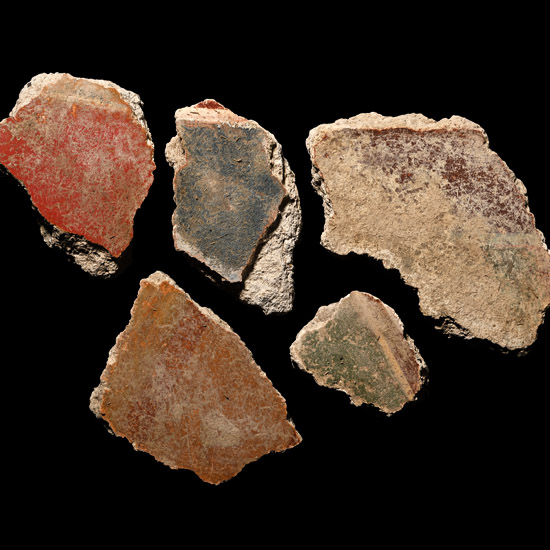
Roman Fresco Wall Plaster Collection
1st century A.D.Sold for (Inc. bp): £312
Fragments of wall plaster with rendered surface painted with mainly Pompeii red, pale blue, brown and white detailing; some with an impression of timber laths to the reverse. 897 grams total, 6.8-16 cm
Acquired in the 19th century. Ex Jeger collection, Switzerland. UK gallery, early 2000s.
These small fragments, for analogies with the fragments of Pompeii, seem to belong to the second style of Roman painting, red panels representing highlight and shadow, decorated with vegetal interlaces. A red grenade fillet probably framed some panels. A fragment shows alternate blue and red colours over a cream background, maybe pertinent to a socle. -
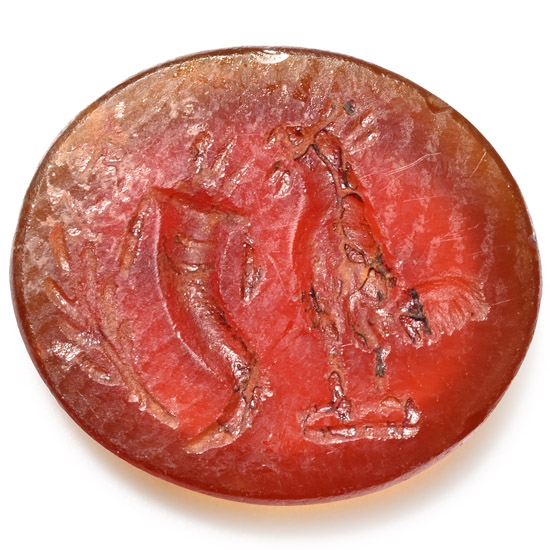
Roman Carnelian Gemstone with Cockerel and Cornucopia
2nd-3rd century A.D.Sold for (Inc. bp): £176
Oval translucent intaglio with a standing cockerel before a cornucopia and an olive sprig on the left. 0.40 grams, 11 mm
UK private collection before 2000. London collection, acquired on the UK art market. -
.jpg)
Roman Agate Cameo with a Julio-Claudian Portrait of an Emperor
1st century B.C.-1st century A.D.Estimate: £1,000 - 1,400 (+bp*)
Opening Bid: £444
Oval cameo with a profile bust facing left, a laurel crown resting on his close-cropped hair; in the background, a second portrait visible 'capita iugata'. 2.5 grams, 20 mm
UK private collection, acquired on the English art market in the 2000s.
