
Loading, please wait...
LOT 0160
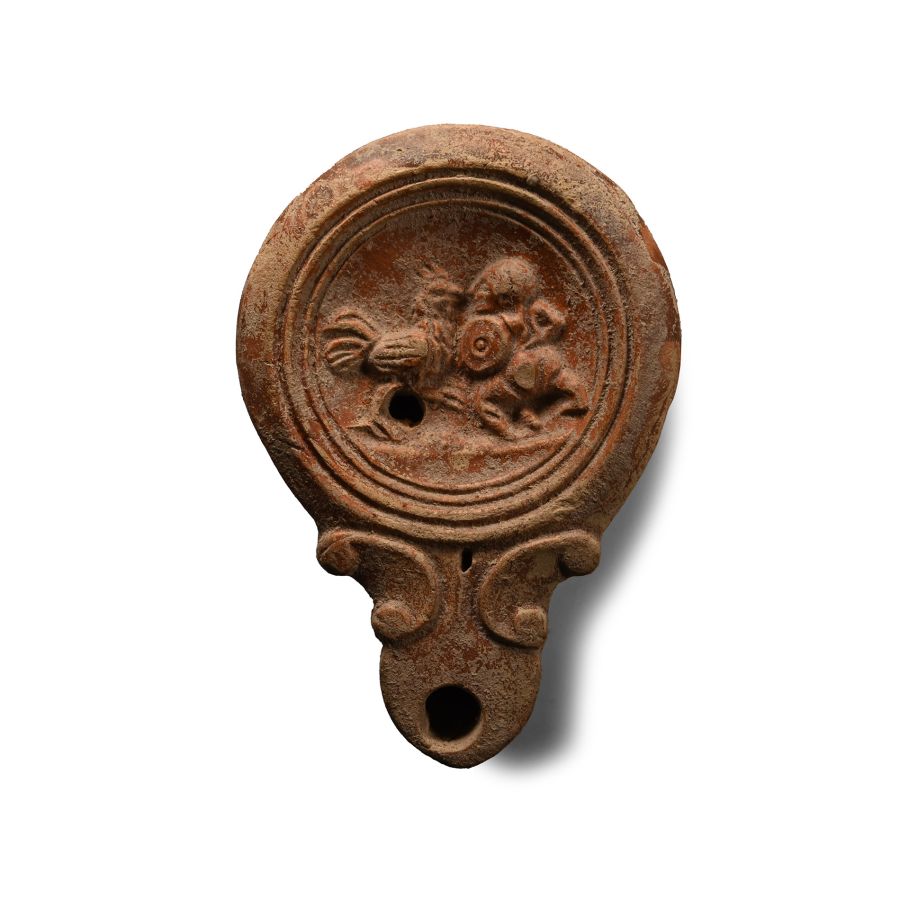
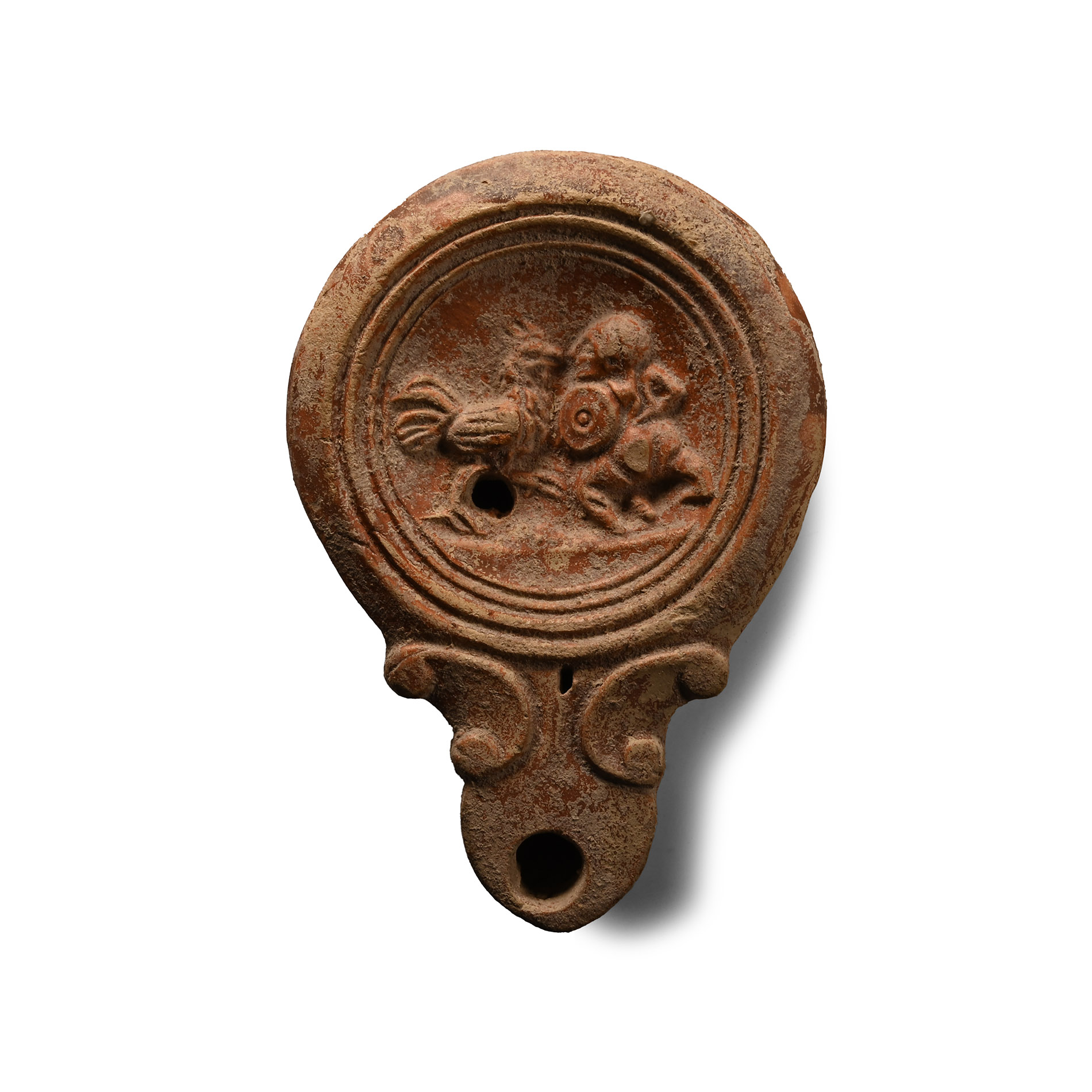
Roman Terracotta Oil Lamp with Dwarf Gladiator
1ST-2ND CENTURY A.D.
4 in. (47 grams, 10 cm).
Squat in profile with broad body, volute scrolls to nozzle, discus with high-relief scene of a grotesque dwarf wearing gladiator's costume and fighting with a cockerel.
ProvenanceFrom the private collection of Mr K.A., acquired in the 1990s-early 2000s.
CONDITIONTimeLine Auctions follows a vetting process to ensure the authenticity and legality of all items, reinforcing our commitment to integrity and responsible trading. Each antiquity, antique, and coin lot undergoes thorough examination by a vetting committee of at least ten external specialists, professional trade association members, scientists, and archaeologists: Our Vetting Process
AUCTIONS:
TimeLine is a leading auction house specialising in antiquities, ancient art, collectables, natural history, coins, medals, and books. Our auctions offer museums, collectors, historians, and enthusiasts the opportunity to acquire unique and historically significant pieces.
-
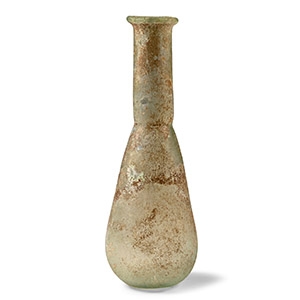
Roman Glass Vessel
1st-2nd century A.D.Estimate: £100 - 140 (+bp*)
Opening Bid: £56
With piriform lower body, extended cylindrical neck and flange rim; iridescent surfaces. 32 grams, 13.5 cm
From a London, UK, collection, 1990s. -
.jpg)
Romano-British Enamelled Bronze Military Lunar Horse Harness Pendant and Hanger
Circa 2nd century A.D.Sold for (Inc. bp): £182
Composed of a pelta-shaped pendant (lunula) attached to a drop hanger decorated with concentric circles, the central one with remains of light blue and crimson enamel. 5.79 grams, 60 mm
Found Yorkshire, UK, in 2022. Property of a Yorkshire gentleman.
Horse harness pendants were often characterised by lunulae (small moons, i.e. pelta-shaped artefacts) and drop hangers. They were decorated with enamels of different colours. -
.jpg)
Roman Silver Figure of a Man
1st-3rd century A.D.Estimate: £400 - 600 (‡+bp*)
Opening Bid: £200
Standing erect wearing a draped toga, bearded and with thick bowl-cut hair. 9.05 grams, 39 mm
Acquired in the mid 1980s-1990s. From the family collection of Mr S.A., Switzerland, thence by descent. Private collection since the late 1990s.
