
Loading, please wait...
LOT 0927
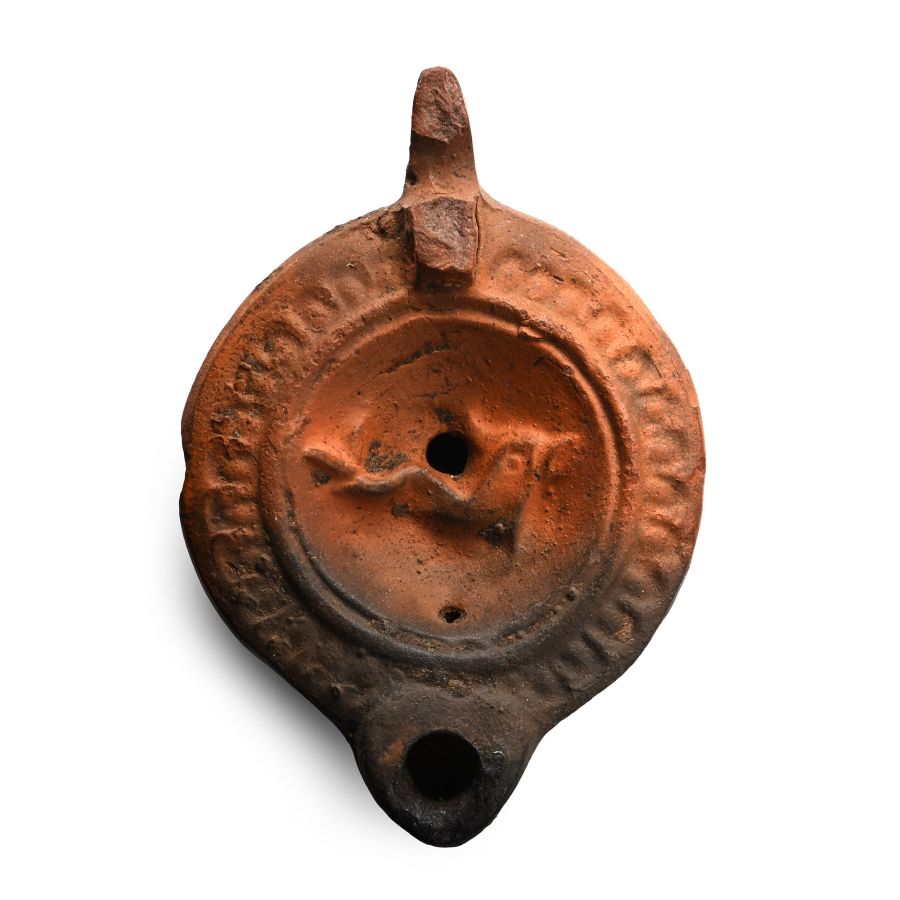
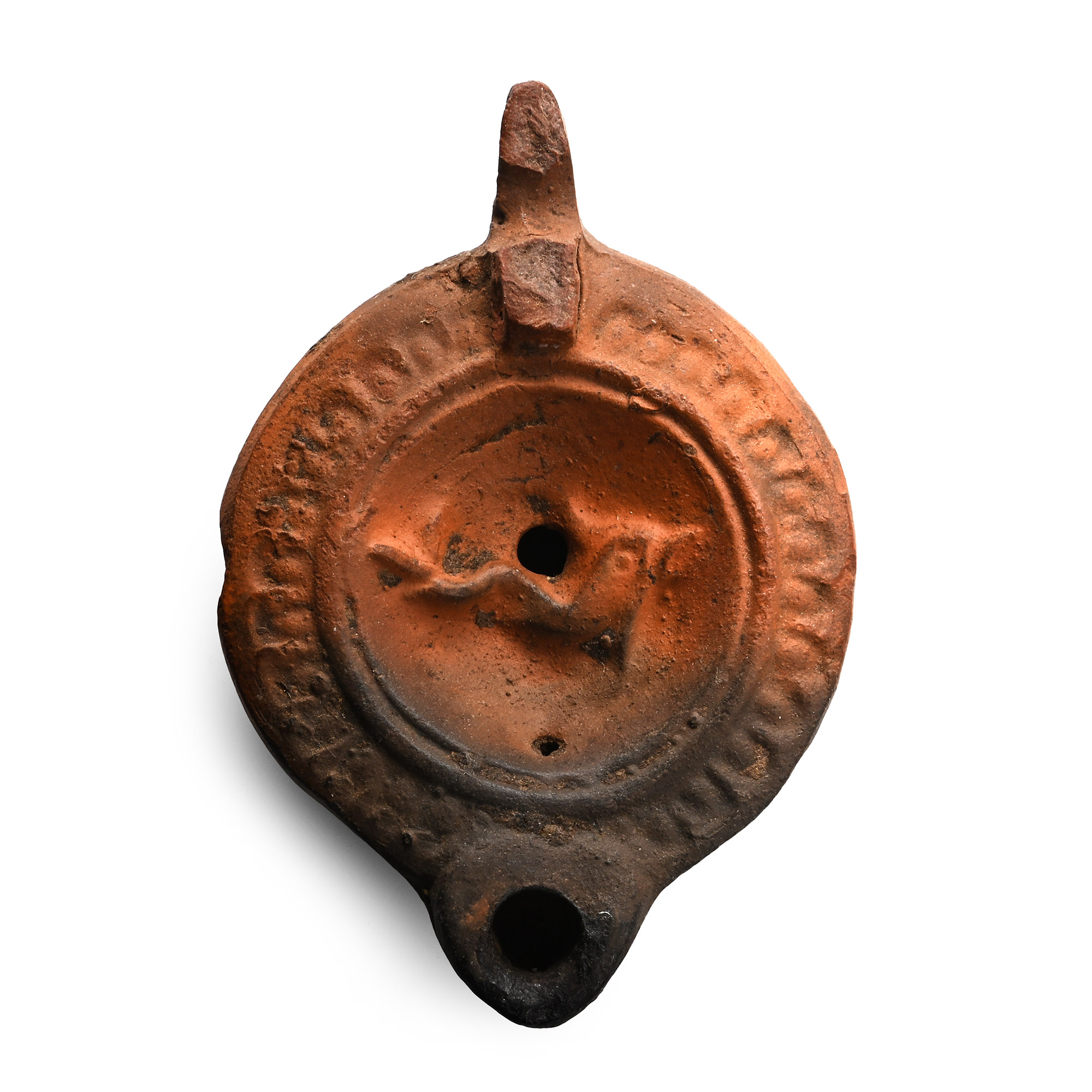
Roman Terracotta Oil Lamp with Dolphin
2ND CENTURY A.D.
3 1/2 in. (46.3 grams, 89 mm).
Discoid in plan with short D-shaped nozzle, loop handle (top absent), discus with low-relief image of a dolphin; shoulder with radiating scales; base marked off with a circular groove. [No Reserve]
ProvenanceFrom the Lloyd and Jeanne Raport collection, Washington, D.C. and Florida, USA, formed between 1972-2000.
Acquired through Bonhams, London, UK.
Cf. Bussière, J., Lindros Wohl, B., Ancient Lamps in the J. Paul Getty Museum, Malibu, 2017, nos.327ss, p.230ff, for type.
CONDITIONTimeLine Auctions follows a vetting process to ensure the authenticity and legality of all items, reinforcing our commitment to integrity and responsible trading. Each antiquity, antique, and coin lot undergoes thorough examination by a vetting committee of at least ten external specialists, professional trade association members, scientists, and archaeologists: Our Vetting Process
AUCTIONS:
TimeLine is a leading auction house specialising in antiquities, ancient art, collectables, natural history, coins, medals, and books. Our auctions offer museums, collectors, historians, and enthusiasts the opportunity to acquire unique and historically significant pieces.
-
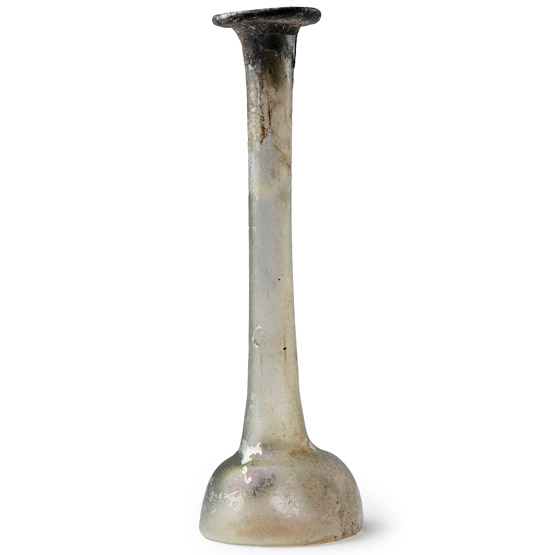
Roman Tall Glass Flask
Circa 1st-4th century A.D.Sold for (Inc. bp): £169
Comprising a squat conical body with a dimple at the base, long tubular neck with everted rolled rim. 28 grams, 15.9 cm
From a London, UK, collection of glass, 1970-2000s. -
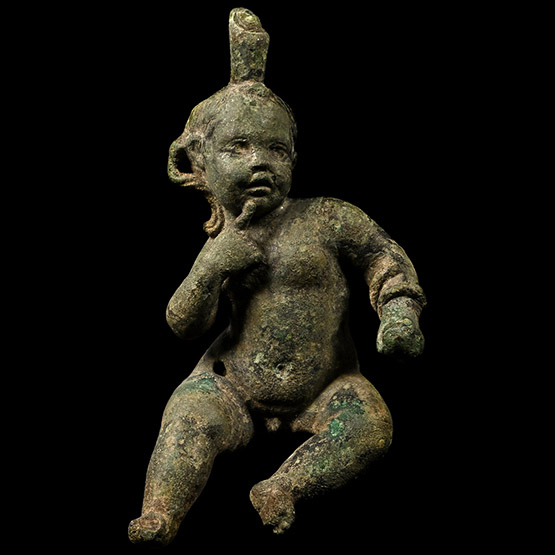
Roman Bronze Figure of the God Harpocrates
1st century A.D.Estimate: £2,500 - 3,500 (‡+bp*)
Opening Bid: £1,250
Modelled in the round, sitting with miniature double-crown, serpent arm-ring on left wrist, sidelock; fixing socket to right thigh. 145 grams, 72 mm
Private collection, Me. A., Florida, USA, early 1990s. European private collection, acquired in Germany, September 2000. This lot has been checked against the Interpol Database of stolen works of art and is accompanied by a search certificate number no.12683-234609. -
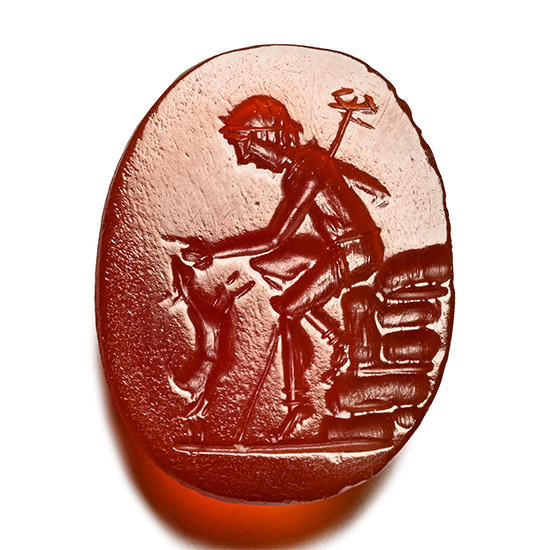
Roman Carnelian Gemstone with Seated Mercury and Goat
2nd century A.D.Sold for (Inc. bp): £260
Plano-convex in section with intaglio scene of a profile male on a baseline resting on a pile of stones, staff (thyrsus?) resting on his shoulder, leaning forward towards a rearing goat; surface repolished; supplied with a museum-quality impression. 1.03 grams, 15 mm
Private collection, England.
