
Loading, please wait...
LOT 0550
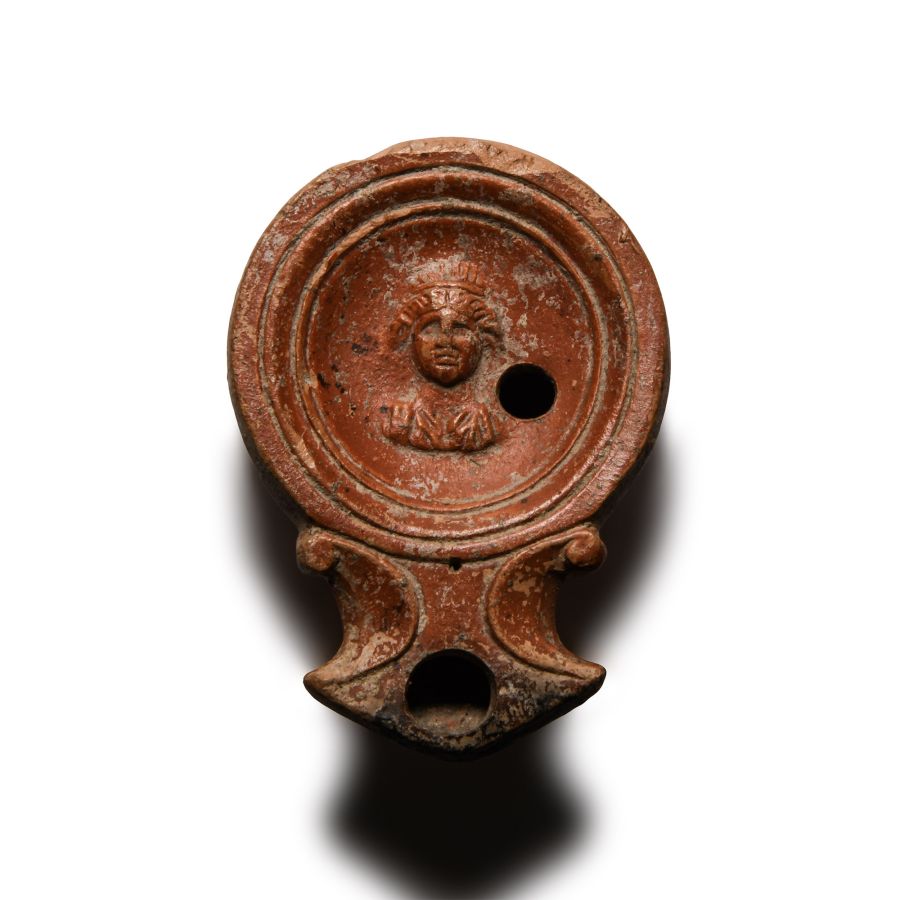
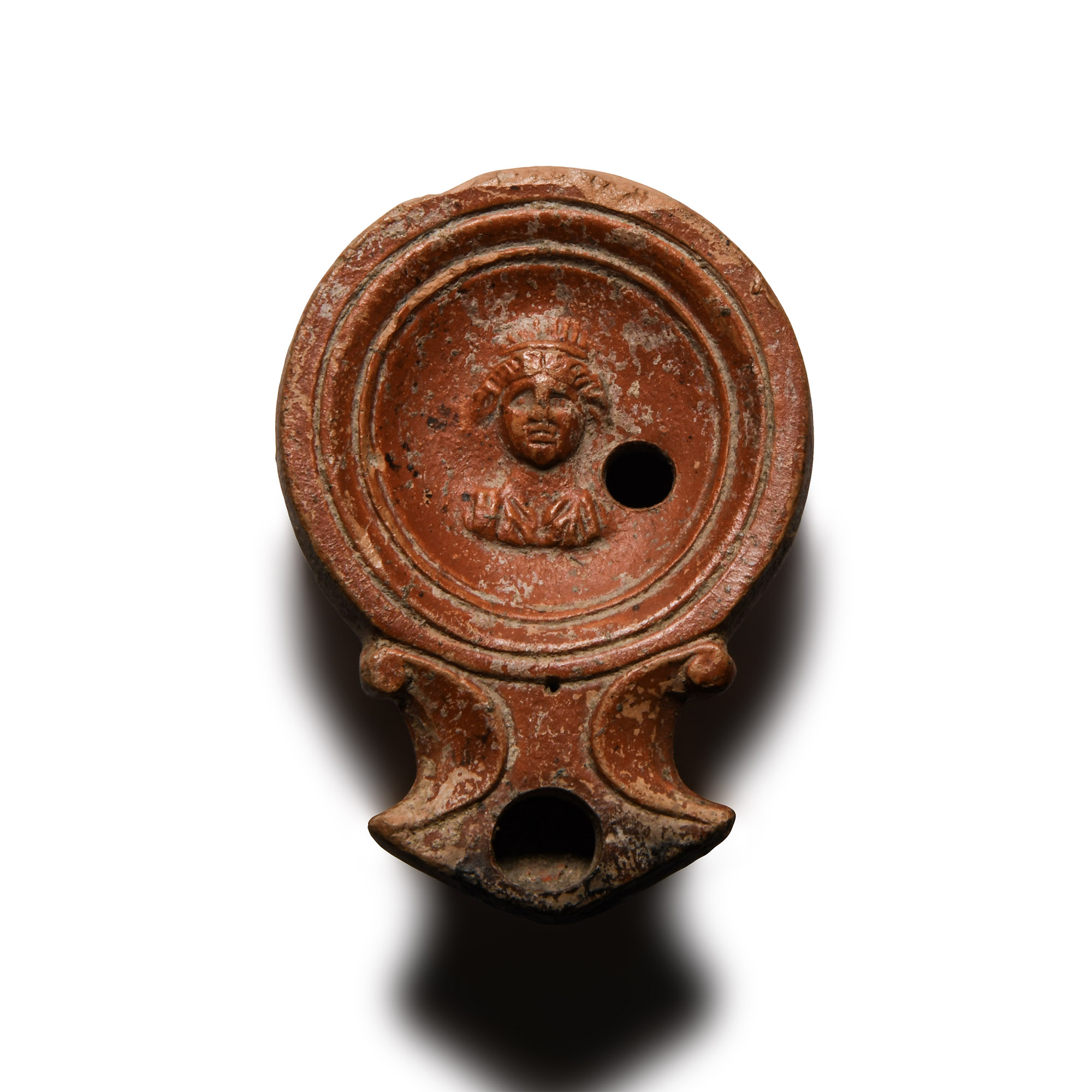
Roman Terracotta Oil Lamp with Bust of Ceres
CIRCA 1ST CENTURY A.D.
3 1/8 in. (41.3 grams, 80 mm).
Central motif of a bust of a goddess with modius (Ceres?); filling-hole in lower left field, voluted angular-tipped nozzle, base slightly raised.
ProvenanceFrom the collection of a High Wycombe, Buckinghamshire, UK, gentleman, circa 2000.
LiteratureCf. Bussière, J., Lindros Wohl, B., Ancient Lamps in the J. Paul Getty Museum, Malibu, 2017, nos.130ff, p.96ff.
FootnotesThe lamp belongs to the type Loeschcke Type I C. This kind of lamp belongs to the early Flavian phase of workshop production. The discus decorations are related to amphitheatre and circus, to mythology, animals, everyday life, and symplegma.
CONDITIONTimeLine Auctions follows a vetting process to ensure the authenticity and legality of all items, reinforcing our commitment to integrity and responsible trading. Each antiquity, antique, and coin lot undergoes thorough examination by a vetting committee of at least ten external specialists, professional trade association members, scientists, and archaeologists: Our Vetting Process
AUCTIONS:
TimeLine is a leading auction house specialising in antiquities, ancient art, collectables, natural history, coins, medals, and books. Our auctions offer museums, collectors, historians, and enthusiasts the opportunity to acquire unique and historically significant pieces.
-
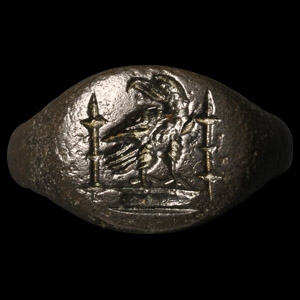
Roman Bronze Military Ring with Eagle Between Standards
Circa 2nd-4th century A.D.Sold for (Inc. bp): £416
With a narrow hoop expanding at the shoulders, oval bezel with a large eagle standing on a pedestal and facing back, a military stand to each side. 4.00 grams, 20.33 mm overall, 17.94 mm internal diameter (approximate size British M 1/2, USA 6 1/4, Europe 13.09, Japan 12)
From the collection of a High Wycombe, Buckinghamshire, UK, gentleman, circa 2000. -
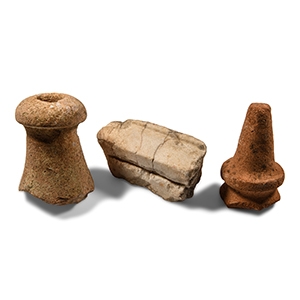
Roman Marble Fragment and Amphora Foot Group
1st-4th century A.D.Sold for (Inc. bp): £8
The marble architectural fragment with a carved groove to the sloped face; the terracotta feet from large wine amphoras, one with a decorative collar and the other with a void to the base. 1.2 kg total, 10.3-12.1 cm
Acquired in the 1970s, thence by descent 2012. Private UK collection, Cambridge, UK. Property of an East Sussex, UK, gentleman. -
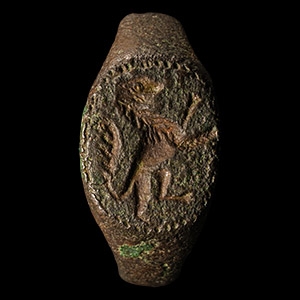
Roman Bronze Ring with Lion
3rd-4th century A.D.Sold for (Inc. bp): £59
With a flat-section expanding hoop, the oval bezel with the quadruped advancing right, voluminous tail curled above the beast's back, surrounded by a dotted border. 6.00 grams, 23.22 mm overall, 23.62 mm internal diameter (approximate size British T, USA 9 1/2, Europe 21.26, Japan 20)
Private collection formed since the 1940s. UK art market. Property of an Essex gentleman.
