
Loading, please wait...
LOT 0666
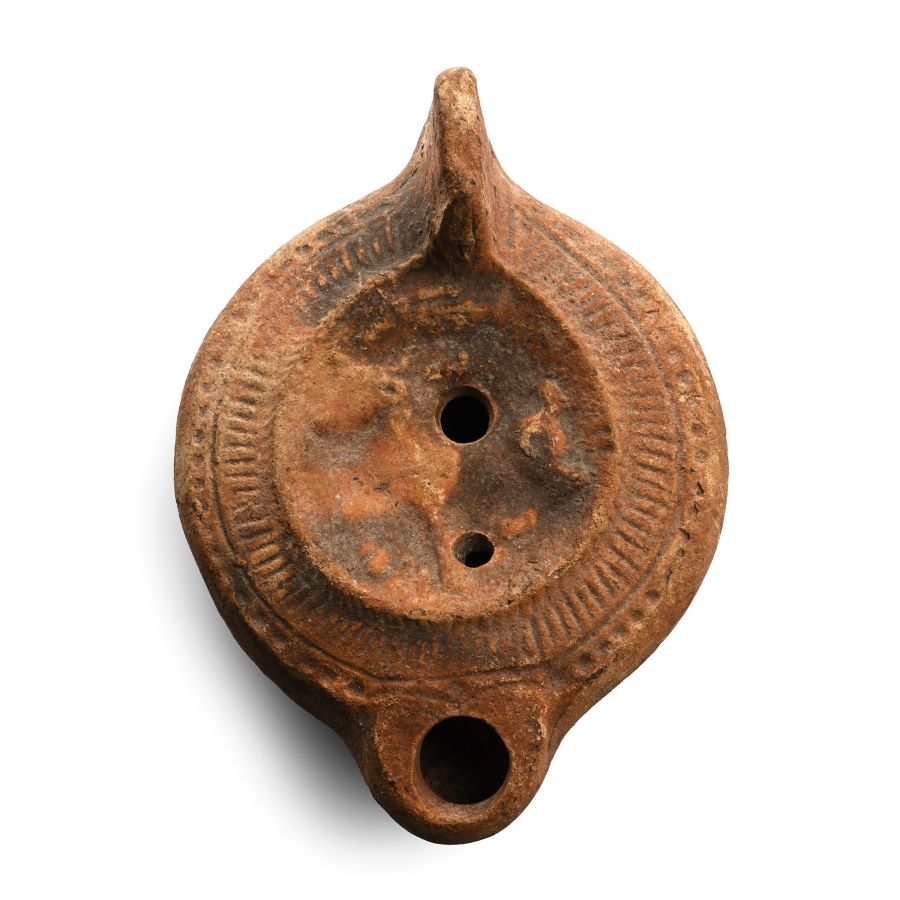
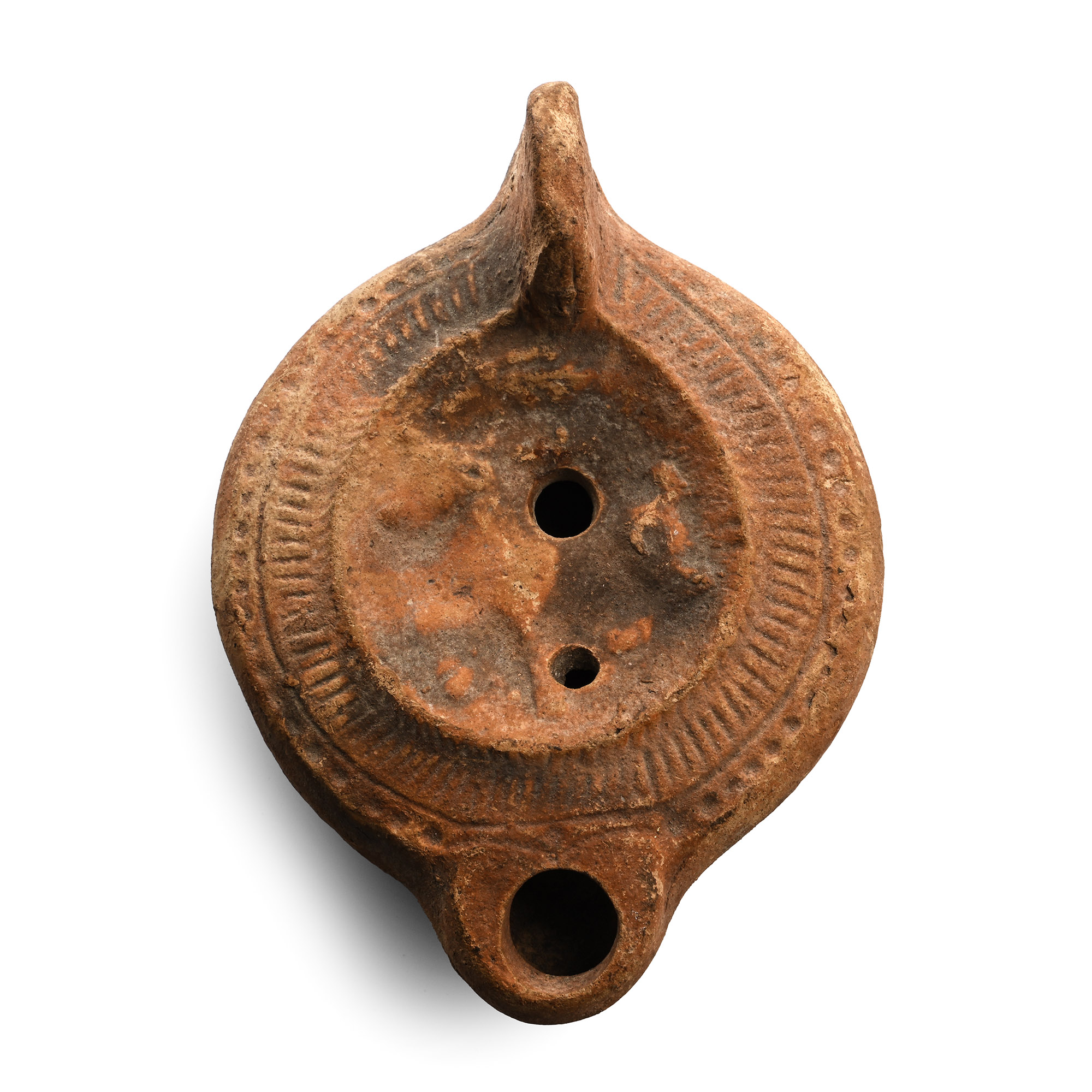
Roman Terracotta Oil Lamp with Bull
2ND CENTURY A.D.
4 3/8 in. (120 grams, 11.2 cm).
Discoid in plan with D-shaped nozzle, lug handle, discus with low-relief image of bull advancing left, discus with radiating hatched lines; base recessed and bordered by two circular grooves, hatched band to base of nozzle. [No Reserve]
ProvenanceFrom a Scottish gentleman’s collection, Glasgow, formed from the early 2000s.
LiteratureCf. Bussière, J., Lindros Wohl, B., Ancient Lamps in the J. Paul Getty Museum, Malibu, 2017, no.333, p.233, for type.
CONDITIONTimeLine Auctions follows a vetting process to ensure the authenticity and legality of all items, reinforcing our commitment to integrity and responsible trading. Each antiquity, antique, and coin lot undergoes thorough examination by a vetting committee of at least ten external specialists, professional trade association members, scientists, and archaeologists: Our Vetting Process
AUCTIONS:
TimeLine is a leading auction house specialising in antiquities, ancient art, collectables, natural history, coins, medals, and books. Our auctions offer museums, collectors, historians, and enthusiasts the opportunity to acquire unique and historically significant pieces.
-
.jpg)
Roman Nicolo Gemstone with Seated Jupiter with Eagle in Gold Ring
2nd century A.D.Estimate: £2,000 - 3,000 (+bp*)
Opening Bid: £1,000
Ellipsoid nicolo cloison with profile figure of Jupiter enthroned and an eagle at his feet; set into a later gold ring; supplied with a museum-quality impression. 8.55 grams, 24.77 mm overall, 19.08 x 19.94 mm internal diameter (approximate size British S, USA 9, Europe 20, Japan 19)
with Gallery Desmet, Belgium. Private collection, England. -
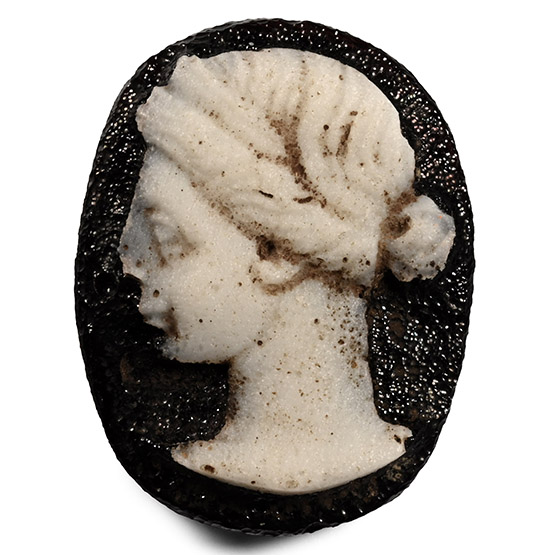
Roman Glass Cameo with Female Bust
1st century A.D.Estimate: £400 - 600 (‡+bp*)
Opening Bid: £200
Ellipsoid black glass plaque with profile female bust, hair dressed in a chignon. 1.82 grams, 18.58 mm
Acquired in the mid 1980s-1990s. Private collection, Switzerland, thence by descent. Private collection, since the late 1990s. Accompanied by a copy of an Art Loss Register certificate, no.S00011371. -
.jpg)
Roman Banded Agate 'Eye' Pendant Inlay
1st century B.C.-1st century A.D.Sold for (Inc. bp): £130
Conical in section with flat top; repaired. 10.6 grams, 33 mm
Acquired by the previous owner, 1970s. Private collection, England.
