
Loading, please wait...
LOT 0959
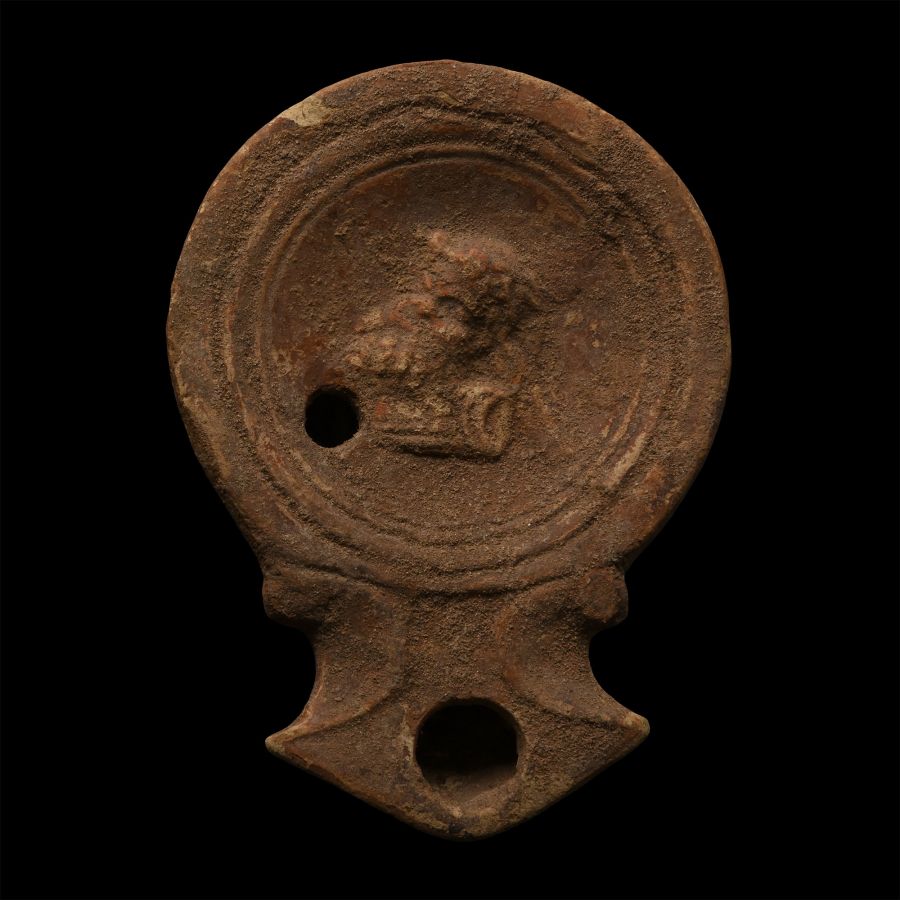
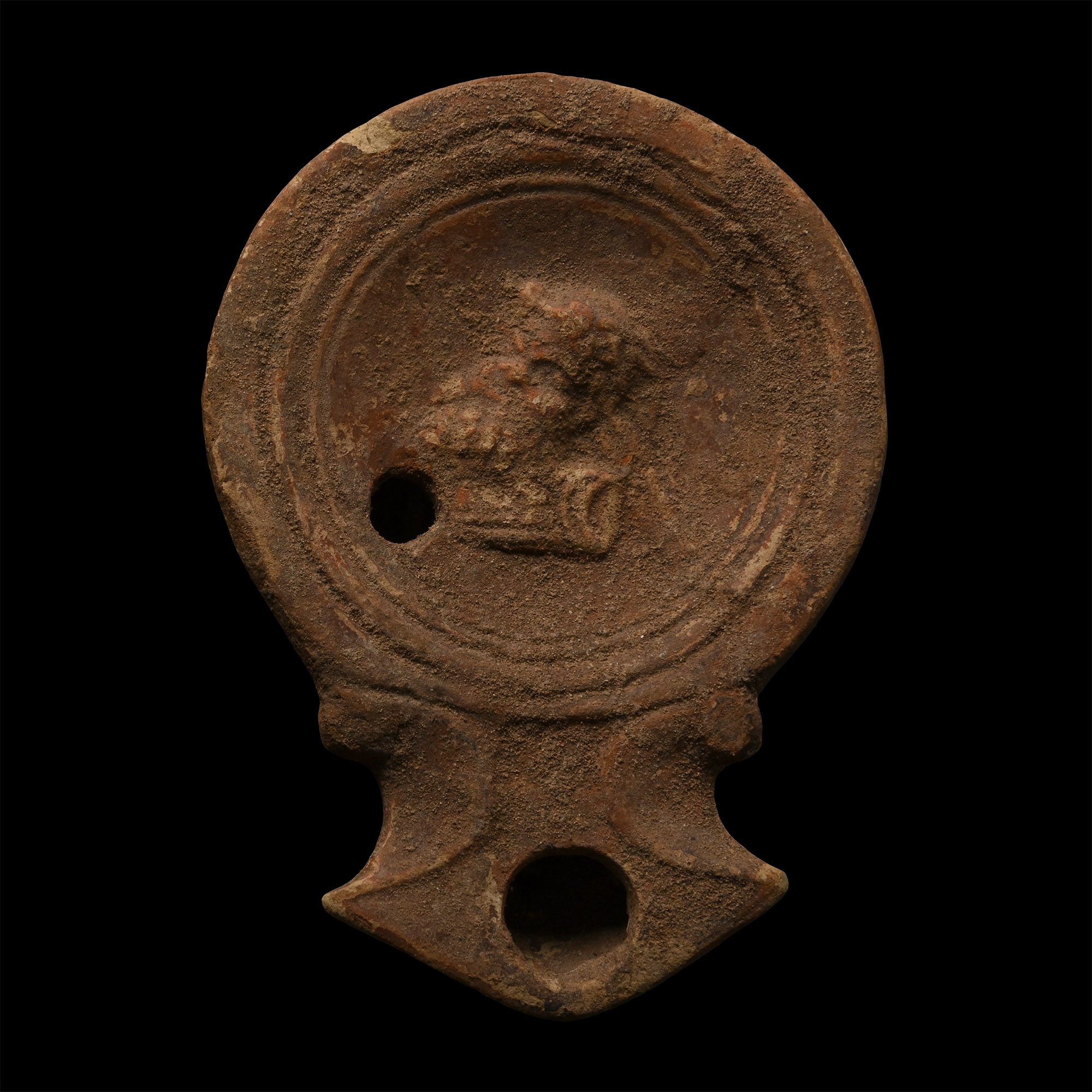
Roman Terracotta Oil Lamp with Bacchus
1ST CENTURY A.D.
3 3/4 in. (45 grams, 94 mm).
Broad discoid body and volute scroll flanking the nozzle; discus with a bearded male bust with a crown of ivy leaves.
ProvenanceFrom the Lloyd and Jeanne Raport collection, Washington, D.C. and Florida, USA, formed between 1972-2000.
Acquired through Bonhams, London, UK.
Cf. Bémont, C., Lampes en Terre Cuite Antiques, Paris, 2007, item D.185, for type.
CONDITIONTimeLine Auctions follows a vetting process to ensure the authenticity and legality of all items, reinforcing our commitment to integrity and responsible trading. Each antiquity, antique, and coin lot undergoes thorough examination by a vetting committee of at least ten external specialists, professional trade association members, scientists, and archaeologists: Our Vetting Process
AUCTIONS:
TimeLine is a leading auction house specialising in antiquities, ancient art, collectables, natural history, coins, medals, and books. Our auctions offer museums, collectors, historians, and enthusiasts the opportunity to acquire unique and historically significant pieces.
-
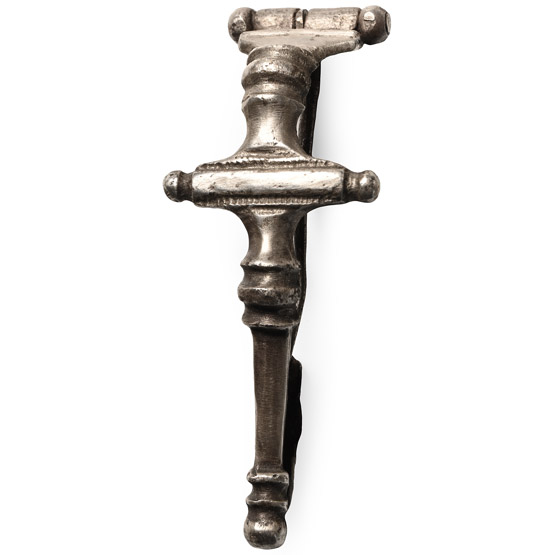
Roman Silver Bow Brooch
1st-2nd century A.D.Sold for (Inc. bp): £195
Of kräftig profilierte type with D-section ribbed bow, tubular collar and central flat plate with knop finials, catchplate and pin to the reverse. 11.5 grams, 54 mm
Ex property of an Essex, UK, gentleman collector. From the private collection of a Colchester, UK, gentleman. -
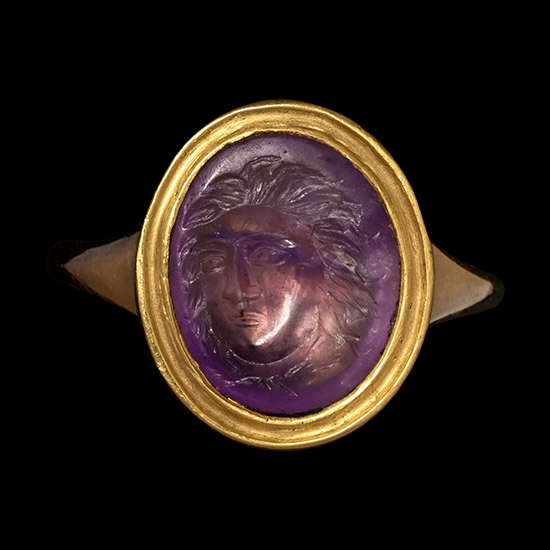
Roman Amethyst Gemstone of Medusa in Gold Ring
2nd century A.D.Sold for (Inc. bp): £1,950
Cloison with incuse gorgoneion in three-quarter view; set into a later gold ring; supplied with a museum-quality impression. 5.70 grams, 20.93 mm overall, 17.52 x 15.50 mm internal diameter (approximate size British L 1/2, USA 6, Europe 11.87, Japan 11)
Private collection, England. -
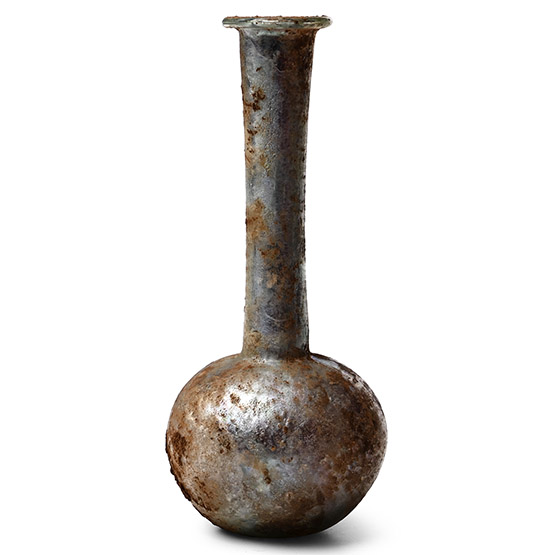
Roman Blue Glass Flask
Circa 1st-4th century A.D.Sold for (Inc. bp): £117
Bulbous body and a long tubular neck with rolled rim. 14 grams, 10.3 cm
From a London, UK, collection of glass, 1970-2000s.
