
Loading, please wait...
LOT 0834
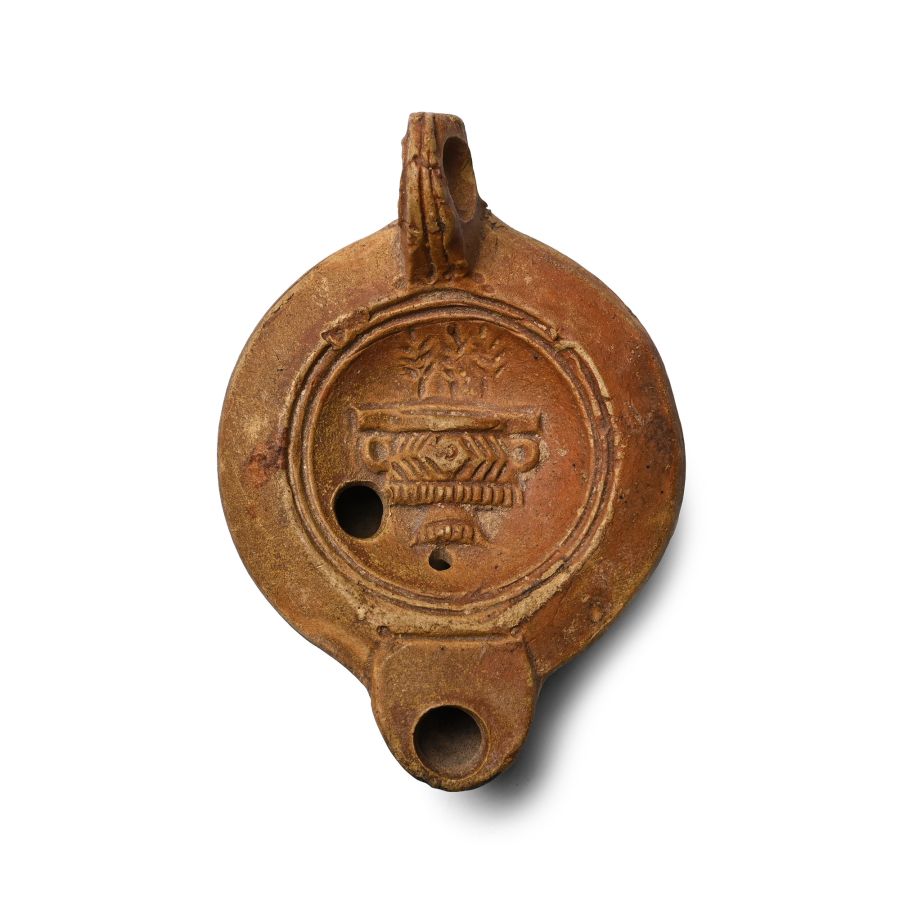
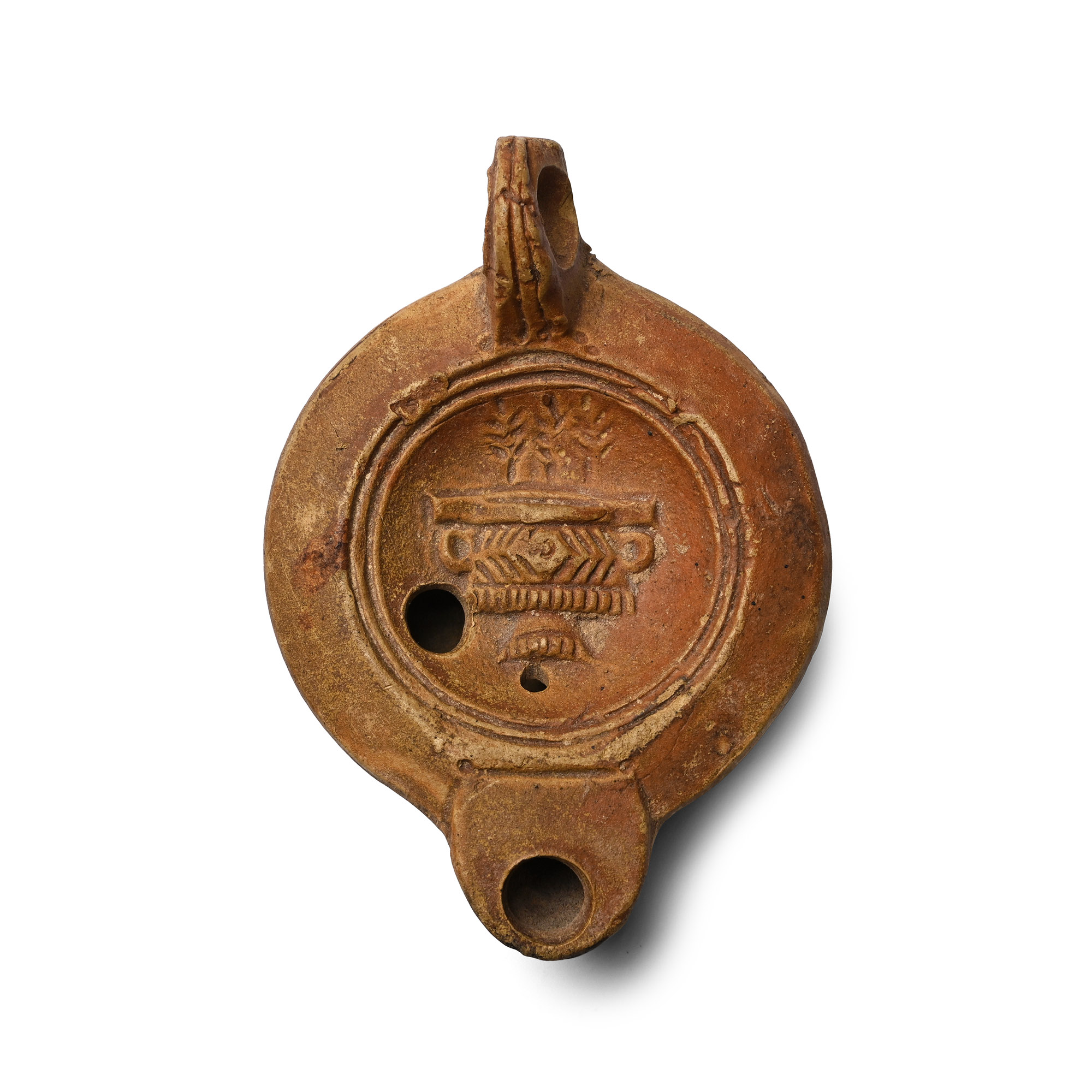
Roman Terracotta Oil Lamp with Amphora
2ND CENTURY A.D.
3 3/4 in. (56 grams, 97 mm).
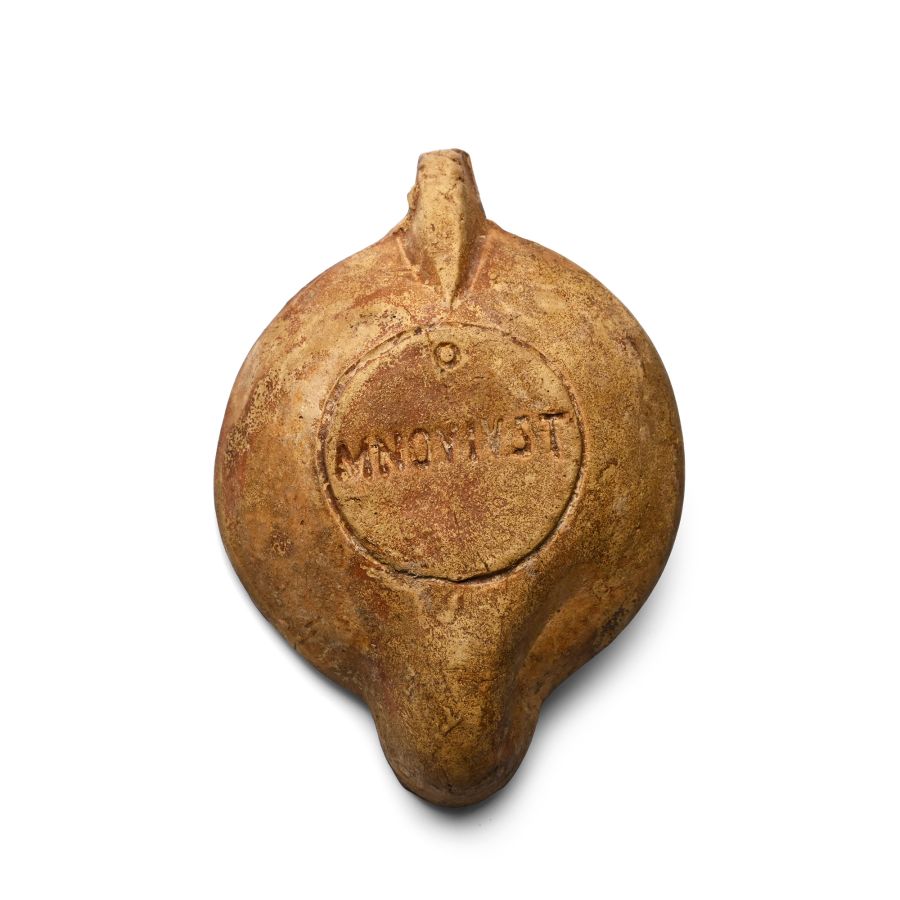
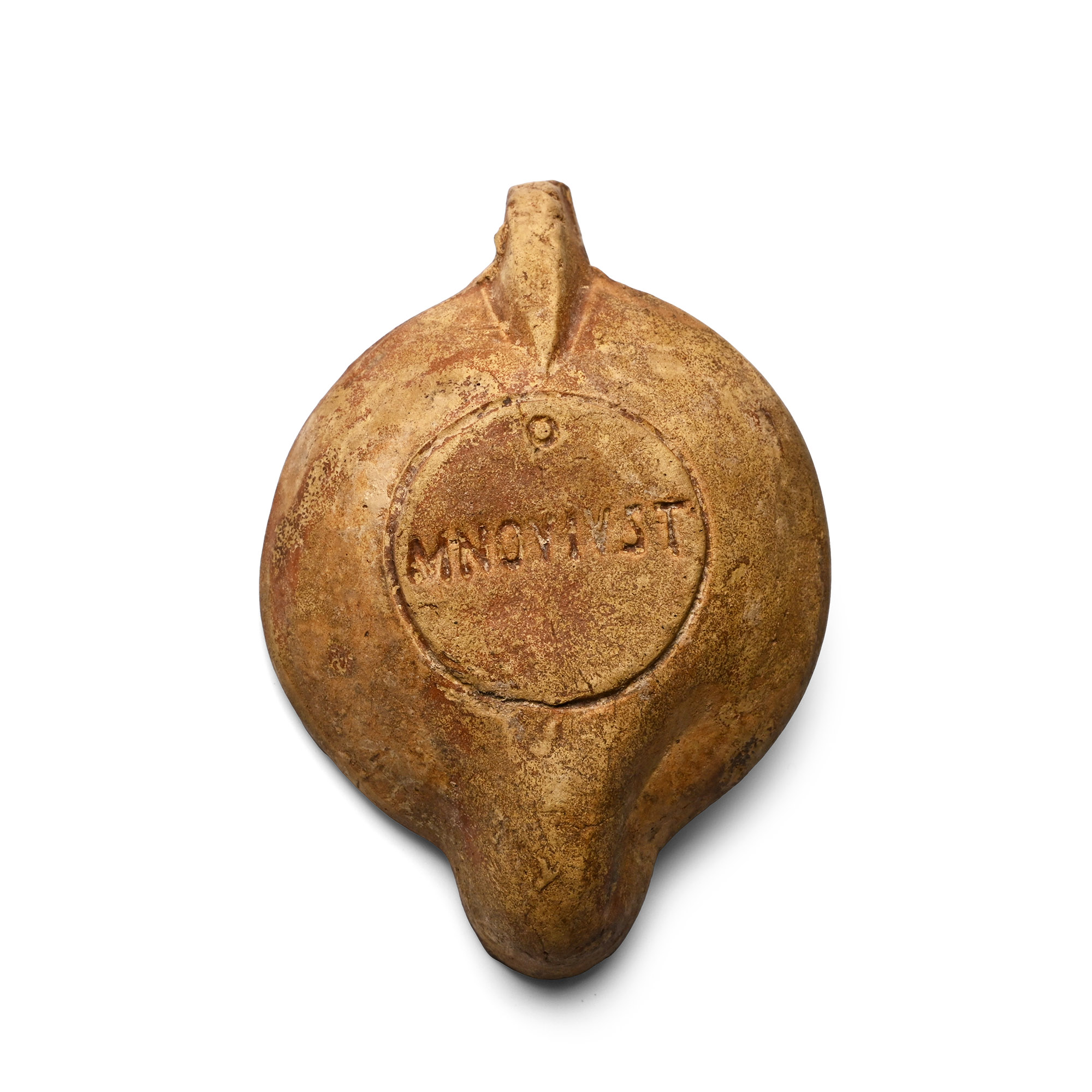
Squat in profile with small loop handle and D-shaped nozzle, discus with low-relief vessel and foliage; maker's mark to underside 'MNOVIVST'. [No Reserve]
ProvenanceFrom the private collection of a Canadian gentleman living in Essex, UK, formed since the 1920s-circa 1990.
Property of an Essex lady until the late 1990s; thence by descent.
From the private collection of an Essex gentleman since the late 1990s.
This lot is accompanied by an illustrated lot declaration signed by the Head of the Antiquities Department, Dr Raffaele D'Amato.
Cf. Bussière, J., Lindros Wohl, B., Ancient Lamps in the J. Paul Getty Museum, Malibu, 2017, no.329, p.231, for type.
FootnotesThe lamp belongs to the Bussière type, form D I 3, from a period between the Late Flavian era to the second half of the second century A.D. Like the types of this category, the ring handle shows two grooves on the upper part and the filling hole is in the lower part.
CONDITIONTimeLine Auctions follows a vetting process to ensure the authenticity and legality of all items, reinforcing our commitment to integrity and responsible trading. Each antiquity, antique, and coin lot undergoes thorough examination by a vetting committee of at least ten external specialists, professional trade association members, scientists, and archaeologists: Our Vetting Process
AUCTIONS:
TimeLine is a leading auction house specialising in antiquities, ancient art, collectables, natural history, coins, medals, and books. Our auctions offer museums, collectors, historians, and enthusiasts the opportunity to acquire unique and historically significant pieces.
-
Roman Bronze Hinged Seal Box with Phallus
2nd-3rd century A.D.Sold for (Inc. bp): £91
Teardrop-shaped in plan with three holes to underside, enamelled phallus to lid. 8.3 grams, 32 mm
Acquired on the UK art market during the late 20th century. From the private collection of David King (1940-2024), Hoddesdon, Hertfordshire, UK. This lot is accompanied by an illustrated lot declaration signed by the Head of the Antiquities Department, Dr Raffaele D'Amato. -
Roman Inked Wooden Tablet Regarding the Marriage between Donatilla and Iulius Donatillus and the Gift of a Slave Girl
Late 318 A.D.Sold for (Inc. bp): £11,050
Well preserved rectangular tablet inscribed in Roman cursive script on one side, the text documents legal acts in the context of a wedding: first a counter-promise concerning the dowry between the father of the bride together with the bride, Donatilla, on the one hand and the groom on the other; then a gift from the bride's mother to her daughter, a 6 year old young slave girl, the transfer taking the form of a mancipatio with Iulius Rogatianus as scale holder (libripens) and with the involvement of witnesses. 86 grams, 24.5 x 14.2 cm
Acquired by Albert Sfez in the early 1950s. Formerly the property of Monsieur Alain Sfez, a Belgian collector; acquired by gift from his father Albert Sfez, in 1965. Acquired by a London dealer in 1973. From an important London collection since 1975; thence by descent. Accompanied by a copy of a three page illustrated academic report by Professor Dr phil. Peter Rothenhöfer. Accompanied by a collection of four old black and white photographs of the the tablet. This lot has been checked against the Interpol Database of stolen works of art and is accompanied by search certificate number no.12600-230808. This lot has been cleared against the Art Loss Register database, and is accompanied by an illustrated lot declaration signed by the Head of the Antiquities Department, Dr Raffaele D'Amato.
Professor Dr phil. Peter Rothenhöfer writes: 'Without any doubts this tablet is an original document from Roman times. This unique document not only reflects legal practice in the Roman Empire, but is also of great importance for Social History.' -
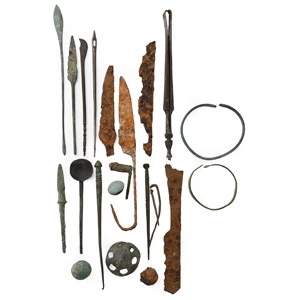
Roman and Other Bronze and Iron Artefact Group
1st-4th century A.D. and laterSold for (Inc. bp): £117
Including: bracelet with clubbed ends; single-edged knife blades; dress pins; brooch chord; and other items. 184 grams total, 1.6-14.6 cm
From a London, UK, collection 2000s. This lot is accompanied by an illustrated lot declaration signed by the Head of the Antiquities Department, Dr Raffaele D'Amato.
